FleaMarketBay: Marketplace
- 370.00
- 4.5
- Installs
- 100.00K
- Price
- Free

Screenshots


Analysis by Reviewed
I found FleaMarketBay: Marketplace most interesting when I treated it as a practical local-shopping tool rather than another app I would open out of habit. It belongs to the shopping category, comes from Flea Market Bay LLC, and focuses on the kind of buying and selling that normally happens through neighborhood conversations, noticeboards, or general classified services. The idea is simple: browse nearby listings, spot something useful, and create an opportunity to sell items you no longer need.
That simplicity is also the app’s main test. A marketplace can feel exciting during the first few days because every scroll reveals a possible bargain. The harder question is whether it remains useful after the novelty disappears. In my experience, this app has lasting value for people who regularly compare local deals, clear out household items, or prefer arranging nearby exchanges. It is less compelling for someone who wants a highly polished retail experience, guaranteed delivery, or a broad catalog with predictable stock.
What the first week feels like
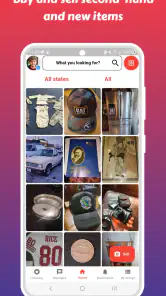
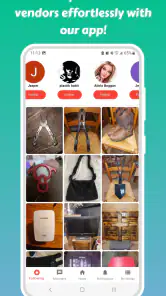
The first-week appeal comes from the local focus. Instead of browsing only professional retailers, I can look at the kinds of things people actually have at home: cars, clothes, furniture, and other goods that make sense to inspect in person. That changes the rhythm of shopping. I am not simply choosing between standardized products; I am judging condition, distance, timing, and whether the asking price makes sense for a particular item.
I also like that the app serves two roles. I can use it as a buyer when I am searching for a low-cost replacement, then return as a seller when I want to turn unused belongings into cash. That two-sided usefulness gives it more potential staying power than a shopping app designed only for browsing. A person moving home, furnishing a room, or clearing a garage may find a reason to use it repeatedly over several weeks.
The free entry point makes trying it straightforward. FleaMarketBay is free to install, carries a Teen content rating, and supports devices running Android 7.0 or later. Its current version is 1.2.8, so I would still check that a device is compatible before planning to use it as the main selling tool. The app was released on November 5, 2022, which gives it enough time in the market to feel more established than a brand-new experiment.
Its store presence also suggests a reasonably active audience: the app has passed one hundred thousand installs, with an average rating of 4.5 from around 4.8 thousand ratings. I do not treat those figures as a guarantee that every local area will be equally busy. A marketplace’s usefulness depends heavily on the people nearby, and a strong overall rating cannot replace checking whether listings in my own area are fresh and relevant.
My practical way to browse
I would begin with a specific need instead of opening the app with no plan. For example, if I needed a small table, I would compare several listings while keeping three questions in mind: is the item realistically close enough to collect, does the description explain its condition, and does the price leave room for the inconvenience of transport? This prevents the most common marketplace mistake, which is confusing a low price with a good deal.
More From Our News Desk

Clash of Clans Is Won Between the Battles

Android Auto Makes the Case for Quieter Car Software

MobiOffice: Transforming Mobile Productivity with Seamless Integration

EA SPORTS FC™ Mobile Soccer: Redefining Mobile Sports Gaming

How Microsoft OneDrive Became a Mobile Productivity Giant

How Google Translate Breaks Language Barriers Effortlessly
For clothes, I would pay particular attention to details that are easy to overlook in a quick scroll. Size labels do not always communicate fit, and a photograph can hide wear. For furniture, dimensions and access matter as much as appearance. A large sofa may look like a bargain until I consider stairs, vehicle space, and the time needed to move it. For cars, the stakes are much higher, so I would use the app to discover possibilities rather than treating a listing as a substitute for inspection and proper paperwork.
One useful habit is to save the details of a promising listing before starting a conversation. I would note the asking price, visible condition, pickup area, and any questions that the listing leaves open. That makes it easier to compare several options without relying on memory. It also reduces hurried decisions when a seller replies quickly.
Where it beats ordinary alternatives
Compared with a conventional online retailer, FleaMarketBay can be more useful for one-off goods that do not fit a standard product catalog. A retailer is usually better when I want a new item, consistent quality, delivery, a return process, or a clear warranty. A local marketplace is better when I care about finding something nearby and am willing to evaluate it myself.
Compared with broad classified platforms, the appeal here is the direct shopping-and-selling focus around local deals. The trade-off is that a smaller or more uneven marketplace may not offer the same depth of listings in every place. I would not abandon a larger alternative if I were searching for a rare part, a very specific model, or an item that needed to arrive by a fixed date.
Compared with social-media selling groups, a dedicated marketplace can feel more purposeful because the shopping intent is clearer. Social groups may provide more conversation and local context, but they can also mix listings with unrelated posts. FleaMarketBay makes more sense when I want to search rather than wait for an item to appear in a feed.
Does it keep earning a place after the novelty?
Month-to-month value for buyers
After the first week, the app’s value depends on whether local supply matches my normal needs. If I regularly look for secondhand furniture, clothing, vehicles, or household bargains, I can imagine checking it whenever a need arises. The strongest recurring use is not endless browsing; it is returning with a clear purpose and using local availability to avoid paying full retail prices.
A realistic example would be replacing a damaged desk after moving into a new apartment. I could search nearby listings, compare the desk’s condition with the cost of buying new, and arrange a collection that fits my schedule. If I find a suitable option, the app has saved money and possibly shortened the search. If the listing is too far away or lacks useful detail, I can move on without building my entire plan around it.
There is also a seasonal rhythm to secondhand shopping. People often sell furniture during moves, clothes after wardrobe clear-outs, and larger household items when they reorganize. That means the app may be more valuable at certain moments than as a daily destination. I would keep it installed if I had an ongoing need to buy locally, but I would not force myself to open it every day just to maintain a habit.
Month-to-month value for sellers
For sellers, the app becomes worthwhile when listing an item is easier than storing it, donating it, or dealing with a more complicated sales channel. I would use it for things that are useful but no longer fit my life: a spare chair, clothing in good condition, or furniture left over after a change of home. The local angle may be especially helpful for bulky goods, since a nearby buyer can collect them instead of requiring shipping.
My advice would be to prepare the item before creating a listing. Clean it, photograph the parts a buyer will inspect, and describe flaws directly. A vague listing creates extra messages and attracts people who may not be suitable buyers. A clear one can reduce wasted conversations, even if it takes a little longer to prepare.
I would also decide in advance how flexible I am on price and pickup time. Sellers often lose time by negotiating without a clear boundary. Knowing the lowest acceptable amount and the periods when collection is possible makes the process less tiring. The app can help expose an item to interested local shoppers, but it cannot remove the work of answering questions, coordinating a meeting, and judging whether a buyer is serious.
Three habits that improve the experience
Separate discovery from commitment. I would use the app to find candidates first, then verify condition, distance, and practical costs before agreeing to anything. This is particularly important for furniture and cars, where transport or inspection can outweigh a low asking price.
Use a short comparison list. Rather than messaging every seller, I would keep a small group of realistic options and compare them on total effort, not just price. A slightly more expensive item nearby may be better than a cheaper one that requires a long trip.
Refresh selling material when interest is weak. If an item attracts views but no serious conversation, I would reconsider the photos, description, condition notes, or price. Reposting the same vague information is less useful than improving what a buyer can understand before messaging.
The maintenance burden
The app itself is free, but using a marketplace well still requires maintenance. Buyers need to check listings, notice whether information is complete, and keep track of conversations. Sellers need to update availability, respond promptly, and remove or revise items that are no longer relevant. That work is not a technical flaw in FleaMarketBay; it is the unavoidable cost of a person-to-person marketplace.
This is where the app may lose people who expect shopping to be nearly automatic. A retail app can remember a product, show standardized specifications, calculate delivery, and provide a familiar checkout path. A local marketplace asks me to do more judgment. I need to decide whether the item is really as described, whether the exchange is convenient, and whether the overall saving justifies the coordination.
I would keep notifications and checking under control by opening the app only at useful times rather than reacting to every possible bargain. The goal is to make it serve a shopping plan, not let it create constant temptation. If I am not actively buying or selling, there is little reason to turn local browsing into a daily obligation.
There is also a financial detail worth noticing. Although the app is free, it includes in-app purchases ranging from $5.99 to $104.99 per item. I would therefore review any paid option carefully before confirming it and distinguish ordinary browsing from optional spending connected with the selling process. A free download does not automatically mean every marketplace action is free, so budget-conscious users should pay attention at the point of purchase.
Where fatigue starts
The first source of fatigue is inconsistency. Local listings can vary greatly in quality, and some may not provide enough information for a confident decision. I may spend time opening an item only to discover that the description is too short, the condition is unclear, or the location makes collection impractical. That is normal for user-created listings, but it limits how efficiently I can shop.
The second is communication. A successful transaction often depends on quick, clear replies and realistic expectations from both sides. If a seller takes too long to answer, or a buyer asks questions already covered in the listing, the convenience disappears. FleaMarketBay can bring people together, but it cannot make every exchange equally organized.
The third is the emotional cost of browsing. Bargains encourage impulse decisions, especially when an item looks unique or inexpensive. I would ask myself whether I need the item, whether I can inspect it properly, and what I will do if it turns out to be unsuitable. That pause is valuable because a local purchase can still consume money, storage space, and time.
Safety and judgment matter as well. I would choose a sensible public arrangement for an ordinary exchange, tell someone where I am going when appropriate, and avoid rushing because a seller claims another person is waiting. For high-value items such as cars, I would treat the app as a place to locate listings, then carry out the checks required for ownership, condition, and payment. The local nature of a transaction is convenient, but it is not a guarantee of trust.
Who should keep it installed?
I think FleaMarketBay is a good fit for people who enjoy secondhand shopping and can make practical decisions without needing every detail standardized. It suits someone furnishing a home on a budget, a seller clearing useful possessions, or a buyer who values collection from nearby over delivery from a distant warehouse. It may also appeal to people who prefer reusing existing goods instead of automatically buying new.
I would be more cautious recommending it to someone who needs a guaranteed item by a deadline, wants effortless returns, or dislikes negotiating and arranging collection. It is also not my first choice for a highly specialized purchase where a larger platform can provide deeper inventory, detailed specifications, and stronger purchase protections. For those users, the app may be a helpful secondary search rather than the main destination.
The audience should also remember the Teen content rating. That makes the app unsuitable as an unsupervised marketplace experience for younger children, and families should use their own judgment about buying, selling, communication, and any optional purchases.
My long-term verdict
After the novelty fades, I would keep FleaMarketBay installed if I were actively buying or selling locally. Its recurring value comes from solving specific problems: finding a nearby secondhand item, giving bulky belongings a chance to reach a new owner, or checking whether a local deal is better than buying new. Those are meaningful uses, but they are occasional and dependent on the strength of the listings around me.
I would not describe it as a replacement for every shopping service. Its advantage is flexibility and local discovery; its cost is the extra judgment, communication, and coordination that come with person-to-person transactions. The app earns a lasting place when I use it deliberately, not when I browse without a purpose.
My final recommendation is simple: install it if nearby buying and selling are genuinely part of your routine, then judge it by the quality and freshness of listings in your area. Start with a modest purchase or an uncomplicated item to sell, learn how much effort the process takes, and decide whether the savings justify the maintenance. FleaMarketBay is most valuable as a practical local tool, not as an endless shopping habit.
For me, that is a positive result. The app does not need to dominate my screen to be useful. If it helps me find one suitable piece of furniture, sell an item that would otherwise sit unused, or discover a better nearby deal at the right moment, it has earned its space. The lasting recommendation goes to people who are comfortable doing a little more work in exchange for local choice and the possibility of real savings.
FleaMarketBay: Marketplace Frequently Asked Questions
Is FleaMarketBay: Marketplace free to download and use?
FleaMarketBay: Marketplace is free to download, so you can install it without paying an upfront price. The app also offers in-app purchases, with purchases ranging from $5.99 to $104.99 per item. Before buying anything in the app, review the purchase details and make sure you understand what is included. You can browse the marketplace without assuming every feature or transaction is free.
Which devices can run FleaMarketBay: Marketplace?
FleaMarketBay: Marketplace is available for Android devices running version 7.0 or later. Before downloading, check the operating system version on your phone or tablet and make sure you have enough available storage to install the app. Keeping your device’s software up to date can also help with compatibility. The app is rated Teen, so consider that age guidance when deciding whether it is appropriate for a younger user.
What is FleaMarketBay: Marketplace, and what can I use it for?
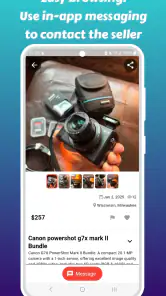
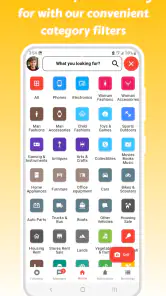
FleaMarketBay: Marketplace is a mobile platform designed for buying and selling items through online listings. Users can browse available products, search by category or keyword, review listing details, and contact sellers about purchases. It may be useful for finding secondhand goods, local bargains, collectibles, clothing, electronics, and other products, depending on the listings available in your area. Its focus includes nearby deals on cars, clothes, and furniture, as well as helping people buy and sell.
Is FleaMarketBay: Marketplace safe to use for buying and selling?
The app can provide a convenient way to discover products and communicate with sellers, but users should still follow standard marketplace safety practices. Review seller information, inspect photos and descriptions carefully, avoid sharing unnecessary personal details, and be cautious of prices that seem unrealistic. Whenever possible, use secure payment methods and meet in a public place for local exchanges. Take time to agree on the item’s condition and transaction details before sending money or arranging a pickup.
How do I create a listing and sell an item on FleaMarketBay?
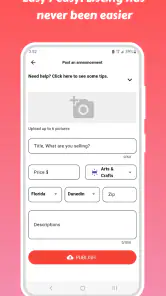
To sell an item, you generally need to create an account, add clear photos, write an accurate description, select an appropriate category, and set a price. Providing details about the item’s condition, size, brand, defects, and delivery or pickup options can help attract serious buyers. Before publishing, check the listing carefully so potential buyers receive complete and reliable information. Clear communication after posting can also help you answer questions and coordinate with interested buyers.
Pros
- Simple marketplace layout makes browsing and listing items straightforward.
- Useful categories help narrow searches for specific products.
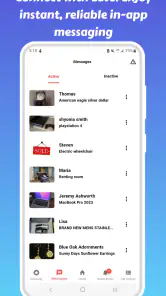
- Direct buyer-seller communication supports quick questions and negotiations.
- Local listings can make pickup more convenient and affordable.
- A broad mix of new and secondhand goods offers varied shopping options.
Cons
- Listing quality and accuracy can vary significantly between sellers.
- Some categories may have limited activity depending on your location.
- Meetups require caution and careful planning for personal safety.
- Search results may include outdated or already sold listings.
- Payment and delivery options can depend heavily on individual sellers.
- Category
- Shopping
- Version
- 1.2.8