eReader-eBooks,Webnovels&More
- 466.00
- 4.3
- Installs
- 100.00K
- Price
- Free

Screenshots



Analysis by Reviewed
I approached eReader-eBooks,Webnovels&More as someone looking for a simple way to spend a few quiet minutes with ongoing fiction rather than as a replacement for a full-featured digital library. It is a free entertainment app from eReader LTD, aimed at readers who enjoy popular novels and web fiction that can be followed over time. My first impression was that its appeal depends less on elaborate extras and more on how quickly you can find a story, start reading, and return to it later.
That focus makes the app easy to understand, but it also sets the right expectations. This is not the best choice if you want a carefully curated academic bookshelf, a broad audiobook service, or a polished reading environment built around books you already own. It makes more sense for casual fiction reading, especially when you like discovering stories that are still developing. The app is free to install, carries a Teen content rating, and includes optional purchases ranging from $0.99 to $99.99 per item, so I would pay attention to any purchase prompt before confirming it.
What reading in eReader-eBooks,Webnovels&More is really like
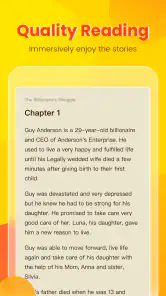
The central experience is browsing through popular novels and ongoing web fiction, choosing something that catches your attention, and settling into a chapter-based reading habit. That ongoing format changes how I use the app. Instead of treating every title as a single sitting, I tend to read a few chapters, stop at a natural point, and return when I want a light distraction. It suits commutes, waiting rooms, and evenings when I want a story without committing to a long film or game session.
The app belongs in the entertainment category, and that is useful context. I would not install it expecting the organization or reference tools of a dedicated e-book manager. Its value is immediate access to fiction discovery and the possibility of following stories as they continue. Readers who enjoy serialized storytelling may find that rhythm more engaging than opening a finished novel, while readers who dislike interruptions or unresolved plots may become impatient.
In everyday use, I found the most important decision happens before reading begins: choosing a title based on its premise rather than tapping the first attractive cover. With ongoing fiction, the opening chapters need to establish enough interest to justify returning later. I recommend sampling the beginning of more than one novel, then keeping the one whose voice and pacing feel natural to you. That small habit saves time and prevents the common mistake of staying with a story simply because it was the first one opened.
The app has built a noticeable audience, with more than 100 thousand installs and an average rating of 4.3 from roughly 4.8 thousand ratings. Those figures suggest that the concept works for many readers, but they should not be treated as a guarantee that every title will match your taste. Fiction discovery is personal. A popular listing can still feel too slow, too dramatic, or poorly suited to the kind of reading session you have in mind.
Who will get the most from it
I see the strongest fit for people who enjoy webnovels, frequent short reading sessions, and the feeling of having another chapter waiting. It can also work well for someone who wants to explore fiction without paying at the point of installation. The free entry makes it easy to test the reading experience before deciding whether the available selection and presentation are worth keeping.
More From Our News Desk

Clash of Clans Is Won Between the Battles

Android Auto Makes the Case for Quieter Car Software

MobiOffice: Transforming Mobile Productivity with Seamless Integration

EA SPORTS FC™ Mobile Soccer: Redefining Mobile Sports Gaming

How Microsoft OneDrive Became a Mobile Productivity Giant

How Google Translate Breaks Language Barriers Effortlessly
It is less suitable for a reader who wants a permanent personal library made from purchased titles, a distraction-free premium reading environment, or a clear separation between finished and unfinished books. If you mainly read bestsellers from a particular publisher or depend on advanced book-management tools, a conventional e-book store or library app may be a better match. I would also skip it if you strongly prefer stories with definite endings and dislike waiting for an ongoing narrative to reach its conclusion.
What I noticed before starting a book
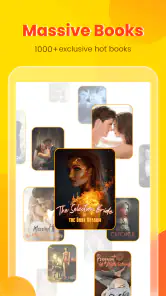
The short store description is simply “eReader,” while the broader summary points toward massive popular novels that are ongoing. That combination tells me the app is intentionally broad rather than narrowly focused on one literary genre. I would therefore approach the catalog as a discovery space, not as a shelf where every title follows the same editorial standard.
My practical advice is to decide what you want from the session first. If you have ten minutes, look for a story with an opening that moves quickly. If you expect to read for longer, choose a premise you can imagine following over several visits. This sounds basic, but it matters more with serialized fiction because the first chapter is not the whole product; it is an invitation to develop a habit.
Getting from installation to a useful first session
The app supports Android devices running version 7.0 or later, which covers a wide range of phones and tablets. After installing it, I would begin with a calm first pass rather than immediately opening several titles. Let the main reading area load, look for the available novel choices, and notice how the app presents a story before committing to it. The goal is to understand the reading path: discover, open, read, and return.
Because the app is free, the first decision is not whether to pay for access at the door. The more important decision is whether a particular reading experience is worth continuing. If an in-app purchase appears, remember that optional items can cost from $0.99 to $99.99 each. I would never tap through a purchase screen casually, especially when exploring unfamiliar content. Read the wording carefully and make sure you know whether you are selecting a one-time item or another kind of paid option before confirming.
The first meaningful success is simple: open one novel, read enough of its opening to judge the voice and pacing, and decide whether you actually want to return to it. I would not measure success by how many titles I can browse. A single story that holds my attention is more useful than a long list of books I opened for a few seconds and abandoned.
For a realistic example, imagine that I am waiting for a friend after work with fifteen minutes to spare. I open the app, browse the fiction choices, select a title with a premise I understand immediately, and read the opening section without trying to explore every menu. If the story works, I make a mental note of the title and continue later. If it does not, I leave it without feeling that I have wasted money. That low-pressure trial is where the free installation is most helpful.
A better way to test the reading experience
I recommend using a three-step test during the first session. First, check whether the premise is clear enough to make you curious. Second, read past the initial hook and see if the writing still feels comfortable. Third, pause and ask whether you remember what you just read. If the answer is no, the problem may be the story rather than the app, but either way it is a useful signal to try another title.
Another helpful habit is to avoid opening too many ongoing novels at once. Serialized fiction can create a cluttered routine when every title demands a different kind of attention. I prefer keeping one main story and perhaps one backup for a different mood. This makes returning to the app feel intentional instead of turning the catalog into an endless stream of unfinished beginnings.
If you read on a phone, try a short session in both a bright daytime setting and a dimmer evening setting. The same page can feel comfortable in one situation and tiring in another. I would adjust the device’s display settings to suit the room rather than blaming the app immediately. For longer reading, a tablet may feel more relaxed, but the basic appeal remains the same: quick access to fiction when I have a spare moment.
Where first-time readers may become confused
The biggest source of confusion is the difference between an ongoing webnovel and a finished e-book. A title can be enjoyable while still leaving the reader waiting for more. I would treat that unfinished quality as part of the format, not as a fault that can be solved by repeatedly searching for a final chapter. If you need closure tonight, choose a completed book elsewhere; if you enjoy anticipation, ongoing fiction may be exactly what you want.
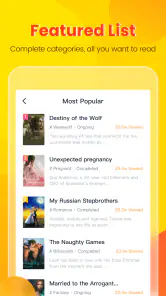
A second point to watch is the difference between browsing and reading. It is easy to spend more time judging covers, summaries, or popularity signals than actually testing a story. I found that the fastest route to a useful opinion is to read the opening directly. A few minutes with the text tells me more than repeatedly comparing thumbnails.
Paid items are another area where a new user should slow down. The app is free, but that does not mean every part of the experience has to be free. Since in-app items cover a wide price range, I would consider the free experience a trial and make each purchase decision separately. If you are setting the app up for a teenager, the Teen rating and purchase options are worth discussing beforehand, particularly on a shared device.
The wording around a title can also be interpreted too broadly. “Popular” does not necessarily mean “right for me,” and “ongoing” does not tell me whether the pacing will be fast or slow. I use those labels as starting points, then judge the actual opening. This is one of the more important trade-offs in discovery-focused reading apps: they reduce the effort of finding something new, but they cannot remove the personal work of deciding what is good for you.
How it compares with ordinary alternatives
Compared with a standard e-book store, eReader-eBooks,Webnovels&More feels more oriented toward discovery and serialized reading than ownership. A traditional store is often the better option when I already know the author or title I want, need a finished book, or want a formal purchase history. This app is more appealing when I want to browse popular fiction and see whether an unfamiliar ongoing story can become part of my routine.
Compared with a general reading app that imports personal files, it offers a different kind of convenience. I do not approach it as a tool for organizing documents I already have. I approach it as a place to find fiction within its own entertainment environment. That is convenient for spontaneous reading, but limiting for people who want one app to hold books from many unrelated sources.
It also differs from video entertainment in a useful way. Reading asks for more active attention, but it can fit into smaller, quieter moments without sound. I can use it when watching a show would be impractical. On the other hand, video provides immediate visual pacing, while a webnovel depends on whether the writing keeps me engaged. The better choice depends on whether I want to participate in the story through reading or simply watch something unfold.
Small habits that make the app more worthwhile
My first tip is to judge a title after a meaningful sample, not after its cover. My second is to keep the number of ongoing stories low enough that returning feels manageable. My third is to separate curiosity from commitment: opening a book is only exploration, while choosing to come back is the real test.
I would also use the app according to the shape of my day. A short commute is a good time to test an opening chapter, while a longer uninterrupted evening is better for deciding whether an ongoing story deserves regular attention. If I am tired, I choose a familiar title instead of browsing endlessly. That prevents the catalog from becoming a source of decision fatigue.
For younger readers, I would combine the Teen content rating with normal family judgment. Age labels are useful guidance, but they do not replace checking whether a particular story suits the reader. I would also keep purchase awareness in the routine. Free installation is reassuring, yet the presence of optional paid items means the app should be used with the same care as any entertainment service that offers digital purchases.
The developer, eReader LTD, has kept the product’s identity centered on reading rather than turning it into a general social platform. That narrow purpose is a strength when I want to get to a story quickly. It becomes a weakness if I am looking for extensive tools beyond reading and browsing. The current version is 3.1.4, so I would keep the app updated through the normal platform process, especially if I notice a reading or navigation issue.
My recommendation after using it
I recommend eReader-eBooks,Webnovels&More to readers who want a free starting point for popular ongoing fiction and who enjoy building a reading habit one chapter at a time. Its best moment is not a dramatic feature; it is the simple transition from spare time to an interesting story. When a title clicks, the app gives that moment very little resistance.
I would not recommend it as the only reading app for someone who wants a polished personal library, guaranteed finished novels, or a dependable home for books purchased from many places. Those readers will probably be happier with a dedicated e-book ecosystem. I would also advise cautious browsing if you are sensitive to paid prompts or prefer to avoid any temptation to buy digital items.
For a first-time user, my suggested path is straightforward: install it on a compatible device, browse without rushing, open one promising novel, read enough to assess the writing, and return only if the story earns that second visit. That process gives you a meaningful answer quickly and avoids confusing a large selection with a good personal fit.
Overall, I see this app as a practical entertainment companion rather than a complete reading system. Its audience rating of 4.3 and its growing install base show that the format has found readers, while the Teen classification and optional purchases remind me to use it thoughtfully. The real value is discovering one ongoing story you genuinely want to follow, not simply collecting titles. If that sounds like the kind of reading experience you enjoy, it is worth trying for free and judging through your own first chapter.
eReader-eBooks,Webnovels&More Frequently Asked Questions
Is eReader-eBooks, Webnovels & More free to download, and are there costs inside the app?
The app is free to download, so you can try its reading experience without paying upfront. Some books, chapters, or other content may cost extra through in-app purchases, and those purchases can range from $0.99 to $99.99 per item. Check the price shown for a specific title or unlock before confirming a purchase, especially if you plan to read an ongoing story.
What kind of reading experience does eReader-eBooks, Webnovels & More offer?
eReader-eBooks, Webnovels & More is an entertainment app for people who enjoy digital books, serialized web fiction, novels, and other written content on a mobile device. It brings reading material into one library, allowing users to browse available titles, open chapters, and continue reading from where they stopped. Its focus includes popular novels and ongoing stories.
What is eReader-eBooks, Webnovels & More?
eReader-eBooks, Webnovels & More is a reading app designed for people who enjoy digital books, serialized web fiction, novels, and other written content on a mobile device. It brings reading material into one library, allowing users to browse available titles, open chapters, and continue reading from where they stopped. The exact catalog and available features may vary depending on your region and app version.
Does the app offer free books and webnovels?
The app may include a selection of free books, chapters, or webnovels, but not every title is necessarily available without payment. Some content can require in-app purchases, credits, subscriptions, or unlocking individual chapters. Before downloading or spending money, users should review the title information, pricing details, and any trial conditions shown in the app, since availability and payment options can change over time.
Can I read books offline with eReader-eBooks, Webnovels & More?
Offline reading depends on the app’s download support and the rights attached to each title. If an offline option is available, you may need to download chapters or books while connected to Wi-Fi before reading them without internet access. Some content may remain online-only because of licensing or account restrictions. It is best to test downloaded material before traveling or relying on the app without a connection.
Pros
- Supports multiple eBook formats for flexible reading.
- Includes customizable fonts
- themes
- and reading layouts.
- Offers webnovel access alongside traditional digital books.
- Reading progress syncs conveniently across supported devices.
- Useful library tools make organizing titles straightforward.
Cons
- Some books or chapters may require separate purchases or subscriptions.
- Content availability can vary by region and publisher agreements.
- The interface may feel crowded for users seeking a simple reader.
- Advanced features may require creating an account or granting permissions.
- Offline access may be limited for certain online novels or content.
- Category
- Entertainment
- Version
- 3.1.4