Engelsberg Ideas
- 1.00
- 5.0
- Installs
- 10.00K
- Price
- Free

Screenshots

Analysis by Reviewed
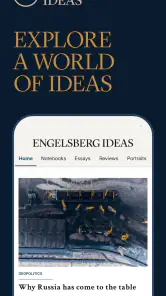
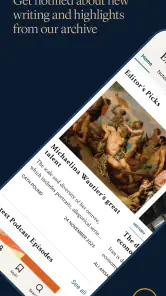
When I want to spend a quiet half hour with an idea rather than chase breaking headlines, I look for something that gives me context, argument and enough room to think. Engelsberg Ideas is aimed at that slower kind of reading and listening. It is a free news and magazines app from Engelsberg Ideas, focused on history, geopolitics and culture, with essays, analysis and podcasts gathered in one place. My overall impression is that it works best as a deliberate learning companion, not as a replacement for a fast-moving news feed.
The first thing I noticed is the difference in pace. This is not an app I would open expecting a stream of short alerts or a constantly changing list of urgent updates. Its value comes from choosing a subject, giving it attention and following an argument through. That makes it particularly appealing when I want to understand why an event matters, how a historical pattern developed or where cultural ideas fit into a wider debate.
The most useful way to approach it is as a path from curiosity to understanding, rather than as a headline machine. I begin with a question, move through an essay or analysis, switch to a podcast when listening suits the moment, and then decide what deserves a second look. That workflow sounds simple, but it changes how the app feels compared with ordinary news products.
From a vague question to a focused reading session
My starting condition is usually something unfinished in my mind. I may have heard a reference to a historical conflict, noticed a geopolitical development or encountered a cultural argument that seemed too complicated for a short post. In that situation, a conventional news app often gives me several brief updates without helping me build a coherent picture. Engelsberg Ideas feels more appropriate when the real need is interpretation.
I would not open it when I need immediate confirmation of a developing story. For that, a general news service with live updates is the better tool. I use this app after the initial information has arrived, when I want to step back and ask what sits behind it. That distinction is important because it prevents disappointment: the app’s strength is considered material, not speed for its own sake.
The app’s subject range also affects how I choose a session. History can provide the background for a present-day question, geopolitics can connect events across regions, and culture can explain how societies express or argue about change. These subjects overlap naturally, so I do not treat them as isolated shelves. A historical essay may prepare me for an analysis, while a cultural discussion may challenge the assumptions I brought into the session.
For a new user, I recommend beginning with one question instead of browsing without a plan. “What background am I missing?” is more useful than simply asking for something interesting. It gives the reading a purpose and makes it easier to judge whether the material has helped. The app becomes less like a pile of articles and more like a small research stop.
How I move through the material
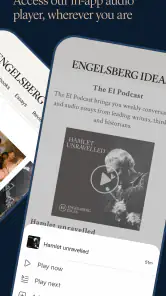
My usual flow starts with scanning the available editorial material and choosing the format that matches my attention. If I am sitting at a desk, an essay or analytical piece is the natural choice. If I am walking, commuting or doing routine work, a podcast is more practical. This division is one of the app’s clearest advantages because it lets the same broad interests fit different parts of the day.
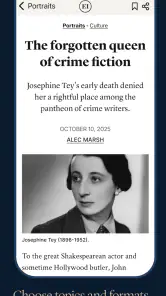
I prefer to read an essay when I need to examine the structure of an argument. Written material allows me to slow down at a difficult passage, reread a name or concept and make a mental connection with something I already know. Podcasts change the experience. They are better when I want a guided discussion or a more conversational route into a topic, although listening is less convenient when I need to verify a detail or compare several points quickly.
That is the first non-obvious trade-off: the choice between reading and listening is not just about convenience. It changes how actively I can test the argument. I use audio for orientation and written pieces for closer examination. If I begin with a podcast, I often treat it as a map of the subject, then move to related written material when I need more precision.
Another useful habit is to separate discovery from evaluation. During the first pass, I ask whether the topic is relevant to my question. I do not try to settle every disagreement immediately. On a second pass, I look at the reasoning, the historical framing and the assumptions behind the conclusion. This prevents a compelling presentation from becoming an automatic opinion. The app encourages thoughtful consumption, but the responsibility for critical reading still belongs to me.
Turning one item into a personal learning route
A strong session does not always end when one article or podcast ends. I use the first item to identify terms, periods, places or arguments that deserve another search inside the app. That creates a more useful route than jumping randomly from one headline to another. The result is a chain of related questions: first the context, then the interpretation, then the wider cultural or political consequence.
This is where the app can serve students, teachers, writers and curious general readers particularly well. It gives a starting point for background research without pretending to replace a full academic library. I would use it to prepare for a discussion, develop questions before reading a book or gain enough orientation to understand a longer debate. I would not use one article as the only source for a serious paper or a high-stakes decision.
A practical workflow is to keep a short note outside the app with three headings: the main claim, the evidence or reasoning that supports it, and the question that remains open. This simple method makes the content more useful after the session. It also exposes a limitation: the app is most rewarding when I bring my own structure. Someone looking for automatic summaries, extensive note tools or a ready-made study system may find the experience less complete.
The free price makes experimentation easy. I can try a subject without first deciding whether a subscription or purchase is worth it, which lowers the barrier for occasional readers. At the same time, free access does not automatically make every item relevant to every person. The real cost is attention. If I am not interested in historical, geopolitical or cultural discussion, there is little reason to keep returning simply because the download costs nothing.
Where the handoffs happen
The most important handoff is from the app to my own thinking. Essays, analysis and podcasts provide the material, but the useful outcome appears only when I connect it with the question that brought me there. I often pause after a piece and explain its central point to myself in one sentence. If I cannot do that, I either need to reread it or accept that the topic was not presented in a way that worked for me.
There is also a handoff between formats. Moving from a written piece to a podcast can make a subject feel more approachable, while moving from audio to text can restore detail. I would not assume that one format is always superior. Audio is excellent for building familiarity during a walk, but it is a poor substitute for close reading when the argument depends on distinctions or a sequence of historical events.
A third handoff occurs when I share the idea with another person. This app is well suited to conversations because its subject matter naturally raises questions rather than ending with a simple update. I might mention an argument during a dinner discussion or use an episode as a prompt for a reading group. The limitation is that a thoughtful conversation still needs context; forwarding a title alone may not communicate why the piece matters.
For families, the age rating is Everyone, which makes the app broadly accessible from a classification perspective. That does not mean every topic will suit every child. Historical violence, political conflict or difficult cultural questions may need an adult explanation. I would introduce younger readers selectively and discuss the material with them rather than treating the age label as a guarantee of simple content.
What the workflow produces
When the workflow succeeds, I finish with more than a fact. I have a frame for understanding a subject, a clearer sense of the competing ideas and a better question for the next step. That is a meaningful result for an app in the news and magazines space. It does not merely fill spare minutes; at its best, it turns spare minutes into a focused encounter with an argument.
I also appreciate that the app can fit different levels of commitment. A short listening session may be enough to decide whether a topic deserves attention. A longer reading session can then deepen the subject. This makes it practical for people whose schedules change throughout the day. I can use it casually without losing the option of taking a more serious route when a subject catches my attention.
The developer, Engelsberg Ideas, has created a focused identity rather than trying to cover every possible kind of news. That focus is helpful because I know what sort of material to expect. The published average is 5.0 from around 150 ratings, and the app has passed 10 thousand installs, so there is clear early interest. I treat those figures as encouraging context, not as proof that every reader will share my experience.
The current version is 1.4, and it runs on Android 8.0 or later. That minimum requirement should suit many older devices, which is useful if I want to keep a dedicated reading phone or an older tablet for long-form material. I would still check the device experience personally before building a daily routine around it, because compatibility alone does not determine how comfortable reading or listening will feel.
Where the flow breaks down
The first break happens when I need immediacy. If a major event is changing minute by minute, I would choose a live news source first and return here for depth afterward. Engelsberg Ideas is not the right first stop for emergency information, market movements or rapid local updates. Its deliberate character is an advantage for reflection, but a disadvantage when timing is the main requirement.
The second break affects readers who want a highly personalized feed. I enjoy selecting a subject and following my own route, but someone who expects an algorithm to learn every preference, produce a perfectly tailored homepage or reduce all reading to short summaries may find the process too hands-on. The app rewards curiosity and patience more than passive scrolling.
There is also a possible friction in the difference between intellectual interest and practical action. An essay can clarify a geopolitical issue without telling me exactly what to do next. That is not a flaw in serious analysis, but it matters if I am looking for service journalism, local guidance or a direct answer. I use the app to improve my understanding, then consult more practical sources when I need instructions, schedules or immediate decisions.
Podcasts create their own limitation. Listening is convenient, but it competes with other audio and does not always suit a crowded commute or a noisy environment. I would not judge the app solely through its audio side. If I am mainly a reader, the written material is likely to be the stronger reason to return; if I mainly listen, I should accept that audio is better for continuity than for quick reference.
Finally, the app is not ideal for someone who dislikes open-ended subjects. History, geopolitics and culture rarely produce one-line conclusions, and the material may leave me with further questions rather than a neat answer. I see that as part of its purpose, but readers who prefer quick summaries, entertainment news or a simple daily briefing should choose a more specialized alternative.
Who I would recommend it to
I would recommend Engelsberg Ideas to a reader who wants a calmer alternative to headline-heavy browsing and enjoys following ideas across history, geopolitics and culture. It is particularly useful for building background knowledge, preparing for a discussion, finding a thoughtful listening option or turning a broad curiosity into a manageable learning session.
I would also recommend it to anyone who switches naturally between reading and listening. The ability to choose the format that matches the moment makes the app easier to use consistently. My tip is to listen when first approaching an unfamiliar subject, then read when you need to challenge, remember or explain the argument. That two-stage workflow extracts more value than treating every item as disposable content.
I would skip it if my main need is breaking news, local information, quick fact lookup or a highly automated feed. I would also look elsewhere if I wanted a complete academic reference system with formal citations, extensive annotation and a structured course plan. Engelsberg Ideas can support those activities, but it is not a substitute for the tools designed specifically for them.
For me, the app succeeds because it gives attention a direction. I can start with a vague question, choose an essay or podcast, move between formats, test the argument and leave with a more informed view. The free access and Everyone rating make it easy to try, while the focused subject range tells me exactly when it is likely to be useful. My recommendation is to use it intentionally: open it when you want context, not noise.
After using it in that way, I see Engelsberg Ideas as a worthwhile addition to a personal news and learning routine. It will not replace a live news app, a research database or a practical information service, and it should not be judged by those standards. Its better role is quieter and more specific: helping me turn spare time into informed reflection, one carefully chosen question at a time.
Pros
- Simple interface makes ideas easy to browse and understand.
- Useful inspiration for creative projects and everyday problem-solving.
- Content can be explored quickly without a complicated learning curve.
- Suitable for users looking for fresh concepts in one place.
- Lightweight design should work well on most modern mobile devices.
Cons
- Some ideas may feel too general for users seeking detailed guidance.
- The app may offer limited options for saving or organizing favorites.
- Content quality can vary between different ideas and categories.
- Users may need an internet connection to access all available content.
- It may not provide enough depth for professional or highly specific projects.

- Category
- News & Magazines
- Version
- 1.4