Elseway: Into the Story
- 87.00
- 3.7
- Installs
- 10.00K
- Price
- Free

Screenshots
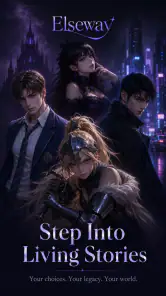
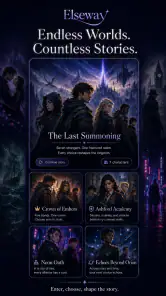
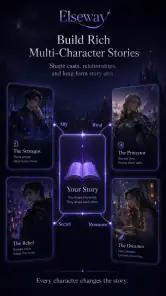
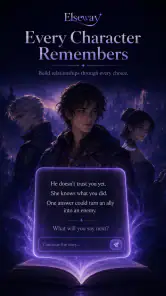
Analysis by Reviewed
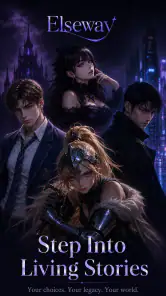
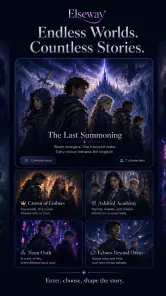
Elseway: Into the Story is an entertainment app built around one clear idea: multi-character AI stories. Instead of reading a fixed story from beginning to end, I found myself exploring conversations and situations shaped by several characters at once. That difference matters because the experience feels less like opening a digital book and more like stepping into a scene where different personalities can influence what happens next.
I reviewed it as a free app from OffAtom Inc., and my first impression was that it is aimed at people who enjoy experimenting with fictional situations rather than simply consuming a finished narrative. The app is rated for Teen users, runs on devices using Android 7.0 or later, and its current version is 1.4.4. Those details make it fairly approachable from a device-compatibility point of view, although the age rating is worth taking seriously before handing it to a younger reader.
The store summary is brief, but the practical appeal is easier to understand after spending time with the concept: Elseway gives character interaction the leading role. I would recommend it to someone who likes imagining alternate conversations, testing how personalities clash, or using fiction as a quick escape during a quiet part of the day. I would not recommend it to someone who wants a polished, tightly edited novel with a guaranteed ending.
Why the multi-character approach changes the experience
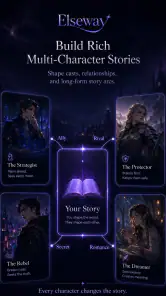
The most important capability here is not simply that the app uses artificial intelligence. It is that the story is presented through multiple characters rather than one isolated narrator. That creates a different kind of attention. I was not only asking myself what would happen next; I was also watching how one character’s attitude might alter another character’s response.
In a conventional story app, the writer controls the order, tone, pacing, and outcome. That can be satisfying, especially when the writing is strong, but it also means the reader’s role is mostly observational. Elseway is more interesting when I treat it as a space for interaction. The enjoyment comes from trying a direction, noticing the reaction, and deciding whether to continue naturally or deliberately push the situation somewhere unexpected.
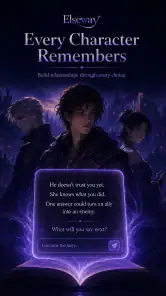
This format is particularly effective for scenes that depend on disagreement. A group conversation can feel more alive than a single-character exchange because the characters do not all serve the same purpose. One may create tension, another may soften it, and a third may introduce a new angle. Even when the result is uneven, the presence of several voices gives the story a social shape that ordinary chatbot conversations often lack.
That is also the app’s main creative strength. A standard AI chat can be useful for asking questions or role-playing with one persona, but it often feels like a direct exchange with a single assistant. Elseway is better suited to users who want a small cast and the feeling of entering an unfolding scene. The trade-off is that a multi-character experience can be harder to control. More voices mean more possibilities, but they can also make the direction less predictable.
More From Our News Desk

Clash of Clans Is Won Between the Battles

Android Auto Makes the Case for Quieter Car Software

MobiOffice: Transforming Mobile Productivity with Seamless Integration

EA SPORTS FC™ Mobile Soccer: Redefining Mobile Sports Gaming

How Microsoft OneDrive Became a Mobile Productivity Giant

How Google Translate Breaks Language Barriers Effortlessly
I found it helpful to think of the app as an improvisation partner, not as a replacement for a traditional author. If I approached it expecting a perfectly structured plot, I was more likely to notice the rough edges. When I approached it as a way to explore a premise, test a relationship, or see how a scene might develop, the format made much more sense.
How I would use a scene instead of merely reading it
The best results come from giving the interaction a clear intention. A vague request such as “make this interesting” leaves too much room for the story to wander. A more useful approach is to decide what kind of tension I want: a misunderstanding that needs resolving, a secret that gradually comes out, a disagreement between friends, or a decision where every character has a different priority.
That small change in approach is one of the most useful lessons I took from the app. I would begin with the situation, then pay attention to which character is driving the scene. If the conversation becomes too calm, I can introduce a complication. If it becomes chaotic, I can narrow the focus to one decision. This makes the experience feel more intentional without turning it into a rigid writing exercise.
Another practical tip is to let the characters disagree without immediately correcting the scene. The temptation with AI storytelling is to steer every line toward the answer I already have in mind. That removes much of the surprise. With Elseway, I get more value when I allow an awkward response or an unexpected objection to become material for the next turn.
For writers, this can work as a quick brainstorming tool. I would not treat the generated exchange as finished prose, but I could use it to test whether a conflict has enough energy or whether two personalities sound too similar. A scene that collapses quickly may reveal that the premise needs a stronger goal. A scene that keeps producing different reactions may point toward a more promising story idea.
For readers, the workflow is simpler. Pick a situation, follow the exchange, and intervene when the direction becomes interesting. The app is not at its best when I passively wait for a complete narrative to arrive. Its value comes from the back-and-forth, so users who enjoy making small choices and observing consequences will probably get more from it than users who prefer uninterrupted reading.
A realistic everyday situation where it fits
Imagine having fifteen quiet minutes on a commute or during a break. I would not open Elseway expecting to finish a long story. Instead, I would use it to explore a compact scenario: three people preparing for an important conversation, with each person wanting a different outcome. One character might avoid confrontation, another might demand honesty, and the third might be hiding the reason the meeting matters.
That kind of setup works because it gives the multi-character format something to do. The point is not merely to generate more dialogue. The point is to see how competing motives reshape the conversation. I could let the scene develop for a few turns, then ask what happens if one character changes their mind or reveals a detail at the worst possible moment.
This makes the app a better fit for short creative breaks than for long, uninterrupted sessions. It can provide a focused mental diversion without requiring the commitment of a full game or novel. At the same time, anyone who needs a completely predictable experience may find the open-ended quality distracting rather than relaxing.
I also see a use for people who enjoy collaborative storytelling but do not always have someone available to play every role. Elseway can provide the feeling of a small cast in one place. It does not replace the humor or spontaneity of real friends, but it can help someone get a scene moving when they want to experiment alone.
Where the app feels stronger than usual alternatives
Compared with a conventional entertainment app that serves finished videos, articles, or books, Elseway gives me more agency. I can influence the direction rather than simply selecting the next episode. That makes it more personal, but also more dependent on my willingness to participate.
Compared with a single-character AI chat, the multi-character structure is the meaningful distinction. A one-to-one conversation can feel intimate and easy to follow, while Elseway is more useful for situations involving alliances, misunderstandings, competing goals, or group pressure. If the appeal is watching several personalities react to the same event, this app has a clearer identity than a general chatbot.
Compared with a story-driven game, it appears less focused on conventional progression and more focused on the scene itself. A game usually gives me systems, objectives, and a defined sense of advancement. Elseway is more flexible, but that flexibility can feel less rewarding for someone who wants achievements, levels, or a strong mechanical challenge. I would choose the app for imaginative interaction, not for traditional game progression.
Compared with a writing assistant, it is more entertaining and less task-oriented. A writing tool may be better when I need an outline, polished wording, or direct editing help. Elseway is more valuable when I want to discover possibilities through character behavior. That distinction prevents disappointment: it can support creative thinking, but it should not be judged as a full editorial workspace.
The trade-offs I noticed before recommending it
The first limitation is unpredictability. Multi-character AI storytelling can produce an engaging turn, but it can also lose the thread or make a character behave in a way that feels inconsistent. For casual exploration, that may be part of the fun. For anyone looking for carefully controlled continuity, it is a genuine weakness.
The second issue is that the quality of the experience depends on how actively I guide it. Users who give no direction may receive scenes that feel generic or unfocused. The app rewards a little preparation: define the setting, explain the conflict, and make clear what each character wants. That is not difficult, but it means the app is not entirely effortless entertainment.
There is also a financial point to consider. The app is free to download, while in-app purchases range from $5.99 to $359.99 per item. I would therefore approach the purchase screen carefully and decide in advance whether the free experience is enough for my needs. The wide range means the app can be tried without an initial payment, but it also makes it important not to assume that every part of the experience is included at no cost.
The Teen content rating is another practical consideration. I would not treat an AI story app as automatically suitable for children simply because it is presented as entertainment. Parents should make their own judgment about whether the themes and interactions fit the individual user. For teens and adults, the rating is a useful reminder to use the app with the same awareness applied to other open-ended storytelling platforms.
Privacy and screen-time habits are also worth handling sensibly, even without making the app feel complicated. I would avoid entering personal details into fictional scenarios, especially when a made-up version works just as well. I would also set a stopping point, because open-ended scenes can encourage repeated “one more turn” use without providing the clear endpoint of a chapter or level.
Small techniques that make the multi-character format better
My first technique would be to assign each character a distinct objective rather than only a personality label. “Funny” and “serious” can be too shallow. “Wants to leave before the truth comes out” and “needs everyone to stay until a decision is made” create more useful friction. The difference gives the characters something concrete to pursue.
Second, I would introduce information gradually. If every secret appears immediately, the scene has nowhere to build. Holding back one important fact lets the characters react in stages. This is especially useful when the goal is suspense or emotional tension rather than a quick joke.
Third, I would occasionally change the question instead of asking for a longer continuation. Asking what each character believes, what they misunderstood, or what would make them walk away can produce a more revealing direction than simply saying “continue.” This turns the app into a tool for examining the scene, not just extending it.
Finally, I would save any promising idea outside the conversation if I planned to develop it later. An improvised exchange can be useful raw material, but it is not automatically a finished outline. Separating inspiration from final writing helps me keep control of the story and prevents the generated material from becoming a substitute for revision.
Who gets the most from Elseway
The strongest audience is people who enjoy interactive fiction, character-driven scenes, role-play, and creative experimentation. It should also appeal to readers who like asking “what if?” and seeing how a small change affects a group dynamic. The app is especially suitable for someone who wants entertainment that responds to participation rather than a passive stream of content.
It may be useful for aspiring writers who need a fast way to pressure-test character motives. The important word is “pressure-test.” I would use it to discover conflicts, compare possible reactions, or break through a blank page, then rewrite the best ideas myself. Someone seeking professional-grade editing, consistent long-form continuity, or a dependable manuscript generator should choose a dedicated writing application instead.
People who prefer structured games may also want to skip it. If your ideal evening involves clear rules, measurable progress, and a definite objective, the open-ended format may feel loose. Likewise, readers who want a finished story with carefully planted details may be happier with an interactive novel or a conventional book.
The app’s current audience is still relatively modest, with over ten thousand installs and an average rating of 3.7 from around a hundred ratings. Those figures suggest that it is worth approaching as an emerging, experimental entertainment product rather than as a universally polished standard. I would judge it by whether its central format matches my interests, not by expecting the maturity of a long-established platform.
In my experience, Elseway: Into the Story is most successful when I use it deliberately: choose a compact premise, give the characters different motives, and treat unexpected turns as prompts for exploration. It is less convincing as a replacement for a finished novel or a conventional game, and the in-app purchase range means I would try the free version carefully before spending anything.
Still, the central idea has real appeal. If you want to explore how several fictional personalities react to the same situation, this is the part of Elseway worth trying first. OffAtom Inc. has built the experience around interaction rather than passive viewing, and that makes it a distinctive choice in entertainment. I would recommend it to curious readers, hobby writers, and role-play fans who enjoy shaping a scene; I would steer everyone else toward a more structured alternative.
Elseway: Into the Story Frequently Asked Questions
What does the Teen age rating mean for Elseway: Into the Story?
Elseway: Into the Story has a Teen content rating, so it may be a better fit for older children, teenagers, and adults than for young players. Parents and guardians should consider whether a story-focused entertainment app is appropriate for the person using it, and can review the experience together. The rating is a useful starting point when deciding whether to download it for a younger user.
What is Elseway: Into the Story?
Elseway: Into the Story is an interactive narrative game focused on choice-driven storytelling. You guide the characters through conversations, discoveries, and important decisions that can influence how events unfold. Rather than relying on traditional action gameplay, it emphasizes atmosphere, exploration, mystery, and personal involvement, making it a good choice for players who enjoy story-rich experiences where their decisions feel meaningful.
How does the gameplay and decision system work?
The main gameplay revolves around exploring scenes, reading dialogue, examining clues, and selecting responses or actions at key moments. Your choices can affect relationships, the direction of conversations, and the way certain story events are revealed. It is worth paying attention to details because some options may only become available after you investigate the environment or understand a character’s situation.
Is Elseway: Into the Story suitable for casual players?
Yes, the game is generally accessible to casual players because it does not demand fast reflexes, complex controls, or extensive gaming experience. Most of the experience is paced around reading, observation, and decision-making. However, players should be comfortable with a narrative format and be willing to take their time, since the enjoyment comes from following the plot and considering the consequences of different choices.
Does Elseway: Into the Story require an internet connection?
Whether a permanent internet connection is required can depend on the platform version, installation process, and any updates or online features provided by the developer. It is safest to download the game while connected to a reliable network and check its store listing for the latest requirements. Players should also allow enough storage space for the initial installation and possible additional content.
Pros
- Atmospheric storytelling creates a strong sense of mystery and immersion.
- Exploration rewards curiosity with hidden details and optional discoveries.
- Distinctive visual style gives the game a memorable identity.
- The narrative encourages players to interpret events and form their own theories.
- Well suited to players who prefer thoughtful
- slower-paced experiences.
Cons
- The deliberate pace may feel too slow for players seeking constant action.
- Some story elements can be cryptic and require patience to understand.
- Replay value may be limited once the main narrative has been completed.
- Exploration can occasionally feel unclear when the next objective is uncertain.
- Performance and loading times may vary across older mobile devices.
- Category
- Entertainment
- Version
- 1.4.4