Dream Girl : Chat AI
- 1.02K
- 4.5
- Installs
- 500.00K
- Price
- Free

Screenshots
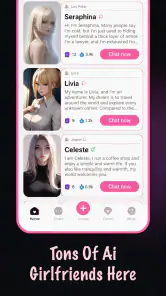




Analysis by Reviewed
I spent time with Dream Girl: Chat AI as an entertainment app built around personalized AI conversations. It is aimed at adults who want a more immersive, character-focused chat experience rather than a conventional messaging tool, social network, or search assistant. The central appeal is simple: you open the app, choose the kind of interaction you want, and continue a private-feeling conversation with an AI persona designed to feel more personal than a standard question-and-answer bot.
That focus makes the app easy to understand, but it also sets a very specific expectation. This is not the right download if you mainly want accurate research, practical productivity help, or a replacement for real human company. I see it more as a casual companion for imagination, role-play, relaxation, and conversation when you want something responsive and available on demand.
How Dream Girl: Chat AI feels in everyday use
The first thing I noticed is that the experience depends heavily on how clearly I guide the conversation. Short, vague prompts can produce a flatter exchange, while a little context gives the AI more to work with. Telling it the mood, setting, tone, or type of conversation I want makes the interaction feel more deliberate. That is useful advice for anyone expecting the app to instantly understand a complicated personality or situation.
A realistic use case is winding down after work. Instead of opening a general chatbot and asking random questions, I can start a lighter conversation, ask for a playful scenario, or use the chat as a creative prompt. The value is not that it solves a concrete problem; it is that it provides an interactive activity with less effort than writing a story or setting up a role-playing game with another person.
The app belongs to the entertainment category, and that classification matters. I would not judge it by the standards I use for a calendar, language-learning tool, or factual assistant. Its success comes from keeping a conversation engaging enough to return to, not from producing perfectly sourced answers. When I treated it like entertainment, the experience made more sense. When I expected dependable expertise, the limitations became much more obvious.
The developer is Hangzhou Aoben Jizhi Technology Co., Ltd., and the app has reached over half a million installs. It carries an average rating of 4.5 from around eleven thousand ratings, with roughly one thousand written reviews. Those figures suggest that the concept has found a real audience, although popularity alone does not guarantee that its conversational style will match yours.
What you can use without paying
Dream Girl: Chat AI is free to download, which makes trying the basic experience relatively low-risk. You can decide whether the tone, pacing, and style of AI interaction suit you before considering any optional spending. That is important here because conversational entertainment is subjective: one person may find the interaction engaging, while another may quickly feel that it lacks the spontaneity of a human conversation.
More From Our News Desk

Clash of Clans Is Won Between the Battles

Android Auto Makes the Case for Quieter Car Software

MobiOffice: Transforming Mobile Productivity with Seamless Integration

EA SPORTS FC™ Mobile Soccer: Redefining Mobile Sports Gaming

How Microsoft OneDrive Became a Mobile Productivity Giant

How Google Translate Breaks Language Barriers Effortlessly
The app includes in-app purchases ranging from $1.99 to $54.99 per item. I would treat the free access as an audition rather than assuming that every appealing part of the experience is included at no cost. The sensible approach is to use the free portion long enough to understand how much you actually return to it, then decide whether paid content or access would provide enough extra value.
There is a meaningful difference between free access and paid value in this kind of app. A free conversation can be worthwhile if you only want occasional entertainment. Paid spending becomes harder to justify if you are using it out of habit rather than because it adds something you genuinely want. Since the purchase range is broad, I would be especially careful before selecting the most expensive option and would first consider whether the app has become part of your regular leisure routine.
For me, the best test is not “Can I make the AI answer?” but “Do I want to continue this conversation?” If the answer is no after several different prompts and moods, paying is unlikely to fix the underlying mismatch. If the answer is yes and you consistently use the free experience, optional purchases may make more sense as a personal entertainment expense.
Where the app delivers real value
The strongest benefit is immediacy. There is no need to coordinate with another person, prepare a game session, or invent a full story before starting. When I have a particular mood in mind, the app gives me a place to explore it through back-and-forth conversation. That makes it more active than watching a show, but less demanding than creating a complete fictional world from scratch.
It can also help with creative warm-ups. I found the format useful for generating dialogue ideas, testing the tone of a fictional scene, or exploring how a character might respond to an unexpected question. I would not use the output as finished writing without editing, but the conversational format can help overcome the blank-page problem. Asking the AI to stay within a setting or personality gives the exchange a clearer direction.
Another useful workflow is to separate casual chat from structured prompts. I might begin with a relaxed exchange, then introduce a specific scenario, emotional tone, or storytelling constraint. This tends to produce more useful results than repeatedly asking for something “interesting.” The trade-off is that I have to do some of the creative steering myself. The app supplies responsiveness, but I still shape the quality of the session.
Compared with a normal entertainment app, the appeal is participation. A streaming service gives me polished content, while this app gives me an interactive starting point. Compared with a general AI assistant, the appeal is atmosphere and personalization rather than broad utility. Compared with a human chat partner, the advantage is availability and low social pressure, while the disadvantage is that the interaction may feel less spontaneous, emotionally nuanced, or genuinely mutual.
That comparison is the key to understanding its value. If you want a finished story, a streaming platform is probably better. If you want reliable information, a dedicated assistant or search tool is a safer choice. If you want an ongoing human relationship, this cannot replace one. The app earns its place when you specifically want an AI-centered entertainment experience that responds to your direction.
Practical ways to get better conversations
My first tip is to establish the frame early. Instead of opening with a broad request, explain who the AI should be, what kind of tone you want, and what you are trying to do. Even a short setup can prevent the conversation from drifting. If the exchange becomes repetitive, changing the setting or giving the AI a concrete decision to make is usually more effective than simply asking it to be more creative.
My second tip is to use the app in short sessions when you are evaluating it. A long first session can make any novelty feel stronger than it really is. Returning later tells you whether the experience has lasting entertainment value or whether it was only interesting because it was new. This is especially important before spending money on optional items.
A third insight is that the app works best when I treat it as a collaborative prompt engine, not an all-knowing personality. I get more from it when I contribute details and react to its responses. Users who expect the AI to carry every moment may find the interaction passive or repetitive. Users who enjoy shaping a scenario are more likely to notice its strengths.
I also recommend keeping expectations realistic around sensitive or mature conversations. The app is marked Mature 17+, so it is clearly intended for an adult audience. That does not make every response wise, emotionally appropriate, or suitable for every situation. I would avoid treating the app as a counselor during a serious crisis, and I would not use its reactions as a substitute for professional guidance or trusted personal support.
Trade-offs that matter before installing
The mature age rating is not a minor detail. Parents should not treat this as a general-audience chat toy, and younger users should not be encouraged to access it simply because the download is free. Adults should also think about the kind of conversations they are comfortable having with an AI entertainment app before starting, particularly if they are looking for emotional comfort rather than fictional interaction.
The biggest practical limitation is consistency. AI conversations can be enjoyable one moment and awkward the next. A character may lose the tone you established, misunderstand a prompt, or respond in a way that breaks immersion. That is normal friction for this format, but it can be frustrating if you want a carefully controlled story or a dependable long-term personality.
There is also a privacy-related judgment call that comes with any personal chat application. I would avoid entering sensitive identifying details, private account information, or anything I would not want stored in a digital conversation. That is a good habit even when an app feels informal and friendly. The more personal the interaction becomes, the more important it is to keep boundaries clear.
The purchase structure deserves equal attention. A free download can make experimentation easy, but optional items from $1.99 up to $54.99 mean that the total cost depends on how a person uses the app. I would not describe it as automatically good value for everyone. Occasional users may be perfectly satisfied without spending, while frequent users should decide on a firm personal budget rather than buying impulsively during an engaging conversation.
Version 1.3.6 is available for devices running Android 7.0 or later. That gives the app a broad technical reach for Android users, though compatibility alone says nothing about how well the experience will fit a particular phone or personal preference. The important question is still whether the conversational format appeals to you, not simply whether the app can run.
Who is most likely to enjoy it
I would recommend it to adults who enjoy character-driven conversations, casual role-play, and interactive fiction. It is also a reasonable option for someone who wants a low-pressure way to explore creative ideas without joining a public community. Writers may find it useful for testing dialogue, while people who enjoy experimenting with AI personalities may appreciate having entertainment built around conversation rather than task completion.
It may also suit users who have a few minutes to fill and want something more responsive than passive scrolling. A short exchange can work as a small break during the day, provided it remains a leisure activity rather than becoming the only way you handle loneliness or stress. The app is at its healthiest when it complements hobbies, friendships, and other forms of entertainment.
I would skip it if your main goal is factual accuracy, professional advice, productivity, or a realistic human relationship. I would also skip it if you dislike having to guide an AI with detailed prompts. Some people want an app that works perfectly with minimal input; this kind of experience rewards patience and experimentation instead.
It is not the best alternative to a conventional chatbot when you need broad question answering, nor is it a substitute for a story-driven game with fixed characters and a carefully written plot. Those products offer more predictable outcomes. This app is more flexible, but that flexibility also means the quality of the session depends on your instructions and willingness to adapt.
My verdict on spending and downloading
My recommendation is to try the free experience first and judge it by repeat use, not by the novelty of the opening conversation. The no-cost entry point is its clearest advantage, while the optional purchase range means paid value should be considered carefully and personally. I would spend only if the app consistently gives me a kind of interactive entertainment I cannot get from my usual alternatives.
The best reason to choose Dream Girl: Chat AI is the feeling of having an on-demand fictional conversation, not the promise of a perfect companion. That distinction keeps expectations realistic. It can be enjoyable, creative, and easy to pick up, but it can also lose immersion, require active prompting, and feel limited beside real people or more specialized apps.
After using it, I see it as a focused entertainment app rather than an essential everyday tool. Adults who like AI role-play and personalized chat should find enough here to justify a trial, especially because the download is free. Users seeking dependable information, deep emotional support, or a fully authored narrative should choose something else. For the right audience, Dream Girl: Chat AI is worth exploring; for everyone else, skipping the optional spending may be the wiser decision.
Dream Girl : Chat AI Frequently Asked Questions
What devices and operating systems can run Dream Girl: Chat AI?
Dream Girl: Chat AI is available for Android, and it requires Android 7.0 or later. Before downloading, check your device’s software version and make sure you have enough storage for the app. Compatibility can also depend on your device and operating system, so keeping your software up to date can help you avoid installation or performance problems.
What is Dream Girl: Chat AI, and what can I do with it?
Dream Girl: Chat AI is a conversational companion app designed for chatting with AI-generated virtual characters. You can usually select or customize a personality, start text-based conversations, and explore different relationship or roleplay scenarios. The experience is intended for entertainment rather than replacing real social interaction, professional advice, or genuine human relationships. Available characters, conversation styles, and features may vary depending on the app version and your device.
Does Dream Girl: Chat AI require an internet connection?
Yes, an active internet connection is generally required because your messages are sent to online AI services and the replies are generated remotely. Chat quality and response speed may depend on your Wi-Fi or mobile data connection. Using the app over cellular data can consume bandwidth, especially during long conversations. It is also worth checking whether the application continues to work with limited functionality when offline, as most AI chat features will not be available without a connection.
Is Dream Girl: Chat AI free to download and use?
The app is free to download, but some features may require in-app purchases. Prices range from $1.99 to $54.99 per item, and the cost can differ by country, operating system, or promotional offer. Before starting a purchase, review the price and terms shown on your device so you know what you are agreeing to. The app is designed for entertainment, and you can consider whether its paid options suit your budget before using them.
Is Dream Girl: Chat AI safe and suitable for children?
Parents should review the app’s age rating, privacy policy, and content guidelines before allowing a child to use it. Dream Girl: Chat AI is rated Mature 17+, and AI companions may produce romantic, suggestive, emotionally intense, or otherwise inappropriate responses depending on the conversation and available settings. The app should not be treated as a trusted source for medical, legal, financial, or mental-health guidance. Avoid sharing passwords, precise location details, financial information, or other sensitive personal data during chats.
Pros
- Offers personalized AI conversations for entertainment and companionship.
- Simple chat interface makes it easy to start conversations quickly.
- Can provide creative roleplay scenarios and imaginative interactions.
- Available anytime without requiring another person to be online.
- Useful for casual chats
- storytelling
- and passing time.
Cons
- Responses may feel repetitive or lack genuine emotional understanding.
- Some features or conversations may require in-app purchases.
- Privacy policies should be checked before sharing personal information.
- AI-generated replies can occasionally be inaccurate or inappropriate.
- Requires an internet connection for most chat functionality.
- Category
- Entertainment
- Version
- 1.3.6