dotdotdot Fantasy AI Boyfriend
- 199.00
- 4.1
- Installs
- 100.00K
- Price
- Free

Screenshots



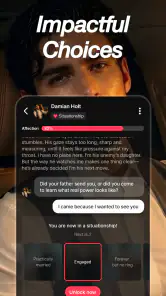

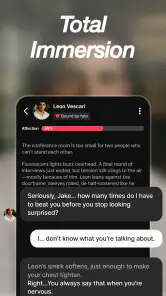


Analysis by Reviewed
I approached dotdotdot Fantasy AI Boyfriend as an entertainment app for people who want an ongoing, text-based fictional connection rather than a conventional game with levels, objectives, or a fixed storyline. Its central idea is simple: you chat with an AI character and help shape the direction of the story through your messages. In practice, that makes the experience feel closer to interactive fiction mixed with casual conversation than to a traditional dating simulator.
That distinction matters. If you enjoy writing prompts, exploring imagined personalities, and seeing a conversation develop in unexpected directions, the format can be absorbing. If you want a tightly authored plot, predictable character behavior, or a purely passive way to watch a story unfold, I think the app may feel less satisfying. My overall impression is that its appeal comes from participation: the more clearly I communicated what I wanted from the scene, the more useful the experience became.
Dotdotdot Inc. presents it as a free entertainment app with a Mature 17+ age rating. It has reached over 100 thousand installs and holds a 4.1 average from around 1.3 thousand ratings, which suggests a meaningful audience without making it look universally loved. The app was released on April 3, 2025, and the current version is 1.0.34. Those details place it firmly in the newer generation of AI chat entertainment, where the quality of the conversation is more important than a large collection of conventional media features.
How the experience reads and navigates
The first thing I noticed about this kind of app is that readability is not just a visual concern. It is also about whether I can understand the conversational state. A normal chat interface is familiar, but an AI story can become confusing when the character changes tone, forgets a detail, or moves the scene forward faster than I expected. I found it easier to stay oriented when I treated each exchange as a small scene instead of expecting the app to maintain the precision of a carefully edited novel.
For readers who prefer short, manageable interactions, the format has a natural advantage. I can send one thought at a time, read the response, and decide whether to continue. That is less demanding than navigating a large entertainment app with many menus, maps, inventories, or visual panels. Someone who gets tired when processing dense screens may appreciate the conversational rhythm, especially when using the app for a few minutes rather than attempting a long session.
At the same time, text-based interaction can become visually tiring. Long replies require sustained reading, and the emotional meaning of a response may depend on subtle wording rather than obvious visual cues. I would not assume that the app is comfortable for every reader simply because it uses chat. People with dyslexia, limited vision, attention difficulties, or language-processing challenges may need to adjust their device’s text and display settings, take frequent breaks, or keep their messages short.
A useful personal workflow is to establish the tone at the start of a session. I might write that I want a calm conversation, a playful scene, or a short exchange with clear replies. This does not guarantee perfect consistency, but it reduces the mental effort of correcting the direction later. It also gives me a quick way to test whether the character’s responses suit me before I invest more time in the conversation.
More From Our News Desk

Clash of Clans Is Won Between the Battles

Android Auto Makes the Case for Quieter Car Software

MobiOffice: Transforming Mobile Productivity with Seamless Integration

EA SPORTS FC™ Mobile Soccer: Redefining Mobile Sports Gaming

How Microsoft OneDrive Became a Mobile Productivity Giant

How Google Translate Breaks Language Barriers Effortlessly
Navigation is easiest when I focus on the current exchange rather than trying to treat every reply as permanent story canon. AI-generated storytelling can be fluid, and that flexibility is part of the appeal. It is also a reason to keep important preferences in simple language. If a particular subject, tone, or pacing matters to me, I repeat it plainly instead of relying on a subtle hint from several messages earlier.
Compared with ordinary romance novels, the app offers more control but less editorial certainty. A novel gives me polished prose, stable characterization, and a clear route through the story. Compared with standard chat apps, this experience is more imaginative and role-oriented, but less dependable as a real human conversation. Those differences are important for anyone deciding whether the interface will feel liberating or frustrating.
Making conversations easier to follow
I found that concise prompts are more practical than trying to write a full script in every message. A short instruction about the setting, mood, and desired pace gives the conversation room to develop without making the exchange feel like a technical task. When a reply goes off course, a direct correction works better than an indirect complaint. For example, I would restate the scene and specify what should happen next rather than asking the character to “be better.”
This approach also helps users who have limited energy for typing. A reusable opening sentence can establish the kind of interaction I want, after which I can answer with brief choices or reactions. The trade-off is that shorter prompts may produce less precise storytelling. Users who want detailed world-building will probably need to spend more time writing, editing, and steering the conversation.
The app’s free entry point makes experimentation straightforward, but the presence of in-app purchases ranging from $0.99 to $99.99 per item means I would avoid treating extended use as automatically cost-free. I recommend deciding in advance whether I am only testing the concept or planning regular use. That small boundary is especially helpful in an entertainment app where curiosity can encourage repeated spending.
Motor, sensory, and cognitive considerations
Typing is the main physical demand, so the experience may suit people who prefer tapping short messages over controlling a fast game. There is no need to coordinate rapid movement, aim, or multiple on-screen controls as part of the basic concept. For someone with limited fine-motor control, voice input offered by the phone may make composing messages easier, although the quality of that input depends on the device and operating system rather than on a feature I would attribute directly to the app.
That advantage has a clear limit: a conversation still requires reviewing the generated reply and deciding how to respond. Users with hand pain may be able to reduce typing by sending shorter prompts, but they cannot remove the need for interaction entirely. I also found that correcting a misunderstood message can require extra effort, so the app is not ideal when every additional tap or edit is difficult.
Sensory comfort varies widely with entertainment apps. A text conversation can be calmer than a game filled with animation, sound effects, and timed events. For people who are sensitive to visual motion or loud audio, that may make this format easier to approach. However, a quiet interface does not automatically mean a low-stimulation experience. Emotional intensity, unexpected turns, or lengthy replies can still be overwhelming, particularly for someone using the app when tired or stressed.
I would use it differently depending on my surroundings. On a crowded commute, I would keep the conversation short and avoid starting a complicated story that needs concentration. At home, I could take more time to steer the character and notice inconsistencies. This is one of the app’s practical strengths: it can fit into small slices of free time, but the quality of the experience improves when I am mentally available to read and respond.
For users with attention-related difficulties, the open-ended format is both helpful and risky. There is no fixed mission pushing me through a sequence, so I can stop after one exchange without losing progress in a conventional sense. On the other hand, the lack of a clear endpoint can encourage me to continue longer than intended. I would set a timer or decide on a number of exchanges before opening the app if I know that open-ended conversations tend to absorb my attention.
The Mature 17+ rating is another reason to think about context and personal boundaries. I would not treat the app as suitable for children or younger teens, and I would be careful about using it around other people who might see private or adult-oriented conversation on the screen. A privacy-conscious routine—such as avoiding public display, locking the device, and not sharing personal information in the chat—is sensible for any AI companion experience.
Who benefits from the flexible format
I think the app is most appealing to adults who enjoy improvisation and do not need every response to be perfectly consistent. It can also suit writers looking for a low-pressure way to test character ideas, provided they remember that an AI reply is a prompt for creativity rather than an authoritative writing partner. Someone who wants to practice expressing a mood or setting in a few sentences may find the back-and-forth useful.
People who rely heavily on speech, screen magnification, switch access, or other assistive tools should judge the app through their own device setup. The conversational structure may be simpler than a visually busy game, but that does not prove that every control or response is equally accessible. I would begin with a short session and check whether reading, composing, and correcting messages are comfortable before paying for anything.
The app is less suitable for anyone seeking dependable emotional support, factual advice, or a replacement for human relationships. Its fictional conversation can feel personal because it responds directly to me, but that should not be confused with human understanding or professional guidance. I would keep the experience in the entertainment category and avoid using it for decisions that require real expertise, accountability, or care.
Access in everyday situations
A realistic use case is a quiet evening when I want something interactive but do not have the energy for a full game or a long film. I can open a scene, describe the mood I want, and exchange a few messages before stopping. That is more engaging than scrolling through a passive feed, yet less demanding than learning a complex game system. The best part is that I can choose the pace instead of waiting for a fixed episode to reach its next dramatic moment.
Another use case is creative decompression after work. I might ask for a gentle, low-conflict scenario and use the conversation as a small imaginative exercise. The benefit is not that the app always produces a perfect scene; it is that I can redirect the tone quickly when I want something different. The limitation is that the same flexibility can weaken the feeling of a carefully planned narrative, so I would choose a conventional interactive story when plot structure matters more than personal control.
For users with limited data, battery, or screen time, the text-first nature may appear convenient, but I would still avoid assuming that every session is equally light on resources. The practical question is whether the app fits the user’s own connection and device conditions. If responses take too long or the interface becomes uncomfortable on an older phone, the conversational promise loses much of its value.
It runs on Android versions beginning with 7.0, which gives it a broad technical reach among Android users. That does not tell me how comfortable it will be on every screen size or with every customized display setting, so I would test the reading area and keyboard before committing to regular use. The current version, 1.0.34, is worth checking when troubleshooting because an update can change the feel of navigation or conversation handling.
One of my more useful habits was separating “story control” from “personal disclosure.” I can provide fictional details about a character or setting without sharing my real name, location, workplace, or private history. This gives me enough material to guide the scene while reducing the risk of turning a playful conversation into an unnecessary record of personal information. It is a small distinction, but it makes the app easier to recommend responsibly.
Where the usual alternatives work better
A standard messaging app is the better choice when I need reliable communication with a real person. A romance novel is better when I want polished writing and a stable emotional arc. A conventional dating simulator is usually better when I prefer authored choices, defined endings, and consistent character rules. This app occupies the space between those options: it offers more freedom than a fixed story and more fictional focus than ordinary messaging, but it cannot promise the strengths of either extreme.
Compared with general-purpose AI chat tools, its entertainment identity is more immediately relevant to users who want a character-driven exchange rather than research, drafting, or productivity help. The trade-off is that a specialized fantasy companion may not be the right tool for broad everyday questions. I would choose the app when the goal is imaginative interaction, not when I need a neutral assistant or a dependable information source.
Users who dislike repetition should approach with realistic expectations. AI character conversations can lose track of earlier details or respond in a way that feels generic. I found that giving the character a small, clear situation was more effective than expecting a long-running relationship to remain perfectly coherent without reminders. If continuity is the main reason I play, an authored game with a fixed script may deliver a stronger experience.
Remaining barriers and sensible boundaries
The biggest barrier is not a complicated control scheme; it is the uncertainty of the response. A human conversation has shared context and accountability. A scripted story has editorial control. Here, I have to accept that the next message may be charming, awkward, repetitive, or simply unsuitable for the direction I imagined. That unpredictability can be entertaining, but it can also place more responsibility on the user to steer, correct, and stop.
The Mature 17+ classification should be taken seriously when choosing where and how to use it. I would not open it in a workplace, classroom, family setting, or shared device unless I was comfortable with the possibility that the conversation could be seen. I would also avoid presenting the fictional character as a substitute for a partner, counselor, or trusted friend. The app can support imaginative play, but it should remain one activity among many.
Cost is another practical barrier. Although downloading and beginning to use the app is free, optional purchases can reach a noticeably higher level than a casual one-time add-on. I would check the purchase flow carefully and use a spending limit if the app becomes part of a daily routine. The right question is not whether paid items exist, but whether the extra spending genuinely improves the experience enough for that particular user.
There is also an inclusion issue created by open-ended writing itself. Users who are confident typists can shape the story more precisely, while someone who communicates in very short phrases may receive a less nuanced experience. That does not make the app unusable, but it does mean the quality of the interaction can depend on language comfort, energy, and the ability to correct misunderstandings. Clear, simple prompts are the most practical equalizer I found.
I would skip this app if I wanted guaranteed privacy in a sensitive conversation, if I found AI-generated replies emotionally uncomfortable, or if I needed firm content boundaries that could never be crossed by an unexpected response. I would also choose another form of entertainment if reading on a phone causes fatigue. The free price makes trying it easy, but it does not remove those personal fit questions.
My inclusive verdict
After using it as an interactive entertainment experience, I see dotdotdot Fantasy as a flexible option for adults who enjoy shaping fictional conversations one message at a time. Its strongest quality is the low barrier to starting a scene: I do not need to learn a complicated ruleset, wait for a scheduled episode, or follow a predetermined route. That makes it approachable for short sessions and for users who prefer imagination over fast controls.
Its accessibility is more situational than guaranteed. Text can be easier than visually crowded gameplay, and brief exchanges can work well for people with limited time or energy. Yet sustained reading, typing, attention, and emotional self-regulation still matter. I would recommend trying a short session with the phone’s preferred display and input settings, then deciding whether the conversation remains comfortable after the novelty fades.
The app’s 4.1 average from around 1.3 thousand ratings feels consistent with that mixed picture: there is a clear audience for the concept, but it will not satisfy everyone who downloads it. The free starting point is useful for testing the format, while the Mature 17+ rating and optional purchases call for adult judgment. I would recommend it to a friend who wants playful AI storytelling and understands its limits, not to someone looking for a real relationship, a polished novel, or a fully predictable game.
My bottom line: choose it when personal control, fantasy conversation, and flexible pacing matter more than perfect continuity. Keep prompts clear, protect your personal information, set a time and spending boundary, and treat every reply as generated entertainment rather than dependable human understanding. With those expectations, it can be an engaging and relatively approachable way to create small fictional moments around your own schedule.
Dotdotdot Inc. has built an experience that is easiest to enjoy when I accept both sides of its design: I get to influence the story, but I also have to manage the uncertainty that comes with that freedom. That is the central trade-off, and it is also the clearest guide to deciding whether this particular AI chat app belongs on your phone.
dotdotdot Fantasy AI Boyfriend Frequently Asked Questions
What should I know about the app’s age rating before downloading?
dotdotdot Fantasy AI Boyfriend is rated Mature 17+, so it is intended for adults and older teenagers rather than children. Its romantic roleplay and AI-generated conversations may touch on mature themes, and replies can be unpredictable. If you are downloading it for a teenager, review the age rating and the app’s terms and privacy policy, and consider using device-level purchase controls.
Which devices can run dotdotdot Fantasy AI Boyfriend?
The app requires Android 7.0 or later, so check your device’s operating-system version before downloading. Compatibility can also depend on the particular phone or tablet and the app store you use. Keeping your operating system and the app updated can help avoid installation or performance problems. If you use an iPhone or iPad, check its App Store page for compatibility details before proceeding.
What does dotdotdot Fantasy AI Boyfriend offer?
dotdotdot Fantasy AI Boyfriend is an entertainment app built around AI chat and virtual romantic roleplay. Its short description is “dotdotdot Fantasy,” and its store summary invites users to create a story through AI chat. You can choose or create a personality, then exchange messages with a character whose replies are generated in response to the conversation and its style. It is designed for imaginative entertainment, not as a substitute for a real relationship.
What is dotdotdot Fantasy AI Boyfriend and how does it work?
dotdotdot Fantasy AI Boyfriend is an AI companion app designed for users who want to chat with a virtual romantic character. After choosing or creating a personality, you can send messages and receive AI-generated replies based on the conversation and the character’s style. The experience is intended for entertainment and roleplay, so responses may sometimes feel repetitive, unexpected, or less emotionally consistent than a real conversation.
Is dotdotdot Fantasy AI Boyfriend free to download and use?
The app is free to download, but in-app purchases are available, with items ranging from $0.99 to $99.99. Before starting an extended conversation, check the purchase details shown in the app store and inside the application. Optional purchases may affect access to features or content, so review each offer carefully and use device-level purchase controls if you want to prevent accidental spending.
Pros
- Offers personalized AI conversations with a fantasy-themed boyfriend.
- Multiple character personalities can make chats feel more engaging.
- Useful for casual companionship and imaginative roleplay sessions.
- Conversation style may adapt to your interests and preferred tone.
- Simple interface makes it easy to start chatting quickly.
Cons
- Some features or messages may require a paid subscription.
- AI responses can occasionally feel repetitive or inconsistent.
- Romantic roleplay may not suit users seeking practical conversation.
- Privacy details should be reviewed before sharing personal information.
- Requires an internet connection for most chat interactions.
- Category
- Entertainment
- Version
- 1.0.34