Dootchi: Chat with AI Chars
- 3.11K
- 4.7
- Installs
- 5.00M
- Price
- Free

Screenshots



Analysis by Reviewed
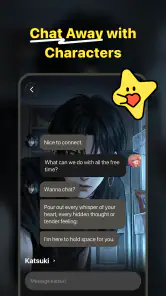
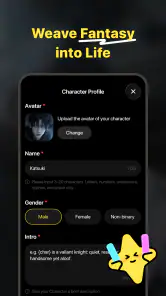
I approached Dootchi: Chat with AI Chars as an entertainment app for the moments when I want company, a playful conversation, or a role-play session without arranging anything with another person. Its basic idea is easy to understand: open it, choose a conversational direction, and spend time chatting with AI characters. That makes it feel closer to a private improvisation space than to a conventional video or music app.
What interested me most was not simply whether the conversations were entertaining, but how comfortable the experience felt for different people and situations. A chat app can be enjoyable and still become tiring if the text is hard to follow, the interaction demands too much precise tapping, or the content is unsuitable for a shared room. In my experience, Dootchi works best when I treat it as flexible, on-demand entertainment rather than as a replacement for real social contact.
How the interface feels to read and navigate
The appeal of Dootchi starts with its low-pressure format. There is no complicated objective to learn before I can begin. I can move into a conversation and let the exchange develop at my own pace. That simplicity is useful for anyone who finds busy entertainment apps overwhelming, especially when the goal is only to relax for a few minutes.
The app is made by Hello Kirana and sits in the entertainment category. It is free to install, with optional purchases ranging from $1.99 to $99.00 per item. That combination makes it easy to try without committing money immediately, although I would still keep an eye on purchase prompts if I were handing the phone to someone else or trying to control spending.
For readability, conversational text is naturally easier to scan than a dense article or a screen full of controls. Short exchanges can be followed in small portions, which suits users who prefer to read a little, pause, and return later. I also found that role-play benefits from this structure because each response gives me a clear point at which to decide what to say next.
One practical habit improved the experience: I treated each conversation as a small scene rather than expecting it to become a perfectly consistent long-term story. This makes navigation feel less demanding. If the exchange starts to wander, I can redirect it with a clear instruction instead of trying to remember every earlier detail. That is a useful approach for readers who become frustrated when an AI conversation loses its thread.
The app’s store presence is unusually concise, presenting the name Dootchi as its short description and positioning the experience around chatting, role-play, and hanging out. That tells me what kind of entertainment to expect, but it does not replace a personal trial. The quality of an AI character interaction depends heavily on the tone I choose, how specific my prompts are, and how much repetition I am willing to tolerate.
Its current version is 1.0.70, and it runs on Android 7.0 or later. That broad operating-system requirement is helpful for people using an older compatible Android phone rather than a recent flagship. Still, compatibility alone does not guarantee that every person will find the interface comfortable. Screen size, text scaling, touch response, and the phone’s own accessibility settings can make a noticeable difference.
Making conversations easier to follow
I recommend starting with a simple purpose instead of sending a vague opening message. For example, I might ask for a short mystery scene, a friendly check-in, or a character who asks one question at a time. Clear boundaries reduce the amount of reading and make the conversation easier to steer. They also help when I am using the app while tired or distracted.
Another useful technique is to write a compact instruction at the beginning: keep replies brief, use plain language, avoid multiple questions, or pause after each scene. This is not a guaranteed accessibility mode, but it gives me some control over the cognitive load. Someone who prefers more detail can reverse the instruction and ask for richer descriptions.
The main weakness is that conversational flexibility can also create uncertainty. A traditional streaming app gives me a predictable timeline, while Dootchi asks me to participate. If I want to sit back and consume polished content with no decisions, a video service is probably a better fit. Dootchi is more suitable when I want the entertainment to respond to me.
Motor, sensory, and attention considerations
Chat-based entertainment has one clear physical advantage: it does not require rapid game controls, repeated swipes, or precise timing. I can compose a message when I am ready, which is friendlier to users who need slower interaction or who find fast-paced games uncomfortable. The experience is also less dependent on sound than many video and music apps, since the core activity is reading and writing.
That does not mean the app is effortless for every motor or sensory profile. Typing remains central, so users who have difficulty with a touchscreen keyboard may prefer voice input supplied by their device, if that works comfortably for them. I would also avoid assuming that every conversation is equally manageable for someone sensitive to intense themes or unpredictable wording. The mature 17+ rating is an important signal that this is not an app I would casually place in a child’s hands.
For users with visual fatigue, the most useful adjustment may happen at the phone level: larger system text, display magnification, stronger contrast, or a screen reader where compatible. I would test those settings with a short conversation before settling into a long session. Enlarged text can improve readability but may also mean more scrolling, so there is a real trade-off between seeing larger words and keeping more of the conversation visible at once.
People who rely on audio rather than visual reading should be more cautious about choosing Dootchi as their main entertainment app. The central activity is written conversation, and I would not treat device read-aloud tools as a perfect substitute for a purpose-built audio experience. Someone looking for podcasts, narrated stories, or hands-free listening will likely have a smoother time with an app designed around those formats.
Attention is another important factor. AI chats can encourage me to keep replying because each message invites another response. I found it helpful to decide on a stopping point before opening the app, such as one short scene or a brief evening check-in. This is especially useful for people who are easily drawn into open-ended activities. The lack of a fixed ending is part of the appeal, but it can also make time feel less structured.
A better workflow for limited energy
When I have little energy, I use a narrow prompt rather than building a complicated world. I specify the character’s role, the mood, and the length I want. For instance, asking for a calm five-minute conversation with one question per reply is easier to manage than launching into a large fictional universe. If the result is not engaging, I can change direction without having invested much effort.
This also reveals a trade-off between creative freedom and consistency. Detailed role-play can be rewarding for users who enjoy planning and writing, but it asks more of the hands, eyes, and attention. Short prompts reduce that burden while producing a less elaborate experience. In my view, Dootchi is most inclusive when I use its flexibility deliberately instead of expecting the app to choose the right pace for me.
Using Dootchi in everyday situations
A realistic use case is a quiet break during a commute or while waiting for an appointment. I can open a short conversation, ask for a light role-play exchange, and stop when my turn arrives. This is more interactive than scrolling through passive entertainment, but it is also easier to interrupt than a long film. I would keep the volume low or muted in public and remember that the mature rating makes private use more appropriate than casual use around children.
It can also work for someone who wants to rehearse creative ideas without showing an unfinished draft to another person. I might use a character conversation to test the mood of a scene, explore dialogue, or see how a fictional situation develops. I would not treat the responses as professional feedback or as a dependable source of sensitive advice. The value here is improvisation, not authority.
For people who feel lonely, the app may provide a temporary sense of interaction, but I would keep expectations realistic. An AI character can respond immediately and follow a chosen scenario, yet that is different from mutual human understanding. If I needed emotional support, crisis help, medical guidance, or a trusted personal conversation, I would choose an appropriate human or professional resource instead.
Compared with social platforms, Dootchi removes some of the pressure of public posting, audience reactions, and maintaining a visible profile. That can be appealing to someone who wants private-feeling entertainment. Compared with messaging a friend, however, it lacks the unpredictability and shared history of a real relationship. Compared with games, it offers less structured challenge and more conversational freedom. The right choice depends on whether I want participation, competition, social connection, or passive viewing.
The free entry point is another practical advantage for curious users. I can explore the basic idea before deciding whether optional purchases are worthwhile. My advice is to identify what I actually want from the app first. If I only need occasional role-play, the free experience may be enough for my habits. If I am tempted by paid extras, I would review each purchase carefully rather than assuming that spending automatically improves the quality of every conversation.
Who may want to skip it
I would not recommend Dootchi to someone seeking a tightly scripted story with guaranteed continuity. AI conversation can be playful, but it may also drift, repeat itself, or interpret a prompt in an unexpected way. Users who dislike correcting an artificial character or who want a polished beginning-to-end narrative may prefer interactive fiction with fixed writing.
I would also suggest skipping it if the mature rating conflicts with your needs or household setting. It is not a suitable casual recommendation for children, and adults who want strictly predictable, family-friendly material may find the open-ended format uncomfortable. The same caution applies to anyone who is sensitive to unexpected themes and does not want to manage the direction of a conversation.
People with limited data access or a strong preference for offline entertainment should think about their routine before relying on it. A conversational app is most useful when I can open it and engage without worrying about interruption, and I would not plan an important activity around an AI chat. For a guaranteed offline pastime, a downloaded book, puzzle, or single-player game is the safer choice.
Remaining barriers and sensible boundaries
The biggest barrier is not a complicated menu; it is the open-ended nature of the product. Dootchi expects me to guide the interaction, judge whether a reply is useful, and decide when to stop. That can be empowering for confident users but tiring for someone who wants clear instructions. A short opening prompt and a defined session length make the experience more manageable.
Another barrier is the difference between technical accessibility and practical comfort. Running on Android 7.0 or later helps older-device users get started, but it says nothing about how well a particular screen, keyboard, font setting, or assistive tool will suit them. I would test one short exchange with personal device settings before buying anything or committing to extended use.
Privacy-minded users should also approach any conversational AI app thoughtfully. I would avoid entering passwords, identifying documents, private medical details, financial information, or anything I would not want repeated in a digital conversation. Even when the chat feels personal, I treat it as entertainment rather than a confidential diary.
For sensory comfort, I would use the phone’s brightness and text controls, keep sessions short, and avoid using the app in a noisy or crowded place if concentration is difficult. For motor comfort, I would rely on slower typing, device-level dictation where suitable, and prompts that do not require long replies. These are practical workarounds, not proof that every user will have the same experience.
The app’s popularity is considerable, with over 5 million installs, a 4.7 average from around 115 thousand ratings, and roughly 3.1 thousand written reviews. Those figures suggest that many people enjoy the concept, but they do not remove the need to judge whether its mature, interactive format suits me personally. A high average cannot tell me whether the text size, pace, themes, or typing demands feel comfortable on my device.
I also appreciate that the app can be approached in small sessions, but I would not confuse convenience with unlimited suitability. Someone who needs a predictable schedule may benefit from setting a timer. Someone who shares a device should use a separate profile or account arrangement where available on the phone, and should avoid leaving purchase screens open. These small habits matter more here because the experience is designed to keep a conversation going.
My inclusive verdict
After using Dootchi as a conversational entertainment space, I see its strongest quality in the control it gives me over the kind of interaction I want. I can make it light, imaginative, brief, or more involved. Its text-led format avoids the rapid controls of many games and can be easier to pause than a film, while the free starting point lowers the risk of trying it.
Its limitations are equally clear. It depends on reading and typing, it may require active steering, and the open-ended mature environment will not suit children or users who need completely predictable content. It is also not a substitute for a friend, therapist, teacher, or reliable expert. The more specific my expectations are, the more carefully I should compare it with a conventional streaming service, a fixed interactive story, a messaging app, or an audio-first option.
My recommendation is conditional but positive: adults who enjoy improvisation and want private-feeling, on-demand character chats should give it a measured try. I would begin with short prompts, adjust the phone’s display and input settings, avoid sensitive personal information, and decide in advance whether optional purchases fit my budget. For me, Dootchi is most successful when I use it as a flexible creative break—not when I expect it to provide perfect continuity, human companionship, or effortless accessibility for every situation.
Pros
- Large variety of AI characters with different personalities and conversation styles.
- Simple interface makes it easy to start chats without a complicated setup.
- Useful for casual entertainment
- roleplay
- and creative conversation ideas.
- Character responses can help keep conversations engaging and varied.
- Suitable for short sessions when you want quick
- interactive companionship.
Cons
- Some replies may feel repetitive or lack consistent personality over time.
- AI conversations can occasionally produce inaccurate or confusing information.
- The best characters or features may require in-app purchases or subscriptions.
- Privacy details should be reviewed carefully before sharing personal information.
- Chat quality may depend on an internet connection and server availability.

- Category
- Entertainment
- Version
- 1.0.70