Debt Payoff Planner & Tracker
- 1.23K
- 4.5
- Installs
- 500.00K
- Price
- Free

Screenshots
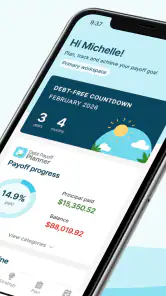
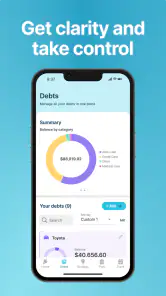
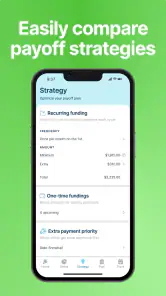
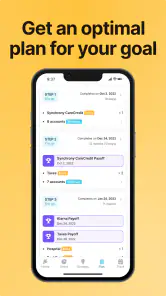
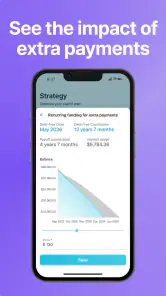
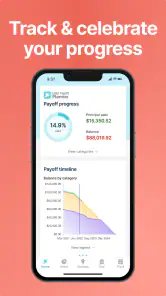
Analysis by Reviewed
Debt Payoff Planner & Tracker is the kind of finance app I would suggest to someone who has several balances, a clear desire to become debt-free, and no patience for complicated budgeting software. I found its approach more focused than a general money manager: instead of trying to monitor every part of my financial life, it keeps attention on a payoff plan, progress tracking, and the small sense of achievement that comes from seeing the balance move in the right direction.
That narrow focus matters. Debt can feel abstract when it is spread across a credit card, a personal loan, and a store account. A planner built around repayment gives those obligations a visible order. The app’s basic promise is simple: make a plan, follow it, and use progress as motivation. In my experience, that makes it easier to turn a vague intention such as “I need to pay off debt” into a routine I can revisit each payday.
How the planner fits into everyday debt repayment
This is a finance app from Easily get a plan and stick to it - OxbowSoft LLC, and it is available free of charge. That makes trying it relatively easy for anyone who wants to see whether a dedicated payoff tool suits them. There are in-app purchases ranging from $6.99 to $41.99 per item, so the free access and the paid value should be considered separately rather than treating the whole experience as costless.
The app is listed for Everyone, which fits the straightforward subject matter. It has been available since January 8, 2015, and the current version is 2.54. On Android, it requires version 6.0 or later, so it remains accessible on many older devices. Its reach is also substantial, with over 500 thousand installs, while its average rating is 4.5 from around 4.7 thousand ratings. Those figures suggest that the concept has connected with a meaningful audience, although a rating alone cannot tell me whether every household will find the workflow comfortable.
What I like most is the psychological framing. A normal calculator can tell me how much interest I will pay, but it does not necessarily help me keep returning to the problem. A general budgeting app can show income and spending, yet debt repayment may become just one category among dozens. This planner puts the repayment journey in the foreground, which is useful when motivation is the main obstacle rather than arithmetic.
Starting with a plan instead of a pile of balances
The first useful step is to gather the debts before trying to optimize them. I would enter each balance carefully, along with the information the app requests for the repayment plan, and then check the result against my statements. That checking step is important: a payoff schedule is only as useful as the balance, rate, minimum payment, and payment timing behind it. I would not treat the first plan as unquestionable advice.
A practical workflow is to create the plan on the same day each month, after statements have arrived but before discretionary spending begins. I can then compare the planned payment with the amount I genuinely have available. If the plan assumes an unrealistic extra payment, it becomes discouraging rather than motivating. A slightly slower schedule that I can repeat is more valuable than an ambitious one that collapses after two weeks.
One non-obvious strength of a dedicated planner is that it can change the emotional meaning of an extra payment. Instead of seeing an additional $50 as money disappearing into an endless account, I can view it as a measurable reduction in the route to the finish. That is not a mathematical feature by itself, but it is a meaningful behavioral advantage. The app works best when I use it as a regular checkpoint, not as a one-time calculator.
Using progress tracking without letting it replace financial judgment
Tracking is most helpful when it changes what I do next. After making a payment, I would update the relevant debt promptly rather than waiting several weeks. The closer the record is to reality, the more useful the next progress view becomes. I would also keep a small note outside the app for unusual events, such as a returned payment, a temporary hardship arrangement, or a balance transfer, because those situations can make a standard payoff plan misleading.
Celebrating milestones can sound superficial, but debt repayment often lasts long enough that motivation needs maintenance. A progress marker gives me a reason to acknowledge a completed stage without turning the process into a shopping reward. My preferred reward would be something free or inexpensive, such as a quiet evening or a walk, so the celebration does not create a new balance.
There is a useful trade-off here. A visible plan can reduce avoidance, but it can also make a difficult month feel more disappointing. If my income changes, I would revise the plan rather than interpreting a missed target as failure. The planner should support honest adjustments. It should not pressure me into skipping essentials, building no emergency cushion, or using new credit simply to preserve a projected date.
Free access, paid value, and the point where cost matters
Because the app is free to download and use at its basic level, I see it as a low-risk way to test a debt-focused workflow. Someone who only needs a simple place to organize balances may get enough value without paying. The important question is not whether the app is free in the broad sense, but whether the particular paid elements solve a problem I actually have.
The available in-app purchases cost from $6.99 to $41.99 per item. I would not buy anything immediately. I would first enter my debts, follow the tracking routine for a while, and identify the exact limitation that is slowing me down. If a paid option saves repeated manual work or provides a planning capability I will use throughout a long repayment period, it may be worthwhile. If I only want a one-time estimate, paying could be unnecessary.
This is also where the app compares differently with spreadsheets. A spreadsheet may cost nothing if I already have one, and it offers complete control, but I must design formulas, maintain them, and decide how to display progress. Debt Payoff Planner & Tracker gives the task a purpose-built home. The paid value, therefore, is not automatically “more features”; it is the convenience of staying inside a debt-specific system when that structure helps me remain consistent.
I would also avoid judging value by the size of a projected saving alone. A payoff tool can show an attractive outcome, but the result depends on accurate inputs and my ability to make the planned payments. The app can organize the decision; it cannot create spare income or negotiate with a lender. That distinction keeps the purchase decision grounded in what the tool can realistically contribute.
A realistic household example
Imagine I have a credit card balance, a personal loan, and a small medical bill. I get paid twice a month, but the dates of the minimum payments are scattered. Without a central plan, I might pay the required amounts and then lose track of which balance should receive extra money. I would use the app to put the debts into one repayment view, choose a manageable additional amount, and check the plan whenever my paycheck arrives.
Suppose an unexpected car repair takes priority in one month. I would not borrow again merely to protect the original schedule. Instead, I would record what was actually paid, reduce the extra amount temporarily, and resume the stronger payment when the repair is handled. The value of the app in this situation is not that it prevents the setback. It gives me a clear baseline to return to, which is much better than abandoning the whole effort because one month went badly.
A second useful scenario is a couple managing shared debt. I would use the planner during a short weekly money meeting, with both people looking at the same balances and deciding what is realistic before making transfers. It can help turn a vague disagreement about “paying more” into a specific conversation about which balance comes first and how much the household can safely commit. I would still keep personal account credentials private and use the app as a planning record rather than assuming it replaces communication.
Where it is stronger than ordinary alternatives
Compared with a notebook, the app gives the repayment process more structure and makes progress easier to revisit. A notebook can be perfectly adequate for someone who enjoys manual tracking, but it is easy to forget an update or lose the connection between a payment and the overall goal. The app is better for a person who needs a recurring prompt to stay engaged with the plan.
Compared with a broad budgeting app, this one is more focused. A full budget is the better choice when my main problem is overspending across categories, irregular income, bill scheduling, or household cash flow. A debt planner is better when I already understand my monthly budget and need help maintaining a deliberate repayment sequence. Some people will reasonably use both: one for the complete household picture and this app for the debt-specific target.
Compared with a spreadsheet, the choice comes down to control versus convenience. A spreadsheet is preferable for users who want custom scenarios, detailed reporting, or formulas tailored to unusual loans. The dedicated planner is more approachable when I do not want to engineer a financial model before I can start. I would choose the app for momentum and simplicity, and a spreadsheet for analysis that goes beyond a standard payoff journey.
Limitations I would consider before relying on it
The focused design can become a weakness if my financial situation is complicated. People with variable income, multiple currencies, business debt, tax obligations, or frequent changes in loan terms may need a more comprehensive system. A simple payoff view can still be useful, but I would verify every result manually and avoid treating it as a complete financial plan.
Manual accuracy is another important limitation. If I forget to update a payment or enter an incorrect balance, the progress picture can drift away from my statements. That is not unique to this app, but the motivational presentation may make an incorrect projection feel more authoritative than it is. I would compare the app with lender statements regularly, especially after interest posts or a payment is reversed.
I also would not use it as a substitute for professional help when debt has become unmanageable. If I am choosing between minimum payments and necessities, the priority is getting appropriate assistance and protecting basic needs. A planner can make information clearer, but it cannot resolve insolvency, dispute a creditor error, or guarantee a particular payoff result.
The purchase structure deserves a calm evaluation as well. Since individual in-app items can reach $41.99, I would consider how long I expect to use the app and whether the paid capability will remain useful after the initial motivation wears off. Someone who enjoys spreadsheets may get better value from building a personal system. Someone who repeatedly starts and abandons repayment plans may find the dedicated structure more valuable than another free calculator.
Who will get the most from it
I think the strongest audience is a person with a manageable set of debts who wants a clear repayment route and encouragement to keep going. It is especially suitable for someone who understands the basics of their balances but struggles with consistency. The app’s emphasis on planning and progress can make a long, repetitive task feel more concrete.
It is also a good fit for a first-time debt planner who does not want to begin with a complicated financial dashboard. The free starting point makes experimentation sensible. I would spend time entering accurate information, test whether the reminders or progress routine fit my habits, and only then decide whether any paid purchase adds enough convenience to justify its cost.
I would skip it, or use it only alongside another tool, if I need full household budgeting, bank-level transaction management, advanced loan modeling, or detailed financial reporting. It is not the right answer merely because the word “debt” appears in the problem. The right tool depends on whether my bottleneck is repayment motivation or a broader lack of financial visibility.
My verdict on downloading or paying
My recommendation is to try the free experience if debt repayment is the specific task I want to organize. The app offers a focused alternative to a general budget and a more guided starting point than a blank spreadsheet. I would judge it by whether I return to it after each payment and whether the plan helps me make safer, more deliberate choices.
I would not purchase an in-app item just to feel committed. Commitment comes from a realistic payment routine, accurate updates, and enough room in the budget for ordinary surprises. A paid option makes sense only when it removes a recurring obstacle that the free experience has exposed. That approach keeps the cost proportional to the value I am actually receiving.
Overall, Debt Payoff Planner & Tracker is a sensible tool for turning scattered balances into a visible journey. Its best quality is focus, and its main risk is expecting a focused planner to solve problems that require a complete financial system or professional guidance. For someone who wants a simple repayment companion and benefits from seeing progress, I would recommend giving it a careful trial. For someone seeking comprehensive money management, I would spend the budget elsewhere and use a broader alternative.
Pros
- Clear payoff projections make debt-free dates easy to understand.
- Supports multiple debts and lets you compare repayment strategies.
- Progress tracking can provide useful motivation over time.
- Payment reminders help reduce the risk of missing due dates.
- Simple interface makes regular updates quick and manageable.
Cons
- Some advanced planning tools may require a paid subscription.
- Manual balance updates can become tedious for users with many accounts.
- Results depend on entering accurate interest rates and payment details.
- It does not make payments or connect with every financial institution.
- Limited budgeting features may require a separate personal finance app.

- Category
- Finance
- Version
- 2.54