Coffeely - Learn about Coffee
- 46.00
- 4.2
- Installs
- 100.00K
- Price
- Free

Screenshots
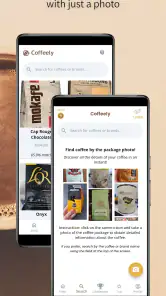
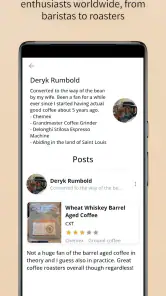
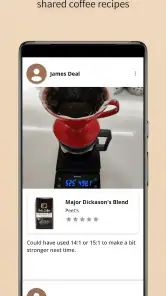
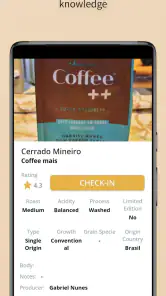
Analysis by Reviewed
I approached Coffeely less like a coffee encyclopedia and more like a small daily challenge: open it, learn one useful idea, and see whether I could remember it later. That focus is what makes this Food & Drink app interesting. It is designed to build coffee knowledge through self-testing, rather than simply handing me a long page of facts to read once and forget.
The central promise is straightforward: improve your “coffee ability” by challenging yourself until the basic vocabulary and distinctions begin to feel familiar. In my experience, that makes it easier to stay engaged than with a conventional reference app. I am not just browsing information about beans, brewing, or tasting; I am actively trying to recognize and retain it.
That approach will not turn a casual drinker into a professional barista overnight, and I would not use it as a substitute for practical brewing experience. Still, for anyone who has ever stood in front of a café menu wondering what a term means, or bought coffee without knowing why one bag tasted different from another, the app offers a friendly starting point.
Learning coffee by testing yourself
The capability that matters most
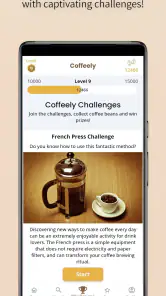
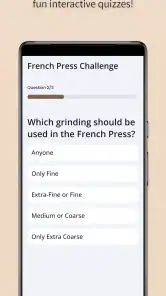
The most valuable part of Coffeely is its challenge-based learning style. Instead of treating coffee knowledge as something I should passively collect, it encourages me to retrieve answers from memory. That small change has a real effect: I notice which concepts I genuinely understand and which ones only looked familiar when I first read them.
This is especially useful with coffee terminology. Many words seem obvious until someone asks me to distinguish them. A quiz-like approach exposes that gap quickly. I may recognize a term on a menu, but if I cannot explain it when prompted, I know I need another look. That makes each session more purposeful than scrolling through unrelated facts.
I also like that the format suits short visits. Coffee learning does not need to become a formal study project. A quick session while waiting for a drink, commuting, or taking a break can be enough to refresh a concept. The app works best when I treat it as a repeatable habit rather than something I must complete in one sitting.
The key benefit is active recall, not the appearance of having read a lot. That distinction matters. A reference guide may be better when I need a precise explanation immediately, but Coffeely is more useful when my goal is to remember information later, perhaps while choosing beans or discussing a brewing method with someone else.
More From Our News Desk

Clash of Clans Is Won Between the Battles

Android Auto Makes the Case for Quieter Car Software

MobiOffice: Transforming Mobile Productivity with Seamless Integration

EA SPORTS FC™ Mobile Soccer: Redefining Mobile Sports Gaming

How Microsoft OneDrive Became a Mobile Productivity Giant

How Google Translate Breaks Language Barriers Effortlessly
What using it feels like
The experience is built around Coffeely presenting knowledge as a personal challenge. I answer, assess what I know, and use the result to decide where I should pay more attention. That creates a simple feedback loop: test myself, notice weak spots, revisit the subject, and test again.
I found that loop more effective when I resisted the temptation to rush. Guessing every answer just to move forward is easy, but it gives me a misleading sense of progress. A better routine is to pause after a mistake and connect the answer with something practical, such as a coffee I have tasted or a choice I might make in a café.
For example, if I encounter a term related to preparation, I try to link it to the equipment or style I already know. If the subject concerns tasting, I think about the last cup that seemed bright, bitter, heavy, or unusually clean. These personal connections make the learning stick better than memorizing isolated definitions.
The app is made by Coffeely and is available as a free download. Its average rating is 4.2 from around 1.2 thousand ratings, while the app has attracted over 100 thousand installs. Those figures suggest that it has found a real audience among people who want a lightweight way to explore coffee, though they do not change the important question: whether a challenge-based format matches the way you prefer to learn.
A practical routine for getting more from each session
My strongest recommendation is to use the app alongside real coffee rather than in isolation. Before making a drink, I might spend a moment reviewing a subject. Afterward, I compare the experience with what I remember. Did the cup taste as I expected? Did a term from the session help me understand the bag, menu, or brewing instructions?
This turns abstract learning into a small experiment. It also reveals an important limitation: the app can help me recognize ideas, but it cannot reproduce aroma, texture, freshness, water quality, grinder adjustment, or the many physical variables that affect a cup. Those require actual coffee, equipment, and practice.
A second useful habit is to keep the sessions focused. I would rather complete a short challenge carefully than tap through several rounds while distracted. When I make an error, I treat it as a prompt to investigate, not as a reason to chase a perfect score. The app is more rewarding when it supports curiosity instead of becoming another place where I feel pressured to perform.
A third tip is to use it before making purchasing decisions, but not as the only source of advice. If I am comparing two bags, the vocabulary I learn can help me understand the labels and ask better questions. It does not guarantee that I will enjoy one coffee more than another, because taste is personal and preparation changes the result.
The best everyday scenario
The clearest use case is someone who has recently become interested in better coffee but feels overwhelmed by the language. Imagine opening a bag of beans and seeing several unfamiliar descriptions. Instead of searching randomly across the internet, I can use a short Coffeely session to build enough background to recognize the general ideas behind those words.
Later, when I visit a café, I am less likely to choose blindly. I may still ask the barista for help, but I can describe what I usually enjoy and understand more of the answer. That is a modest improvement, yet it is exactly the kind of everyday confidence a learning app should provide.
It also works well for a coffee conversation with friends. If someone mentions a preparation style or tasting expression, I may not know everything, but I have a better chance of following the discussion. The app gives me a reason to notice details I would previously have ignored.
For a home brewer, the best routine is slightly different. I would use the challenges to identify a topic, then apply it during the next brew. The app can help me form better questions: why did this cup taste different, what does this label imply, or which part of the process should I learn about next? It is most useful as a guide for curiosity, not as a machine that diagnoses every brewing problem.
Where the experience falls short
The same focused design that makes Coffeely approachable can also make it feel limited for experienced coffee enthusiasts. If I already know the basic language and want detailed brewing science, precise recipes, or advanced sensory training, a dedicated reference, course, or specialist community may offer more depth.
I also would not expect the app to replace hands-on instruction. Reading and answering questions can prepare me for practice, but it cannot show whether my grind is uneven or whether my pouring technique is consistent. Someone who wants immediate improvement in extraction may gain more from a reliable brewing guide and repeated tasting than from repeated challenges alone.
Another trade-off is that challenge-based learning depends on honest participation. If I tap quickly, guess often, or focus only on getting through a session, the educational value drops. The app can encourage recall, but I still have to supply the attention. That makes it less suitable for someone looking for completely passive entertainment.
The free entry point is welcome, although in-app purchases range from $1.99 to $19.99 per item. I would look at the purchase choices carefully before paying and first decide whether the core learning loop fits my routine. A free app can be worth keeping even if I never buy anything, but the value of optional spending depends on how regularly I return and how much additional material I actually use.
The Teen content rating also makes the app broadly approachable for older children and adults, but coffee interest is not limited to one age group. Parents choosing it for a younger learner should still make their own judgment about whether the content and challenge style suit that child.
How it compares with ordinary alternatives
The usual alternative is a web search. Searching is better when I need one exact answer immediately, especially if I want a brewing ratio, equipment comparison, or troubleshooting guide. The downside is that search results can scatter my attention across many sources, and reading an answer once does not mean I will remember it.
A book or long-form coffee course offers more structure and depth. That is the better choice for someone who wants a complete education, a carefully sequenced curriculum, or detailed technical explanations. Coffeely is lighter and easier to pick up for a few minutes, but it cannot provide the same sustained treatment of a subject.
Video content has a different advantage: it can demonstrate physical actions. Watching someone adjust a grinder or pour water is more helpful than answering a question about the process. On the other hand, video is often passive, and I can lose track of what I actually retained. Coffeely’s challenge format is stronger when I want to check my memory rather than watch another explanation.
Social communities are useful for recommendations and personal experiences, but advice can be inconsistent. Coffeely gives me a more contained way to build vocabulary before I enter those conversations. I would combine the two: learn the basic concepts in the app, then use real people and real coffee to test whether the knowledge helps.
Who will gain the most
I think Coffeely is a good fit for curious beginners, occasional café visitors, home brewers who want more confidence, and coffee drinkers who enjoy small learning challenges. It is also suitable for people who struggle to stay focused with long articles but can manage a short interactive session.
It is less convincing for someone who only wants drink recommendations, a café locator, shopping tools, or detailed equipment instructions. It is also not the right first choice for an advanced enthusiast seeking professional-level sensory calibration. In those cases, a specialized resource will probably be more efficient.
The app runs on Android with a minimum operating system requirement of version 6.0, and its current version is 6.32.04. That makes it accessible on a wide range of compatible devices, including older phones that may not handle newer, heavier apps comfortably. I would still keep expectations realistic: broad compatibility does not change the fact that the app’s usefulness depends mainly on whether I enjoy learning through challenges.
My final take after using it
Coffeely succeeds because it gives coffee learning a clear action: answer, remember, and try again. That is more engaging than a static glossary and less demanding than a full course. I especially appreciate how easily it fits around an existing coffee habit, because the knowledge becomes more meaningful when I connect it with a cup I am actually drinking.
Its limitations are equally clear. It cannot replace tasting, brewing practice, a good technical guide, or a knowledgeable barista. Users who want advanced detail may outgrow it, and users who dislike quizzes may never enjoy its central format. I would also think carefully before making an in-app purchase, since the free experience should be enough to decide whether the routine works for me.
For me, the app is worth recommending to a friend who says, “I like coffee, but I do not really understand it.” It offers a low-pressure way to start building that understanding, one challenge at a time. If you want a practical companion for developing coffee vocabulary and remembering what you learn, Coffeely - Learn about Coffee is a sensible place to begin. If you want complete brewing instruction or expert-level analysis, I would pair it with a more specialized resource rather than rely on it alone.
Coffeely - Learn about Coffee Frequently Asked Questions
What devices can I use Coffeely - Learn about Coffee on?
Coffeely is a coffee-learning app for mobile devices, and its listed minimum operating-system requirement is version 6.0. Before downloading, check that your device meets the requirement and that the app is available for your platform and region. Keeping your operating system current can also help with compatibility and access to the latest app version.
Who develops Coffeely, and what do users think of it?
Coffeely is developed by Coffeely and is listed in the Food & Drink category. It has an average rating of 4.2 from around 1,200 ratings, with 46 written reviews and over 100,000 installs. These figures offer a quick sense of its reception, though individual experiences can differ depending on what someone hopes to learn and how they use the app.
What is Coffeely - Learn about Coffee?
Coffeely - Learn about Coffee is an educational app designed for people who want to understand coffee more deeply. It introduces users to coffee origins, bean varieties, roasting levels, brewing methods, tasting notes, and related terminology. The app is suitable for beginners, casual coffee drinkers, and enthusiasts who want a convenient way to expand their knowledge at their own pace.
Is Coffeely suitable for complete beginners?
Yes. Coffeely is presented in a way that makes coffee education approachable even if you know very little about the subject. Explanations generally focus on practical concepts rather than assuming professional barista experience. New users can learn the differences between common beans, roasts, and preparation techniques gradually, while more experienced coffee drinkers may use the app to review fundamentals or discover topics they have not explored before.
What topics can users learn about in Coffeely?
The app covers several areas related to coffee, including bean types, growing regions, flavor profiles, roasting, grinding, extraction, and popular brewing techniques. Depending on the available content and app version, users may also find information about tasting coffee, selecting beans, and understanding how preparation variables influence the final cup. It works best as a compact reference and learning companion rather than a professional certification course.
Pros
- Clear lessons make coffee basics easy for beginners to understand.
- Useful explanations cover beans
- brewing methods
- and tasting terminology.
- Short learning sections are convenient for quick daily study.
- Helps users make more informed choices when buying or ordering coffee.
- Clean presentation keeps the educational content easy to follow.
Cons
- Advanced coffee enthusiasts may find the material too introductory.
- Some topics may lack the depth of a dedicated barista course.
- Learning is mainly theoretical and offers limited hands-on practice.
- Content usefulness depends on how regularly the app is updated.
- Coffee information may not cover every regional style or brewing tradition.
- Category
- Food & Drink
- Version
- 6.32.04