Classmates
- 134.00
- 3.0
- Installs
- 50.00K
- Price
- Free

Screenshots
Analysis by Reviewed
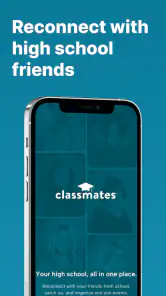
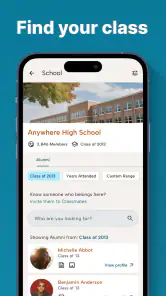
I approached Classmates as a social app for people who want to keep school connections in one place rather than rely entirely on general-purpose social networks. Its focus is easy to understand: finding or staying connected with classmates, former classmates, and familiar school communities. In practice, that makes it feel more personal than a broad social feed, but also more dependent on whether the people you care about are using it.
The app is developed by Classmates Mobile and is free to install, with optional in-app purchases priced from $19.99 to $59.99 per item. It is aimed at a Teen audience and runs on Android devices using version 7.0 or later. The current version is 1.5.41, so this is not an abandoned-looking product frozen at its first release. Still, my overall impression is mixed: the idea is useful, the audience is clear, and the app can be worthwhile for reconnecting, but its value rises or falls with local participation and your expectations.
How Classmates feels today
The strongest part of Classmates is its narrow purpose. Most social apps ask you to follow celebrities, brands, public personalities, distant acquaintances, and algorithmically selected content. A school-centered service has a different emotional starting point. You are more likely to open it because you recognize a name, remember a shared place, or want to see whether an old connection is still reachable.
That focus can make the experience less noisy. Instead of treating every interaction as public entertainment, the app is better understood as a directory and meeting point for school-related relationships. I would not install it expecting a replacement for every social platform I already use. I would install it when the specific goal is to locate classmates or revive connections that have disappeared from everyday life.
The important practical question is not simply whether the app exists. It is whether your school friends, former classmates, or local contacts have created a useful network inside it. A social app can have a sensible design and still feel empty if the people you want to find are elsewhere. That is the central trade-off here: the more relevant people who join, the more useful Classmates becomes; without them, it can feel like a promising address book with too few addresses.
Its current public reach is modest, with over 50 thousand installs and an average rating of 3.0 from around 259 ratings. I read that combination as a reason to approach it with realistic expectations rather than as an automatic warning. There is enough adoption to suggest that the concept has found an audience, but not enough evidence to assume that every school, city, or age group has an active community.
A better fit for reconnecting than for constant posting
In my view, Classmates makes the most sense for people who want a practical social bridge. Imagine remembering a former classmate while organizing a reunion, searching for someone who shared a school project with you, or trying to reconnect with a friend after years without contact. A focused app can reduce the feeling that you are broadcasting to an enormous audience just to reach one person.
More From Our News Desk

Clash of Clans Is Won Between the Battles

Android Auto Makes the Case for Quieter Car Software

MobiOffice: Transforming Mobile Productivity with Seamless Integration

EA SPORTS FC™ Mobile Soccer: Redefining Mobile Sports Gaming

How Microsoft OneDrive Became a Mobile Productivity Giant

How Google Translate Breaks Language Barriers Effortlessly
It may also suit families and older students who want a more school-oriented environment than a general entertainment feed. The Teen content rating matters here because younger users and parents may reasonably expect the app to be approached with ordinary social-app caution. I would still encourage users to think carefully about what they share, whom they contact, and whether a profile really belongs to the person they remember.
Where it is less convincing is as a daily replacement for messaging apps. If your main need is fast group chat, file sharing, video calls, or dependable communication with people who already know your phone number, a mainstream messenger will probably be more efficient. Classmates has a discovery and reconnection advantage, not necessarily a universal communication advantage.
What the version number tells me—and what it does not
The app was released on June 3, 2022, and the current version, 1.5.41, shows that it has moved beyond its initial launch build. That is useful context when judging its evolution: the product has had time to be maintained and refined instead of remaining only an early experiment.
At the same time, a newer version number alone does not tell me that every important problem has been solved. It does not guarantee a large active community, a perfect search experience, or a smoother experience on every phone. I treat the version as evidence of ongoing product work, not as proof that the app has become mature in every area.
For an existing user, the sensible approach is to update when a new build is available, then pay attention to whether familiar tasks feel easier rather than assuming that every change will be visible. Social apps often improve through small adjustments: clearer navigation, more dependable account handling, or fewer rough edges when moving between profiles and conversations. Those changes can matter more than a dramatic new feature because they affect every visit.
One useful habit is to judge the app by the complete reconnection workflow rather than by the opening screen. Can you identify the right person without confusion? Can you tell whether a profile is current? Can you move from discovery to a respectful conversation without exposing more information than intended? Those are the points where a social product proves its value.
How I would use it in an ordinary situation
Suppose I am helping organize a small reunion for people from a previous school year. I would begin by treating Classmates as a place to search for familiar names, not as a guarantee that every result is the correct person. I would compare recognizable details, use a polite opening message, and avoid posting the reunion location publicly before the group is ready.
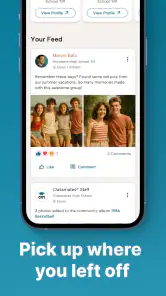
That workflow highlights a non-obvious strength: the app can be useful even when I do not plan to become a heavy poster. A person who checks in occasionally to locate a former classmate may get more from it than someone expecting a constant stream of fresh content. The value comes from targeted discovery and relationship maintenance, not from spending hours scrolling.
There is also a practical downside. Reconnection can create awkwardness. Someone may not want contact, may use a different name, or may have a profile that is difficult to distinguish from another person with the same name. I would keep first messages brief and non-demanding, and I would accept silence without repeatedly following up. The app can open a door, but it cannot make the relationship comfortable or active.
For a group project, I would probably use Classmates to locate the people involved and then move the actual work to a tool designed for collaboration. That division of labor is important. A social discovery app is not automatically the best place for deadlines, document versions, detailed planning, or sensitive school information.
Where it stands against familiar alternatives
Compared with a large social network, Classmates has a clearer identity and potentially less irrelevant content. A general platform may offer a much larger audience, better-established messaging habits, and more ways to share media, but it can also bury school connections among everything else. Classmates is appealing when the school relationship itself is the reason for opening the app.
Compared with a messaging service, the difference is even sharper. Messaging apps are usually better once you already know how to reach someone. Classmates is more interesting at the earlier stage, when you remember the person but no longer have current contact details. If you already have the number or account name of everyone you need, the specialized discovery layer may not add enough value.
Compared with professional networking services, this app feels more personal and less career-centered. A professional network is the better choice for employment history, industry contacts, and formal introductions. Classmates is more appropriate when the shared school experience is the connection you want to preserve.
My advice is not to choose one platform for every purpose. Use Classmates for finding and re-establishing school relationships, a messenger for quick private conversations, and a collaboration service for organized group work. That combination avoids forcing one app to perform jobs it was not designed to handle.
The friction points I would consider before installing
The first limitation is network density. With around 50 thousand installs, the app has a real user base, but that does not mean your particular school community is active. I would ask a few friends whether they use it before investing much time in building a profile. Social products are strongest when participation is concentrated among the people you actually know.
The second is the rating signal. An average of 3.0 from roughly 259 ratings suggests an uneven experience among users. I would not treat that as a complete verdict, because ratings can reflect different devices, expectations, and use cases. Still, it tells me to test the basic path early: install, create or access an account, find a relevant person, and decide whether the experience is clear enough to justify continuing.
The third issue is the presence of optional purchases. The app is free to install, but individual in-app items range from $19.99 to $59.99. That is a meaningful amount for a social app, so I would not assume that every useful function is included at no cost. Before paying, I would identify exactly what an item unlocks, whether it solves a problem I actually have, and whether the people I want to reach are present in the first place.
This is where I would be especially cautious with casual users. If I only want to look up one former classmate, paying for an expensive optional item may not make sense unless its benefit is clear and immediate. A free trial of the basic experience, where available within the app, should come before any purchase decision. I would also avoid buying simply because I feel nostalgic; nostalgia is not the same as sustained usefulness.
Another friction point is privacy judgment. The Teen rating does not remove the need for personal boundaries. I would avoid publishing a home address, daily routine, private school records, or information about someone else without permission. I would also verify identities through a mutual contact before sharing sensitive reunion details. These are not reasons to reject the app specifically; they are sensible rules for a service built around real-world relationships.
Small strategies that make the experience more useful
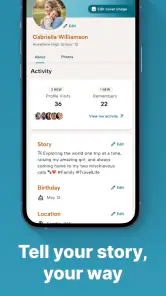
My first strategy would be to create a profile that helps recognition without oversharing. A school connection is easier to confirm when the profile contains enough context to distinguish you from someone with a similar name, but adding excessive personal details creates unnecessary exposure. I would aim for recognizable, not exhaustive.
My second strategy would be to search in stages. I would start with the most distinctive information I know, then broaden the search only if necessary. Searching too broadly can produce confusion, especially with common names. Once I find a likely match, I would look for shared context before sending a message.
My third strategy would be to use the app as a periodic tool rather than a notification obligation. If my goal is reunion planning or occasional reconnection, checking at sensible intervals can be enough. This keeps the app from competing with the services I use for immediate communication and reduces the temptation to measure its value by daily activity.
A fourth, less obvious trade-off concerns group momentum. If I am introducing Classmates to former classmates, I would invite a small cluster of people who already know one another instead of waiting for strangers to discover it independently. A social network becomes useful faster when the first group has a shared reason to participate, such as planning an event or preserving contact after graduation.
I would also keep important plans duplicated in a neutral place. If a reunion depends on one social profile or one conversation, a lost account or missed message can disrupt everything. Classmates can help start the connection, while a separate calendar or group message can hold the final details. That is a more reliable workflow than treating the app as the only record.
Who should try it, and who should skip it
I would recommend trying Classmates if your goal is specifically to reconnect with school friends and you are willing to see whether your community is represented. It is particularly suitable for someone who remembers people but no longer has current contact information, or for a small group looking for a dedicated space to rebuild a school network.
I would be more hesitant if you want a busy entertainment feed, advanced collaboration tools, or guaranteed access to a particular person. I would also skip it if you are uncomfortable with the uncertainty that comes with identity-based social discovery. A mainstream messenger is better when your contacts are already known, while a broader social network may be better when you want scale and constant activity.
The purchase structure is another reason to be selective. Free installation lowers the barrier to testing, but the higher-priced optional items mean I would make the basic experience prove its value first. If the app does not help me find relevant people or maintain useful conversations, spending more is unlikely to fix the underlying network problem.
What I would watch as the app continues
For future updates, I would watch three things closely. First is whether finding the right classmate becomes more dependable and understandable for newcomers. Second is whether existing users have better reasons to return after the initial reconnection. Third is whether optional purchases feel clearly explained and proportionate to the value they provide.
I would also look for signs that the product is becoming useful across different stages of a relationship: discovering someone, confirming identity, beginning a conversation, and keeping contact alive. Improving only the first step would make the app interesting once, while improving the whole sequence would make it part of a lasting routine.
The current version is a reasonable point from which to evaluate the service, but I would separate present experience from future hope. It is fair to expect maintenance and refinement from an app that has progressed beyond its original release. It is not fair to assume that a future update will automatically solve low participation in a particular school community or make every social interaction comfortable.
My final take
Classmates is a focused social app with a clear reason to exist: helping people reconnect through school relationships. I like that it does not need to compete directly with every general social platform to be useful. When the right people are present, its focused purpose can make a forgotten connection feel easier to recover.
My recommendation is cautious but positive. Try the free experience if you have a real classmate or reunion goal, keep your profile measured, and test whether your community is active before considering any optional purchase. The app is not the best answer for instant messaging, professional networking, or endless content. It is better viewed as a targeted bridge between remembering someone and reaching out respectfully.
My bottom line: Classmates is worth exploring for school-based reconnection, but its success depends more on the people around you than on the app alone. If your network is represented, it can be genuinely handy; if not, a familiar alternative may deliver faster results.
Classmates Frequently Asked Questions
Is Classmates intended for students, teachers, or both?
Classmates is a social app with a school-oriented name, so it may appeal to people who want to connect around their classmates. The app’s welcome message is brief, and the name alone does not establish that it is an official school platform or that it includes tools for teachers. Before downloading, consider whether you are looking for a general social app or a service your school specifically uses.
What is Classmates, and what can I use it for?
Classmates is an educational and social app designed to help students stay connected with their classmates, organize school-related information, and communicate more conveniently. Depending on the available features, users may be able to share updates, discuss assignments, access class resources, manage reminders, or participate in group conversations. It is best suited to students who want a more organized way to coordinate their academic life and keep in touch with peers.
Is Classmates free to download and use?
Classmates is free to download, though optional in-app purchases are available, with items ranging from about $20 to $60. The presence of paid items means some costs may arise beyond installing the app, so check purchase details before confirming a transaction. If you are downloading it for a younger user, it is sensible to discuss in-app spending and use any purchase controls available on the device.
Do I need an account or school invitation to use Classmates?
Most features of a class-focused application such as Classmates generally require users to create an account or sign in before joining a class community. In some cases, access may depend on an invitation code, school administrator, teacher, or existing group. This is worth confirming before installation, especially if you expect to use the app for an official course. Keep your login details private and use accurate information during registration.
Is Classmates safe for students and does it protect personal information?
Classmates is rated for Teen audiences. It may handle personal details such as a name, email address, profile information, messages, class membership, or device data, depending on how its features work. Parents, students, and schools should review the app’s privacy policy and permissions before creating an account. Avoid posting sensitive information publicly, use a strong password, and report suspicious messages or inappropriate content through the available support or moderation tools.
Pros
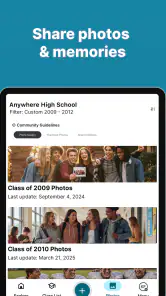
- Easy way to reconnect with former classmates and school friends.
- Profiles can help identify people despite changes in names or locations.
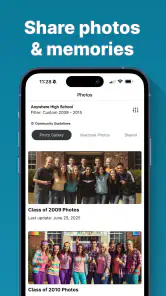
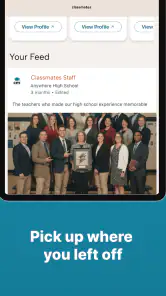
- Useful for sharing updates
- memories
- and school-related news.
- Search tools make it simple to find contacts from different school years.
- Can support group discussions for reunions and class activities.
Cons
- Some features may depend on how many classmates already use the app.
- Older profiles may contain outdated contact or personal information.
- Privacy settings should be checked before sharing photos or updates.
- Notifications from groups and messages may become distracting.
- Finding the right person can be difficult when names are common.
- Category
- Social
- Version
- 1.5.41