Cinerra
- 10.00
- 1.4
- Installs
- 10.00K
- Price
- Free

Screenshots
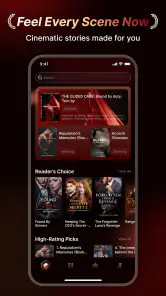
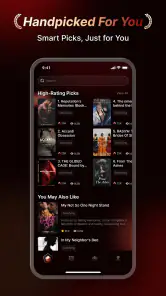
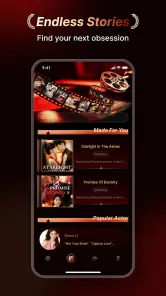
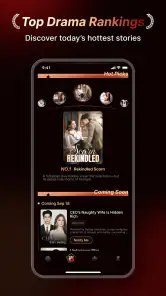
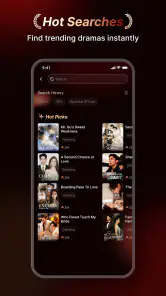
Analysis by Reviewed
I opened Cinerra expecting a simple entertainment app, but its idea is more specific than a standard video platform: it brings short dramas and novels into one place. That combination makes sense for people who like switching between watching a story and reading one, especially when they have only a few spare minutes. My experience was less about finding a huge all-purpose library and more about judging whether this focused format fits naturally into a daily routine.
The app comes from Tuofu Jiyuan and is free to install, with optional purchases shown from $4.99 to $299.99 per item. It is listed for everyone, which makes the basic concept approachable for a broad audience. Still, the very low average rating of 1.4, based on around 27 ratings, is important context before you commit time or money. I would treat Cinerra as an app to test carefully rather than an automatic replacement for established reading and streaming services.
From a spare moment to a story
The most realistic starting point is a small gap in the day. Imagine waiting for an appointment, riding public transport, or winding down before bed. You want a complete piece of entertainment, but not necessarily a long film or a full novel. Cinerra is aimed at that in-between moment, where a short drama can provide immediate visual momentum and a novel can offer a quieter alternative.
I like the basic decision it presents: watch when I want quick visual context, or read when I want to control the pace. That is more useful than it may sound. A short drama can be easier when my attention is divided, while reading works better when I want to pause, reread, or continue without sound. Having both formats in the same entertainment app reduces the need to jump between unrelated apps.
At the same time, the combined concept creates a question that a normal streaming app or reading app does not have to answer: does each side feel equally worthwhile? A unified shelf is convenient only if the handoff between formats is smooth and the available stories are easy to understand. If one side feels thin, the other side has to carry the experience.
What I would do first
My first step would be to browse rather than purchase anything. I would look for a drama whose premise is immediately clear, then check whether the novel section offers a comparable choice for the same mood. This is a practical way to judge the app without spending money. If the content feels appealing in both formats, Cinerra has a stronger reason to stay on the phone. If only one section interests you, a dedicated alternative may be more sensible.
The app is currently at version 1.0.7 and requires Android 7.0 or later. That makes it accessible to many older Android devices, although compatibility alone does not guarantee a polished experience. I would install it on the device I actually use for entertainment, not assume that a technically supported phone will provide the same comfort as a newer one.
More From Our News Desk

Clash of Clans Is Won Between the Battles

Android Auto Makes the Case for Quieter Car Software

MobiOffice: Transforming Mobile Productivity with Seamless Integration

EA SPORTS FC™ Mobile Soccer: Redefining Mobile Sports Gaming

How Microsoft OneDrive Became a Mobile Productivity Giant

How Google Translate Breaks Language Barriers Effortlessly
Because the store description is simply “Cinerra,” the first impression depends heavily on what the app itself presents after opening. That puts extra importance on clear browsing, readable titles, and useful story descriptions. When an app has both dramas and novels, the categories should help me understand what I am choosing without making me inspect every item one by one.
Following the story workflow
The natural workflow begins with discovery, continues with a format choice, and ends with either a short viewing session or a reading session. I would start by selecting a story based on its premise, open it, and decide whether the presentation gives me enough confidence to continue. For a drama, that means quickly understanding the characters and situation. For a novel, it means being able to settle into the text without unnecessary confusion.
The key trade-off is commitment. Short dramas are attractive when I want an immediate result, but they can also encourage rapid switching if the opening does not hold my attention. Novels reward patience, yet they ask more from me when I am tired or distracted. Cinerra is most useful when I choose the format according to my situation instead of treating both sections as interchangeable.
A good personal routine would be to reserve dramas for noisy or visually busy parts of the day and novels for quieter periods. That is one of the app’s more practical strengths: the same destination can serve two different attention levels. I would not expect it to replace a dedicated e-reader for long reading sessions, but I can see the value of having a lightweight story option ready when I do not want to open several apps.
Another useful habit is to judge a story before making a purchase. I would read the description, sample the opening experience, and decide whether the pacing suits me. This matters because the listed in-app purchase range reaches from $4.99 to $299.99 per item. The upper end makes it especially important to understand what an item includes before confirming anything. I would keep purchases limited to stories I already know I want, rather than buying simply because the app makes browsing convenient.
Where the handoffs matter
The handoff from browsing to watching or reading is the central test. In a focused entertainment app, I should not have to rethink the entire interface each time I change format. The visual language can differ between video and text, but the basic path should remain understandable: find a story, open it, continue it, and return to the wider collection.
I would also pay attention to the handoff between sessions. If I watch part of a drama during a break and return later, the experience is much better when I can quickly identify where I stopped. The same applies to a novel. A combined app has an opportunity to make this continuity feel natural, but it also has more chances to make me lose track of what I was doing. That is why I would test both formats on separate days instead of judging the app from a single launch.
There is a second handoff that affects real households: moving from personal browsing to shared viewing. A short drama may work when I can give it my full attention, but a novel is more private and flexible. If I am choosing entertainment for a room with other people, video is the obvious route. If I am trying not to disturb anyone, reading is the better fit. Cinerra’s value depends partly on how well it supports these different circumstances without making the user feel pushed toward one format.
For a commuter, the workflow is straightforward: open the app before the journey, choose a story while connected, and continue during the trip. I would avoid assuming that every session will be equally convenient in changing network conditions, so I would prepare my choice rather than browse endlessly while traveling. That small change reduces frustration and helps keep the app in its intended short-session role.
What the result feels like
The best outcome is not simply finishing a video or reading several pages. It is leaving the app feeling that the time was well spent. Cinerra can achieve that when the story selection matches the moment: a compact drama for an immediate emotional beat, or a novel for a slower escape. The combined format gives me more control than an app that offers only one kind of content.
I would recommend it most to curious users who enjoy serialized storytelling and do not mind exploring a newer service. It may also suit someone who regularly alternates between watching and reading but wants fewer separate apps on the home screen. The free entry point lowers the risk of trying it, provided the user treats purchases cautiously and does not assume that every available item will be equally compelling.
The result is less convincing for someone who already has a carefully organized reading app and a mature streaming subscription. Those services usually make a stronger case through depth, familiar discovery tools, and established viewing or reading habits. Cinerra’s advantage is its focused combination, not a promise that it will outperform every specialist alternative.
I would also separate the app’s concept from its current reputation. Around 10K installs show that people are trying it, but the 1.4 average is a serious warning sign. I would not ignore that simply because the idea sounds convenient. A low rating can reflect problems with content, usability, purchases, or expectations, and a prospective user should be ready to uninstall if the actual experience feels unreliable or unappealing.
Where the workflow breaks
The first possible break is discovery. If the opening screen does not make the difference between dramas and novels obvious, I may spend more time navigating than enjoying a story. This is especially damaging for short sessions, because a few minutes of searching can consume the time I intended to use for entertainment.
The second break is the paid boundary. Free installation is helpful, but the presence of high-priced individual purchases changes how I would use the app. I would never hand my phone to a child and leave purchase decisions unattended, even though the content rating is Everyone. The age label describes audience suitability; it does not remove the need for sensible control over spending.
The third break is format mismatch. Someone who wants a deep reading environment, extensive personalization, or a large established catalog may find the novel side less satisfying than a dedicated reading service. Someone who wants premium long-form video may find short dramas too limited in length or scope. Cinerra works best when its compact, mixed-format identity is exactly what the user wants.
The fourth break is trust. With a rating of 1.4 and roughly 27 ratings, I would approach the app as an experiment. I would avoid building my entire entertainment routine around it immediately. Instead, I would test one drama, try one novel, observe how easy it is to resume each, and only then decide whether it deserves regular use.
Who should try it, and who should skip it
I would suggest trying Cinerra if you enjoy short storytelling, want both video and text in one entertainment app, and are comfortable evaluating a less established option for yourself. It is particularly suitable for people whose free time arrives in irregular pieces. The ability to choose between watching and reading can be genuinely useful when the same person has different attention levels throughout the day.
I would skip it if you need a proven, highly rated platform, want a specialized reading experience, or prefer to avoid apps with expensive individual purchase possibilities. I would also skip it if the low average rating makes you uncomfortable experimenting. There is no reason to force a combined app into your routine when a dedicated service already gives you the exact format you prefer.
My practical recommendation is to begin with the free experience, compare one drama and one novel, and make no purchase until the complete path feels clear. Notice how quickly you can move from opening the app to starting a story, how easily you return to it later, and whether the content matches the promise of a short, convenient escape. Those checks tell you more than the concept alone.
My final take on the mixed-format approach
Cinerra has a clear and appealing premise: it puts short dramas and novels side by side so I can choose between watching and reading according to the moment. That makes it more interesting than a single-format app, and the free starting point gives curious users a low-risk way to explore it.
Still, I would keep expectations measured. The low rating, the early version number, and the broad range of in-app purchase prices mean that careful testing is essential. I would recommend trying the free path first and treating every purchase as a deliberate decision, not as an automatic part of browsing.
In my view, Cinerra is worth considering for flexible, short entertainment, especially if you genuinely want both dramas and novels in one place. It is not the obvious choice for readers seeking a dedicated library or viewers looking for a mature streaming replacement. Its success depends on whether the handoff from discovery to story feels effortless and whether the available content earns a place in your everyday routine.
Cinerra Frequently Asked Questions
What kind of stories can I find in Cinerra?
Cinerra is presented as an entertainment app that brings short dramas and novels together in one hub. That makes it worth considering if you enjoy discovering stories in more than one format, rather than browsing only a conventional video catalog. The store short description is simply “Cinerra,” so the app’s fuller focus is best understood through its short-drama and novel offering.
Who develops Cinerra, and what is its age rating?
Cinerra is developed by Tuofu Jiyuan and is rated for Everyone. That age rating makes the app suitable for a broad audience, although parents may still want to review the stories and app experience with younger users. It is listed in the Entertainment category, so its purpose is leisure and story discovery rather than a tool for work or study.
What is Cinerra, and what can I use it for?
Cinerra is designed for users who want to discover, browse, and keep track of movies and other video entertainment in one place. Depending on the version and region, it may provide film information, recommendations, search tools, watchlists, ratings, trailers, or links to available viewing services. It is best used as a discovery and organization tool rather than assuming every title can be streamed directly inside the app.
Is Cinerra free to download and use?
Cinerra is free to download, while optional in-app purchases are offered at prices ranging from $4.99 to $299.99 per item. The free download does not mean that every option inside the app is free, so check purchase details before confirming a transaction. If you are setting it up for a child, consider using the device’s purchase controls to avoid accidental spending.
Does Cinerra let me watch movies directly in the app?
The availability of direct playback depends on how Cinerra is configured in your region and on the specific title you select. In many cases, entertainment apps focus on providing movie details, recommendations, availability information, or links to third-party platforms rather than hosting the content themselves. You should review each title’s viewing options and confirm whether a separate streaming subscription is required.
Pros
- Simple interface makes browsing films and series quick.
- Useful filtering helps narrow down titles by genre or release year.
- Personalized recommendations can reveal less obvious viewing options.
- Title pages provide essential information in a compact layout.
- Lightweight design generally feels responsive on modern devices.
Cons
- Availability of titles and services may vary by country.
- Some recommendations may feel repetitive after regular use.
- Streaming availability can change without much warning.
- Limited details may be shown for lesser-known productions.
- The app may depend on external services for playback or availability.
- Category
- Entertainment
- Version
- 1.0.7