ChimeChat: AI Character Chat
- 506.00
- 4.7
- Installs
- 100.00K
- Price
- Free

Screenshots


Analysis by Reviewed
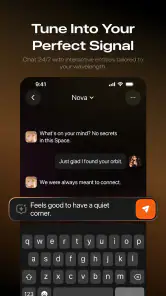
I approached ChimeChat as an entertainment app rather than a replacement for a search engine, messaging service, or professional adviser. Its central idea is simple: you chat with AI characters in a more personal, conversational setting. That sounds familiar at first, but the experience feels different from asking isolated questions in a general chatbot because the focus is on ongoing interaction, tone, and the feeling of speaking with a chosen personality.
The app comes from Hamlikyger and is available free of charge. It sits in the entertainment category, carries a Mature 17+ rating, and works on devices running Android 7.0 or later. The latest listed build is version 1.0.4. Those details matter because the age rating sets a clear expectation: this is not an app I would hand to a child, and adults should treat conversations as entertainment instead of assuming every exchange is suitable, accurate, or emotionally healthy.
What caught my attention was the balance between accessibility and uncertainty. A free AI chat app is easy to try, and ChimeChat has attracted more than 100 thousand installs with an average rating of 4.7 from around 4.5 thousand ratings. That level of interest suggests that the basic idea connects with users. Still, popularity does not automatically answer the questions I care about most: what control do I have over a conversation, what happens when a topic becomes sensitive, and how carefully should I handle anything I type?
How the character-chat experience feels in everyday use
The most useful way to understand ChimeChat is to compare it with the alternatives people already know. A normal chatbot is usually built around tasks: ask a question, request a summary, generate an idea, and move on. A social messaging app, on the other hand, depends on another person being available and willing to respond. ChimeChat occupies the space between those two habits. It is designed for a more relaxed exchange where the character and the mood of the conversation matter as much as the answer.
I can see the appeal after a long day when I want a low-pressure conversation without arranging a call or sending a message that demands a reply. Someone might use it to explore fictional dialogue, improvise a scene, test how a character reacts to a dilemma, or simply enjoy a playful back-and-forth. That makes it more suitable for casual entertainment than for serious productivity.
A realistic example would be using it during a commute. Instead of scrolling through short videos, I could start a conversation with a character and ask for a fictional travel companion, a friendly debate, or a small role-playing scene. The value is not that the AI knows me in the human sense. The value is that it gives me an immediate conversational prompt and keeps the interaction moving without requiring a second person.
That same design creates a trade-off. The more natural a conversation feels, the easier it becomes to forget that the responses are generated. I found it helpful to keep a mental boundary: enjoy the character as a performance, but do not treat the exchange as proof of real understanding, friendship, or expertise. This is especially important when the conversation turns toward loneliness, relationships, health, money, or personal crises.
More From Our News Desk

Clash of Clans Is Won Between the Battles

Android Auto Makes the Case for Quieter Car Software

MobiOffice: Transforming Mobile Productivity with Seamless Integration

EA SPORTS FC™ Mobile Soccer: Redefining Mobile Sports Gaming

How Microsoft OneDrive Became a Mobile Productivity Giant

How Google Translate Breaks Language Barriers Effortlessly
Where the app is more useful than a general chatbot
ChimeChat makes more sense when I already know the kind of interaction I want. A general assistant is usually better when I need a precise explanation, a structured plan, or a dependable answer that can be checked. A character-focused chat is better when the goal is atmosphere. The difference is similar to choosing between a calculator and an improvisation partner: both respond to input, but they are built for different reasons.
One non-obvious advantage is that character framing can reduce the pressure of starting a creative exercise. If I want to write dialogue, I can begin by speaking to a fictional personality instead of staring at a blank page. The conversation can supply a direction, a conflict, or a particular voice that I later reshape. I would still edit the result carefully, because generated dialogue can drift, repeat itself, or make confident choices that do not fit the scene.
Another useful approach is to treat the chat as a rehearsal space. I might practice how to phrase a difficult request, test several tones for a fictional conversation, or explore how a scene changes when the character is supportive rather than skeptical. This is not a substitute for practicing with a real person when the stakes are high, but it can help me notice which parts of my wording sound unclear.
The app is less convincing for users who want a focused tool. If I need citations, reliable current information, advanced writing controls, or a work-oriented history of prompts, a conventional assistant may be the better choice. ChimeChat’s entertainment-first identity is a strength only when I actually want the conversational mood.
Small habits that improve the quality of a session
I get more from this type of app when I begin with a clear purpose instead of typing random questions. A short instruction such as “keep this as a light mystery scene” or “challenge my assumptions but stay respectful” gives the exchange a direction. It also makes it easier to notice when the conversation has wandered away from what I intended.
A second useful habit is to reset the tone deliberately. If a character begins responding too dramatically, I would rather state the adjustment plainly than keep feeding the same pattern. Asking for shorter replies, a calmer style, or a fictional setting can make the next part easier to follow. This is a practical way to preserve user agency: I am not just reacting to the character; I am steering the session.
I also recommend separating creative material from personal records. For a story exercise, invented names and fictional circumstances are enough. There is rarely a good reason to paste a private message, a complete diary entry, an identifying document, or sensitive details about another person into an entertainment chatbot. Even when an app feels friendly, the safest habit is to share only what the conversation genuinely needs.
Trust, controls, and moments that require care
Trust in an AI character app should come from visible choices, not from the warmth of the writing. A character can sound considerate while still producing an incorrect or unsuitable response. I therefore judge the experience by what I can control in the moment: whether I can choose how much to disclose, whether I can end or redirect a conversation, and whether the app makes its boundaries understandable.
ChimeChat’s Mature 17+ classification is an important signal for how I would use it. Adults should not interpret that label as a promise that every conversation will be responsible or personally appropriate. Instead, it is a reminder to approach the app with judgment, particularly when a character-led exchange becomes intimate, emotionally intense, or suggestive.
Data-sensitive moments deserve extra attention. The most obvious risk is oversharing during a conversation that feels private. I would avoid entering passwords, payment details, government identifiers, precise location information, private contact details, or confidential work material. I would also think twice before describing another person in a way that could identify them. These precautions are useful because the entertainment value of the chat does not require that level of detail.
There is a subtler risk as well: emotional disclosure. A user may begin with a fictional scenario and gradually move into real worries. If that happens, I would pause and ask whether continuing is actually helping. A generated character can offer words that feel comforting, but it cannot take responsibility for a real-world situation. For urgent mental-health, medical, legal, or safety concerns, a qualified human or an appropriate emergency service is a better route.
Account and privacy choices should be reviewed in the app’s own visible settings before starting regular use. I would look for controls related to sign-in, conversation history, deletion, notifications, and any options that affect personalization. I would not assume that a free app has no data considerations, and I would not treat a friendly interface as evidence of a particular privacy practice. The responsible approach is to read the choices presented on the device and use the most restrictive settings that still support the experience I want.
This is also where ChimeChat may not suit everyone. People who need strict control over records, workplace confidentiality, or regulated information should choose a tool whose documented controls match those requirements. An entertainment app can be enjoyable without being the right place for sensitive professional conversations. That is not a criticism of the concept; it is a matter of matching the tool to the risk.
Keeping control when the conversation becomes persuasive
Character chat can make suggestions sound more personal than they really are. I pay attention when a response pushes me toward a decision, frames disagreement as disloyalty, or encourages me to keep secrets from people I trust. Those are moments when I would stop treating the exchange as harmless role-play and evaluate the wording critically.
A practical technique is to ask the character to present alternatives rather than a single conclusion. For a fictional dilemma, I might request three possible interpretations and the weakness of each one. This does not guarantee a correct answer, but it helps prevent the conversation from becoming a one-sided stream of confident statements. It is especially useful when I notice myself accepting a response because it sounds emotionally convincing.
I would also avoid using the app as a substitute for real companionship. It can fill a few quiet minutes and provide a creative prompt, but it cannot share responsibility, notice nonverbal cues, or build a mutual relationship. Users who are already spending too much time in simulated conversations may find that the easy availability encourages avoidance rather than connection. In that situation, a real message to a friend, a walk, or an offline hobby may be the healthier choice.
Who should try it, and who should skip it
I think ChimeChat is a good fit for adults who enjoy fictional interaction, casual role-play, character-driven writing, and spontaneous conversation. It is also worth trying for someone who wants a gentle way to brainstorm scenes without opening a full writing program. The free price lowers the barrier to experimenting, although I would still pay attention to every on-screen choice during setup and use.
I would skip it if my main goal were factual research, dependable advice, formal content production, or strict privacy for sensitive material. I would also avoid recommending it to anyone under the stated age rating. Users who dislike unpredictable replies may prefer a conventional entertainment app with fixed content, while users who want genuine social connection should look toward human communities rather than an AI character.
My final view is cautiously positive. ChimeChat has a clear entertainment purpose, and its character-based format can make creative practice and casual conversation feel more inviting than a blank chatbot window. The strongest experience comes from using it intentionally: choose a harmless scenario, guide the tone, keep personal information out of the conversation, and remember that natural language is not the same as human understanding.
Hamlikyger’s app is easy to approach because it is free and available on older Android versions, while its growing install base and 4.7 average show that many users find the concept appealing. I would not let those figures replace my own judgment, though. The right question is whether I want an AI performance for entertainment and creative exploration, and whether I am comfortable maintaining boundaries while using it.
My recommendation is to try ChimeChat as a controlled, lighthearted character-chat experience, not as a private confidant or authority. If I keep that distinction clear, the app can be a fun way to break a creative block, rehearse fictional dialogue, or fill a quiet moment. If I need certainty, accountability, or meaningful human support, I would choose a different kind of service.
ChimeChat: AI Character Chat Frequently Asked Questions
What age group is ChimeChat: AI Character Chat intended for?
ChimeChat is an entertainment app intended for mature users aged 17 and older. Its AI character conversations and role-play themes may not be appropriate for younger audiences, so parents and guardians should consider the age guidance before allowing a teenager to use it. The age rating is a useful starting point, but it does not replace reviewing the app’s content and privacy settings together.
What is ChimeChat: AI Character Chat?
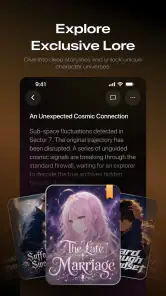
ChimeChat: AI Character Chat is an interactive AI companion app that lets you communicate with virtual characters through text-based conversations. Each character may have a different personality, conversational style, and role-play theme, giving users the option to enjoy casual chats, storytelling, creative scenarios, or character-driven interactions. The quality and tone of replies can vary depending on the character and the prompts you provide.
Is ChimeChat: AI Character Chat free to download and use?
ChimeChat is free to download, so you can try the app without paying upfront. The app has a 4.7 average from around 4,500 ratings, with more than 500 written reviews, and has passed 100,000 installs. Those figures offer a snapshot of its audience, but they do not guarantee that every feature or conversation option is free. Check any purchase prompts and their terms before confirming a payment.
Does ChimeChat create private and secure conversations?
You should review ChimeChat’s privacy policy before sharing personal information in a conversation. AI chat services may process messages on remote servers to generate responses, and data handling can depend on the provider’s policies, account settings, analytics tools, and third-party services. Avoid entering passwords, financial details, private documents, or sensitive personal information, and check whether the app offers controls for chat history, data deletion, or account management.
Can I customize characters or create my own conversations?
ChimeChat’s character experience may allow users to select different personalities, themes, or conversation styles, while some versions may also provide customization options. The exact tools can depend on the current app release and whether certain features are limited to premium users. Clear prompts generally produce more consistent results, but AI characters can still respond unpredictably, forget earlier details, or interpret role-play instructions differently.
Pros
- Wide range of AI characters with distinct personalities and conversation styles.
- Simple interface makes it easy to start chats without a steep learning curve.
- Useful for casual entertainment
- creative prompts
- and roleplay scenarios.
- Conversations can inspire stories
- ideas
- and imaginative writing exercises.
- Mobile format allows quick chats whenever you have a few free minutes.
Cons
- AI responses may occasionally feel repetitive
- inaccurate
- or out of character.
- Some characters or features may require purchases or a premium subscription.
- Privacy details should be reviewed before sharing personal or sensitive information.
- Long conversations may lose context or contradict earlier messages.
- Availability and quality of characters can vary between app updates.
- Category
- Entertainment
- Version
- 1.0.4