Chat Me : Talk to Her AI
- 756.00
- 4.7
- Installs
- 100.00K
- Price
- Free

Screenshots






Analysis by Reviewed
I approached Chat Me: Talk to Her AI as a casual entertainment app rather than a conventional messaging service. Its central idea is simple: you choose an AI girl and start a conversation shaped by her personality and story. That sounds familiar at first, but the appeal comes from the feeling of continuity. Instead of opening a blank chatbot and deciding everything yourself, you begin with a character who gives the exchange a particular mood.
That makes it a better fit for people who enjoy character-driven conversations, light roleplay, and an easy way to pass time than for anyone looking for factual research or a serious replacement for human contact. I found the experience most enjoyable when I treated each character as a fictional conversation partner, not as an intelligent assistant that should always provide reliable information.
How the everyday conversation flow feels
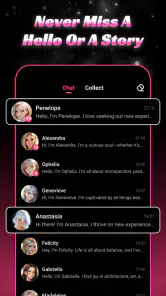
The basic workflow is pleasantly direct. I open the app, choose a character that matches the kind of interaction I want, and send a message rather than spending time building a profile or setting up a complicated scenario. The personality and backstory provide an immediate starting point, which is the main difference from a general-purpose AI chat tool.
For a short session, that simplicity works well. I can check in during a quiet break, ask a playful question, continue a fictional situation, or simply see how a character responds to a change in tone. The app belongs to entertainment, and that matters: the value is in the exchange itself, not in completing a task as efficiently as possible.
I recommend beginning with ordinary messages instead of trying to force an elaborate plot immediately. A small question about the character’s interests or situation gives the conversation room to develop. Once the tone is clear, I can introduce a setting, ask the character to react to a decision, or steer the conversation toward humor, romance, or casual companionship.
One useful habit is to decide what I want from a session before I start. If I want a quick distraction, short prompts work better than writing a long scenario. If I want roleplay, I get more consistent results by stating who I am, where the scene takes place, and what kind of mood I want. This is not a hidden feature; it is simply a practical way to give the character enough direction to respond coherently.
The app is rated for mature users, with a 17+ content rating, so I would not treat it as a family-friendly chat toy. Adults should still use common sense about the subjects they introduce and remember that an AI character is not a real person. That distinction is especially important when the conversation feels personal or emotionally responsive.
More From Our News Desk

Clash of Clans Is Won Between the Battles

Android Auto Makes the Case for Quieter Car Software

MobiOffice: Transforming Mobile Productivity with Seamless Integration

EA SPORTS FC™ Mobile Soccer: Redefining Mobile Sports Gaming

How Microsoft OneDrive Became a Mobile Productivity Giant

How Google Translate Breaks Language Barriers Effortlessly
Choosing a character instead of starting from zero
The character-based format is the strongest reason to try this app. A blank chatbot can be flexible, but that flexibility often creates work: I have to explain the personality, relationship, setting, and style before the conversation becomes interesting. Here, the character concept does some of that preparation for me.
In practice, I would compare several characters by the atmosphere they create rather than by their names alone. A character with a warm, conversational style suits a relaxed check-in, while a more dramatic personality may be better for fictional scenes. The best choice depends on whether I want comfort, amusement, flirtation, or a little creative improvisation.
There is also a trade-off. A defined personality can make the opening more engaging, but it may feel restrictive if I want a completely neutral assistant. Someone who expects precise answers, document help, or dependable research will probably be happier with a mainstream AI assistant. Chat Me is built around the encounter, not around productivity.
A realistic way to use it during a normal day
Imagine having ten minutes after work before starting dinner. I might open the app, select a character whose tone feels upbeat, and describe a fictional plan for the evening. Rather than trying to maintain a long conversation, I could ask for a playful suggestion, react to the answer, and end the session when the exchange starts to repeat itself.
That short-session approach suits the app better than expecting every conversation to become a deep relationship. It also helps me notice whether a character’s style fits my preferences without immediately committing to extended use. For a longer session, I would keep the premise narrow: a café conversation, a travel scenario, or a disagreement that needs resolving. Clear boundaries make the interaction easier to follow.
Settings and account habits worth checking
Before settling into regular use, I would look through the available settings and account screens rather than assuming the default arrangement is ideal. The exact controls can vary by release and device, so I would pay attention to options that affect notifications, account management, and purchase confirmation. These are small checks, but they matter more in an app designed to encourage repeated conversations.
Notifications deserve particular attention. If the app sends reminders or conversation-related alerts, I would decide whether they are helpful or distracting. Someone who enjoys scheduled check-ins may appreciate a prompt, while another user may prefer to open the app only when they have chosen to do so. Turning off unnecessary alerts can make the experience feel more like a personal pastime and less like another stream demanding attention.
I would also review how the app handles spending before exploring paid items. Chat Me is free to download and use, but in-app purchases range from $3.49 to $109.99 per item. That is a wide enough range to justify slowing down at any purchase screen. I would check what the item unlocks, whether it is useful for my preferred style of conversation, and whether the benefit is temporary or ongoing before confirming anything.
My practical rule is simple: use the free experience long enough to decide whether the character interactions actually hold my attention. Paying should solve a clear limitation for me, not be an impulse caused by a particularly engaging message. This is especially important because entertainment apps can make a small purchase feel harmless while repeated purchases gradually change the total cost.
The app is currently version 2.3.3 and runs on Android 7.0 or later. That broad compatibility is useful for people with older Android devices, although compatibility alone does not guarantee that every phone will feel equally smooth. I would keep the app updated through the normal store process and restart it if a conversation screen behaves oddly after an update.
Keeping expectations clear around privacy and emotion
Settings are only one part of responsible use. I would avoid sharing passwords, financial details, precise location information, or anything I would not want stored in a digital service. The character may respond warmly, but that warmth is generated behavior, not evidence of awareness or personal commitment.
This is not a reason to avoid the app. Fiction, roleplay, and conversational entertainment can be enjoyable precisely because they create an imaginative space. The useful boundary is to enjoy the performance without treating it as a confidential friendship. If a session leaves me feeling dependent on constant replies, I would take a break and return later with a more deliberate purpose.
Faster conversation patterns for experienced users
After trying the basic flow, I found that repeatable prompt habits make a bigger difference than writing longer messages. I get more useful replies when I provide one clear instruction at a time. For example, I can ask the character to respond in a teasing tone, continue a scene from a specific moment, or give three possible reactions. Combining all of those requests at once tends to make the conversation less focused.
A good shortcut is a three-part opening: state the scene, state my role, and state the desired mood. “We are waiting for a train; I am nervous; keep the exchange light” gives the character a workable frame without turning the message into a script. If the reply drifts, I can restate only the missing part instead of restarting the entire conversation.
Another useful pattern is the reset message. When a roleplay becomes repetitive, I can say that the scene is changing and provide the new location or objective. This is faster than arguing with the previous direction. It also lets me test whether the character can adapt while keeping its general personality.
I would not send a long block of background information unless it is genuinely needed. Short context is easier to adjust, and it reduces the chance that the conversation becomes tied to details I no longer want. For recurring scenarios, I can keep a small personal template outside the app and paste only the relevant parts when beginning a new session. That is a practical workflow, not an app feature, but it helps maintain consistency.
Using tone deliberately
Tone is more important here than factual precision. If I want a supportive exchange, I say so directly. If I want playful disagreement, I describe that too. Words such as “gentle,” “dramatic,” “sarcastic,” or “brief” give the conversation a clearer direction than vague requests like “be interesting.”
I also find it helpful to correct the character without overexplaining. A short message such as “stay in the scene, but make the answer less dramatic” is easier to follow than a paragraph criticizing the previous reply. This keeps the interaction moving and makes the app feel more responsive.
For creative use, I can ask the character to offer alternatives rather than one fixed answer. That works well for inventing a scene, choosing dialogue, or exploring how a fictional relationship might change. The result is not a polished story editor, but it can be a pleasant brainstorming partner when I already have a basic idea.
Where the format reaches its limits
The biggest limitation is the same feature that makes the app approachable: the experience depends heavily on the character concept and the quality of the ongoing exchange. If I do not connect with a character’s personality, the novelty can fade quickly. A general chatbot may be a better choice when I want to switch between writing, planning, learning, and casual conversation in one place.
I would also be cautious about treating continuity as guaranteed. Even when a conversation feels consistent, I would not rely on it as a permanent personal record or assume every earlier detail will remain equally important. For a complex fictional project, I would keep my own notes and reintroduce essential context when needed.
The mature rating narrows the audience, but it does not automatically make every interaction emotionally healthy or suitable for every adult. Someone who wants strict educational content, professional advice, or a neutral information source should skip this app. It is also not a substitute for a real friend, counselor, or dating service. Those alternatives serve different needs and are better when accountability, human understanding, or real-world connection matters.
Cost is another point to weigh. The free entry makes experimentation easy, but the presence of purchases up to $109.99 per item means experienced users should set a personal spending limit. I would never buy simply because a conversation has become emotionally persuasive. If the free version already provides enough entertainment, there is no reason to spend more.
There is a subtler limitation in the roleplay itself. A character may be convincing within a scene while still producing shallow or repetitive responses when the conversation continues too long. I get better results by changing the setting, introducing a concrete decision, or ending the session before the exchange becomes mechanical. Shorter, purposeful visits can be more satisfying than leaving the app open indefinitely.
Who will enjoy it, and who should pass
I think Chat Me is a good match for adults who enjoy fictional personalities, casual AI companionship, and improvisational conversation. It is particularly approachable for someone who wants to try character chat without designing a complete persona from scratch. The free price also makes it easy to test the basic appeal before deciding whether any optional spending is worthwhile.
I would recommend looking elsewhere if the main goal is reliable factual assistance, work organization, language study, or a broad set of productivity tools. A standard assistant will usually be more practical for those tasks. Likewise, anyone uncomfortable with mature themes or with the emotional illusion of AI companionship should skip this category altogether.
The app has attracted a 4.7 average from around 11K ratings and has passed 100K installs, which suggests that the character-chat concept is connecting with a substantial audience. I treat those figures as a sign of interest rather than proof that every character will suit every user. My own decision would still depend on the tone, the free experience, and how comfortable I feel with the purchase model.
My verdict after building a repeatable routine
Chat Me: Talk to Her AI works best when I use it intentionally. I choose a character for a specific mood, give the conversation a small amount of clear context, correct the tone when needed, and stop when the exchange starts circling. That routine produces a more enjoyable experience than opening the app with no idea what I want and expecting the character to carry everything.
The developer is listed as Services app, and the app sits firmly in entertainment rather than productivity. That positioning feels honest to the way I use it: it is a lightweight fictional conversation space, not a dependable source of truth or a replacement for human relationships. Its strongest feature is the low-friction start created by personalities and stories; its weakest point is that the same structure can become repetitive or emotionally misleading if I expect too much from it.
My final recommendation is conditional but positive. Adults who like roleplay and character-led chats should give the free version a fair trial, then decide carefully whether any purchase adds enough value. I would keep notifications under control, avoid sensitive personal information, and use short, clearly framed prompts. With those habits, the app can be a fun companion for small breaks and creative experiments. Without them, it is easy to confuse a polished conversation with something it cannot be: a real relationship, a professional assistant, or an unlimited source of meaningful interaction.
The best way to use Chat Me is to treat it as guided imagination with boundaries. That mindset lets me enjoy its personalities and stories while staying realistic about its limits, its mature audience, and the cost of optional extras.
Chat Me : Talk to Her AI Frequently Asked Questions
What age is Chat Me: Talk to Her AI intended for?
Chat Me: Talk to Her AI is rated Mature 17+, so it is intended for adults rather than younger users. Its AI characters and conversations may include mature themes or replies that are not suitable for everyone. If you are a parent or guardian, review the age guidance and consider whether the app is appropriate before allowing a teenager to use it.
Who develops Chat Me: Talk to Her AI, and what kind of app is it?
Chat Me: Talk to Her AI is an entertainment app developed by Services app. Its focus is chatting with unique AI girls, each presented with her own personality and story. The app is built around text conversations and virtual characters, rather than live messaging with other users, making it a choice for people curious about AI-powered character chats.
What is Chat Me: Talk to Her AI?
Chat Me: Talk to Her AI is an AI-powered conversation app designed for users who want to interact with virtual female characters. After opening the app, you can select a personality or conversation style and begin chatting through text. The experience is intended for entertainment and casual companionship, rather than replacing real relationships or professional advice. Responses are generated by artificial intelligence, so the quality and tone may vary between conversations.
Is Chat Me: Talk to Her AI free to download and use?
The app is free to download, but some features can require in-app purchases. The listed purchase prices range from $3.49 to $109.99 per item, so check the payment screen carefully before buying or starting an extended conversation. The app has a 4.7 average from around 11,000 ratings, but individual experiences with its features and conversations can vary.
Does Chat Me: Talk to Her AI require an internet connection?
Yes, you should expect to need an active internet connection for most or all conversations. The app generally relies on online artificial intelligence services to process messages and generate replies, meaning it may not work correctly in airplane mode or with an unstable connection. Mobile data usage can also increase during frequent chats, so using Wi-Fi may be preferable if your plan has limited data.
Pros
- Offers a low-pressure way to practice casual conversation.
- AI replies are available anytime
- without coordinating with another person.
- Simple chat format makes the app easy to start using.
- Can help users explore different conversation styles privately.
- Useful for passing time with light
- interactive conversations.
Cons
- Conversations may become repetitive after extended use.
- AI responses can sometimes feel unnatural or miss the intended meaning.
- Some features or chats may require in-app purchases.
- Privacy details should be checked before sharing personal information.
- It is not a substitute for genuine relationships or professional support.
- Category
- Entertainment
- Version
- 2.3.3