BtcCoin-Cloud Miner Mining
- 643.00
- 3.9
- Installs
- 100.00K
- Price
- Free

Screenshots
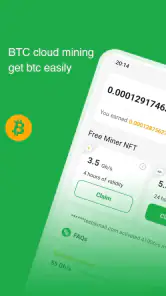
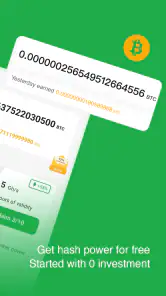
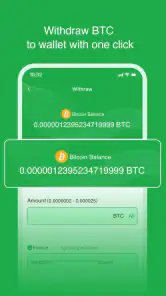
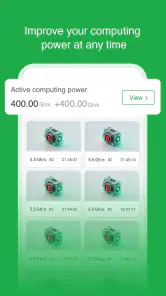
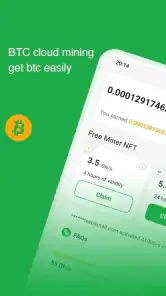
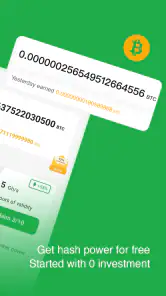
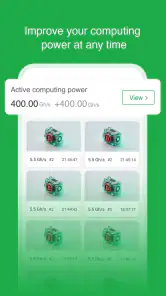
Analysis by Reviewed
I approached BtcCoin-Cloud Miner Mining as a finance app for someone curious about cloud mining but not ready to manage mining hardware. Its basic promise is easy to understand: the app presents a way to engage with Bitcoin mining through the cloud rather than setting up a machine at home. That sounds convenient, especially if you only have a phone and want to explore the idea without dealing with heat, noise, electricity, or hardware maintenance.
My first impression is more cautious than enthusiastic. The app is free to install, but that does not make cloud mining risk-free or automatically profitable. It belongs to a category where the important questions are not only whether the interface is simple, but also how clearly the service explains the path from starting a session to receiving any eventual outcome. I would treat it as an exploratory finance app, not as a substitute for saving, investing, or earning a dependable income.
From curiosity to a cloud-mining workflow
Starting with the right expectations
The most realistic starting condition is a user who has heard about Bitcoin mining and wants a low-friction introduction. Traditional mining requires specialized equipment, a stable power supply, cooling, technical setup, and a willingness to accept ongoing operating costs. A cloud-mining app changes that starting point by moving the apparent mining activity away from the user’s physical device.
That convenience is also the first trade-off. With personal hardware, you can see what equipment you own and what it is doing. With a cloud service, the experience depends on the app’s presentation, account flow, and the terms attached to the service. The phone becomes a control point rather than the machine doing the difficult work. I think that distinction is essential because a polished screen should never be confused with proof of profitable mining.
The app is published by BTC COIN Cloud Miner NFT and is listed as a finance app for mature users. Its age classification is 17+, which is a useful reminder that this is not a casual arcade-style experience. Anyone considering it should already understand that cryptocurrency-related activity can involve uncertainty, changing asset values, and possible financial loss.
What the first session should accomplish
A sensible first session should be treated as an inspection rather than a commitment. I would begin by reading every visible explanation of the mining process, checking what the app says about balances, withdrawals, eligibility, and any purchase connected with cloud-mining activity. I would also note whether the language is clear enough for a newcomer to understand what is happening at each stage.
This is one of the app’s most important practical tests. A user should be able to distinguish between a displayed balance, a pending amount, a promotional figure, and money that can actually be withdrawn. Those are not interchangeable. If the interface makes them look similar, I would slow down and avoid spending anything until the difference is obvious.
The free entry point makes it possible to examine the workflow before considering an in-app purchase. That is the approach I recommend. The available purchases range from $7.99 to $999.99 per item, so the gap between trying the app and spending serious money is substantial. Do not use a purchase to discover how the withdrawal process works. Learn the process first, then decide whether the service deserves any financial trust at all.
Following the activity step by step
Once inside, the natural workflow is to look for the area that starts or manages cloud mining, observe how the app represents progress, and then follow the account balance toward whatever outcome it offers. Even when an app makes this sequence feel automatic, I would keep a written record of what I selected and when. That simple habit helps separate an actual change in account status from a moving animation or a temporary display.
For a beginner, the most useful habit is to inspect the screen after every meaningful action. If a mining session starts, check whether the app shows a status, a duration, a rate, or another explanation. If a balance changes, check whether the change is described as available or pending. If the app asks for a payment, stop and identify exactly what that payment is supposed to provide. This is not unnecessary caution; it is basic bookkeeping for a finance product.
I would also avoid opening several commitments at once. Testing one path at a time makes it easier to understand the handoff from activity to balance and from balance to withdrawal. It also limits the chance of confusing separate purchases, promotional credits, or different mining options. In a category where small labels can carry major financial meaning, a slower workflow is safer than chasing the fastest-looking result.
The handoff from app activity to a usable outcome
The crucial handoff is the point where the app’s internal activity is expected to become something useful to the user. That might mean a balance becoming eligible for withdrawal or another clearly explained result. This is where I would judge the product most severely, because a mining dashboard is only part of the experience. The real value lies in whether the user can understand and complete the next step.
Before paying for anything, I would look for practical explanations about the destination of funds, minimum requirements, processing stages, and any user verification involved. I would not assume that a number shown in a wallet area is immediately transferable. I would also avoid treating a successful in-app update as evidence that a transaction has reached an external wallet. Those are separate events and should be presented separately.
This handoff is also where cloud mining differs from buying Bitcoin through a conventional exchange. An exchange normally focuses on purchasing, selling, and holding an asset, while a mining app frames the experience around generating or accumulating mining-related rewards. If my goal were simply to gain Bitcoin exposure, I would compare the clarity of both routes before choosing. Mining language can sound more productive, but it may involve more conditions and a less direct path to ownership.
A realistic everyday scenario
Imagine someone commuting to work who has a spare phone and a small amount of money set aside for learning about cryptocurrency. They install the app in the evening, explore the free experience, and review how the balance is represented. The next day, instead of buying the largest available option, they check whether the app clearly explains the relationship between the selected activity and any eventual withdrawal.
That user could reasonably keep the app as a learning tool if the workflow is understandable and no payment is required to discover basic information. They might record the starting balance, observe the account over several days, and decide whether the process is transparent enough to continue. The important outcome is not a large number on the screen; it is a clear understanding of what that number means and what must happen before it becomes usable.
Now change the scenario slightly. The same person needs reliable monthly income, cannot afford to lose the money attached to an in-app purchase, or assumes that cloud mining guarantees Bitcoin. In that situation, I would tell them to skip this app. The product category is too uncertain for money that is needed for rent, bills, debt payments, or emergency savings.
Where the workflow becomes difficult
The first friction point is the gap between simplicity and transparency. An app can make starting a cloud-mining activity feel effortless, yet the financial consequences may remain complicated. New users may focus on the apparent progress and overlook the conditions that govern access to the result. My advice is to treat every unexplained term as a reason to pause, not as a minor interface issue.
The second friction point is spending pressure. Because the app is free to install but includes high-priced in-app items, users may be tempted to move from a no-cost trial directly into a larger commitment. I would resist that pattern. A free download is an opportunity to evaluate the workflow, not an argument that paid mining will work in your favor.
The third issue is the difference between mining and market exposure. Even if a cloud-mining process is presented clearly, the value of Bitcoin can change independently of the app’s interface. A rising displayed balance does not guarantee a rising real-world value. Conversely, a technically successful accumulation process could still result in an unsatisfying outcome if the asset’s market value falls or the withdrawal conditions are inconvenient.
There is also a practical device question. Since this is a mobile app, I would not assume that leaving it open, checking it repeatedly, or using a newer phone will transform the economics of cloud mining. The central activity is represented as cloud-based, so the phone should be viewed mainly as the place where the user accesses the service. That makes the app more convenient than running hardware, but it also means the user has less direct visibility into the underlying operation.
How it compares with familiar alternatives
Compared with home mining, this app is easier to approach because it avoids the equipment and technical burden of running a miner yourself. It is a better fit for someone who wants to understand the concept without turning a room into a small data center. The compromise is control: you are relying on the app’s account presentation and service flow rather than inspecting your own hardware and electricity usage.
Compared with a cryptocurrency exchange, the app may appeal to users who prefer the idea of earning through mining rather than purchasing an asset directly. However, an exchange can be the clearer option for someone whose goal is simply to buy, hold, or sell Bitcoin. The choice depends on whether you want a mining-themed process or straightforward asset access. I would not select a mining app merely because the word “mining” sounds more passive or more profitable.
Compared with a standard budgeting or savings app, this product serves a completely different purpose. A budgeting tool helps organize money and reduce uncertainty; a cloud-mining service introduces exposure to a speculative digital-asset activity. If your immediate priority is building financial stability, the usual savings and budgeting alternatives are more appropriate. This app belongs later in the decision process, after essential finances are already under control.
What the current release tells me about usability
The app was released on February 9, 2025, and the current version is 2.0.2. It supports Android 7.0 and later, which gives it broad compatibility with older devices. That is helpful for users who want to test it without buying a recent phone, although compatibility alone says nothing about the quality of the financial workflow.
Its audience is already fairly sizeable, with over 100 thousand installs, while the average rating is 3.9 from around 5.8 thousand ratings. I read that as a mixed but meaningful signal: enough people have tried it to create a visible user response, but the score is not so high that I would skip careful checking. The review count, at more than 600, adds context without replacing personal due diligence.
Those figures make me more willing to investigate the app, not more willing to spend. User adoption can show that an app is discoverable and usable enough to attract attention, but it cannot establish profitability, withdrawal reliability, or suitability for a particular financial situation. In this category, the quality of explanations and the user’s ability to verify each step matter more than popularity.
Who should try it and who should walk away
I see a reasonable use case for a curious adult who wants to explore the language and workflow of cloud mining with a free starting point. That person should be comfortable reading conditions, tracking balances, and stopping when the app asks for money before the outcome is clear. The app can be useful as a structured way to learn what a cloud-mining interface feels like.
I would not recommend it to someone looking for guaranteed returns, instant withdrawals, or a dependable side income. I would also steer away users who are unfamiliar with cryptocurrency terminology and are likely to mistake an internal balance for cash. Beginners can still investigate it, but they should do so with a strict limit of zero spending until they understand every handoff.
It is also a poor fit for anyone who dislikes speculative products. The free price removes the cost of downloading the app, not the broader financial uncertainty associated with cloud mining or Bitcoin. If your preferred financial tools are predictable and easy to audit, a savings product or a regulated exchange may better match your needs.
My practical way to test it
I would use a simple three-stage check. First, explore the free experience and write down what the app claims each screen represents. Second, follow the balance carefully and identify the exact point at which an outcome is considered available. Third, only after understanding the process, decide whether continued use has any educational value for you.
I would keep payment details out of the process until the app’s basic path is clear, and I would never borrow money or use essential funds for an in-app item. I would also save relevant account records for my own reference, particularly if the app shows changing balances or asks the user to complete several steps before a result is available. These habits are more valuable than constantly checking the dashboard.
Most importantly, I would set a stop rule before beginning. For example, if I cannot explain what a displayed balance means, what a purchase changes, or how the final handoff is supposed to work, I would stop using the app rather than trying a more expensive option. That rule protects the user from confusing persistence with progress.
The outcome I would expect
After testing the workflow, the most realistic positive outcome is greater familiarity with cloud-mining interfaces and a clearer sense of whether this model suits you. I would not define success as seeing a growing number inside the app. Success would mean understanding the route from starting activity to usable result and knowing exactly where uncertainty remains.
For me, that makes the app more interesting as an exploratory finance product than as a financial plan. The free entry point is helpful, the mobile format is convenient, and the concept is easier to approach than physical mining. At the same time, paid items reaching $999.99 create a serious need for restraint, especially when a new user has not yet tested the full process.
My final view is cautiously neutral. I would recommend trying BtcCoin-Cloud Miner Mining only as a no-cost investigation for someone who already understands that cloud mining is speculative. I would not recommend purchasing an expensive item based on the promise of a displayed balance, and I would choose a conventional exchange for direct Bitcoin access or a savings app for dependable financial progress. If you approach it slowly, document each handoff, and keep your money outside the experiment until the outcome is genuinely clear, the app can answer whether cloud mining interests you. It should not be asked to answer whether your finances are secure.
Pros
- Cloud-based mining requires no specialized hardware or setup.
- Simple interface makes it accessible to beginners.
- Mining can continue without keeping your phone active.
- Useful dashboard for tracking balances and mining activity.
- Avoids the heat
- noise
- and battery drain of physical mining rigs.
Cons
- Mining returns may be very small compared with fees or minimum withdrawals.
- Cloud-mining services require trust in the provider’s transparency and security.
- Withdrawal rules and processing times may limit access to earned funds.
- Earnings can depend heavily on changing cryptocurrency prices.
- A stable internet connection may be needed for reliable account updates.

- Category
- Finance
- Version
- 2.0.2