BondbloX
- 8.00
- 3.6
- Installs
- 50.00K
- Price
- Free

Screenshots
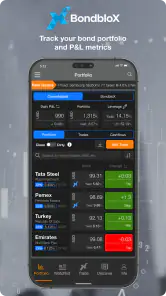
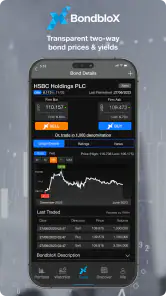
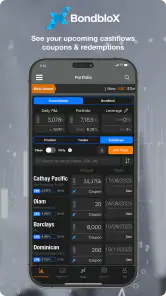
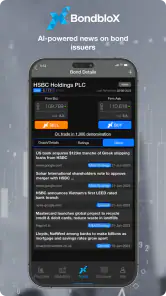
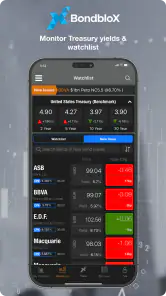
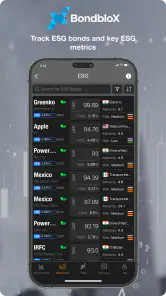
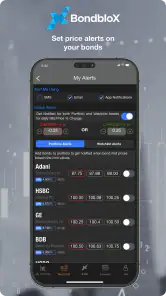
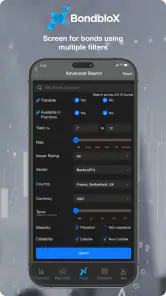
Analysis by Reviewed
BondbloX is a finance app from BondbloX Pte. Ltd. that I would describe as a focused companion for people who want to explore bond trading information, market data and analytics from a mobile device. I found its purpose more specialized than that of a normal banking app or a general investment tracker. It is aimed at helping users look at fixed-income opportunities in a more structured way, rather than simply checking a balance or watching a stock price.
The app is free to install, which makes it easy to try without committing money at the download stage. It also carries an Everyone age rating, runs on Android eight and later, and its current version is 6.70. Those details make it reasonably accessible for many Android users, although the presence of optional in-app purchases means “free” should be understood as free access to the app, not as a promise that every part of the experience has no cost.
How BondbloX fits into a bond-investing workflow
My first impression is that BondbloX works best when I treat it as a research and decision-support tool, not as a replacement for a complete personal finance system. The store summary points directly to bond trading, data and analytics, and that focus matters. A bond investor usually needs a different kind of information from someone choosing a savings account or following a popular equity fund. Maturity, income, issuer quality, market conditions and liquidity can all affect whether an opportunity makes sense.
That narrower purpose is also the app’s main identity. Instead of trying to be a universal money app, it places fixed-income investing at the center. For a reader who already understands why bonds can behave differently from shares, this concentration may feel useful. For someone who only wants to track monthly spending, transfer money, or compare ordinary savings products, the app is probably not aimed at that need.
I would also set expectations carefully before opening it. A bond-data screen can help me organize questions, but it does not automatically turn a complicated investment into a safe one. Even a clean presentation of figures needs context. I still need to think about the issuer, the term, the possibility of selling, currency exposure where relevant, and how the investment fits my own plans. The app can support that thinking; it should not replace it.
What the free entry point really means
The most attractive part of the cost structure is the low barrier to trying the app. BondbloX is listed as free, so I can install it and decide whether its approach suits me before considering any payment. That is especially helpful for a specialist finance product because usefulness depends heavily on the kind of investor I am and on whether I find the presentation clear.
There are also in-app purchases priced from $21.99 to $59.99 per item. I would not treat those amounts as an automatic recommendation to spend. The sensible question is what a paid item unlocks for my particular workflow and whether I would use that benefit repeatedly. If I only want a quick look at the app’s layout or occasional bond-related information, paying may not be worthwhile. If I use the analytical side regularly, the decision becomes more practical, but I would still compare the cost with the value of the specific tools I actually need.
This distinction is important because a free download and paid value are not the same thing. I like being able to start without an upfront purchase, but I would avoid assuming that the free experience includes every useful capability. Before buying anything, I would inspect the purchase description inside the app and check whether it addresses a real limitation in my routine rather than paying simply because the product looks specialized.
The app’s average rating is 3.6 from around two hundred ratings, with eight written reviews shown alongside it. I read that as a reason to approach it with curiosity rather than blind confidence. The rating suggests that the experience may work well for some users and feel less polished or less suitable for others. For a niche investment app, personal fit can influence reactions more than it would with a simple calculator or weather tool.
What I found useful in everyday research
A realistic use case would be preparing for a conversation with a financial adviser or reviewing an investment idea I have already encountered elsewhere. I could open BondbloX before the meeting, gather the relevant bond information, note the questions that remain unanswered, and use the app to keep my attention on fixed-income details instead of drifting into unrelated market news. That makes the app more valuable as a preparation tool than as a source of instant decisions.
Another useful routine is a two-stage review. First, I would use the app to identify the main facts and analytical signals that deserve attention. Then I would step away and compare those findings with my own time horizon, cash needs and tolerance for loss. This pause is a small but important habit. It prevents a prominent number or attractive income figure from becoming the entire investment argument.
A less obvious benefit of a dedicated bond application is that it can encourage better questions. With a general investment app, I might focus on price movement because that is the most visible information. With a bond-focused tool, I am more likely to ask how the return relates to maturity, what might happen if I need to exit early, and whether the opportunity fits a particular objective. That change in attention is valuable even when I ultimately decide not to invest.
I would also use it as a screening layer rather than my final research destination. For example, I might create a short list of instruments or opportunities to investigate, then verify the important details through the relevant documents and professional sources. This workflow reduces the risk of treating an app interface as a complete investment prospectus. It also gives the app a clear job: help me narrow my research, not make the entire decision for me.
Where the app may feel less comfortable
The specialized focus can be a strength and a weakness at the same time. If I am new to bonds, the terminology and analytical context may take effort to understand. A beginner who expects a simple “good choice” or “bad choice” label may find the experience demanding. That is not necessarily a flaw in a research product, but it does mean I would want basic knowledge before relying on it for important decisions.
There is also a practical difference between seeing information and acting on it. A data-and-analytics experience can improve my understanding, but it may not provide everything I need for account management, tax records, budgeting or a broad view of my assets. I would still keep a separate way to monitor cash flow and overall allocation. A traditional bank app may be better for everyday transactions, while a broad portfolio tracker may be better for combining shares, funds, deposits and other holdings in one place.
The in-app purchase model adds another point of friction. Since the app is free to install but includes paid items, I would not begin with the assumption that the free version is the complete product. I would first test how often I return, whether the available information answers my questions, and whether the paid option offers something concrete enough to justify its price. A specialist tool can be worth paying for, but only when it saves me time or improves decisions in a way I can clearly recognize.
Mobile investing also has an inherent limitation: a phone is convenient, but it is not always the best place for deep comparison. If I am evaluating several bonds, reading detailed material or checking multiple assumptions, a larger screen may be more comfortable. BondbloX can fit into a mobile workflow, but I would avoid making a significant decision while distracted, rushed or working only from a small summary.
Three habits that make the app more useful
First, separate discovery from approval. I would use BondbloX to discover what deserves attention, then write down the unanswered questions before considering a purchase. This simple separation helps me avoid confusing a useful data point with a complete investment case.
Second, compare opportunities by purpose, not just by headline return. If I need money available soon, a longer-term bond may be a poor match even if its income looks appealing. If I am building a more stable part of a portfolio, the relevant comparison may be consistency and fit rather than the most eye-catching figure. The app becomes more useful when I bring a clear goal to the screen.
Third, use paid features only after identifying a repeated task. I would not buy an item merely to unlock more information in the abstract. I would first notice a recurring problem, such as spending too much time gathering the same kind of analysis, and then ask whether the purchase solves that problem. This is the fairest way to judge value when optional items range from $21.99 to $59.99.
These habits also answer a common concern: can the app replace professional advice? In my view, no. It can help me prepare, compare and organize my thinking, but it cannot know my full financial situation from a screen. For a large investment, an adviser or qualified professional may provide context that an app cannot.
Who is most likely to get value from it
I see the strongest fit for an investor who already has a reason to study bonds and wants a dedicated mobile place for related data and analytics. That person may appreciate a narrower interface more than a general-purpose finance app because the subject is not buried among spending charts, card offers and unrelated market categories.
It may also suit a financially curious user who wants to learn by examining real fixed-income questions, provided that user is willing to look up unfamiliar terms and avoid rushing into a transaction. The free installation makes experimentation straightforward, while the optional purchases leave room to decide later whether deeper value is worth paying for.
I would be more cautious recommending it to someone whose main goal is basic money management. If the priority is tracking bills, monitoring a bank balance or building a household budget, BondbloX is likely too specialized. A banking app, budgeting tool or broad portfolio service would probably be a better first choice. Likewise, a person who wants a simple, fully explained investment recommendation may prefer guided financial advice rather than a data-oriented bond application.
It is also not the right choice for someone who dislikes researching financial products. Bonds still involve meaningful questions about risk, timing and suitability, even when an app makes the information easier to view. The app can reduce some of the organizational work, but it does not remove the responsibility to understand what I am considering.
How it compares with ordinary finance alternatives
Compared with a bank app, BondbloX appears more focused on investment research than on everyday money movement. A bank app usually wins when I need transfers, statements or a complete view of my account relationship. BondbloX is more interesting when my question is specifically about bond opportunities and the information surrounding them.
Compared with a general portfolio tracker, its advantage is concentration. A tracker may show how my holdings are performing across several asset types, but it may not give fixed-income analysis the same central role. On the other hand, the broader tracker is likely more convenient for seeing my whole financial picture. I would use the two types of tools for different jobs rather than expecting one to replace the other.
Compared with a spreadsheet, the app may be easier for browsing specialized information on the move, while a spreadsheet gives me more control over personal assumptions and custom comparisons. I would still keep my own notes or calculations for important decisions. The best workflow may combine BondbloX’s subject focus with a separate record of why I considered or rejected an opportunity.
My verdict on value and suitability
After looking at the app through the lens of actual use, I think BondbloX is worth trying for a clearly defined audience: people who want bond trading information and analytics in a dedicated mobile experience. The free entry point is a genuine advantage because I can test the workflow before deciding whether optional purchases are justified. The developer, BondbloX Pte. Ltd., has kept the product centered on a specific financial need rather than presenting it as an all-purpose money app.
My recommendation is conditional rather than universal. If I were already researching bonds, I would install it, spend time understanding the available information, and judge the paid options only after finding a repeated need. I would use it to prepare questions, compare ideas and structure research, while checking important details through authoritative documents or professional advice.
If I mainly need budgeting, banking or a simple overview of every asset I own, I would skip it in favor of a broader finance tool. The average rating of 3.6 suggests that it will not be an effortless match for everyone, and its specialist nature makes that understandable. BondbloX offers the most value when I use it as a focused research instrument, not as a complete financial life manager or an automatic investment adviser.
In short, I would recommend giving it a careful trial if bonds are already part of your interests. Start with the free access, learn how the information fits your decisions, and only then consider an in-app purchase. For a casual finance user, there are simpler alternatives; for a bond-focused researcher, this app has a more relevant reason to be on the phone.
Pros
- Clear view of bond prices
- yields
- and maturity details in one place.
- Fractional bond access can make higher-value investments more approachable.
- Portfolio tools help track holdings and expected income conveniently.
- Useful market information supports more informed bond-investing decisions.
- Digital account management reduces paperwork and manual record keeping.
Cons
- Bond availability and features may vary by country and account eligibility.
- Fixed-income products still carry issuer
- interest-rate
- and liquidity risks.
- Some bonds may have limited liquidity before their maturity date.
- The app may feel complex for users new to bond investing.
- Investment returns and product access can depend on minimum funding requirements.

- Category
- Finance
- Version
- 6.70