Bold: Local Chat & Date
- 115.00
- 4.7
- Installs
- 10.00K
- Price
- Free

Screenshots



Analysis by Reviewed
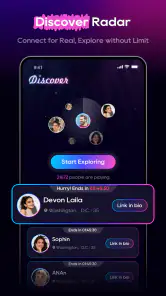
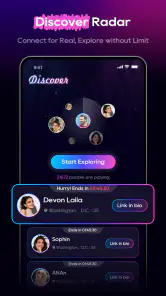
I tried Bold: Local Chat & Date as a social app built around meeting people nearby, and my first impression was that it wants to make local discovery feel more immediate than the usual endless profile browsing. The idea is simple: find nearby people, decide whether there is a connection, and move into a conversation without turning the whole experience into a long research project. That direct approach can be refreshing, especially if you are tired of apps where a match rarely becomes an actual chat.
Bold is free to download and use at its basic level, with optional purchases ranging from around fifteen dollars to around three hundred dollars per item. That pricing detail matters because a free starting point does not necessarily mean every useful part of the experience is free. I would approach it as an app worth testing before spending anything, particularly because local social apps depend heavily on the number and quality of people active around you.
How Bold feels in its current form
Robo Technologies presents Bold as a social discovery tool rather than a traditional messaging app. Its focus is proximity: the people you see are intended to feel relevant to your everyday surroundings, not like distant profiles that are unlikely to lead anywhere. In practice, that makes the app most interesting for someone who is open to meeting locally and willing to start conversations rather than simply collect matches.
The current release is version 1.66.0, and that gives the app the feel of a product that has already moved beyond its earliest build. I would not read the version number as proof that every rough edge has disappeared, but it does suggest an actively evolving experience rather than a one-off experiment. The developer is Robo Technologies, and the app has reached over ten thousand installs with a 4.7 average from around two thousand ratings. Those figures indicate encouraging early reception, although a local network can still feel very different from one neighborhood to another.
The age rating is Mature 17+, which is appropriate for an app centered on adult social and dating conversations. I would take that seriously when deciding whether to let a younger family member use it, and I would also treat every new conversation as a contact with a stranger until trust has been earned. A polished interface can make interaction feel comfortable quickly, but it cannot verify another person’s intentions for you.
The practical appeal of nearby discovery
The strongest reason to try Bold is convenience. If I want to meet someone who could realistically become part of my routine, distance matters. A nearby connection is easier to turn into a coffee, a walk, or a shared local activity than a promising conversation with someone several hours away. That local emphasis also changes how I judge profiles: I care less about a perfectly written presentation and more about whether a conversation could naturally fit into real life.
There is a useful trade-off here. A smaller geographic focus can make the app feel more relevant, but it can also reduce variety. In a busy area, the nearby feed may feel lively; in a quieter place, the same concept may become repetitive. I would give the app a fair trial during more than one part of the day before deciding that it has nothing to offer. Local activity can fluctuate, and an empty-looking first session does not always represent the whole experience.
More From Our News Desk

Clash of Clans Is Won Between the Battles

Android Auto Makes the Case for Quieter Car Software

MobiOffice: Transforming Mobile Productivity with Seamless Integration

EA SPORTS FC™ Mobile Soccer: Redefining Mobile Sports Gaming

How Microsoft OneDrive Became a Mobile Productivity Giant

How Google Translate Breaks Language Barriers Effortlessly
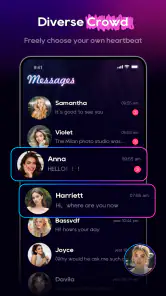
Bold is also a better fit for people who prefer quick decisions. The app’s promise is built around discovering, matching, and chatting in a connected flow. That can remove some of the hesitation found in apps where every profile invites prolonged comparison. The downside is that speed can encourage shallow choices. I found it more useful when I treated a match as an invitation to ask one thoughtful question, not as evidence that I already knew the person.
A realistic everyday use case
Imagine finishing work on a Thursday and realizing that your usual social circle is unavailable. Instead of opening a general messaging platform and waiting for someone to respond, you could check Bold for people nearby, look for a profile that gives you a genuine conversation opening, and send a short message connected to something visible in that person’s presentation. If the exchange feels comfortable, the local distance makes a low-pressure weekend plan possible.
The important part of that scenario is restraint. I would not arrange an immediate private meeting just because someone appeared close by. A better workflow is to chat first, notice whether the person answers consistently, and suggest a public place with an easy exit. Locality is useful for planning, but it should never replace basic judgment. The app can help reduce distance; it cannot remove the need for boundaries.
What the current version means for users
Version 1.66.0 is the release I would evaluate today, rather than relying on impressions from an older build. That distinction is important with social products because small changes can affect how discovery, conversations, or account controls feel. I can say that the app is being presented in a relatively mature current version, but I would avoid assuming that an update automatically solves every concern a user may have. Product evolution is visible in the release number; the quality of every interaction still depends on the local community.
For someone already using Bold, the main benefit of staying current is straightforward: the newest build is the sensible baseline for judging the experience. If the app feels different after an update, I would first spend time checking the everyday workflow rather than reacting to a single changed screen. Open the app, review how quickly nearby discovery becomes useful, start a few conversations, and see whether the overall rhythm still suits you. That approach separates a temporary adjustment from a genuine problem with the product.
New users should begin with modest expectations. A strong average rating and a growing install base are reassuring signs, but they do not guarantee a dense pool of compatible people in a particular location. I would judge Bold on the quality of relevant conversations, not simply on how many profiles appear. Ten loosely suitable suggestions are less valuable than one person who communicates clearly and wants the same kind of connection.
The app’s free entry point makes that testing process easier. I would use the no-cost experience long enough to understand whether local discovery works for my area before considering any in-app purchase. The available purchase range is broad, so I would be especially careful with impulse spending. If a paid option promises more visibility or convenience, I would ask whether it solves a real problem I have already experienced, rather than buying it merely because the app feels quiet.
Small habits that improve the experience
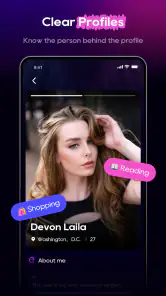
My first practical tip is to write a profile that gives nearby people something specific to respond to. A generic line creates generic messages, while a clear mention of a hobby, a preferred kind of outing, or the sort of conversation you enjoy makes it easier to identify compatible users. This is not about making the profile elaborate. It is about reducing the work required for the other person to begin naturally.
My second tip is to use the local angle as a conversation filter. Instead of opening with a vague greeting, I would ask a question that reveals whether meeting nearby would actually be comfortable: a favorite type of weekend plan, a local interest, or what they usually enjoy doing after work. That approach quickly shows whether the connection has practical potential without demanding personal information too early.
My third tip is to separate responsiveness from compatibility. A fast reply can feel exciting, but it does not automatically mean the person is respectful, reliable, or looking for the same thing. I would pay attention to whether the conversation stays balanced, whether questions are answered directly, and whether pressure appears when I set a limit. Those signals are more useful than speed alone.
A fourth useful habit is to keep the first meeting deliberately ordinary. A public café, a daytime walk in a familiar area, or another place where other people are present gives both sides a simple way to leave if the chemistry is not there. Because Bold emphasizes nearby connections, it may be tempting to move quickly from chat to meeting. I think the local focus should make safe planning easier, not encourage skipping it.
Where Bold compares well with familiar alternatives
Compared with a broad social network, Bold has a clearer purpose. General platforms are good for staying connected to people you already know, following interests, or joining communities that may not be local. They are less focused when your goal is to discover a new nearby person and start a direct conversation. Bold’s narrower identity can therefore feel more efficient for that specific task.
Compared with large dating services, the local-first approach is its main point of difference. Bigger services may offer a wider pool and more established habits for filtering profiles, but that scale can also create decision fatigue. Bold feels more suitable when I would rather explore a manageable nearby set than spend a long time sorting through people who are unlikely to become part of my life.
The reverse is also true. If I live in a small community, want a very specific type of match, or regularly travel between locations, a larger established service may be more practical. A broader network can provide more choice and continuity. Bold is not automatically the best replacement for those apps; it is better understood as a focused option for people who value local relevance over maximum reach.
It also differs from ordinary chat apps because the initial purpose is discovery rather than messaging people who are already in your contacts. That can make the first step more intentional, but it also means users need to be comfortable with conversations that begin between strangers. If I only want private communication with people I already trust, I would choose a conventional messenger instead.
Limits I would consider before committing
The biggest limitation is the local network effect. An app can have a strong overall rating and still feel unhelpful if few suitable people are active near me. This is not a flaw that a clever interface can completely overcome. I would check whether the suggestions feel geographically practical and personally relevant before investing time in building a routine around the service.
The second limitation is the tension between quick matching and meaningful judgment. A streamlined path from discovery to chat is convenient, but it can reward snap decisions. Users who prefer detailed compatibility tools, long profile histories, or highly structured filters may find Bold too lightweight for their method of choosing connections. In that case, a more established alternative could offer better control.
The purchase model is another reason to stay deliberate. Since individual in-app items can be expensive, I would not treat paid features as a necessary part of joining. I would first confirm that the free experience provides enough local activity and that the conversations are worth continuing. Spending should address a clearly observed need, not compensate for a quiet area or an unsuitable audience.
Privacy and personal safety also require active participation. I would avoid sharing my home address, workplace details, financial information, or travel plans during early conversations. If someone tries to move the conversation off-platform immediately, asks for money, or reacts badly to a reasonable boundary, I would end contact rather than trying to rescue the interaction. These are not reasons to reject Bold specifically; they are essential habits for any app that connects strangers.
Who should try it, and who should skip it
I would recommend Bold to an adult who wants nearby social or dating possibilities, prefers a direct route into conversation, and is willing to judge the app by the people available in their area. It is especially appealing if distance is a practical concern and you want a connection that could realistically become part of your weekly life. The free starting point also makes it reasonable to explore without making an immediate financial commitment.
I would be more cautious if you need a large, highly specialized user base, detailed compatibility analysis, or a platform that works equally well across many cities. Someone who dislikes initiating conversations may also find the app frustrating, because local discovery only becomes valuable when users participate actively. Likewise, if you are looking solely for an anonymous chat space with no interest in meeting people, Bold’s purpose may not match what you want.
What I would watch as the app develops
For future updates, I would watch how Robo Technologies balances speed with user control. The best evolution would preserve the quick local flow while giving people enough context to make thoughtful choices. I would also pay attention to whether the experience remains useful outside major population centers, since the value of a nearby social app depends so strongly on local participation.
I would also watch how clearly the app communicates the value of its optional purchases. A free social app can work well when paid extras feel genuinely optional and understandable. Users should be able to decide whether an item is worth the cost based on a real need, not pressure created by uncertainty. The wide purchase range makes that transparency particularly important.
After using it, my view is positive but measured. Bold has a clear reason to exist: it puts nearby discovery at the center and tries to shorten the distance between noticing someone and having a real conversation. Its 4.7 average from around two thousand ratings is encouraging, and the current version shows a product that is continuing to move forward. Still, the experience will depend more on your local audience and your own communication habits than on the app’s concept alone.
My recommendation is to try Bold without rushing into paid purchases or private meetings. Spend time learning whether the nearby pool suits you, use specific conversation starters, and keep your boundaries firm. If you want local connections and appreciate a faster path from discovery to chat, it is worth a place on your phone. If you need a huge network, advanced matching controls, or a purely private messenger, another category of app will probably serve you better.
Bold: Local Chat & Date Frequently Asked Questions
Who is Bold: Local Chat & Date intended for, and is there an age restriction?
Bold is a social app focused on discovering people nearby, matching, and chatting. Its mature audience rating makes it intended for adults rather than younger users. Before downloading, check that the app’s age guidance is appropriate for you and consider whether you are comfortable using a service centered on meeting and communicating with people you may not know.
What is Bold: Local Chat & Date, and how does it work?
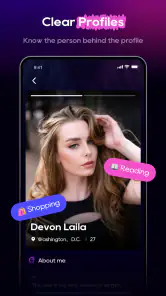
Bold: Local Chat & Date is a social and dating app designed to help you discover people nearby, start conversations, and potentially arrange local meetings. After creating a profile, you can browse available users, review their photos and descriptions, and interact through the app’s communication features. The experience depends heavily on the number of active users in your area, so results may vary by location.
Is Bold: Local Chat & Date free to download and use?
The app is free to download, but some features can require in-app purchases. Paid options may be offered at different prices, so check the current pricing, renewal terms, and cancellation instructions shown in the app store and during checkout before confirming any payment. You can consider starting with the free experience and deciding whether any paid features suit your needs.
Is Bold: Local Chat & Date safe for meeting people nearby?
No dating app can guarantee that every profile is genuine or that every interaction will be safe. Avoid sharing your home address, financial information, passwords, or sensitive personal details with strangers. Keep early conversations inside the app, use available reporting and blocking tools, and arrange a first meeting in a busy public place. Tell someone you trust where you are going.
What information does Bold: Local Chat & Date require from users?
To create a useful dating or social profile, Bold may request information such as your name or nickname, age, location, photos, interests, and preferences. Some permissions, including location access, can improve local discovery but are not always essential. Review the privacy policy and your device permission settings carefully, and provide only the information you feel comfortable sharing.
Pros
- Matches and chats are organized around your current location.
- Simple interface makes browsing profiles quick and easy.
- Useful for meeting people nearby without lengthy setup.
- Chat features support casual conversations before meeting.
- Location-based discovery can make local connections feel more relevant.
Cons
- The nearby user pool may be small outside busy areas.
- Location access can raise privacy concerns for some users.
- Match quality may vary depending on local activity.
- Some useful features may require in-app purchases or subscriptions.
- Users should remain cautious when arranging in-person meetings.
- Category
- Social
- Version
- 1.66.0