Blossom: Social Investing
- 158.00
- 4.5
- Installs
- 100.00K
- Price
- Free

Screenshots
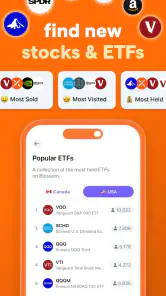

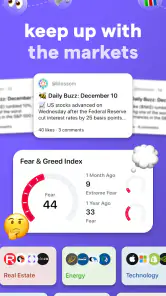

Analysis by Reviewed
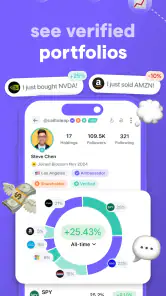
Blossom: Social Investing caught my attention because it approaches personal finance from a more social angle than a typical market tracker. Instead of treating stocks and exchange-traded funds as isolated lines on a chart, it lets me follow real investor portfolios while keeping an eye on dividends and broader market holdings. That makes the first few sessions feel more approachable, especially if I learn better by watching how other people organize their investments.
After using it as a finance app rather than a one-time curiosity, I found the important question was not whether the social feed was interesting. It was whether the app could help me build a repeatable investing habit without turning every market move into something I felt compelled to check. My answer is cautiously positive: it has lasting value for research and learning, but it works best as a companion to a brokerage account or a more detailed portfolio tool, not as a complete replacement for either one.
What the first week feels like
The initial appeal comes from the combination of familiar market information and visible investor behavior. I can explore stocks, ETFs, and dividend-focused ideas, then compare those interests with portfolios shared by other users. That changes the experience from simply asking, “What is this stock doing?” to asking, “How are people combining this kind of holding with everything else?” For a new investor, that context can be more useful than a bare price screen.
I also like that the app does not force the social element to be the entire experience. Someone who mainly wants to watch a shortlist of companies or funds can use the portfolio-following feature as a source of ideas rather than as a constant conversation. In my first week, the most useful approach was to treat other portfolios as research prompts. If I noticed an unfamiliar holding, I would investigate why it might belong there instead of copying it immediately.
That distinction matters. A portfolio is a snapshot of somebody else’s decisions, goals, time horizon, and tolerance for loss. Blossom can make those decisions easier to see, but it cannot make them suitable for me. The app is at its best when it encourages questions about diversification, income, and concentration. It is less helpful if I use popularity as a substitute for analysis.
The free entry point also makes experimentation easy. Blossom is listed as a free app, with optional in-app purchases ranging from around seven dollars to around one hundred twenty dollars per item. I would not rush into any paid option during the first week. I would first decide whether the free experience actually fits my routine, because the value of a finance app depends much more on repeated usefulness than on how impressive the opening screen feels.
Learning from portfolios without copying them
One of the more valuable workflows is to examine a portfolio in layers. I start by looking at the broad mix: are the holdings mostly individual companies, funds, dividend names, or a blend? Then I look for repeated themes. If several portfolios contain similar types of assets, that may reveal a sector or income preference worth researching. It still does not prove that the investment is appropriate, but it gives me a more focused starting point than browsing the entire market.
More From Our News Desk

Clash of Clans Is Won Between the Battles

Android Auto Makes the Case for Quieter Car Software

MobiOffice: Transforming Mobile Productivity with Seamless Integration

EA SPORTS FC™ Mobile Soccer: Redefining Mobile Sports Gaming

How Microsoft OneDrive Became a Mobile Productivity Giant

How Google Translate Breaks Language Barriers Effortlessly
I would also keep a separate note of why I opened a portfolio in the first place. Was I looking for dividend ideas, ETF comparisons, or examples of a long-term allocation? Without that small bit of discipline, the social side can become an endless stream of interesting holdings with no clear decision process. Blossom supplies discovery; I still need to supply the filter.
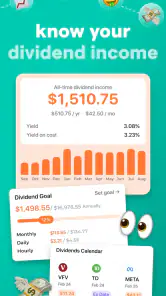
The dividend focus is especially useful for people who think in terms of cash flow rather than only price growth. It can help me notice that two investments with similar market exposure may serve different purposes in a portfolio. At the same time, I would avoid treating a dividend label as proof of safety. Income can change, prices can fall, and a high distribution can come with trade-offs that a quick glance does not reveal.
How it compares with ordinary finance apps
Compared with a standard brokerage app, Blossom feels more observational. A brokerage is built around orders, account balances, and execution. Blossom is better suited to browsing investment ideas, following portfolios, and building market awareness. I would not choose it when my main task is placing a trade or managing every detail of an account.
Compared with a conventional market-news or quote app, the difference is the portfolio perspective. A quote app may tell me what an individual security is doing, while Blossom can help me think about how holdings sit beside one another. That is a meaningful advantage for someone who is still learning how an investment list becomes an actual portfolio.
Compared with a spreadsheet, it is quicker for discovery and less flexible for personal analysis. A spreadsheet lets me create custom categories, calculate my own scenarios, and record the reasoning behind every decision. Blossom is more convenient when I want a ready-made view of market interests and investor portfolios, but I would still use a separate method for detailed budgeting, tax records, or a personal investment policy.
Why it can remain useful after the novelty
The first-week excitement of seeing other portfolios will eventually fade. That is normal. The lasting value has to come from a smaller set of repeatable tasks: checking a focused watchlist, reviewing dividend interests, comparing portfolio structures, and returning to a few investors whose approach I understand. Those habits are more sustainable than scrolling through every new idea.
For month-to-month use, I would open the app with a specific question. For example, I might want to compare how different portfolios balance individual stocks against ETFs, or review whether a dividend theme is appearing in several unrelated portfolios. A question gives the session a finish line. Without one, the social discovery layer can encourage passive browsing without improving my decisions.
Another practical use is preparing for a monthly personal review. Before looking at my own accounts, I can use Blossom to revisit the ideas I saved or followed and ask whether they still fit my original reasoning. If an investment only looks attractive because it has recently been visible in several portfolios, that is useful information about my attention, not necessarily about the asset itself.
This is where I think the app earns recurring value. It can act as a visual reminder to think in groups of holdings rather than isolated tickers. That is a healthier habit than checking one price repeatedly. I would still limit how often I open it, because market awareness and market anxiety can look very similar when the phone is always available.
A realistic monthly routine
Imagine I am reviewing my finances on the first weekend of each month. I open Blossom for fifteen minutes, check the ETFs and dividend stocks on my watchlist, and look at a few followed portfolios. I write down one or two questions, such as whether my interest in a company is based on its business or merely its recent performance. Then I close the app and do the deeper work elsewhere.
The important part is that Blossom has a defined role. It provides ideas and perspective, while my budget, account statements, and research process handle the decisions. If I instead spend an hour jumping from one portfolio to another, I may finish with more names in my head but no clearer plan. The app supports a routine; it does not create one automatically.
For a beginner, this routine can also reduce the temptation to make an immediate purchase. I can observe a holding, compare its place in different portfolios, and return to the question later. That delay is a genuine advantage because social investing tools can otherwise make investing feel like a popularity contest. The app is most constructive when it slows me down enough to investigate.
The maintenance it asks from me
Blossom is not especially demanding if I keep my use focused, but it does require ongoing curation. A large watchlist becomes difficult to interpret. Following too many portfolios can create noise, especially when the people I follow have very different strategies. I would periodically remove items that no longer answer a useful question and keep only the portfolios that teach me something specific.
That maintenance is not just housekeeping. It protects the quality of the app’s social layer for me. If every interesting stock, fund, and investor remains in view, the app stops being a research tool and becomes a stream of distractions. A smaller, intentional set of follows makes changes easier to notice and reduces the pressure to react to every new idea.
I would also keep expectations realistic about what the app can replace. It is not where I would maintain a complete financial plan, calculate household cash needs, or document a tax strategy. Those tasks need tools designed for personal records and detailed calculations. Blossom’s strength is the market-facing part of the process: discovery, comparison, and observation.
The app comes from Blossom Social Inc. and has a Teen content rating, which makes its general presentation accessible to younger users who are beginning to learn about investing. Still, accessibility should not be confused with simplicity. A teenager or first-time investor may understand the interface quickly while still needing guidance on risk, diversification, and the difference between following a portfolio and owning its contents.
Where fatigue begins
The biggest source of fatigue is the social comparison itself. Seeing a portfolio that appears well organized can make me wonder whether I am missing an opportunity. That feeling can be productive if it leads to research, but harmful if it turns into constant switching or imitation. The app cannot fully separate education from influence because the same portfolio view can serve both purposes.
Dividend content can create a second kind of fatigue. Income-oriented ideas are easy to understand at a glance, but the underlying questions take more work: how dependable is the payment, what is the business doing with its cash, and how does the holding fit with the rest of the portfolio? If I use Blossom only to collect attractive-looking dividend names, I am using its most visible feature in the least careful way.
There is also a limit to how much insight a portfolio snapshot can provide. Even when I can see the holdings, I may not know the owner’s objectives, purchase prices, other accounts, or reasons for changing position sizes. That makes the social information useful but incomplete. I treat it as an example of a possible structure, never as a full investment thesis.
Optional purchases may add another decision point. Because the app is free to install but offers paid items, I would judge upgrades by a simple test: do they remove a recurring obstacle in my monthly workflow, or do they merely make browsing feel richer? If the answer is the latter, I would keep the money and continue with the free experience until a clear need appears.
Who should use it, and who should skip it
I can recommend Blossom to a beginner who wants a gentler way to explore stocks, ETFs, and dividend investing. It is also a good fit for someone who already has a brokerage account but wants a separate place for portfolio ideas and investor perspectives. The social angle is valuable for learners who find isolated price charts dry or difficult to connect to real allocation choices.
It may also suit an experienced investor who enjoys comparing portfolio construction styles. The benefit is not necessarily finding a new ticker. It may be seeing how another person handles concentration, fund exposure, or an income theme, then using that observation to challenge my own assumptions.
I would skip it if I am looking for a full trading platform, a detailed budgeting system, or a complete replacement for professional financial advice. I would also be cautious if market content tends to make me check prices compulsively. In that situation, a quieter, less social tool may be better, even if it offers fewer ideas.
Practical details before installing
The app was released on August 3, 2022, and the current version is 3.7.8. It supports devices running Android 6.0 or later. Those details matter mainly for people using an older phone, while the broader adoption picture is reflected in its average rating of 4.5 from around four thousand four hundred ratings and more than one hundred thousand installs.
I would approach those figures as signs that the app has found an audience, not as proof that it will suit every investor. Ratings cannot tell me whether the social workflow matches my habits, and install totals cannot tell me whether I will return after the first week. The more useful test is whether I can define a monthly task that Blossom handles better than my current alternative.
My own test would be simple: install it, explore the portfolio and dividend views, follow only a small number of relevant examples, and wait before paying for anything. After a few scheduled sessions, I would ask whether the app changed the quality of my questions or merely increased the number of investments I noticed. That answer is more revealing than the initial impression.
My long-term verdict
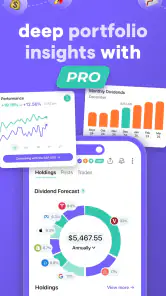
Blossom: Social Investing earns a place on my phone when I use it as a structured learning and discovery tool. Its strongest idea is making portfolio context visible: stocks and ETFs become easier to discuss when I can see how they relate to other holdings and investor approaches. The dividend emphasis adds another useful lens, particularly for people trying to understand the difference between growth and income goals.
Its weaknesses are tied to the same design. Social portfolios can encourage imitation, frequent checking, and an unhealthy focus on what other investors appear to be doing. The app also stops short of being the detailed financial workspace some users may expect. I need another tool for execution, records, and deeper personal planning.
The lasting value comes from disciplined use, not endless discovery. If I return with a question, keep my follows selective, and treat every portfolio as a prompt for research rather than a recommendation, the app can remain useful month after month. If I want instant trade execution or a complete financial command center, I would choose a brokerage or planning tool instead.
For me, that makes it a worthwhile free finance app with a clear audience: curious investors who want market ideas presented through real portfolio context. I would recommend trying it, but I would also recommend setting boundaries from the beginning. Used that way, Blossom Social Investing has a better chance of surviving the novelty phase and becoming a small, practical part of an investing routine.
Blossom: Social Investing Frequently Asked Questions
What does Blossom: Social Investing let me track?
Blossom is a finance app for tracking stocks, ETFs, and dividends, with tools to follow real investor portfolios. This can give you a place to keep an eye on investments and explore how other investors organize their holdings. The app’s social angle is part of the experience, but information shared by other users should be treated as a starting point for your own research, not as a recommendation tailored to you.
What is Blossom: Social Investing, and how does it work?
Blossom: Social Investing is a mobile platform designed to combine investing tools with a social, community-focused experience. After creating an account, users can generally explore market information, follow other investors, review shared ideas, and monitor selected investments. The app is intended to make investing more approachable, but it should not be treated as personalized financial advice or a guarantee of returns.
Can beginners use Blossom: Social Investing comfortably?
The app is aimed at investors of different experience levels, including people who are still learning about stocks and other financial products. Its social features can help beginners discover how other users research and discuss investments. However, new investors should verify information independently, learn the risks involved, and avoid copying trades without understanding them, because community opinions may be incomplete, outdated, or unsuitable for their personal goals.
Does Blossom: Social Investing allow users to buy and sell investments?
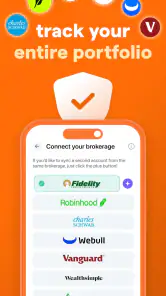
Whether you can place trades directly depends on the features available in your region, the supported brokerage connections, and the current version of the app. Some investing platforms focus mainly on research, portfolio tracking, and social discussion, while others connect users to trading services. Before downloading or depositing money, check the official listing and in-app terms to confirm which assets, brokers, and transaction functions are supported.
Is Blossom: Social Investing safe to use?
Blossom: Social Investing may include standard account and privacy protections, but no financial application is completely risk-free. Users should download it from an official app store, use a strong unique password, enable available security options, and be careful when interacting with public profiles or investment claims. Market losses are also a separate risk, so never invest money you cannot afford to lose.
Pros
- Clean interface makes portfolio tracking easy for beginners.
- Social feeds help users compare ideas and discover new market perspectives.
- Watchlists make it simple to monitor selected stocks in one place.
- Educational content can support more informed investing decisions.
- Useful for discussing strategies with a community of like-minded investors.
Cons
- Investment ideas shared by others may be biased or poorly researched.
- Social features can encourage emotional or impulsive trading decisions.
- Market data and some features may depend on a paid subscription.
- Limited control compared with advanced brokerage and trading platforms.
- Privacy concerns may arise when sharing portfolio activity publicly.
- Category
- Finance
- Version
- 3.7.8