Bella: Anime Characters Chat
- 409.00
- 3.9
- Installs
- 100.00K
- Price
- Free

Screenshots



Analysis by Reviewed
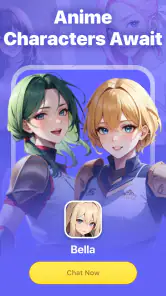
I approached Bella: Anime Characters Chat as a casual entertainment app rather than a traditional game, and that distinction matters from the first minute. Its main idea is to let me chat with anime-style companions while shaping personal storylines through the conversation. Instead of following a fixed campaign, I steer the mood, topic, and direction myself. That makes the experience feel closer to interactive character fiction than to a conventional chat utility.
The app is developed by APPS4FREEZ and is available as a free download for Android devices running Android 6.0 or later. It sits in the entertainment category, carries a Mature 17+ content rating, and currently appears as version 1.0.4. The free entry point makes it easy to try without committing money immediately, although optional purchases range from $1.99 to $49.99 per item, so I would still pay attention before confirming anything inside the app.
My first impression was that the appeal depends heavily on how much I enjoy improvising. If I want a clearly designed adventure with objectives, combat, puzzles, or a definite ending, this is not trying to replace those experiences. If I like testing personalities, inventing scenes, and seeing where a fictional conversation can go, the format is much more inviting. The best way to use Bella is to treat it as a creative prompt, not as a replacement for a real conversation.
What to expect before starting a chat
The store summary describes the central experience simply: chat with anime companions and create unique storylines. In practice, that means the conversation itself is the activity. I am not opening the app to manage a large world or complete a checklist. I am opening it to establish a premise and then respond to whatever direction the exchange takes.
That open structure is both the strongest feature and the main limitation. A focused prompt can quickly create a scene with a recognizable tone, while a vague opening can lead to an ordinary exchange that feels less memorable. I found that the quality of the session depends on the effort I put into defining the situation. “Hello” is a weak start; “We are preparing a school festival after everyone else has gone home, and something keeps moving backstage” gives the conversation a reason to develop.
For a first-time user, I would set expectations around short sessions. A few minutes can be enough to test a character and decide whether the style suits you. Longer sessions are possible when the storyline catches on, but the app is more enjoyable when I allow the scene to evolve naturally instead of expecting a perfectly plotted narrative.
The audience rating is important here. Because the app is marked Mature 17+, I would not install it on a child’s device or assume that anime presentation automatically means family-friendly content. The visual style may look playful, but the intended audience is older. That is a practical consideration for parents, shared tablets, and anyone who prefers strictly moderated entertainment.
More From Our News Desk

Clash of Clans Is Won Between the Battles

Android Auto Makes the Case for Quieter Car Software

MobiOffice: Transforming Mobile Productivity with Seamless Integration

EA SPORTS FC™ Mobile Soccer: Redefining Mobile Sports Gaming

How Microsoft OneDrive Became a Mobile Productivity Giant

How Google Translate Breaks Language Barriers Effortlessly
Bella has attracted over 100 thousand installs and holds an average rating of 3.9 from around 2.6 thousand ratings. Those figures suggest a real user base, but they also tell me to keep expectations measured rather than assuming the experience will work equally well for everyone. The concept is appealing, yet conversational entertainment is personal: one user may enjoy an imaginative companion while another may find the same interaction repetitive.
How I would approach the first launch
After installing the app, I would begin with a quick orientation rather than immediately trying to build an elaborate saga. The goal is to learn how the character interaction feels, how quickly replies arrive, and whether the tone matches what I want from an entertainment app. This first check is more useful than spending time planning a complicated storyline before understanding the basic rhythm.
I would also decide in advance what kind of session I want. There are at least three practical approaches: a relaxed conversation, a role-playing scene, or a continuing story with a small objective. Each one produces a different experience. A relaxed conversation is easiest for testing the companion. Role-play is better for discovering how the app handles context. A continuing story gives the most satisfying results, but it requires more consistency from me.
One useful habit is to give the opening message three pieces of information: who I am in the scene, where the scene takes place, and what should happen next. For example, I might describe myself as a new assistant at a nighttime radio station, place the character in the recording booth, and introduce a mysterious message that interrupts the broadcast. This is more effective than listing a long biography because it gives the exchange an immediate action.
I would avoid treating the first reply as a final judgment. Conversational apps can need a little direction before their personality becomes clear. If the exchange feels too general, I would add a concrete detail rather than abandoning the session immediately. Asking the companion to choose between two options, react to a problem, or remember the scene’s immediate goal gives the conversation something to work with.
Reaching the first meaningful result
For me, the first successful action is not simply sending a message. It is reaching a point where the conversation produces a scene I would actually want to continue. That usually happens when I stop asking isolated questions and start offering situations. Instead of interviewing the character, I create a small decision: the train is leaving, the festival lights have failed, or a hidden room has just been discovered.
This approach makes the app feel more like collaborative writing. I provide the direction, and the companion supplies a response that I can accept, challenge, or redirect. If the character takes the story somewhere unhelpful, I can clarify the intended tone in the next message. I found that gentle correction works better than trying to control every sentence. The fun comes from leaving room for surprise.
A particularly useful workflow is to divide a story into small scenes. I might begin with an arrival, move to a discovery, and then finish the session after a decision. This prevents the storyline from becoming a loose stream of unrelated messages. It also makes it easier to return later with a clear starting point: I know what happened, what remains unresolved, and what I want to test next.
Another tip is to use recurring details sparingly. A name, object, promise, or location can help give a scene identity, but adding too many facts at once can make the opening cumbersome. I prefer introducing one memorable element and bringing it back naturally. If a silver key appears early, I can ask about it later instead of introducing five new mysteries in the same message.
The trade-off is that this is more demanding than pressing play on a scripted show. I have to contribute ideas. Users who enjoy passive entertainment may find the experience slow or unsatisfying, while people who like writing prompts, character improvisation, or anime-inspired role-play may appreciate the freedom.
Common points of confusion
The biggest possible misunderstanding is expecting a conventional game structure. Bella is not most useful when I look for levels, missions, or a fixed sequence of rewards. Its entertainment comes from the conversation and the storyline I build around it. If I approach it like a chat-driven fiction tool, the open format makes sense; if I approach it like a role-playing game with a designed progression system, it may feel under-directed.
Another point is the difference between a character having an appealing theme and producing a consistently deep narrative. A strong opening can create an exciting mood, but keeping that mood alive requires follow-up prompts. I would not assume that one dramatic message automatically creates a complete story. The user’s choices still shape the result, and the app works best when I actively maintain continuity.
It is also worth remembering that fictional companionship is not the same as human support. I would use the app for amusement, creative practice, and imaginative scenarios, but not for urgent emotional, medical, or personal decisions. That boundary is especially important because a responsive character can feel engaging even when the interaction remains artificial.
The Mature 17+ label should be treated as a genuine part of the product, not as a minor store detail. I would be cautious about using it in public spaces or handing my phone to younger relatives. Anyone who wants a clean, family-oriented anime experience should look for an app with an age rating that matches that expectation instead.
Payments are another area where a first-time user should slow down. The app is free to start, but in-app items can cost between $1.99 and $49.99. I would explore the basic experience first and only consider a purchase after deciding that the conversations are worth extending. That approach reduces the chance of paying for something before understanding how much I will actually use it.
Finally, I would not confuse the short description, “Bella,” with the full product identity. The complete app name is Bella: Anime Characters Chat, and that longer name better explains what I am installing. This matters when searching for the app or distinguishing it from unrelated entertainment tools with similar naming.
Ways to get more from a continuing storyline
Once the basic chat feels comfortable, I would move from one-off scenes to a simple story framework. Before sending a message, I might choose a genre, a relationship between the characters, and one unresolved problem. I would keep those choices flexible rather than writing a complete script. The companion becomes more interesting when it has room to respond unexpectedly.
A good session pattern is to alternate between action and reflection. I can describe what happens, then ask how the character reacts; after that, I can introduce a consequence instead of another unrelated event. This creates a sense of cause and effect. It also helps avoid the common problem of a chat becoming a sequence of disconnected questions.
I would use direct corrections when necessary. If the story drifts from a mystery into comedy, I can say that the atmosphere should return to suspense. If a character forgets an important detail, I can restate it briefly and continue. This is not a failure of the concept; it is part of working with an open-ended companion. The user is effectively acting as editor and co-author.
For creative writers, the app can serve as a low-pressure way to test dialogue. I can try a conflict between two personalities, see whether a scene has enough tension, or explore how a character might respond to an unexpected choice. I would not treat every generated exchange as finished writing, but it can help uncover ideas that I would not have reached by outlining alone.
For anime fans, the attraction is more about atmosphere and character interaction than about reproducing a specific series. I would approach the companions as original fictional personalities rather than expecting official characters, licensed storylines, or a familiar franchise campaign. That makes the app easier to enjoy on its own terms and avoids comparing it unfairly with a dedicated anime game.
Who should try it, and who should choose something else?
I think Bella is a good fit for adults who enjoy anime-inspired character conversations, improvisational storytelling, and entertainment that changes according to their prompts. It is especially suitable for someone who wants a creative break during a commute, a quiet evening, or a short pause between tasks. A user who likes writing scenes but does not always know how to begin may find the companion format useful as a source of momentum.
A realistic everyday use case would be a short evening session after work or study. I might start with a light scenario, give the character one problem to solve, and continue until the scene reaches a natural pause. That is more manageable than attempting an epic story and makes the app feel like a small creative ritual rather than another obligation.
I would recommend skipping it if I wanted a structured game with clear objectives, competitive systems, exploration, or a guaranteed narrative arc. A visual novel with authored dialogue would be better for someone who values carefully paced scenes and consistent characterization. A standard messaging app would be better for genuine social connection. A general writing tool would be better for organizing a manuscript rather than improvising with a fictional companion.
I would also skip it if I am uncomfortable with mature-rated entertainment or do not want to monitor optional spending. The free download lowers the barrier to trying it, but it does not remove the need to consider age suitability and purchase decisions. Those are not minor details for families or users sharing devices.
My final take after using the format
Bella: Anime Characters Chat is most convincing when I give it a clear scene and allow the interaction to develop one decision at a time. Its strength is immediacy: I can move from a blank screen to an anime-style storyline without preparing a long outline. Its weakness is the same openness, because a session can feel flat when I provide little direction or expect a fully authored adventure.
The app comes from APPS4FREEZ, is free to begin, and has a current version of 1.0.4 for Android 6.0 and newer. Those practical details make it accessible to many Android users, while the Mature 17+ rating and optional purchases mean I would approach installation with clear expectations. The existing audience gives the app some visibility, but the average rating of 3.9 also supports a balanced view rather than blind enthusiasm.
My advice is to start small: create one setting, introduce one problem, and see whether the companion gives you enough material to continue. If the first exchange feels promising, return to the same scene and build it in short chapters. If you want a finished story delivered to you, choose a visual novel or scripted game instead. If you want a playful space for anime-flavored conversation and personal story ideas, this is worth trying before deciding whether the paid options add enough value for your habits.
Bella: Anime Characters Chat Frequently Asked Questions
What should I check before installing Bella: Anime Characters Chat?
Bella: Anime Characters Chat is an entertainment app developed by APPS4FREEZ, built around conversations with anime companions and creating your own storylines. It is free to download, with optional in-app purchases. Before installing, consider whether you are comfortable with chat-based roleplay and the app’s mature audience rating, and check that your device meets its Android version requirements.
What does the app’s age rating mean for users?
The app is rated Mature 17+, so it is intended for adults rather than children or younger teens. That rating is worth considering before downloading, particularly if the app will be used on a shared device. Parents and guardians should review the app themselves and use appropriate device-level controls when deciding whether it is suitable for someone in their care.
What is Bella: Anime Characters Chat?
Bella: Anime Characters Chat is an interactive app that lets you communicate with anime-inspired characters through text-based conversations. Each character is designed with a distinct personality, style, and conversational approach, so chats can feel different depending on who you choose. It is mainly intended for entertainment, casual roleplay, storytelling, and exploring imaginative scenarios rather than providing professional advice or factual information.
How does chatting with the anime characters work?
After opening the app, you can generally select a character and begin a conversation by sending messages in the chat interface. The character responds according to its programmed personality and the context of your messages. Conversations may include roleplay, friendly discussions, questions, or fictional situations. The quality and relevance of replies can vary, since responses are generated within the app’s available character and artificial-intelligence features.
Is Bella: Anime Characters Chat free to download and use?
The app may be available as a free download, but some features, characters, messages, or customization options can require in-app purchases or a subscription. Before starting a trial or confirming payment, check the current pricing, renewal terms, and what is included in each plan on the Google Play Store or Apple App Store. Store listings and prices can also vary by country and may change over time.
Pros
- Fun way to chat with a wide variety of anime-inspired characters.
- Quick replies make conversations feel lively and easy to follow.
- Useful for roleplay
- storytelling
- and casual entertainment.
- Simple interface makes character selection straightforward.
- Offers creative prompts for fans who enjoy anime-style interactions.
Cons
- Conversations may become repetitive after extended use.
- Some character responses can feel generic or inconsistent.
- Advanced features may require in-app purchases or subscriptions.
- Not every character may match the personality you expect.
- Requires an internet connection for most chat features.
- Category
- Entertainment
- Version
- 1.0.4