AI Chat & Friends - SeaHot
- 18.00
- 3.1
- Installs
- 100.00K
- Price
- Free

Screenshots




Analysis by Reviewed
I tried AI Chat & Friends - SeaHot as a social app built around conversations with AI characters, and its appeal became clearest when I stopped treating it like a normal messaging service. It is better understood as a shared stream of interactive characters, posts, and conversations that you can browse when you want company, ideas, or a quick distraction. The app comes from Seaart ai, is free to install, and sits in the social category, although optional purchases range from $0.99 to $299.99 per item. That last detail matters if several people use the same phone or tablet, because “free” does not mean every part of the experience is cost-free.
My household-focused test was simple: I imagined one person discovering a character, another family member picking up the device later, and a teenager using the app independently. That made the useful questions less about whether the chat feels entertaining and more about boundaries. Who is using the account? Which conversations are personal? Is the device shared? Does everyone understand that an AI character is not a human friend? Those questions shape whether this app feels comfortable at home.
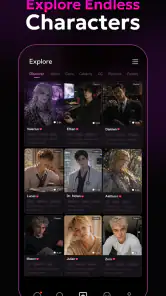
The store description presents a place to chat, share, and explore through an endless interactive feed. In practice, that combination gives the app a different rhythm from a conventional social network. You are not only waiting for replies from real contacts, and you are not simply scrolling through fixed videos or images. You move between discovery and conversation, with the AI characters providing the interactive part. I found that engaging for short visits, but it also means the experience can feel less focused than a dedicated chat app.
How SeaHot Fits Into Shared Household Use
A realistic shared-device moment
Imagine a family tablet left in the living room. One person opens the app after dinner to explore a character and starts a conversation. Later, someone else picks up the tablet and continues browsing the feed. That is a perfectly plausible way to use a social AI app, but it creates an important distinction between shared access to a device and shared access to a personal account.
I would not assume that a conversation started by one person is suitable for everyone else to read or continue. The app’s central attraction is interaction, so chats can quickly become more personal than a public feed. A household should decide in advance whether the app belongs to one individual, whether the device is only being borrowed, or whether several people are intentionally exploring it together. Without that decision, accidental reading and accidental replies are easy risks.
For a shared tablet, I would keep the first session in a common area and treat the app as something to explore together. That approach works particularly well for discovering characters, discussing how their replies are generated, and deciding which conversations are comfortable. It is less appropriate to hand over an already open account and assume that every family member will understand what the previous user was doing.
What the endless feed changes
The feed is useful when I want to browse before choosing a conversation. Instead of needing a specific person or topic in mind, I can look around and follow the thread that seems interesting. That makes the app approachable for someone who has never used an AI character service before. It also creates a small trade-off: discovery can become the main activity, while the actual conversation becomes secondary.
When several people share a device, the feed can blur personal taste. One user’s interests may influence what the next person sees, and a family member may not know whether a displayed character was selected by them or by someone else. I would therefore avoid judging the account’s feed as a reliable reflection of one person’s preferences. It is better treated as a changing noticeboard than as a private diary.
A practical routine is to use the feed for group discovery, then let each person decide whether they want a separate, private session. If the household cannot maintain that separation, the app is safer as a supervised curiosity than as a communal account. This is one of the less obvious trade-offs: the social design makes shared exploration inviting, but the conversational side still benefits from individual boundaries.
Why account boundaries matter before the first chat
Before installing it on a family device, I would agree on three basic rules. First, identify whose account is being used. Second, decide whether conversations may be opened by other people. Third, establish who is allowed to make purchases. These are not special controls I am claiming the app provides; they are household arrangements that prevent confusion around a shared device.
The purchase range makes the third rule especially important. A free download can still present optional spending, and a large variation between the smallest and largest listed item means adults should not leave payment decisions to chance. On a personal device, that may be straightforward. On a tablet used by children, parents, guests, or siblings, the safest approach is to keep purchasing under one clearly identified adult’s responsibility and discuss it before anyone explores the app.
I also recommend closing the app when changing users rather than relying on memory. That sounds basic, but it is the difference between a deliberate handoff and an accidental one. If the app is used by one person only, the boundary is simpler. If it is shared, the household should treat every handoff as a new session, not as an invitation to continue whatever the previous user left open.
Coordinating conversations without pretending they are human
AI characters can make a conversation feel responsive, but responsiveness is not the same as human understanding. I found that the most useful household conversation about SeaHot is not “Which character is your friend?” but “What do you think this character can and cannot know?” That distinction is especially important for younger users, who may interpret a warm or confident reply more literally than an adult would.
For a shared activity, I would encourage users to compare replies rather than treating one answer as final. Ask the character a harmless question, discuss whether the response makes sense, and notice how the wording affects the tone. This turns the app into a small lesson in media awareness instead of leaving the user alone with an apparently confident personality.
Another useful boundary is to avoid entering private household information merely to make a conversation feel more realistic. I would not share addresses, school details, passwords, financial information, or sensitive family disagreements with an AI character. That advice is relevant to any conversational service, but it matters more in a social app that encourages users to keep exploring and chatting. The easier a conversation feels, the easier it is to overshare.
SeaHot is more enjoyable when I use it for imaginative prompts, casual role-play, creative brainstorming, or light conversation. I would not use it as a substitute for a parent, teacher, counselor, doctor, or trusted friend. If a child brings a serious concern to the app, an adult should be the next conversation, not the character.
Teen rating and the trust question
The app carries a Teen content rating, so I would not present it as a children’s social tool. That rating is a useful signal for families, but it is not a replacement for supervision or an age-appropriate conversation. A teenager may be ready to explore fictional AI personalities while still needing guidance about privacy, spending, emotional attachment, and the difference between generated replies and real relationships.
For younger users, I would skip independent access. A supervised demonstration can be reasonable if an adult is present and the conversation stays within a clearly defined topic, but I would not assume that a teen rating makes every character or interaction suitable for every member of the household. The right decision depends on the child’s maturity, the device arrangement, and the adult’s willingness to check in.
Trust also works in both directions. Parents should explain why they want to know how the app is being used instead of quietly reading every conversation. Teenagers, meanwhile, should understand that a shared family device is not the same as a private phone. A clear agreement is more useful than vague monitoring: decide what remains personal, what must be reported, and when an adult should step in.
SeaHot’s social framing can make the app feel more like a place to meet personalities than a simple utility. That is part of its charm, but it can also encourage emotional language. I would remind younger users that an AI character does not have personal experiences, needs, or feelings in the way a human does. Enjoying the fiction is fine; confusing the fiction with a dependable relationship is where stronger boundaries become necessary.
Everyday uses that make sense
One good use is a short creative break. I might browse the feed, choose a character, and use the conversation to develop a story idea or test a fictional scenario. This is more satisfying than endlessly scrolling when I want participation rather than passive content. It is also easy to stop after a single idea, which makes it suitable for a brief evening session.
A second use is shared discovery between an adult and a teenager. Instead of allowing silent, unsupervised browsing, both users can examine a character together and talk about why its replies sound convincing. The point is not to inspect every line but to build judgment: what is entertainment, what is speculation, and what should be checked elsewhere?
A third use is as a conversation starter for people who find ordinary social apps tiring. There is no need to coordinate with friends before opening a chat, and the AI format removes the pressure of waiting for a real person to respond. That can be appealing after a long day. However, it should remain a supplement to real relationships rather than a replacement for them, especially for someone already withdrawing from family or friends.
I would skip it if my main goal were private messaging with known contacts, reliable factual answers, or a tightly controlled family communication space. A conventional messenger is better for coordinating dinner plans, school pickups, and household tasks. A search or reference tool is better when accuracy matters. SeaHot is strongest when the goal is exploration and interactive entertainment.
How it compares with ordinary social alternatives
Compared with a standard social network, this app places more emphasis on AI-led interaction and less on maintaining a circle of real acquaintances. That reduces the pressure to post for people you know, but it also removes the value of genuine human feedback. If I want to see what friends are doing, exchange photos with relatives, or organize an event, I would choose a normal social platform or messenger instead.
Compared with a traditional chatbot, SeaHot feels more discovery-oriented because the feed and character browsing are central to the experience. A general chatbot may be better for structured questions, drafting, or step-by-step problem solving. SeaHot is the better fit when I want to encounter a personality and follow an open-ended interaction rather than arrive with a precise task.
Compared with short-form entertainment apps, it asks more from me. I have to choose a character, read replies, and shape the conversation. That extra participation is a strength when I want something interactive, but a weakness when I only have a minute and want instant, predictable content. The endless feed can also make the app feel less purposeful than a tool with one clear job.
Its current version is 1.7.7.1786613910, and it supports devices running Android 7.0 or later. Those details make it accessible to people using older Android hardware, although the age of a device can still affect how comfortable a feed-heavy social app feels. On a shared tablet, I would pay attention to typing comfort, screen visibility, and whether switching users is practical before making it the household’s regular entertainment app.
What I would check during the first session
I would begin with a short, low-stakes conversation rather than immediately sharing personal details or committing to a long interaction. The goal is to learn the app’s rhythm: how browsing leads into chat, how easy it is to return to the feed, and whether the experience feels more like reading, role-play, or social discovery. That first session is also the right time to decide whether the app belongs on a personal device or a shared one.
Next, I would inspect the purchase path carefully before letting another household member use the app. I would make sure everyone knows that the download is free but optional items can cost money. If a teenager is using it, I would explain that tapping through a purchase flow is not the same as receiving permission. This is a small step, yet it prevents the most avoidable form of household friction.
Finally, I would agree on a stopping point. AI feeds are designed to invite one more character and one more exchange, so a simple time limit or end-of-session habit can help. I would not claim that the app supplies a particular family timer or control; the useful safeguard is the routine created by the household. Closing the app, returning the device, and saying who used it keeps the account boundary visible.
Where the experience can become frustrating
The same openness that makes character discovery fun can make the app feel unpredictable. If I want a direct route to one practical result, browsing and interactive conversation may feel like extra work. The app’s social identity is also not a guarantee of human connection, so someone expecting a replacement for friends may finish a session entertained but still socially unfulfilled.
Shared use adds another layer of friction. A conversation can be harmless to one user and uncomfortable or confusing to another, particularly when people have different ages and expectations. The Teen rating means adults should take that possibility seriously rather than assuming the app is automatically suitable for a mixed-age household.
There is also a financial trade-off. The free entry point makes experimentation easy, but the listed in-app purchase range means a household should not treat every prompt as part of the basic experience. I would personally use the app without spending at first and only consider an optional item after deciding that the service genuinely adds value. That keeps curiosity from turning into an impulse purchase.
My household verdict
I see SeaHot as a social AI playground with a strong fit for teens and adults who enjoy discovering characters and shaping open-ended conversations. It is more interactive than passive scrolling and more personality-driven than a standard chatbot. For a personal device, that can make it an easy app to open during a quiet break. For a shared household device, it needs rules before it needs enthusiasm.
My recommendation is to use one clearly identified account per person whenever possible, avoid treating an open session as public property, and make purchase responsibility explicit. I would introduce it to a teenager through a conversation about privacy and AI trust, not simply by pointing to the Teen rating. For younger children, I would choose a different activity or keep any exploration directly supervised.
The app is free, has passed the early discovery stage with over one hundred thousand installs, and holds a 3.1 average from around three hundred fifty ratings, so it has attracted a meaningful but still relatively modest audience. I would read that as a reason to try it personally rather than assume it will suit every household. Its value depends heavily on whether you enjoy AI character interaction and whether you can keep personal and shared use separate.
In the end, I would recommend it to a friend who wants lightweight, imaginative conversation and understands its limits. I would not recommend making it the family’s main communication tool, leaving it open on a communal tablet, or using it for sensitive advice. The best way to enjoy SeaHot is to treat it as interactive entertainment with clear human boundaries: explore together when that is useful, keep private sessions genuinely separate, and remember that a convincing reply is still generated conversation rather than a human relationship.
AI Chat & Friends - SeaHot Frequently Asked Questions
What devices and operating systems support AI Chat & Friends - SeaHot?
AI Chat & Friends - SeaHot is an app for Android, with version 7.0 or later required. Check your device’s operating system before downloading, and make sure you have enough available storage for installation and updates. Compatibility can also vary by device, so reviewing the app’s store page on your phone is a sensible step before installing.
Who makes AI Chat & Friends - SeaHot, and what do users think of it?
AI Chat & Friends - SeaHot is made by Seaart ai and sits in the social app category, centered on interacting with AI characters. It has a 3.1 average from 353 ratings, alongside 18 written reviews. Those figures give a mixed snapshot rather than a guarantee of how you will experience it, so it is worth reading recent user comments and deciding whether its chat-focused format suits you.
What is AI Chat & Friends - SeaHot?
AI Chat & Friends - SeaHot is an entertainment-focused conversational app that lets users interact with AI-powered virtual characters and create chat-based experiences. Depending on the available characters and features, conversations may include casual discussions, roleplay, companionship, or personalized scenarios. It is designed for users who enjoy experimenting with artificial intelligence in a social, informal format rather than using the app as a professional advice or productivity tool.
Is AI Chat & Friends - SeaHot free to download and use?
The app is free to download, but some features can require in-app purchases ranging from $0.99 to $299.99 per item. Access may vary depending on the character, conversation limits, customization tools, or premium content offered in your region. Before starting a long chat or entering payment information, review the app’s own pricing details carefully, since free access does not necessarily mean every feature is free.
Is AI Chat & Friends - SeaHot safe for children?
Parents should check the official age rating and privacy information before allowing a child to use AI Chat & Friends - SeaHot. It is rated Teen, but AI conversations can sometimes produce unexpected, inaccurate, mature, or unsuitable responses, even when the user does not deliberately request them. The app may also involve account information, chat data, advertising, or purchases. It is best used with appropriate supervision, parental controls, and a reminder never to share personal or sensitive information with an AI character.
Pros
- Offers casual AI conversations for entertainment and passing time.
- Multiple virtual characters provide different conversation styles.
- Simple interface makes starting a chat quick and accessible.
- Can feel engaging for users who enjoy role-play interactions.
- Useful for exploring AI companion apps without complex setup.
Cons
- Conversation quality may vary noticeably between different characters.
- Some replies can feel repetitive during longer conversations.
- Privacy details should be checked before sharing personal information.
- Certain features or interactions may require in-app purchases.
- Not a replacement for professional advice or genuine human support.

- Category
- Social
- Version
- 1.7.7.1786613910