11PM - Chat & Date Now
- 234.00
- 4.3
- Installs
- 50.00K
- Price
- Free

Screenshots


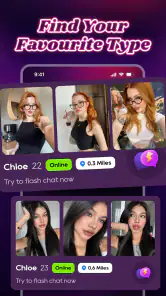



Analysis by Reviewed
I approached 11PM - Chat & Date Now as an entertainment app for people who want conversation with a romantic possibility attached, rather than as a traditional dating service built around long profiles and careful filtering. Its central appeal is easy to understand: open the app when you feel social, start chatting, and see whether a connection develops naturally. That makes it feel more immediate than browsing a large catalog of profiles, but it also means the quality of the experience depends heavily on who is available and how comfortable you are taking the first step.
After spending time with it, my impression is that 11PM works best when you treat it as a low-pressure way to meet people, not as a guaranteed route to a relationship. The app is free to install, and Tweetup presents it in the entertainment category. It has an average rating of 4.3 from around two thousand ratings, with more than two hundred written reviews and over fifty thousand installs. Those figures suggest a real early audience, while also reminding me that this is still a relatively focused service rather than an enormous mainstream network.
How the free experience and paid value fit together
The most important cost detail is that the app itself is free. That makes trying it straightforward: you can decide whether its conversational style suits you before committing money. At the same time, in-app purchases range from $0.99 to $179.99 per item. That is a very wide span, so I would not judge the app’s value from the existence of purchases alone. The sensible approach is to begin with the free access, understand what you can do without paying, and only consider an optional purchase when you know exactly what it adds for your own use.
This distinction matters more here than it would in a simple messaging tool. In a dating-oriented app, spending can feel tempting when a conversation seems promising or when you want faster access to attention. I would set a personal limit before buying anything, rather than making a decision in the excitement of a new chat. The free entry point is a genuine advantage, but it does not automatically make every paid item good value. The useful question is whether a purchase improves a specific part of your routine, not whether it makes the app feel more serious.
The current version is 1.2.0, and the app runs on Android 7.0 or later. That broad device compatibility makes it approachable for people who do not use a recent phone. Its mature rating of 17+ is also important. I would not recommend treating this as a general-purpose social app for younger users, and adults should still bring the same caution they would bring to any service centered on meeting or flirting with strangers.
What you are really paying for
Because the app’s store summary focuses on flirting that may lead to something real, the value is mainly experiential rather than practical in the way a calendar or utility app is practical. You are paying, if you choose to pay, for a better chance of getting more from the social environment. That can be worthwhile for someone who enjoys quick conversations and dislikes filling out an elaborate dating profile. It is less convincing for someone who wants transparent, detailed matching controls before investing time.
I would also avoid assuming that a purchase can manufacture compatibility. No paid option can guarantee a thoughtful reply, mutual attraction, or an offline relationship. The strongest value comes when the free experience already feels active and comfortable for you. If the conversations are not engaging without spending, paying more is unlikely to solve the underlying problem.
More From Our News Desk

Clash of Clans Is Won Between the Battles

Android Auto Makes the Case for Quieter Car Software

MobiOffice: Transforming Mobile Productivity with Seamless Integration

EA SPORTS FC™ Mobile Soccer: Redefining Mobile Sports Gaming

How Microsoft OneDrive Became a Mobile Productivity Giant

How Google Translate Breaks Language Barriers Effortlessly
What using 11PM feels like in everyday life
The app’s appeal is its sense of immediacy. Instead of turning dating into a long administrative task, it encourages a more conversational mindset. I can imagine opening it after work, when I have enough energy for a short exchange but do not want to complete a long sequence of profile decisions. A quick chat can be more natural than trying to summarize an entire personality in a few carefully chosen fields.
That same immediacy creates a trade-off. A conversation-first service asks you to judge tone, interest, and boundaries as you go. You may learn more from a lively exchange than from a static profile, but you also have less context at the beginning. I found that the best way to use it is to keep early conversations light, avoid rushing into personal details, and pay attention to whether the other person respects a simple boundary.
One practical workflow is to use a short first session rather than leaving the app open indefinitely. Start with a clear idea of what you want from that visit: perhaps two genuine conversations, a way to pass time, or a chance to see whether the app’s atmosphere suits you. This prevents the endless-scroll feeling that can make social apps tiring. It also gives you a better basis for deciding whether a paid item would actually change your experience.
Three details that make a difference in practice
First, your opening message matters more here because the app’s identity is built around chat rather than a lengthy profile review. I would avoid sending a generic greeting that places all the work on the other person. A small question connected to something they have already shared creates a clearer path into conversation and helps you identify quickly whether there is mutual effort.
Second, I would separate “fast reply” from “good connection.” An immediate exchange can be exciting, but consistency and respect are better signals than speed. Giving a conversation room to develop helps prevent the common mistake of treating early attention as proof that the match is meaningful.
Third, I would use the app at a time when I can leave comfortably. If a chat becomes intense, pressuring, or simply uninteresting, there is no benefit in staying because the interaction started well. The conversation-first format is strongest when you remain willing to end a chat politely. That is a small habit, but it protects the experience from becoming emotionally draining.
These points are not flashy features, yet they are where much of the app’s practical value sits. A service like this cannot control whether two people click. It can, however, offer a setting where starting is easier, and the user’s own choices determine whether that opportunity becomes enjoyable or exhausting.
Where it stands beside familiar dating alternatives
Compared with profile-heavy dating apps, 11PM feels less like a catalog and more like a social doorway. That is its clearest difference. If you enjoy reading detailed information, setting several filters, and deciding who to contact before speaking, a conventional dating app may feel more efficient. You can make a more deliberate shortlist there, while 11PM asks you to discover compatibility through interaction.
Compared with ordinary messaging or social platforms, the romantic purpose is more obvious. That can remove some ambiguity: people are more likely to understand why a conversation begins. The downside is that expectations may become intense sooner. On a general social network, a casual exchange can remain casual; in a dating-focused environment, one person may interpret the same exchange as a sign of stronger interest.
Compared with paid dating services, the free starting point is attractive. You do not need to make a financial commitment just to see whether the style works for you. However, the wide range of optional purchase prices means that careful spending still matters. I would choose a fully free alternative if I wanted to avoid purchase prompts altogether, and I would choose a more structured service if detailed compatibility information mattered more to me than spontaneous conversation.
In other words, 11PM is not a universal replacement for every dating app. It occupies a narrower space: quick, flirt-oriented interaction for adults who are comfortable learning about someone through chat. That focus is a strength when it matches your personality and a weakness when you need more structure before engaging.
Who is likely to get the most from it?
I think the best fit is someone who wants to meet people without turning the process into a research project. If you are comfortable writing first, can handle occasional quiet or uneven conversations, and prefer a relaxed entertainment experience, the free version gives you a reasonable way to test the idea. It may also suit people who have become tired of judging potential connections entirely from photos and short descriptions.
It is less suitable for anyone looking for a highly controlled dating process. If you need extensive filters, detailed identity context, or a system that does most of the selection before you interact, the conversation-led approach may feel too open-ended. I would also skip it if you are not prepared to manage boundaries yourself. The app can create an opportunity to talk, but you remain responsible for deciding what to share, when to stop, and whether an interaction deserves further attention.
For a real everyday scenario, consider someone who has a quiet evening and wants social contact without arranging a full date. They could try the free app, exchange a few messages, and leave with a clearer sense of whether there is enough mutual interest to continue. That is a modest use case, but it is exactly where the app makes the most sense. It does not need to produce a dramatic outcome every time to be useful; a pleasant conversation can already justify a free trial.
On the other hand, someone actively seeking a serious relationship on a fixed timeline may be better served by combining a more structured dating service with this kind of casual chat app, rather than relying on 11PM alone. The app’s tone encourages discovery, not certainty. Expecting it to provide certainty would create disappointment that comes from using the wrong tool for the job.
Questions worth answering before you install
Is it worth trying if you do not want to spend money? Yes, because the app is free to install and use as an entry point. I would spend time understanding the unpaid experience before considering any purchase. The fact that paid items exist does not make them necessary for every user, and your own level of engagement should guide the decision.
Should you buy something immediately? I would not. First see whether you enjoy the conversations, whether you find people you genuinely want to talk with, and whether a paid item addresses a problem you have actually encountered. If you cannot name the specific benefit you expect, keep your money.
Is it appropriate for younger users? No. Its mature 17+ rating makes the intended audience clear, and adults should still use normal care when chatting with strangers or considering any move from online conversation to real-world contact.
Will it suit someone who dislikes initiating conversations? Probably not as well as a service with stronger matching or profile tools. The app’s main attraction is the chat itself, so reluctance to write first can make the experience feel inactive. If you prefer others to make the first move, a different dating format may be a better match.
Can it replace a serious dating platform? I would not treat it as a complete replacement. It is better viewed as a lighter, more immediate option for meeting and talking. Someone who wants a broader set of relationship tools may prefer a structured alternative, while someone who values spontaneity may find 11PM more inviting.
My buy-or-skip verdict
My recommendation is to try 11PM - Chat & Date Now for free if you are an adult who enjoys direct conversation and wants a less formal way to explore romantic connections. Tweetup has positioned it as an entertainment app, and that framing is useful: approach it as a place for social discovery, not as a machine that promises a relationship. The free access lowers the risk of finding out whether its style suits you.
I would be more cautious about spending. With in-app purchases running from $0.99 to $179.99 per item, the sensible value judgment depends on the individual item and your actual pattern of use. Start free, set a budget, and only pay when the benefit is clear and proportionate to how much enjoyment or convenience you are receiving. The strongest reason to use 11PM is the chance to have a good conversation, not the hope that spending will force one to happen.
Skip it if you want extensive filtering, a formal relationship-planning experience, or a completely passive way to meet people. Choose it if you like the energy of a quick chat, can handle uncertainty, and want to decide for yourself whether a conversation deserves another one. In my view, that makes 11PM a worthwhile free experiment, with paid value that should be approached carefully rather than assumed.
11PM - Chat & Date Now Frequently Asked Questions
Is 11PM - Chat & Date Now available for my device?
11PM - Chat & Date Now is an entertainment app, and its listed minimum operating system is version 7.0. Check your device’s software version before downloading so you can confirm compatibility. The app is free to download, though some features may involve in-app purchases. Its current version is 1.2.0, so keeping the app updated can help you access the latest available experience.
Is 11PM - Chat & Date Now intended for all ages?
No. 11PM - Chat & Date Now is rated Mature 17+, which makes it intended for adults rather than younger users. That rating is worth considering before installing, especially if the app will be used on a shared device or by a family member. Parents and guardians may also want to review device-level content restrictions and discuss online dating and chat safety with teens.
What is 11PM - Chat & Date Now?
11PM - Chat & Date Now is a social and dating app designed for meeting people, starting conversations, and exploring potential connections. After installing it, users can generally create a profile, browse or discover other members, and use chat features to communicate. The app’s tagline invites users to flirt their way into something real, though the exact experience may depend on your location, account settings, age eligibility, and which features are currently available in the app.
Is 11PM - Chat & Date Now free to download and use?
The app is free to download, but some functions can require in-app purchases. Listed purchase prices range from 99 cents to $179.99 per item, so check the price shown in the app before confirming any transaction. Before using premium messaging, profile visibility tools, or additional discovery features, review the purchase details and any renewal terms carefully. Availability and costs can vary between Android and iOS, as well as by country.
Is 11PM - Chat & Date Now safe for meeting and chatting with people?
As with any dating or chat platform, safety depends partly on how carefully you use it. Avoid sharing passwords, financial information, private documents, or your exact home address. Keep early conversations inside the app, be cautious of requests for money, and report suspicious accounts. If you decide to meet someone, choose a public place, tell a trusted person, and arrange your own transportation.
Pros
- Simple interface makes starting conversations quick.
- Designed for spontaneous
- late-night chats and casual dating.
- Lets users meet people beyond their existing social circle.
- Chat-based format can feel less intimidating than formal dating apps.
- Useful for users seeking relaxed
- no-pressure social interaction.
Cons
- The late-night focus may attract users with limited dating intentions.
- User activity and match quality may vary by location.
- Some conversations may be brief
- inactive
- or quickly abandoned.
- Privacy settings should be reviewed before sharing personal details.
- The app may not suit users looking for serious relationship tools.
- Category
- Entertainment
- Version
- 1.2.0