Yarn Out 3D
- 335.00
- 4.7
- Installs
- 100.00K
- Price
- Free

Screenshots
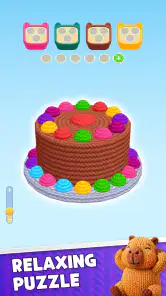
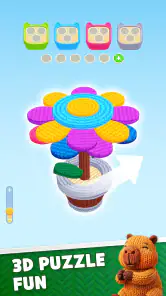

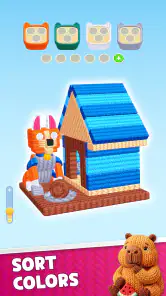
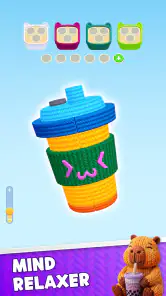


Analysis by Reviewed
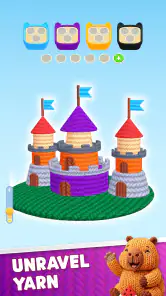
Yarn Out 3D is the kind of puzzle game I reach for when I want something visual, quiet, and easy to understand within a few seconds. The idea is simple: you work through tangled yarn loops and try to free them by thinking about their order and movement in a three-dimensional space. That sounds gentle, but the puzzles can become surprisingly demanding once several strands overlap and a seemingly obvious move blocks the next one.
Developed by Unico Studio, this free puzzle game is aimed at Everyone and runs on Android devices using version 7.0 or later. It has a 4.7 average from around 13K ratings, with over 100K installs, so it has already found an audience among players who enjoy short logic challenges. I think its strongest appeal is that it gives you a clear physical problem to inspect rather than burying the solution under complicated rules.
What the yarn puzzles feel like in everyday play
The first thing I noticed is that the game asks me to look before I act. The yarn loops are not just flat lines on a screen; their crossings and overlaps matter. A strand that appears to be on top may be trapped by another section, while a loop that looks unimportant can be the piece that prevents the whole arrangement from opening.
That makes each level feel closer to untangling a small pile of cords than solving a conventional word or number puzzle. The visual design gives the challenge its identity, but it also creates the main source of difficulty: depth can be hard to judge when several colorful strands occupy the same area. I often need a moment to trace one loop with my eyes before deciding whether it is safe to move.
For a first-time player, the most useful expectation is that success comes from planning, not speed. There is no reason to tap rapidly. I get better results when I choose one strand, follow its complete path, and ask what it is connected to before committing to a move. That habit is more valuable than trying to guess the intended solution from the most visible loop.
The game works particularly well in short sessions. I can play while waiting for an appointment or during a brief break without needing to remember a large story, a complicated inventory, or a long chain of objectives. At the same time, it is not only a casual time filler. When the layout becomes crowded, solving a level can demand enough concentration to make it feel worthwhile.
The free download makes it easy to try, although in-app purchases range from $0.99 to $99.99 per item. That is worth keeping in mind before handing the phone to a child or allowing purchases on a shared device. The age classification is Everyone, which fits the nonviolent puzzle format, but the purchase range still makes device-level purchase controls sensible.
What I would prepare before the first level
I would begin with a clean screen and a few uninterrupted minutes. The important details are small, and glare or a cramped display can make overlapping yarn harder to read. A larger phone or tablet can make the three-dimensional arrangement more comfortable to inspect, especially when several loops cross near the center of the puzzle.
I also recommend treating the opening levels as a tutorial for the visual language rather than rushing through them. Notice how a selected strand responds, how the game shows a possible movement, and whether the loop changes position in a way that affects the remaining arrangement. Those observations form the real instruction manual. The basic objective is easy to grasp, but the practical skill is learning to read the crossings.
The current version is 1.2. On a compatible device, getting started should be straightforward: install the game, open it, and begin with the available puzzle path. I would not expect a player to need outside instructions for the core idea. If you do feel lost, the best first adjustment is not changing strategy dramatically; it is slowing down and tracing the yarn from one end to the other.
One useful setup habit is to hold the phone steadily instead of playing while walking or multitasking. This sounds obvious, but it matters here more than in a simple matching game. A small accidental touch can make you lose track of which loop you were studying. I prefer to inspect the board, make one deliberate action, and then pause again to reassess the new shape.
How to get the first meaningful success
My first reliable method is to search for the least obstructed loop rather than the largest or brightest one. A strand with a clear route is a good candidate because moving it can reveal the structure underneath. I then check whether that move opens space or creates another crossing. The goal is not merely to move yarn; it is to reduce the number of blocked relationships on the board.
After selecting a likely strand, I follow it visually around the puzzle. If I cannot tell where it goes, I do not move it yet. That hesitation prevents a common mistake: choosing a loop because one section looks free while another section is still trapped. In a three-dimensional puzzle, the entire route matters more than the point that first catches the eye.
A practical way to think about the board is as a sequence of permissions. One loop may need to move before another can be released, and a third may be the reason the first two cannot shift. I try to identify the piece that is currently preventing progress, then work backward to find what must be cleared first. This is more dependable than repeatedly touching random strands.
When a move does not help, I use it as information rather than treating it as wasted time. The new position can reveal whether I misunderstood the depth of a crossing or whether I selected the wrong order. I mentally compare the board before and after the action. If the arrangement becomes more crowded, I look for a way to restore a simpler position and start again with a better reading.
That approach is especially helpful during a realistic everyday session. Imagine opening the game on a bus while you have only a few minutes before your stop. You can inspect the first arrangement, identify one unobstructed loop, and make a careful move without needing to finish the entire puzzle immediately. If you are interrupted, the visual state is easier to remember when your last action had a clear purpose.
My strongest tip is to avoid tapping at the center of a knot simply because it is visually prominent. The center is often where the information is most compressed. I prefer to start at an outer section and trace inward. This gives me a clearer sense of which strand sits above another and reduces the chance of confusing two similarly colored paths.
Where new players are most likely to get confused
The biggest source of friction is the gap between seeing a loop and understanding its full route. A yarn section can look loose while still being constrained elsewhere. If a move seems to do nothing useful, I take that as a sign that I have not correctly read the complete path, not necessarily that the puzzle is unfair.
Another confusing moment comes after a successful move. Clearing one loop can change the apparent depth of the remaining strands, so the board may look more complicated for a moment even though progress has been made. I pause after each action and redraw the puzzle in my head: which strand is now free, which one is still crossing, and which area has become easier to inspect?
It is also easy to confuse movement with progress. A busy board can invite constant interaction, but several movements may leave the underlying order unchanged. I try to judge an action by whether it exposes a new route or removes an obstruction. If it only shifts the visual clutter around, I reconsider before making another similar move.
Players who normally prefer fast match-three games may find the pace unusually deliberate. Yarn Out 3D does not give the same immediate rhythm as matching colored tiles or clearing a timed grid. Its satisfaction comes later, when a sequence of careful decisions finally opens the arrangement. If you want constant action, this may feel slow; if you enjoy spatial reasoning, the slower pace is part of the attraction.
There is a second trade-off in the three-dimensional presentation. It gives the game character and makes the puzzles more tactile, but it can also make small overlaps difficult to parse on a compact screen. I would choose a conventional two-dimensional logic game instead if visual clarity is my top priority or if I regularly play on an older, smaller device. The yarn format is more distinctive, but distinction brings a learning curve.
I would also skip it if I need a deep narrative, competitive ranking, or a strong sense of character progression. This is a focused logic experience. Its reward is the moment of understanding and completion, not a story campaign or a social loop. That narrow purpose is a strength for the right player and a limitation for anyone looking for a broader game.
How to make harder arrangements more manageable
Once the early puzzles feel comfortable, I stop thinking of the yarn as a collection of individual colors and start thinking in terms of intersections. Color helps me follow a strand, but the key question is always which loop blocks which. This shift makes the later arrangements less visually overwhelming because I am studying relationships instead of trying to memorize the entire picture.
I also divide the board into zones. I inspect the outer edges first, then the middle, and finally the densest knot. This prevents me from repeatedly returning to the same confusing center. Often, an edge loop provides the clearest starting point, while the central cluster becomes easier after one or two outside strands have been moved.
A useful discipline is to make a prediction before every action: “This should expose the lower crossing,” or “This should free the loop behind it.” If the result differs from the prediction, I know exactly what assumption was wrong. That turns trial and error into a learning process. Without a prediction, it is easy to make several moves and forget which one changed the situation.
When I am stuck, I do not immediately restart mentally from zero. I review the last meaningful change and ask whether it reduced or increased the number of visible constraints. If it increased them, I look for a reversal or a different route. If it reduced them but did not finish the puzzle, I continue from the newly exposed section rather than returning to the original knot.
This method also helps manage frustration. The game is more enjoyable when I accept that a failed attempt can improve my understanding of the board. I would rather spend a minute studying why a loop was blocked than make ten hurried touches and lose the structure completely. The puzzles reward patience in a very direct way.
Who will enjoy it and who should choose something else
I would recommend this game to anyone who likes tactile-looking logic puzzles, visual untangling challenges, and short sessions that still require genuine attention. It is a good fit for players who enjoy discovering an order of operations and do not mind pausing to inspect a crowded arrangement. It can also suit families because the Everyone rating and simple premise make the concept approachable, though adults should remember the available purchase range on shared devices.
It is less suitable for players who want a fast reward every few seconds. The appeal is not in rapid tapping, and the three-dimensional yarn can make the first encounters feel slower than familiar casual puzzle formats. People with difficulty distinguishing overlapping colors may also find some boards less comfortable, depending on the device and display. In that situation, a puzzle with larger symbols or clearer tile boundaries may be a better choice.
Compared with standard match-three games, this offers less instant spectacle but more deliberate reasoning. Compared with classic grid-based logic puzzles, it is more visual and spatial, with the added challenge of interpreting loops that overlap in depth. Compared with physics-style untangling games, its appeal is the clean focus on yarn relationships rather than a larger set of tools or objects. Those differences make it feel specific rather than like another reskinned tile puzzle.
The developer, Unico Studio, has kept the central idea easy to approach, but the game still asks the player to build a new visual habit. I would give it a fair trial beyond the first few simple arrangements. The opening concept is immediately understandable; the real test is whether you enjoy learning to read the knots as structured problems.
What I would do after mastering the basics
My next step would be to play more slowly, not faster. Once the basic interaction is familiar, the challenge shifts from learning what to do to choosing the best order. I would set myself a small goal for each session, such as solving one puzzle without random moves or identifying the blocking loop before touching the screen.
I would also use the game as a short mental reset rather than forcing a long session. A difficult arrangement can become harder when I keep staring at it after losing focus. Closing the game and returning later may make the depth relationships easier to see. That is not a weakness unique to this title; it is part of working with visual puzzles where attention matters as much as logic.
For someone deciding whether to install it, the answer depends on the kind of satisfaction you want. If you like the feeling of turning a confusing physical arrangement into a clean solution, the free entry point is appealing. If you need a story, action, or highly transparent two-dimensional rules, another puzzle category will probably serve you better.
My overall recommendation is to try Yarn Out 3D with patience rather than speed. Its yarn-loop premise is simple enough for a first attempt, yet the three-dimensional crossings give the puzzles more depth than the short summary suggests. The main limitation is that visual overlap can occasionally slow down understanding, especially on a small screen. Still, when I want a focused logic game that can fill a few spare minutes without demanding a complicated setup, this is an easy one to keep installed.
In the end, Yarn Out 3D succeeds because its best moments come from seeing the solution before making the final move. I enjoy that quiet pause when the tangled structure suddenly makes sense, and I think first-time players will get the most from it by tracing complete loops, predicting each action, and treating every failed move as useful information.
Pros
- Simple drag-and-sort controls are easy for new players to understand.
- Short levels make it convenient for quick gaming sessions.
- Colorful 3D visuals make the yarn puzzles pleasant to follow.
- Progressive challenges keep later stages more engaging.
- Offline play is useful when you have no internet connection.
Cons
- Gameplay can feel repetitive after completing many similar levels.
- Some puzzles may become frustrating when the yarn layout gets crowded.
- Ads may interrupt play
- especially between completed levels.
- The game may offer limited depth for players seeking complex puzzles.
- Performance can vary on older phones with less memory.

- Category
- Puzzle
- Version
- 1.2