Wrestling Empire
- 4.32K
- 4.3
- Installs
- 5.00M
- Price
- Free

Screenshots
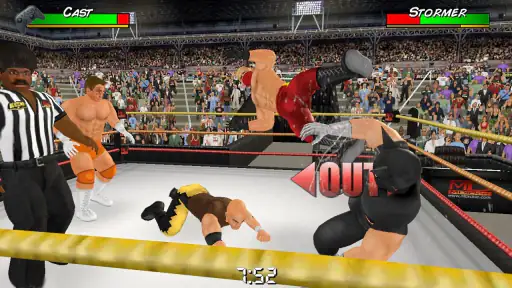
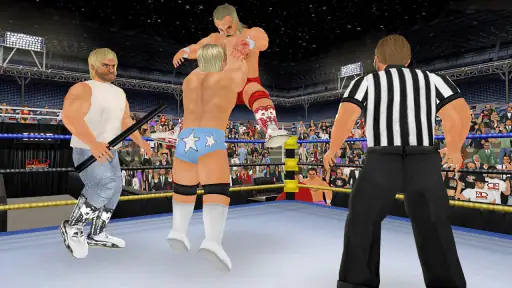
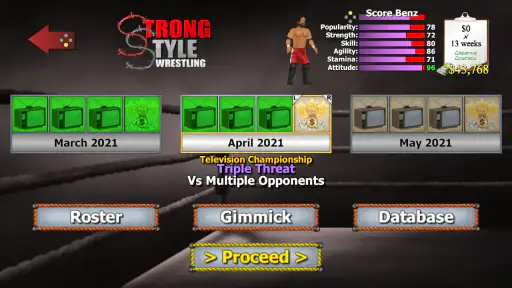
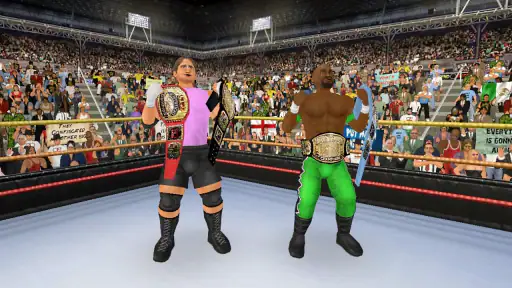
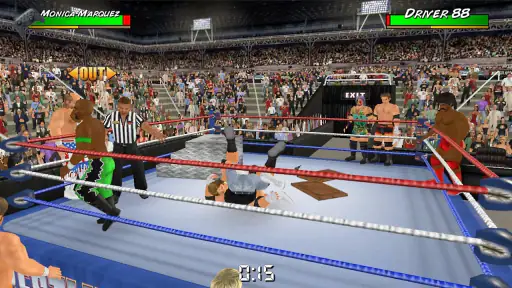
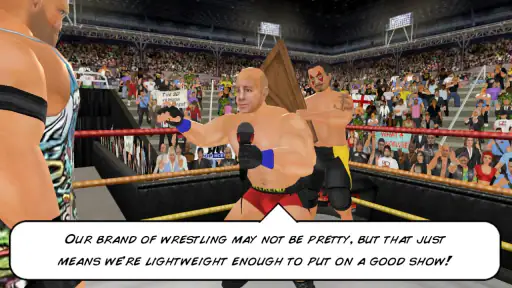
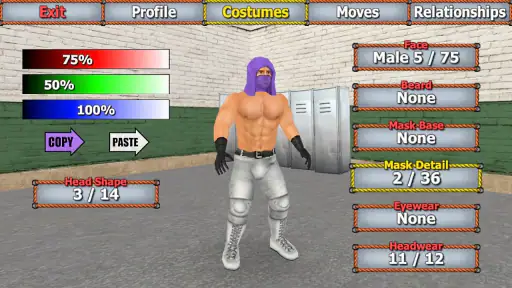
Analysis by Reviewed
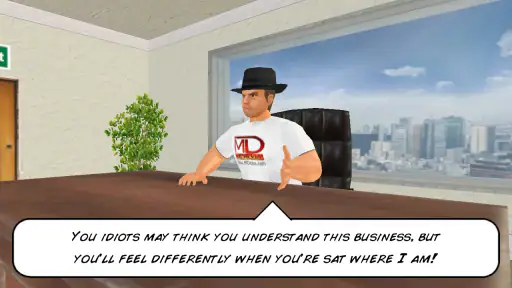
I went into Wrestling Empire expecting a straightforward wrestling game, but its appeal became clearer after spending time with it: this is less about producing a polished match every time and more about surviving a strange, unpredictable wrestling career. It is a free sports game from MDickie, rated Teen, and its rough edges are part of the experience rather than something the game tries to hide.
The store summary, “Let’s take it outside...”, gives a reasonable hint about the attitude here. Matches can feel unruly, careers can turn in unexpected directions, and the fun often comes from reacting to what happens instead of following a perfectly controlled plan. I found that refreshing after playing more conventional wrestling titles built around neat menus, licensed presentation, and carefully staged action.
That does not make it an easy recommendation for everyone. If you want realistic television-style wrestling, precise controls, or a calm progression path, this may frustrate you. If you enjoy emergent situations, exaggerated personalities, and the feeling that a small decision can create a much bigger problem, it has a distinctive charm. Its average rating of 4.3 from around 85 thousand ratings and more than five million installs suggest that this unusual approach has found a substantial audience.
What makes the first sessions work
The early goal is simple to understand even when the route toward it is not: establish yourself in a wrestling world and keep moving forward. I liked that the game does not immediately feel like a collection of isolated exhibition matches. The context around a bout matters, and the sense of having a career gives ordinary fights more weight.
At the beginning, I recommend treating every match as practice in reading situations rather than trying to perform a perfect sequence. The controls can feel busy, especially on a phone screen, and the action is deliberately less tidy than in a highly polished console wrestling game. Learning when to attack, when to create distance, and when to stop forcing a move is more useful than memorizing an elaborate routine.
One of the first useful discoveries is that winning is not the only way to judge a session. A match can teach you how opponents behave, how quickly a situation can become chaotic, and how much control you really have once several things start happening at once. That makes the opening hours more interesting than a basic win-or-lose ladder, although players looking for immediate mastery may find the learning process uneven.
The game also benefits from short, self-made goals. I often approached a session by deciding to survive a difficult opponent, complete a match without wasting energy, or avoid turning a manageable situation into a brawl. These targets give direction when the broader career feels unpredictable. They also make losses less disposable because each match can reveal something about the game’s timing and temperament.
Progress feels personal rather than purely numerical
The most satisfying progress signals are not just obvious rewards. I noticed improvement when I could recognize trouble earlier, position myself more deliberately, and recover from mistakes instead of panicking. That kind of progress is especially important here because the game’s presentation does not always give the same clean feedback found in mainstream sports games.
There is a useful trade-off in this design. A conventional wrestling game usually makes advancement easy to read: complete a match, unlock a character, climb a ranking, and move toward a clearly marked objective. Here, the career atmosphere creates a stronger sense of consequence, but the path can feel less transparent. You may understand that you are moving through a wrestling life without always feeling that every step has been explained.
For me, this uncertainty became part of the attraction after the initial adjustment. I started paying attention to the circumstances around each match rather than waiting for a large reward screen to tell me that I had succeeded. The game asks you to remember what happened and decide what matters next. That is a stronger fit for players who enjoy stories emerging from play than for anyone who wants constant, explicit confirmation.
A practical tip is to avoid rushing through every encounter simply because the next event is available. When the action becomes messy, slowing down and choosing a safer response can preserve a promising run. I also found it helpful to think of failed attempts as information: an opponent who seemed manageable may require a different approach, while a chaotic situation may be best handled by escaping its center rather than trying to dominate it.
The challenge curve rewards patience, not perfection
The difficulty does not feel like a smooth staircase. Some moments are approachable, while others can become demanding because of the situation rather than a simple increase in opponent strength. That unevenness is one of the game’s defining traits. It creates memorable surprises, but it can also make a loss feel caused by confusion or circumstance instead of a clear mistake.
I would not describe the challenge as purely competitive in the traditional sports-game sense. You are not always solving a clean tactical puzzle with a single correct answer. You are managing momentum, positioning, timing, and the consequences of taking a risk. When that works, a comeback feels earned. When it does not, the result can feel abrupt.
Players who enjoy learning through repetition should find enough here to stay interested. The game gives you reasons to return because the same broad objective can play out differently depending on how you approach it. However, anyone who dislikes trial and error should be prepared for friction. This is not the ideal choice if you want every defeat to come with a precise explanation and an obvious training exercise.
The touch interface is part of that challenge. On a phone, wrestling actions compete with the need to see what is happening, and the screen can feel crowded during hectic moments. I gradually became more comfortable by using fewer inputs and focusing on the immediate situation instead of attempting complicated actions constantly. That approach makes the game feel less like a struggle against the controls.
Another useful habit is to protect your attention. Playing while distracted makes the unpredictable moments feel unfair because you miss the change that caused the situation to deteriorate. In a quiet break, the game is easier to appreciate. A quick match during a commute may still work, but the more chaotic encounters deserve enough concentration to understand what went wrong.
Why the pacing can keep you coming back
The retention appeal comes from uncertainty rather than a relentless stream of rewards. I wanted to see what the next stage of a career would bring, but I was also curious about whether a different decision would produce a better result. That creates a natural “one more match” feeling without relying entirely on a conventional checklist.
There is a downside to that same design. When progress is less clearly signposted, returning after a break can require a moment to remember what you were trying to achieve. The game is more compelling when you are willing to reconnect with its world, but less convenient than a sports title that immediately shows your next objective and the exact reward for completing it.
The free entry point helps with experimentation. You can try the core experience without paying upfront, which is useful because the style is unusual and not easy to judge from screenshots or a short description. The listed in-app purchase price is $3.99 per item, so I would approach optional spending carefully and first decide whether the basic gameplay loop suits you.
I also think the Teen rating matters when deciding who should play it. The tone is exaggerated and wrestling-focused, but it is not aimed at very young children. For parents, the rating is a useful signal to check the game’s presentation and decide whether its rough, confrontational style fits the player.
Where it differs from familiar wrestling alternatives
Compared with polished wrestling games built around official presentation, Wrestling Empire feels more like a sandbox career experiment. It does not give me the same sense of watching a television broadcast or controlling a carefully choreographed spectacle. Instead, it offers a looser structure in which the entertainment comes from instability, personality, and the possibility that a plan will stop working.
That comparison explains both its strength and its limitation. If your priority is visual realism, licensed stars, or highly precise animation, another wrestling game will probably serve you better. If you are tired of games where every match feels interchangeable and every career choice is reduced to a predictable menu, this one has more character.
It also differs from casual sports games that are designed for instant, low-commitment rounds. A single match can be quick to start, but understanding the broader experience takes more patience. The game is at its best when you allow a session to develop instead of treating it as a disposable arcade attempt.
I would particularly recommend it to players who enjoy unusual simulations, wrestling fans who do not need official presentation, and people who like discovering stories through imperfect systems. I would suggest skipping it if you need responsive controls from the first minute, dislike chaotic outcomes, or want a clearly measured progression path with no ambiguity.
Small choices that improve the experience
My first concrete recommendation is to set a narrow intention before starting. Decide whether you are testing control, trying to finish a match safely, or pushing for a more aggressive result. Without that intention, the game’s unpredictability can make a session feel directionless. With it, even a messy loss gives you something specific to evaluate.
Second, do not confuse aggression with progress. The temptation is to keep attacking whenever an opening appears, but the game becomes more manageable when you choose moments instead of constantly forcing them. Creating space, observing the opponent, and waiting for a better opportunity can be more valuable than trying to win every exchange immediately.
Third, use the game as a story generator rather than a score generator. Remember the matches that went wrong, the decisions that created trouble, and the situations you handled well. That mindset reveals the strongest part of the design: the personal narrative built from unexpected turns. If you only measure success through clean victories, you may miss why this game has retained its audience.
Finally, give the controls time before deciding that the game is unplayable. The opening can feel awkward, and some players will never enjoy that interface, but a short adjustment period makes the action easier to read. I still think the controls are a genuine barrier, not a minor complaint, yet the barrier is worth crossing if the career unpredictability appeals to you.
Technical fit and value for mobile players
The game is available as a free download and supports devices running at least Android 7.1. Its current version is 1.7.9, which makes it accessible to many older Android phones as well as newer devices. I would still keep expectations realistic: compatibility does not guarantee that every phone will make the touch controls equally comfortable, especially during crowded action.
MDickie’s authorship is visible in the game’s distinctive personality. It does not feel designed to imitate the safest mainstream wrestling formula. The presentation, pacing, and situations all lean toward a particular kind of eccentric career experience. That strong identity is valuable, although it also means the game has fewer neutral settings for players who want to smooth away its roughness.
For a free sports game with a Teen rating and a large installed audience, it offers an easy way to test whether unconventional wrestling appeals to you. I would not judge it by the standards of a premium console production. Its value comes from replayable situations and the freedom to react, not from flawless polish or a perfectly guided tutorial.
One everyday scenario where it works well is a quiet evening when I have enough time for a few attempts and want something more unpredictable than a standard match-three or quick arcade game. I can begin with a simple goal, play through the consequences, and stop after a memorable outcome rather than needing to complete a long campaign. It is less suitable for a rushed moment when I need immediate clarity and exact control.
My progression verdict
The progression succeeds because it makes survival and adaptation feel like achievements. Early goals are understandable, but the route is intentionally irregular. Progress signals come as much from improved judgment and memorable career developments as from obvious rewards. The difficulty curve can be rough, yet that roughness supports the feeling that the wrestling world is not fully under your control.
The pacing sustains interest when I accept that not every session will produce a clean victory or a clearly labeled milestone. The retention pressure is strongest for players who enjoy wondering what a different choice might change. It is weaker for players who need constant unlocks, transparent objectives, or a carefully tuned difficulty ladder.
My final opinion is positive, with a clear qualification: I recommend Wrestling Empire for its unusual career-driven wrestling experience, not for technical polish. The free price makes trying it easy, and the game has enough personality to stand apart from safer alternatives. Just approach it patiently, expect awkward moments, and judge your progress by how well you understand and handle the chaos.
With its 4.3 average, around 4.3 thousand written reviews, and more than five million installs, it is clearly not a niche experiment that nobody has embraced. Still, popularity does not remove the need for the right expectations. If you want controlled spectacle, choose a more conventional wrestling game. If you want unpredictable stories, imperfect decisions, and a sports game that feels unlike the usual template, this is one I would gladly keep installed.
Pros
- Deep career mode with meaningful choices and unexpected events.
- Large roster of wrestlers
- promotions
- and venues to explore.
- Simple controls make matches accessible on touchscreen devices.
- Highly entertaining physics create funny and unpredictable moments.
- Regular updates add new content and improve the overall experience.
Cons
- Graphics look dated compared with modern wrestling games.
- Touch controls can feel imprecise during fast-paced matches.
- Some career events depend heavily on random outcomes.
- The free version includes limitations and promotional interruptions.
- Long-term progression may become repetitive after extended play.

- Category
- Sports
- Version
- 1.7.9