Infinite Lives
- 267.00
- 4.1
- Installs
- 500.00K
- Price
- Free

Screenshots

Analysis by Reviewed
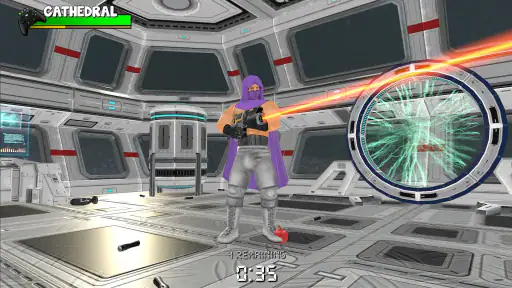
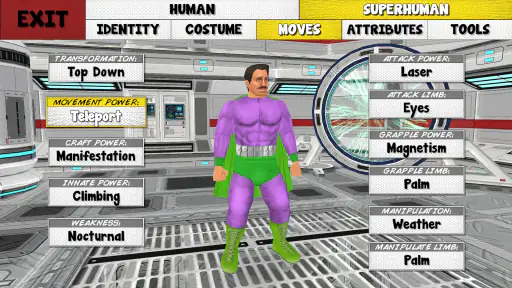
I went into Infinite Lives expecting a quick action game, but its appeal is less about reaching a single finish line and more about seeing what happens when a powerful character collides with a world full of other powerful characters. This adventure game from MDickie puts superhumans and subhumans into a struggle for control, then leaves me to decide how directly I want to shape the chaos. The result is rough around the edges, unpredictable, and often more interesting than a carefully scripted campaign.
The basic promise is easy to understand: enter a world where unusual fighters compete, act, react, recover, and eventually give me a reason to begin another life. The important part is that the game does not feel like a simple sequence of locked stages. My interest comes from the consequences of each encounter. A fight can change my position, expose a weakness, create a new problem, or simply make me curious about what would happen if I tried a different approach next time.
That makes it a particularly personal kind of adventure game. I am not just following a story that behaves the same way for everyone. I am testing the limits of a character and a world that seems designed to produce unexpected situations. It is free to download, carries a Mature 17+ rating, and has already reached over 500 thousand installs with a 4.1 average from around 6 thousand ratings. Those numbers suggest that its unusual formula has found an audience, although it is still very much a game for players who enjoy experimentation rather than polished predictability.
How the action starts and why the first decision matters
The first useful lesson is not to treat every encounter as a command to attack immediately. The premise encourages conflict, but the most enjoyable opening moments come from reading the situation first. I look at who is nearby, how much pressure is building, and whether a direct confrontation will give me control or simply create several new threats. That small pause makes the first action feel meaningful instead of automatic.
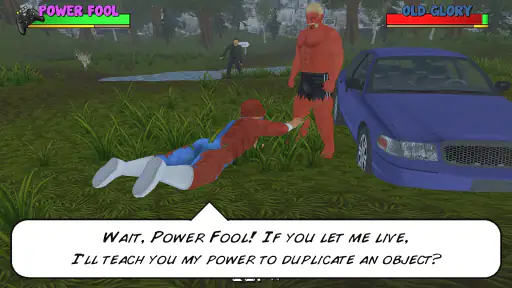
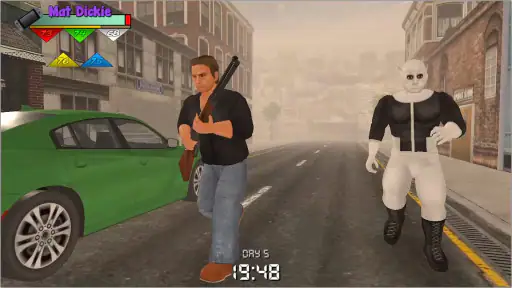
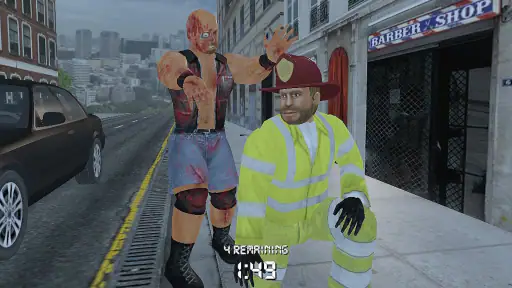
When I do commit to a fight, the feedback is immediate in a way that suits MDickie’s style. Hits, movement, resistance, and the reactions of surrounding characters all tell me whether my plan is working. The game’s presentation is not trying to imitate a glossy console blockbuster. Its rougher personality makes the action feel more like a sandbox incident than a perfectly staged set piece, which is exactly why a failed attempt can still be entertaining.
I found that the best opening move depends on the kind of session I want. If I am playing for a short burst, I can take a risk, push into trouble, and see how long the character survives. If I want a longer run, patience becomes more valuable. I can use the early moments to understand the local situation before spending energy or exposing myself to unnecessary danger. That difference gives the same starting point two distinct moods: reckless testing or careful preparation.
One practical tip is to treat the first encounter as information gathering, even when it ends badly. Notice which opponents interrupt your plans, which situations become crowded, and how quickly a simple confrontation turns into a wider struggle. On the next attempt, I can change only one decision and immediately learn whether that choice mattered. This makes resets useful rather than frustrating, because each new life becomes a small experiment.
The game is also better suited to players who enjoy making their own goals. I might try to dominate a conflict, survive as long as possible, or simply create the strangest chain of events I can manage. Someone looking for a tightly directed adventure with constant story instructions may find this freedom vague. I appreciate it, but I also understand why another player might want clearer objectives and a more orderly route through the game.
The feedback rhythm keeps ordinary encounters moving
The central rhythm is action, reaction, adjustment, and another action. I make a move, the world answers, and I decide whether to continue with the same idea or change direction. That rhythm is more important than any individual punch because it turns even a familiar confrontation into a question. Can I press the advantage? Should I escape? Did the last decision create a better position or make the next few seconds worse?
This feedback is strongest when several characters become involved. A fight that starts as a simple exchange can develop into a broader struggle, and that change forces me to stop thinking in terms of one opponent. The surrounding activity becomes part of the challenge. I have to watch the whole situation rather than focus only on the character directly in front of me.
That is one of the game’s less obvious strengths: it rewards awareness more than memorizing a perfect route. In many conventional adventure games, the safest approach is to learn the intended sequence. Here, the useful skill is recognizing when the situation has changed. A plan that worked moments ago may become a bad idea once another fighter enters the picture or the balance of power shifts.
The trade-off is that this kind of feedback can feel messy. The game’s appeal depends on accepting a certain amount of disorder. I sometimes understand why an encounter became difficult without feeling that every outcome was cleanly explained. Players who need precise visual feedback, carefully tuned enemy patterns, or highly polished controls may prefer a more traditional action title. Infinite Lives is more interested in emergent trouble than in delivering perfect combat choreography.
For everyday play, I found it works well during short breaks because a session can begin with one simple intention. I might decide to test a new approach, survive a difficult situation, or see whether avoiding a conflict changes what follows. I do not need to prepare for a long campaign before enjoying it. At the same time, the open-ended structure can pull me into another attempt because I usually finish with a question rather than a clean conclusion.
That question is the reward. There may be no single dramatic prize that explains every session. Instead, I gain knowledge about how the world reacts and how my choices shape the next situation. A failed run can show me that rushing into a crowded confrontation is a poor idea. A successful run can reveal that a cautious opening creates more opportunities later. The reward is partly progress in the usual sense and partly a better understanding of the game’s behavior.
What makes the reward worth another attempt
I would describe the reward structure as experiential rather than purely collectible. The satisfaction comes from surviving a difficult sequence, turning a bad position around, or producing an outcome I did not expect. That matters because the game’s store summary points toward endless possibilities, but the real value is in how those possibilities make me reinterpret the next session.
A useful way to play is to set a specific challenge before starting. Instead of entering without a plan, I can decide to avoid unnecessary fights, take a more aggressive route, or focus on learning the behavior of one type of opponent. This turns a loose sandbox into a series of personal experiments. It also prevents the game from feeling directionless after the novelty of the first few encounters fades.
Another non-obvious benefit is that failure does not automatically erase the value of the run. In a tightly scripted game, losing can mean repeating the same section until I execute it correctly. Here, losing can still teach me something about timing, positioning, and the cost of escalation. I may not become stronger in a conventional role-playing sense, but I can become more capable as a player because I understand the situation better.
That approach also explains who will enjoy the game most. I would recommend it to someone who likes sandbox action, unpredictable confrontations, and stories created by play rather than delivered through long scenes. It is a good fit for a player who enjoys telling a friend, “I tried one thing and the whole situation changed.” It is less suitable for someone who wants a calm adventure, a carefully authored plot, or a clear checklist of objectives.
The Mature 17+ rating is important when deciding whether it belongs on a shared family device. I would not present it as a general-audience adventure game simply because it is free. The tone and conflict are aimed at older players, so the age label should be taken seriously when choosing it for someone else.
The free entry point makes trying it straightforward, but optional purchases cost $3.99 per item. I would approach those purchases carefully and first decide whether the core loop actually suits me. Since the main attraction is experimentation, spending money will not automatically solve the game’s rougher presentation or make its unpredictable encounters feel more structured. I would only consider an optional purchase after I had already confirmed that I enjoyed the basic cycle.
The reset is part of the design, not merely a punishment
The reset matters because Infinite Lives is built around repeated attempts. When a life ends or a run reaches a natural stopping point, I am not simply returning to the beginning of a conventional level. I am carrying forward what I learned: which choices created pressure, which risks were worthwhile, and which situations I should handle differently. That makes the next session feel like a fresh test rather than a chore.
This is where the short description, “Infinite Lives,” becomes more meaningful in practice. The idea is not just that I can keep playing. It is that the end of one attempt creates the setup for another. The loop is action, feedback, consequence, reset, and renewed curiosity. If I am enjoying the game, the reset gives me a reason to ask how a different decision would change the outcome.
Still, the reset will not appeal to everyone. Players who want permanent, easily visible progress may find repeated beginnings less satisfying. If my favorite part of an adventure game is unlocking a long chain of upgrades and watching a character become steadily stronger, I may prefer a more conventional progression system. Infinite Lives is at its best when I value discovery and variation over a carefully measured climb.
I also recommend keeping sessions mentally separate. If I become attached to one exact outcome, the game’s unpredictability can feel unfair or disappointing. If I treat each attempt as its own story, the reset becomes much easier to accept. One run may be about survival, another about testing aggression, and another about seeing how much trouble I can create before the situation collapses.
The current version is 1.0.7, and the game runs on devices using Android 7.1 or later. That makes the compatibility requirement relatively approachable for many Android users, but I would still consider the age of a device before expecting the smoothest experience from a busy action scene. The game’s design is more important than technical spectacle, yet crowded encounters can still be the moments when an older phone feels least comfortable.
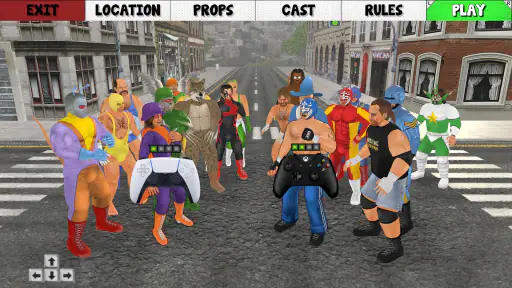
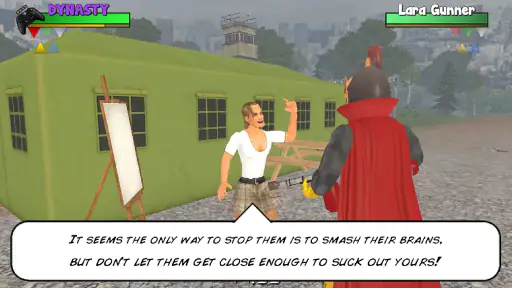
Because the game is from MDickie, I would also set expectations around style. This is not trying to be a realistic superhero production with cinematic presentation. Its identity comes from unusual situations, direct interaction, and a willingness to let the player’s choices produce messy results. If that sounds appealing, the distinctive style is a reason to try it. If I want visual polish and a carefully controlled tone above everything else, the same style may be the main barrier.
Where it stands beside more traditional adventure games
Compared with a standard mobile adventure game, Infinite Lives gives me less certainty and more room to improvise. A traditional alternative may guide me through a designed story, place objectives clearly on the screen, and make progress easy to measure. That structure is better when I want to relax and follow a dependable path. This game is better when I want the path to change because of what I do.
Compared with a pure fighting game, it also asks me to think beyond the immediate exchange. The surrounding struggle, the consequences of escalation, and the possibility of another life add context to the action. I am not only asking whether I can win one confrontation. I am asking whether winning that confrontation helps the wider situation or creates a more dangerous one.
That distinction gives it a specific use case. I would choose it when I have fifteen or twenty minutes and want a self-contained story to emerge from play. I would not choose it when I need a quiet game with predictable pacing, when I want a precise competitive match, or when I am looking for a deep narrative that explains every character and event in detail.
There is also a social angle, even though the experience itself is something I play alone. The unpredictable outcomes are easy to remember and describe. A run that goes wrong in an unexpected way can be more memorable than a technically perfect victory. For me, that is a sign that the game is doing something distinct rather than simply repeating the usual mobile action formula.
My main criticism is that the same freedom that creates memorable moments can make the experience feel uneven. Not every session produces a great story. Sometimes the action is more confusing than exciting, and sometimes I want a clearer indication of what I should be trying to accomplish. The game asks me to supply motivation and patience. That is a fair trade for a sandbox, but it remains a trade.
I would also avoid recommending it to younger players despite the free price and accessible premise. The Mature 17+ rating should guide that decision. For older players, the better question is whether they enjoy experimental systems and repeated runs. If they do, the roughness is easier to forgive. If they prefer a polished, linear adventure, another game will likely be a better use of their time.
My verdict on the action-to-reset loop
After spending time with Infinite Lives, I see its strongest quality in the complete loop rather than in any isolated feature. The first action invites a choice, the feedback shows how the world responds, the reward comes from learning or surviving, and the reset turns that knowledge into a reason to try again. That loop is tangible, and it explains why a short session can become a second or third attempt without needing a conventional cliffhanger.
My advice is to approach it as a playable experiment. Do not expect every run to feel balanced or every goal to be announced clearly. Begin with a small intention, pay attention to how the situation changes, and use the next life to test one adjustment. That method brings out the game’s best qualities and reduces the frustration caused by its less polished moments.
MDickie has made something that will divide players, but I think that is preferable to producing another interchangeable mobile adventure. The game’s superhuman and subhuman conflict gives the action a distinctive setting, while the repeated-life structure makes failure useful. It is free to try, but the Mature 17+ content, optional $3.99 purchases, and deliberately unpredictable style are all worth considering before committing.
I would recommend it to adventurous players who enjoy making their own stories from chaotic encounters. I would skip it if I wanted a linear campaign, refined combat feedback, or permanent progression that always moves forward. For the right player, though, the reason to start another session is clear: not because the game promises that the next run will be better, but because it may be completely different.
Pros
- Removes the need to wait for lives to refill between attempts.
- Makes difficult levels easier to replay and practice repeatedly.
- Useful for players who prefer uninterrupted
- relaxed gameplay sessions.
- Can help complete time-limited challenges before they expire.
- Reduces frustration caused by losing progress after several failed attempts.
Cons
- May make the game feel less challenging by removing its intended limits.
- Could reduce the excitement of earning or managing lives normally.
- Some features may require an active internet connection to work properly.
- Third-party tools can pose privacy or account-security risks.
- Using modified features may violate the game's terms and risk account penalties.

- Category
- Adventure
- Version
- 1.0.7