Voxel Blast Jam
- 452.00
- 4.7
- Installs
- 100.00K
- Price
- Free

Screenshots

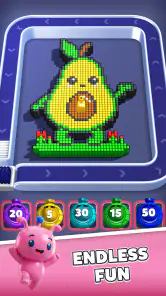
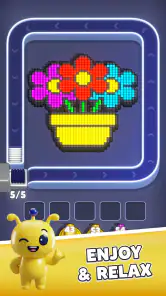
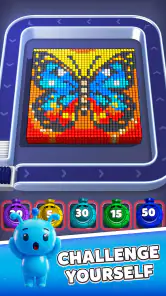
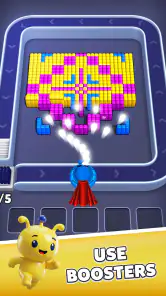
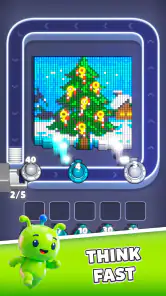
Analysis by Reviewed
I went into Voxel Blast Jam expecting a light puzzle game, and that is exactly where it fits best: short sessions, simple controls, and enough visual activity to keep a quiet moment from feeling empty. It is a free Android game from Unico Studio, built around shooting voxel-style pieces and arranging block colors rather than racing against a clock. That last point matters more than it may sound. The relaxed pace makes it easier to think through a move instead of tapping quickly just because a countdown is pressuring me.
After spending time with it, I see the game as a comfortable choice for people who like casual matching puzzles but want a little more direct interaction than simply swapping tiles. The shooting element gives each turn a physical feeling, while the block-puzzle structure keeps the rules approachable. It is not trying to replace a deep strategy game, and it does not have the intensity of an arcade shooter. Its appeal is the middle ground: a colorful puzzle that can fill a few minutes without demanding complete concentration.
How the current version feels to play
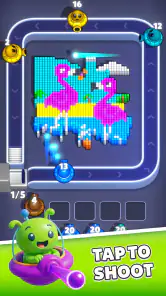
The basic appeal is easy to understand. I look at a compact field of voxel-like shapes, consider where colors and blocks can connect, and use the shooting mechanic to influence the board. The result feels more active than a conventional color-matching game, but it remains recognizably casual. I can play while waiting for an appointment or during a short break, stop after a few turns, and return without needing to remember a complicated story or control scheme.
The absence of a timer changes the mood completely. In many puzzle games, the best move is not necessarily the smartest one; it is the move I can make before the clock runs out. Here, I have room to inspect the arrangement and think about what a shot might open up. That makes the game friendlier to players who dislike reflex tests, and it also gives the block layouts more importance. A careless action can still make the next decision awkward, but the pressure comes from the board rather than from a countdown.
I found the voxel presentation useful rather than merely decorative. The chunky shapes make the pieces easy to distinguish, and the colorful style gives the board a playful identity. It is less visually tiring than a screen filled with tiny symbols or overly glossy effects. At the same time, players who prefer minimalist puzzle interfaces may find the 3D-inspired look busier than necessary, especially when several colors and shapes are competing for attention.
The controls are best understood as a planning tool. I do not need a complicated button layout to enjoy the game, but I do need to pause before committing to a shot. My most useful habit was to inspect the spaces that would become available after a match rather than focusing only on the immediate color group. That small change in approach made the game feel more thoughtful. The strongest move is often the one that preserves room for the next arrangement, not the one that creates the biggest instant reaction.
A good fit for short, low-pressure sessions
One realistic use case is a commute with unreliable attention. If I am standing in a queue or sitting on public transport, I can play a few turns without needing sound, a long uninterrupted session, or a complicated tutorial to remember. Because the game is free to start, it is also easy to test without making a purchase decision first. The Everyone age rating makes its tone suitable for a broad audience, although younger players may still need guidance around optional purchases.
It also works well as a wind-down game. I would not choose it when I want a demanding brain-training challenge or a competitive match against another person. I would choose it when I want something interactive but not stressful. The lack of a timer is especially helpful late at night, when a fast-paced puzzle can feel more irritating than entertaining.
That relaxed design has a trade-off. Without a clock pushing me forward, some moments can feel slower than they would in a traditional match-three game. Players who enjoy rapid chains, strict turn limits, or constant score pressure may find the pace too gentle. The game is more about making a comfortable sequence of decisions than chasing adrenaline.
What the shooting mechanic adds
The shooting layer gives the puzzle a useful sense of cause and effect. Instead of only exchanging neighboring pieces, I am directing an action toward the board. That makes positioning important and creates a different kind of anticipation: I am not merely asking which colors match, but also where the resulting space will leave me. This is the feature that separates the experience from a standard swap-based alternative.
My practical tip is to avoid treating every available match as equally valuable. A quick color clear can be tempting, but it may leave the remaining blocks packed into an inconvenient shape. When I looked for shots that opened a larger working area, later moves became easier to read. This is a small strategic habit, yet it gives the game more depth than the short store summary suggests.
Another useful approach is to use the no-timer format deliberately. Rather than tapping as soon as a possible action appears, I compare two or three outcomes in my head. One shot may remove a visible group, while another may set up a better chain by changing the board’s structure. The game rewards that kind of patience more than quick fingers, so players who normally avoid arcade-style puzzles may find it surprisingly comfortable.
How the latest release fits into the product’s early life
The game was released on January 20, 2026, and the current version is 1.5.3. That places it in an early stage of its life, which is important when deciding what kind of experience to expect. I would approach it as a developing casual puzzle rather than as a long-established platform with years of accumulated systems. The current build is the one that matters for anyone installing now, while future changes should be treated as possibilities rather than promises.
Its early traction is encouraging: it has passed 100 thousand installs and holds a 4.7 average from about 12 thousand ratings. Those figures suggest that the central idea is connecting with a sizeable group of players, but they do not automatically mean it will suit every puzzle fan. I still recommend judging it by the specific combination of voxel shooting, color matching, and unhurried play, because those choices define the experience more than popularity does.
The version number also gives existing users a practical reason to keep an eye on updates. In a game this focused, small adjustments can affect how satisfying a board feels: clearer feedback, smoother handling, better balance, or additional variety could each change the rhythm without changing the central concept. I would welcome evolution that protects the calm puzzle identity instead of adding pressure simply to make sessions longer.
Where it compares well with familiar alternatives
Compared with a classic match-three game, this one feels less dependent on fast pattern recognition and more dependent on placement. A traditional swap puzzle may be better if I want immediate combos, a familiar grid, and a very quick learning curve. Voxel Blast Jam is the better fit when I want my action to feel directed and spatial rather than limited to exchanging adjacent pieces.
Compared with physics-based block games, it is more controlled. Physics puzzles often create entertainment through unexpected movement and chain reactions, while this game’s appeal comes from reading the arrangement before acting. If I enjoy experimenting with objects falling or bouncing, another option may offer more surprise. If I prefer a board that lets me plan without a timer, this title has the stronger case.
It also differs from competitive puzzle games because the experience is not built around another player’s pace. That makes it less exciting for someone who needs leaderboards, head-to-head pressure, or a constant reason to improve a score. On the other hand, it is easier to recommend to a mixed-age household or to someone who finds competitive timers tiring. The Everyone rating supports that broad positioning, while the actual mechanics determine whether the player enjoys the slower decision-making.
What may frustrate regular players
The same simplicity that makes the game approachable can limit its long-term appeal. Players who need a large progression system, a story campaign, or many distinct modes may eventually want more variety than this focused format provides. I would not install it expecting a sprawling adventure disguised as a puzzle. Its strength is concentration on one central loop, and that can become a weakness if the loop does not evolve enough for a player’s taste.
The free model is another point to consider. The game costs nothing to download, but in-app purchases range from $0.99 to $74.99 per item. That does not mean a purchase is necessary for every player, and I would not assume that optional spending defines the whole experience. Still, anyone sharing a device with children should review purchase controls before handing it over. Adults who prefer a single upfront payment may also feel more comfortable with a paid puzzle that avoids this kind of store structure.
Because the game depends on color and shape recognition, screen readability matters. I found it most comfortable when I could give the board my full attention rather than playing with the display dimmed or viewed from an awkward angle. Someone with difficulty distinguishing similar colors may want to test the visual clarity personally before committing to longer sessions. The voxel styling is attractive, but a decorative look should never be confused with accessibility for every player.
Who should install it and who should skip it
I would recommend it to casual puzzle fans who want a free game with no countdown pressure, especially people who enjoy planning a shot and watching the board open up. It is also a sensible choice for short breaks, family-friendly play, and anyone who likes the idea of color matching but finds conventional swapping repetitive. The current version is easy to approach, and the broad age rating makes it less intimidating than many action-focused alternatives.
I would skip it if my main goal were competitive intensity, a demanding logic challenge, or a large narrative adventure. I would also hesitate if I strongly dislike free-to-play purchase options, even though the game itself is free to download. Players who want every session to feel different may prefer a puzzle with several modes or a more elaborate progression structure.
For a better first session, I suggest playing slowly rather than trying to clear the most obvious group immediately. Watch how a shot changes the available space, then look for a move that leaves multiple follow-up options. If the board becomes crowded, resist the urge to act just because a match is visible. That habit is where I found the game’s quiet strategy, and it is also the best way to tell whether its style matches your own.
What I would watch as it develops
As an early release with version 1.5.3 currently available, the most important question is whether future updates add meaningful variety without losing the no-timer identity. I would look for more interesting board situations, clearer communication of why a shot is effective, and improvements that make planning feel rewarding rather than repetitive. Those are expectations for the direction of the game, not claims about features already present.
I would also watch how the balance between free play and optional purchases develops. The current purchase range is wide, so transparency and restraint will matter to players who want a relaxed puzzle rather than a game that repeatedly interrupts the flow. A good evolution would keep the core loop enjoyable on its own and make spending feel genuinely optional.
My overall impression is positive but specific. Voxel Blast Jam is strongest when I treat it as a calm spatial puzzle with shooting controls, not as a conventional shooter or a high-pressure arcade game. Its free entry, voxel presentation, broad age rating, and timer-free structure make it easy to try. Its limitations are equally clear: the focused loop may not satisfy players seeking deep variety, and the in-app purchase model deserves attention. For a friend who wants a colorful, thoughtful game for spare minutes, I would recommend giving it a chance, especially if patient board reading sounds more appealing than racing a clock.
Pros
- Simple voxel-style visuals run well on many modern devices.
- Short levels make it convenient for quick gaming sessions.
- Bright effects and animations make matches feel lively.
- Easy-to-understand goals suit players new to puzzle games.
- Offline play is useful when you have no internet connection.
Cons
- Later stages can feel repetitive once the core mechanics are familiar.
- Some challenges may depend more on luck than careful planning.
- Small on-screen elements can be difficult to distinguish on phones.
- Progress may feel slow without spending extra time in the game.
- Frequent visual effects may become distracting during longer sessions.

- Category
- Puzzle
- Version
- 1.5.3