Two Dots: Connect the dots
- 87.16K
- 4.3
- Installs
- 50.00M
- Price
- Free
Screenshots
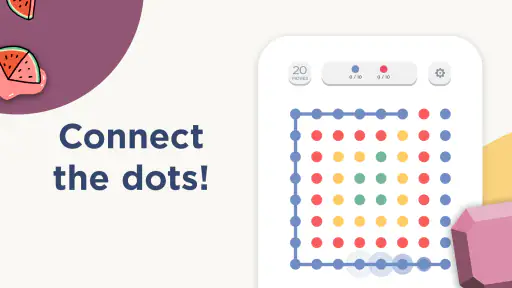
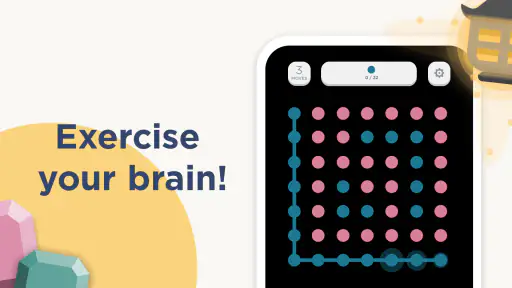
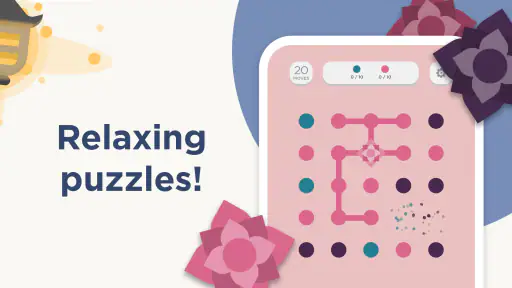
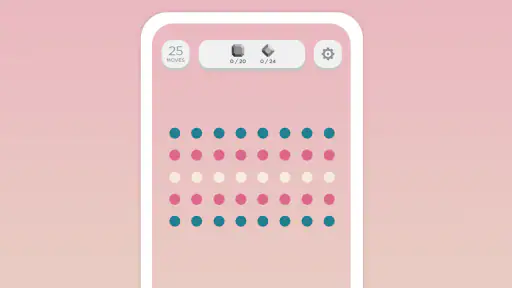
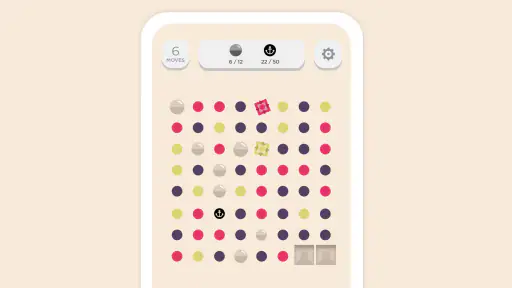
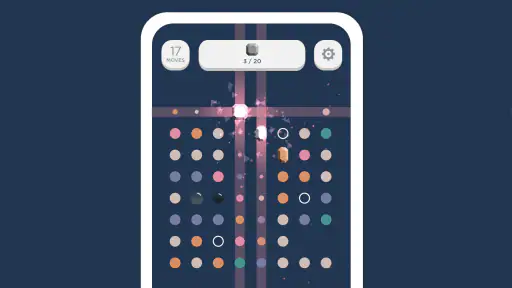
Analysis by Reviewed
My main reason for recommending Two Dots is that it makes a small puzzle feel satisfying without demanding a long session. I like it best as a game to dip into when I have a few spare minutes: the board gives me a clear problem to solve, while the changing objectives stop every level from feeling like a repeat of the last. It is a free board game from PlayDots, rated for Everyone, and its relaxed presentation makes it approachable even if you do not usually play puzzle games.
Where the puzzle gets interesting
The pleasure is not simply in matching colors. A move can clear a useful space, set up a larger chain, or leave an awkward cluster that costs precious turns later. I try to scan the whole board before swiping rather than immediately matching the first obvious group. When a level has a special obstacle, I also make a point of checking what the objective actually asks me to clear; a pretty match is not always a productive one.
That little planning step is what gives the game more staying power than a basic match-three alternative. Those games often reward quick combinations and cascades; here, I find that thinking about the shape of the board and the limited moves is more important. The trade-off is that a puzzle can feel stubborn when the colors or openings do not cooperate. If you want a game built around fast reactions, a timer, or a competitive action loop, this is probably not the one I would pick.
A good fit for short breaks
I can imagine playing a level while waiting for a kettle to boil or sitting through a short commute. It is easy to understand what I am trying to do, and I can stop after a puzzle rather than needing to keep a long session going. The calm look and sound suit a quiet break, though I would lower the volume if I were playing somewhere public. The game has been available since November 12, 2014, and version 9.9.1 is the current release; its long life is reflected in its 50 million-plus installs and a 4.3 average from around 1.1 million ratings.
One practical distinction is that a free download does not mean every shortcut is free. Optional purchases range from $0.99 to $119.99 per item, so I would treat boosts as convenience rather than a requirement and avoid buying in a hurry after a frustrating level. The game works best for me when I pause, look for a better route, and accept that some puzzles may take another try. If you prefer a completely uninterrupted challenge without purchase prompts or a more direct, no-frills puzzle, another option may suit you better.
Gameplay and Features
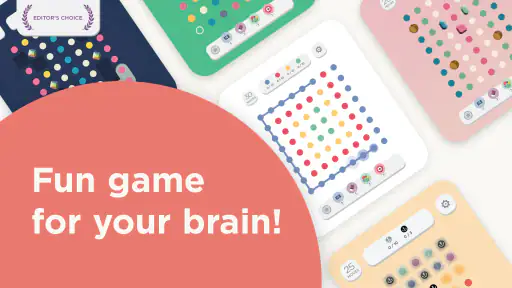
At its core, Two Dots is a puzzle game that challenges you to connect dots of the same color to make them disappear. Sounds simple, right? Well, as you progress through the levels, you'll find yourself navigating through a variety of challenges that keep the gameplay fresh and engaging. From fiery dots that explode to anchors that need to be sunk, each level presents a new twist that keeps you on your toes.
One of the standout features of Two Dots is its beautifully designed levels. The minimalist art style combined with the soothing background music creates a calming yet captivating experience. It's the kind of game you can play to unwind after a hectic day. Plus, with over 3,000 levels, there's no shortage of puzzles to solve!
More From Our News Desk

Weather by Xiaomi Review: Clear at a Glance, Less Clear Up Close

X Under Pressure: Can It Recover When Posting Goes Wrong?

Clash of Clans Is Won Between the Battles

Android Auto Makes the Case for Quieter Car Software

MobiOffice: Transforming Mobile Productivity with Seamless Integration

EA SPORTS FC™ Mobile Soccer: Redefining Mobile Sports Gaming
Reading the board instead of rushing
The most useful habit I have picked up is to treat the objective as a route-planning problem, not just a target. If a level asks me to deal with an obstacle, I first look for the dots that let me reach it efficiently. A large match elsewhere can feel rewarding but leave the real task untouched. I also watch how a clear changes the spaces around it; opening room can make a later move easier, even when the first clear does not directly advance the goal.
When I am stuck, I try changing what I am looking for rather than repeating the same kind of move. I might focus on clearing a narrow lane, or wait for a color arrangement that lets one move do two jobs. That approach does not make every level predictable, but it helps me distinguish a genuinely useful move from one that merely looks satisfying. It is a small puzzle, yet the limited moves give each decision a consequence.
This is also why I would not recommend playing while distracted if you care about making steady progress. The controls are simple, but the board rewards a few seconds of attention before each move. I can still play casually, of course; I just get more out of it when I pause to inspect the whole layout instead of tapping through quickly.
How it compares with other puzzle games
Compared with a typical match-three game, Two Dots feels less about chasing a cascade and more about managing a small space under a specific constraint. That makes it a better fit for someone who enjoys deliberate choices than for someone seeking constant visual effects or a rapid score chase. Compared with a traditional board game, it is much easier to pick up alone and play in a brief gap, but it does not offer the face-to-face negotiation or shared strategy of a game night.
I see its strongest competition as other mobile puzzles that can be played in short bursts. A minimalist number puzzle may be better if you want a purely logical challenge with no color matching, while a fast arcade puzzler is a better choice if you want urgency. This game sits between those moods: calm in presentation, but capable of making me think carefully when a board is tight. Its changing goals help that format stay varied, although anyone who dislikes repeating a difficult stage may find the slow pace frustrating rather than relaxing.
The Social Aspect
If you're anything like me, a bit of friendly competition always spices things up. Two Dots integrates seamlessly with social media, allowing you to challenge friends and see how your scores stack up against theirs. It's a great way to stay connected and maybe even brag a little when you beat your friend's high score!
In-Game Purchases
Now, let's talk about the elephant in the room – in-game purchases. While Two Dots is free to download and play, it does offer in-app purchases. These can range from additional lives to special power-ups that help you get through those particularly tricky levels. In my experience, you can enjoy the game without spending a dime, but if you're eager to progress faster, the option is there.
I would decide on a spending limit before playing, rather than making that choice right after a frustrating attempt. That simple pause helps keep a hard level from turning into an impulse purchase. If you are comfortable replaying a puzzle or taking a break and returning later, the optional items are easier to treat as optional. If you expect every level to be cleared immediately without retries, the purchase structure may bother you more.
Who should play—and who should pass
I would point casual puzzle fans toward this one, especially anyone who enjoys spotting patterns more than racing a clock. It is also an easy recommendation for someone who wants a familiar game to return to over time rather than a story that needs regular attention. With 87,000 reviews and a 4.3 average, it has clearly found a substantial audience, but popularity alone does not make its pace right for everyone.
It suits people who like a self-contained challenge and can enjoy a level even when it takes more than one attempt. I would also suggest it to someone who wants a quiet way to occupy a short wait without needing to coordinate with other players. On the other hand, I would steer away anyone who wants a deep campaign, direct multiplayer rivalry, or a puzzle that always rewards a quick reflex. The pleasure here comes from noticing a better move, not from speed or spectacle.
A realistic way to fit it into a day is to play one level during a break, then put the phone away when the break ends. Because a puzzle gives me a natural stopping point, I do not feel that I need to keep a long session alive. If I find myself replaying the same board while tired, I stop and return later; fresh attention is often more useful than trying to force a solution. That makes it a better companion for small pauses than for filling an entire evening with a single continuous activity.
For a more thoughtful session, I find it useful to reserve a move for the board’s least convenient target instead of spending every turn on whatever match is closest. That can matter when obstacles divide the play area: clearing a path may be more valuable than making a larger-looking match elsewhere. This is not a guaranteed solution for every level, but it is a better habit than swiping on impulse. If I am stuck, I would rather take a short break and return with fresh eyes than spend repeatedly on help just to force progress.
What to expect before installing
The game is free to start, so you can see whether its deliberate pace suits you before deciding whether to spend anything. Its Everyone age rating makes it broadly accessible, while the simple matching idea is easy to explain to a new player. Still, the later challenge comes from managing the board and its objectives, not from learning a complicated control scheme. I would choose it for calm, bite-sized problem solving, but not as a substitute for a deep strategy game or a lively multiplayer board-game night.
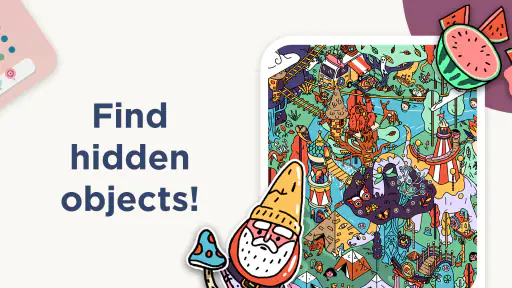
Scavenger Hunt is another mode named in the game’s store summary, so there is a reason to look beyond the standard puzzle path if you want a different way to engage with it. I would treat that as a change of pace rather than assume it replaces the central matching appeal. Two Dots has reached a 4.3 average across around 1.1 million ratings, and that scale suggests it has broad appeal, but the useful test is simpler: do you enjoy studying a small grid and making each move count?
For a first session, I would focus on understanding the objective shown for each level and resist the urge to judge progress only by how many dots disappear. That gives you a fair sense of whether the game’s planning suits you. If you enjoy working out why one move is more useful than another, the format has a clear appeal. If you mainly want to switch off completely, a more automatic or less goal-driven game may be a better fit.
Overall, Two Dots offers a delightful blend of challenging puzzles, beautiful design, and social interaction. Whether you're a puzzle enthusiast or just looking for a fun way to pass the time, this game has something for everyone. So, why not give it a try? You might just find yourself getting lost in the world of dots, and trust me, it's a journey worth taking!
Two Dots: Connect the dots Frequently Asked Questions
Is Two Dots appropriate for players who prefer calm games?
Two Dots is presented as a relaxing matching-dots puzzle game, making it a natural choice if you want a thoughtful game rather than one centered on quick reactions. Its dot-connecting puzzles encourage you to look over the board and consider your next move. The challenges still require planning, so the experience can be calming without feeling completely effortless.
What is Scavenger Hunt mode in Two Dots?
Scavenger Hunt is a mode highlighted in Two Dots’ store summary, alongside its main matching-puzzle experience. It gives players another activity to explore beyond connecting dots on puzzle boards. If you enjoy discovering different ways to engage with a game, this mode may be a reason to try Two Dots; the core appeal remains its colorful, thoughtful puzzle play.
Is Two Dots suitable for short play sessions?
Yes. Two Dots is built around individual puzzle levels, so it can fit into a brief break as well as a longer session. Each level has an objective and a limited number of moves, giving you a natural point to pause between challenges. Its relaxing matching-puzzle style makes it an easy game to pick up when you have a little time.
What kind of game is Two Dots?
Two Dots is a board-style puzzle game focused on matching and connecting colored dots. Its store summary describes it as a relaxing matching dots puzzle game and highlights Scavenger Hunt mode. The main appeal is solving visual challenges through careful choices, rather than relying on fast reactions or complicated controls.
What is Two Dots and how do you play it?
Two Dots is a popular puzzle game where players connect dots of the same color in a grid to complete various objectives. The game is structured into levels, each with unique challenges such as eliminating anchors or lighting up torches. Players must strategize to connect dots efficiently within a limited number of moves, making the game both fun and challenging.
Pros
- Engaging puzzle gameplay.
- Visually appealing art style.
- Regular updates with new levels.
- Challenging yet rewarding.
- Free to play with optional purchases.
Cons
- In-app purchases can be costly.
- Requires internet for some features.
- Ads can be intrusive.
- Some levels are very challenging.
- Limited lives slow down play.
- Category
- Board
- Version
- 9.9.1