TFT: Teamfight Tactics
- 11.87K
- 4.4
- Installs
- 10.00M
- Price
- Free

Screenshots
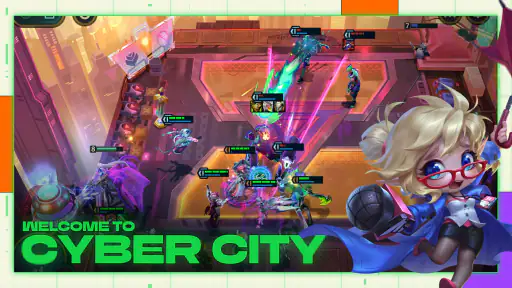
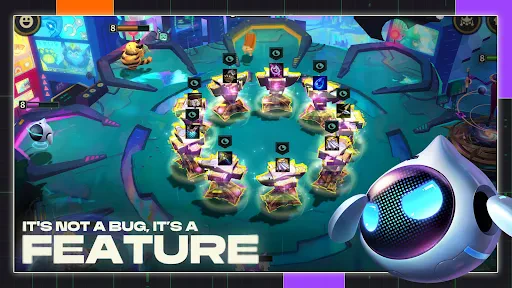
Analysis by Reviewed
I like TFT: Teamfight Tactics most when I treat it as a series of decisions rather than a game where I can force one perfect plan. A promising shop can disappear, a rival may be chasing the same pieces, and the best move is often to adjust instead of doubling down. That push and pull makes each match engaging, but it also means the game asks for attention: it is a poor fit for a quick session when you cannot focus on the board.
What free access does—and doesn’t—settle
The game is free to download, which makes trying its strategy and auto-battler format straightforward. Optional in-app purchases range from $0.99 to $159.99 per item, so there is a wide gap between the no-cost entry point and the most expensive listed purchase. I would separate those facts when judging value: you can begin without paying, but the existence of purchases does not tell you whether any particular item is worthwhile for you.
Riot Games, Inc. is the developer, and the game is rated Teen. Its average rating is 4.4 from around 633,000 ratings, with roughly 12,000 written reviews and over 10 million installs. Those figures suggest a well-established audience, but they do not guarantee that the learning curve or match pace will suit every player. The current version is 14.23.6359815, and Android 7.0 or later is required.
How the strategy earns its place
I find TFT’s strategy most rewarding when I pay attention to how each choice affects the team I’m building, rather than chasing a fixed plan. In this section, I’ll focus on how that decision-making can make the game worth returning to—and why flexibility matters more than memorizing a supposedly perfect lineup.
Learning to adapt, not just collect champions
First off, for those who are new to the world of TFT: Teamfight Tactics, it’s a strategic auto-battler game developed by Riot Games, the same guys behind League of Legends. The game takes place in a fantastical realm where you, as a player, assemble a team of champions to battle it out against seven other competitors. It’s like a chess game but with more pizzazz and unpredictability.
In practical terms, the appeal is the gap between seeing a possible team and actually making it work. Champions, gold, levels, and synergies all compete for your attention. I find it useful to decide what I’m trying to improve before spending: do I need a stronger frontline, a more reliable damage source, or simply more flexibility? That small pause can keep a tempting shop from turning into a string of purchases with no coherent plan.
The Gameplay Experience
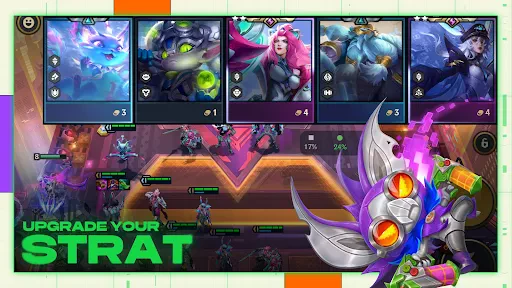
Okay, let’s talk about gameplay. It’s all about strategy and a little bit of luck. You start with a handful of gold and a few champions to choose from. As the game progresses, you earn more gold, buy more powerful champions, and level them up to create synergies that give you a competitive edge. Sounds easy, right? But here’s where it gets interesting. The game’s random element ensures no two matches are ever the same. You’ve got to adapt your strategy on the fly, which keeps things fresh and exciting.
More From Our News Desk

Weather by Xiaomi Review: Clear at a Glance, Less Clear Up Close

X Under Pressure: Can It Recover When Posting Goes Wrong?

Clash of Clans Is Won Between the Battles

Android Auto Makes the Case for Quieter Car Software

MobiOffice: Transforming Mobile Productivity with Seamless Integration

EA SPORTS FC™ Mobile Soccer: Redefining Mobile Sports Gaming
A useful habit is to treat early choices as experiments rather than promises. If the champions appearing in your shop point toward a different direction, changing course can be smarter than waiting for a specific lineup to arrive. I also try to look at what opponents are building: when several players seem to want similar pieces, holding out for the same plan can become a gamble. This kind of observation gives the strategy more texture than simply memorizing a favorite composition.
That uncertainty is also the main trade-off. A thoughtful decision can improve your odds, but it cannot remove the random element, and losing a close match may feel frustrating if you wanted a clean test of skill. Compared with a traditional turn-based strategy game, TFT keeps the focus on assembling a roster and responding to changing options rather than directing every unit through a long sequence of moves. If you want precise control over each action, a conventional tactics game may be more satisfying.
Getting more from each decision
For a new player, I would keep the first few sessions deliberately simple. Pick one clear question to practice—such as whether the team needs sturdier protection or more damage—and notice how your choices answer it. Trying to learn every champion, combination, and strategic term at once makes the board feel noisy. A narrow goal gives you a way to judge decisions even when the result of a match is disappointing.
Another useful habit is to separate a bad outcome from a bad decision. The random shop can deny a plan, while an opponent’s choices can make a once-promising route harder to pursue. After a loss, I would look for one moment where I could have stayed flexible, rather than blaming every problem on luck or assuming that one popular lineup would have solved everything. That review makes the next game more informative without requiring a long study session.
Visuals and Soundtrack
What I love most about TFT is the sheer variety of champions and the endless possibilities for team compositions. It’s a game that rewards creativity and strategic thinking. You can go for a defensive build, focusing on tanky units, or go all-out offense with high-damage dealers. The choice is yours, and the freedom is exhilarating.
That flexibility is strongest when I’m willing to learn from a match instead of judging it only by the final result. If a team collapses, I can ask whether the problem was a weak frontline, an awkward mix of roles, or a plan that depended too heavily on one hoped-for champion. Keeping one simple question in mind makes a loss more useful and helps me make a more deliberate choice next time.
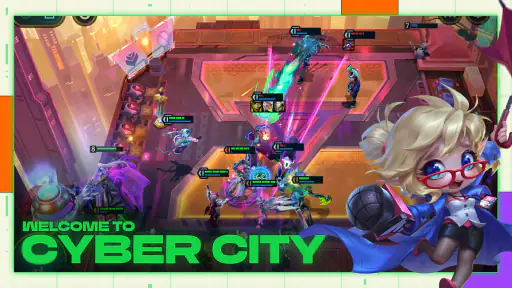
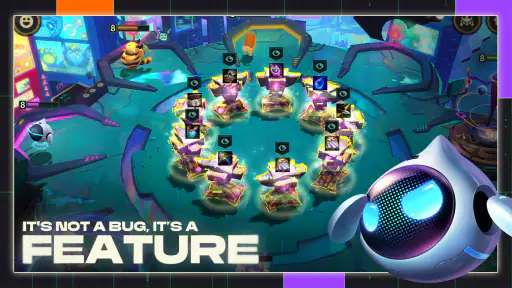
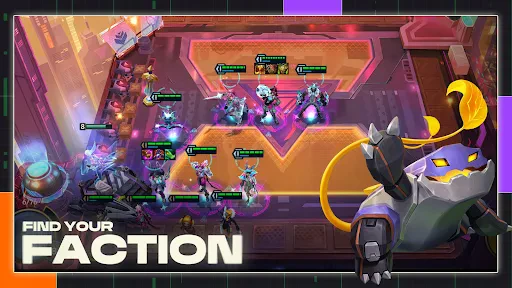
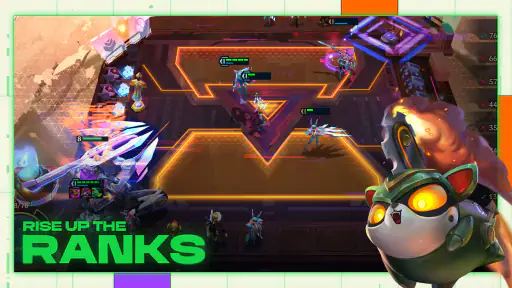
As for the visuals, TFT has a charming, cartoonish art style that’s easy on the eyes. The animations are fluid, and the champions are beautifully designed, each with their own unique flair. The game board itself is a vibrant and dynamic space that feels alive as battles unfold. And let’s not forget the soundtrack, which is an epic mix of orchestral tunes that perfectly complements the intense battles you’ll be engaging in.
When it fits into an ordinary day
For a realistic use case, I’d open TFT when I have enough uninterrupted time to follow a match from its early choices through the final rounds. It works better as a focused break than as something to dip into while answering messages or switching between tasks. If I only have a few spare minutes, I would choose a game with shorter, more predictable turns instead; the value here comes from having room to watch the board and adjust.
It is especially appealing if you enjoy comparing strategies, learning from opponents, and making decisions with incomplete information. If you dislike chance, prefer direct control of every fighter, or want a very relaxed game that asks little attention, I would skip it. The strategy category is broad, and a puzzle or classic tactics title can be a better match for someone who wants deliberate, fully controlled moves without the same roster-building uncertainty.
A practical way to approach a match
When I sit down for a game, I try not to treat every shop as a command to spend. I first check whether the available champions strengthen the direction I already have or offer a sensible reason to pivot. If neither is true, keeping some flexibility can be more useful than making a purchase simply because an option appeared. This is a small discipline, but it helps make the economy and team plan feel connected rather than like separate tasks.
I also pay attention to whether a composition is becoming difficult to complete. If other players appear to be competing for the same champions, I reassess instead of assuming persistence will eventually pay off. That does not mean abandoning every plan at the first obstacle; it means weighing the cost of waiting against the value of an alternate route. For me, that tension is one of the game’s most satisfying strategic tests—and one of the reasons it can be mentally tiring.
The Community and Updates
One of the standout features of TFT is its ever-evolving nature. Riot Games regularly updates the game, introducing new champions, items, and game mechanics to keep players on their toes. The community is active and passionate, with forums and social media buzzing with strategies and discussions. It’s a great place to pick up tips or just geek out about your latest game.
Because the game changes, I would be cautious about treating an old favorite strategy as a permanent answer. Community discussions can help explain why a composition works, but I find it more useful to look for the reasoning behind the advice than to copy a lineup blindly. Understanding what a strategy is trying to solve makes it easier to adapt when the available champions or match situation differ.
For someone comparing it with other auto-battlers, the draw is this blend of champion collecting during a match, team planning, and adaptation among several opponents. The drawback is that a newcomer may need time to understand why a combination succeeds, and outside tips can feel overwhelming if they arrive as lists of rules. I’d start by learning a few basic roles and watching how each decision changes the team, rather than trying to memorize every possible option at once.
Who is likely to get the most value
I think the best fit is someone who enjoys the thinking between battles as much as the animations themselves. You do not need to enter with a complete strategy guide in hand; curiosity and a willingness to revise a plan are more useful starting points. Players who like comparing outcomes, spotting patterns, and gradually understanding why a team works can find plenty to think about without needing every match to end in a win.
It is less suited to someone who wants a reliable short break with a clear stopping point after a few quick actions. A full match asks you to keep track of several evolving choices, and splitting attention can make the decisions feel arbitrary. If you tend to play while commuting, in brief gaps, or with frequent interruptions, I would choose a game designed around shorter rounds or pause-friendly turns instead.
What to expect before installing
The Android release requires version 7.0 or later, so it is worth checking that before planning to play on an older device. The game is free to start, while optional purchases have a broad listed range; I would not treat that range as a spending recommendation. If you are cautious about purchases, decide your own limit before browsing them, and first see whether the strategic loop is enjoyable on its own.
The Teen content rating is another practical point for households choosing games for younger players. I would make that decision based on the age guidance and the individual player, rather than assuming a strategy label alone tells you whether it is appropriate. For adults, the more important question is probably whether you like a competitive, changing puzzle that rewards attention more than speed or direct control.
Overall, TFT: Teamfight Tactics is more than just a game; it’s a community and a constant challenge. Whether you’re a casual player or a competitive strategist, there’s something here for everyone. So, if you haven’t tried it yet, give it a shot. Who knows, you might just find your new favorite pastime. Happy battling!
My buy-or-skip verdict
I’d try it if you want a free way to explore an auto-battler and enjoy adjusting plans under pressure. The optional purchases are a reason to decide carefully what, if anything, you want to spend; they are not a reason to assume the game requires payment to be worth sampling. I would not buy anything until I knew that the match style itself suited me. If you are after a game that rewards patience, observation, and flexible thinking, it is an easy one to test. If randomness and attention-heavy matches sound like chores, skipping it is the better call.
TFT: Teamfight Tactics Frequently Asked Questions
Can I play TFT: Teamfight Tactics offline?
TFT: Teamfight Tactics is designed around matches against other players, so you should plan to have an internet connection available when you play. Its appeal comes from making team and positioning decisions as a match develops, rather than progressing through a standalone offline campaign. If you often play without reliable access to the internet, that is worth considering before downloading.
Is TFT: Teamfight Tactics suitable for younger children?
TFT: Teamfight Tactics has a Teen content rating, which makes it more suitable for teenagers and adults than for younger children. Parents and guardians should consider that rating when deciding whether it is appropriate for a child. The game focuses on strategic competition and battles, so it may be helpful to review its store page together before installing it for a younger player.
Can I play TFT: Teamfight Tactics for free?
Yes. TFT: Teamfight Tactics is free to download and play, so you can try its strategy-focused battles without paying upfront. The game also offers optional in-app purchases, with prices ranging from $0.99 to $159.99 per item. These purchases are separate from the initial download, so consider your spending preferences before buying anything.
What kind of game is TFT: Teamfight Tactics, and who makes it?
TFT: Teamfight Tactics is a strategy game developed by Riot Games, Inc. Its store tagline, “Replay their battles, rewrite their stories,” captures the appeal of building a team and making decisions as each match unfolds. It is rated Teen, so it may be more suitable for teenagers and adults than for younger children.
What is TFT: Teamfight Tactics?
TFT: Teamfight Tactics is a strategic auto-battler game developed by Riot Games. Inspired by the MOBA genre, players draft, position, and deploy a team of champions to battle against seven opponents in real-time. The game requires strategic thinking as you build your team, manage in-game resources, and adapt to ever-changing challenges to outlast all opponents.
Pros
- Engaging strategic gameplay
- Frequent updates and events
- Varied champions and synergies
- Cross-platform play support
- Visually appealing graphics
Cons
- Steep learning curve
- In-game purchases can be costly
- Occasional server issues
- Requires constant internet connection
- Can be time-consuming
- Category
- Strategy
- Version
- 14.23.6359815