Tennis Clash: Multiplayer Game
- 32.49K
- 4.5
- Installs
- 100.00M
- Price
- Free
Screenshots


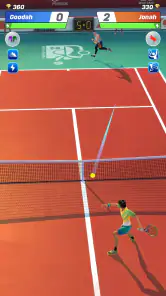
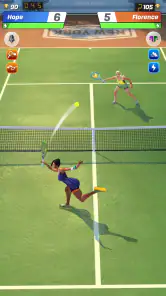
Analysis by Reviewed
I like tennis games most when the point itself asks me to make a decision, not just tap through a match. That is the appeal of Tennis Clash: Multiplayer Game: its central idea is a quick swipe that shapes each shot, put to the test against another person online. It turns a familiar sport into short, direct contests that can fit between other things in the day, while still giving me room to learn how to place the ball and manage pressure.
It is a free sports game from Wildlife Studios, rated for Everyone, and its audience is substantial: it has passed 100 million installs and holds a 4.5 average from around 1.9 million ratings. Those figures make it easy to see why it attracts attention, but they don’t tell you whether the matches suit your taste. I’d think of it less as a full tennis simulation and more as a competitive mobile game built around the feel of a rally.
Why the swipe is the whole point
The most important capability is the simple swipe-to-hit control. Rather than managing a collection of buttons, I aim and send the ball with a gesture, with the movement affecting its direction and force. That makes the first match easy to understand, but the control has enough consequence that careless swipes can cost a point. The useful distinction is between learning the gesture and learning when to use it: the second takes longer.
This is a good fit for a touchscreen because it keeps the exchange immediate. I can focus on the ball and the opponent instead of remembering a complicated control layout. At the same time, a swipe is not a substitute for the range of timing and movement found in a console tennis game. The simplified input is the reason the game is approachable, and also the reason players looking for a detailed simulation may find it light.
How a match feels in practice
Online play gives the swipe mechanic a clear purpose: there is another player reacting to the point, rather than a predictable sequence to repeat. In my experience, the attraction is the small contest inside each rally. I have to make a quick choice about where to direct the shot, then respond to what comes back. When the score is close, a basic control scheme can still produce a tense exchange because the opponent is making decisions too.
Matches are arranged through matchmaking, and the game presents itself as a live PvP experience across multiple arenas. That makes it easy to get from opening the app to playing, which is useful when I only have a short break. The other side of that convenience is that a live match demands attention. I would not start one if I knew I might have to put my phone down halfway through; this is not the kind of mobile game I’d treat as a pause-anywhere puzzle.
Progression changes the decisions
After matches, cards let me upgrade equipment and skills. The interesting part is choosing what to improve rather than treating every upgrade as automatically useful. A stronger serve and better volley ability point toward different preferences, so I’d pay attention to how I actually play before spending resources. If I tend to rely on a particular kind of shot, investing around that habit can make more sense than spreading upgrades without a plan.
You May Like

Clash of Clans Is Won Between the Battles

Android Auto Makes the Case for Quieter Car Software

MobiOffice: Transforming Mobile Productivity with Seamless Integration

EA SPORTS FC™ Mobile Soccer: Redefining Mobile Sports Gaming

How Microsoft OneDrive Became a Mobile Productivity Giant

How Google Translate Breaks Language Barriers Effortlessly
That progression also means a match is not only about the swipe in front of me. The build I have developed can influence how I approach later contests, giving the game a longer-term layer beyond quick rallies. It is worth remembering that this can make comparisons between players feel less like a pure test of gesture skill. Anyone who wants every contest to be determined only by immediate execution may prefer a more stripped-down tennis game.
The game is free to download, with optional in-app purchases ranging from $0.49 to $149.99 per item. I’d treat purchases as a choice, not a requirement to understand the basic appeal. The card-and-upgrade structure encourages investment in progression, so players who dislike upgrade systems or feel pressure to spend may find that part less enjoyable. I’d take time to learn the match flow before deciding whether any purchase has value for me.
Where clubs and arenas fit
Clubs add a social reason to return: I can play alongside friends or meet other players, exchange tips, and celebrate a win. That is a different kind of appeal from matchmaking itself. If I already have someone who enjoys tennis games, the club layer can turn an occasional solo session into a shared hobby; if I prefer to play privately and avoid social competition, it is easy to regard that element as secondary.
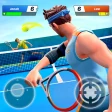
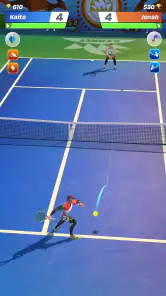
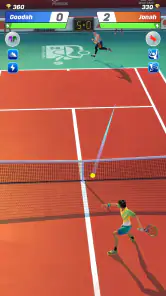
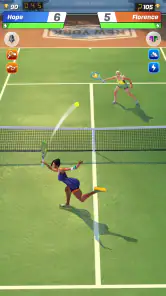
The multiple arenas give online matches a sense of variety, while the presentation helps sell the sport. The graphics are bright, the stadiums and player animations add energy, and the racket and crowd sounds make a point feel more satisfying. I wouldn’t choose it for a deep audio or visual showcase, but these touches support the quick-match format without getting in the way of reading the rally.
First Serve: A Gameplay Experience
From the moment I launched Tennis Clash: Multiplayer Game, it was clear that this is no ordinary tennis simulation. The graphics are vibrant and crisp, making every match feel alive. The game's controls are intuitive, which is a blessing for someone like me who tends to fumble with complicated setups. You simply swipe to hit the ball, with the direction and strength of your swipe affecting the ball's trajectory.
One aspect that really caught my attention was the multiplayer mode. It's exhilarating to compete against players from around the world. The matchmaking is quick, so you’re not left waiting for a match to start. And let me tell you, the adrenaline rush when you're in a close match is something else!
Level Up Your Game
As you progress, you earn cards that allow you to upgrade your equipment and skills. This adds a strategic layer to the game as you decide where to allocate your resources. Do you focus on improving your serve, or do you boost your volley skills? The choice is yours, and it significantly impacts your gameplay style.
There's also a social element with clubs, where you can join forces with friends or other players. It’s a great way to share tips and strategies, or simply brag about your latest victory!
Visuals and Soundtrack
The visual aspect of the game is top-notch. The attention to detail in the stadiums and player animations is impressive. It really feels like you're watching a live tennis match. The soundtrack complements the gameplay perfectly, with upbeat music that keeps your energy levels high during intense rallies.
Even the sound effects are immersive, from the satisfying thwack of the racket hitting the ball to the crowd's cheers when you score a point. It’s these little details that enhance the overall experience.
End Game Thoughts
If you're looking for a tennis game that combines fun, strategy, and a bit of friendly competition, Tennis Clash: Multiplayer Game is definitely worth a swing. Whether you're a casual player or a hardcore tennis fan, this app has something for everyone. So grab your virtual racket, and let's hit the court!
A practical routine for short sessions
A realistic way to fit this game into a day is to save it for a break when I can give a match a few uninterrupted minutes. I might open it after lunch, play one contest, and stop there rather than letting a quick check turn into a long session. The key is deciding before I queue whether I have time to finish. Since the appeal is live opposition, stepping away mid-rally is a poor match for how the game is designed.
For a new player, I’d use the first sessions to get comfortable with the swipe rather than chase wins immediately. Try directing shots deliberately, notice whether stronger gestures help or make control harder, and pay attention to which exchanges feel awkward. That gives a more useful basis for later skill upgrades than choosing improvements simply because one sounds powerful. It also helps separate a control mistake from a build choice when a point goes badly.
Another small but useful habit is to review a loss as a pattern, not a verdict. Was I repeatedly sending the ball where the opponent could answer comfortably? Was I relying on the same shot because it felt familiar? Thinking in those terms gives the simple controls more depth without pretending the game offers the full tactical range of real tennis. It is a practical way to make progress even when a short session does not end with a win.
Choosing it over other tennis games
Compared with a turn-based sports game or a tennis title built around solo play, this one puts the live opponent at the center. That is its strongest reason to choose it: I get the uncertainty of another person’s decisions and the immediate satisfaction of responding during a rally. A single-player tennis game is the better option if I want to pause freely, practice without online pressure, or follow a more structured solo experience. A deeper simulation is preferable if detailed player movement and a broad set of tennis controls matter more to me than quick access.
It also occupies a different space from a casual arcade game where each round is mostly about reflexes. The swipe is easy to grasp, but progression and online competition give it a longer tail than a one-off mini-game. That blend works best when I enjoy repeating a familiar match format and gradually adjusting how I play. If I need constant new modes or a story to carry me forward, the core loop may feel too focused.
The practical choice comes down to what I want from a phone game. For a short, competitive tennis exchange, the format is more convenient than sitting down for a detailed sports simulation. For an offline commute or a moment when I may be interrupted, I would choose something that does not depend on a live contest. The distinction matters more than whether I consider myself a tennis fan: enjoying head-to-head play is the stronger predictor of whether this will hold my interest.
Who will enjoy it—and who may not
I’d recommend it to players who like quick head-to-head competition, can give a match their attention, and enjoy making small improvements over time. Tennis fans may appreciate the familiar serve-and-rally rhythm, but no tennis background is needed to understand a swipe. It can also suit friends who want a light shared activity, especially if they like discussing tactics or comparing victories through clubs.
I would steer away from it if I wanted a realistic training tool, an offline-first game, or a pure test of skill without progression. The simplified controls are accessible, but they do not reproduce the full demands of tennis. Likewise, the card-based upgrades add motivation for some players and friction for others. If that kind of development feels like a chore, or if competitive losses make a game stressful rather than exciting, a solo sports game is likely a better fit.
Age-wise, it is rated for Everyone, which makes its broad presentation approachable. Still, the online competitive setting is worth considering for younger players and families: the main activity is playing against other people, and clubs add a social layer. I would choose it for someone comfortable with that kind of multiplayer environment, rather than assuming the accessible visuals mean the experience is purely solitary.
Before installing and settling in
The game was released on October 23, 2019, and the current version is 6.12.2; it requires Android 7.0 or later. I’d check that requirement before downloading on an older device. Its free entry point makes it straightforward to try, but I would keep the purchase range in mind if I am sensitive to optional spending. A sensible approach is to play long enough to understand the controls and progression first, then decide whether the game is worth making part of a routine.
Does it work for a very casual player? I think so, provided “casual” means playing occasionally rather than expecting every match to be interruptible. The swipe is accessible from the start, and a short session is a natural way to sample it. Does it reward improvement? Yes, through both the way I handle shots and the decisions I make about cards, though those two kinds of progress are not identical. One is about my execution; the other is about developing the character and equipment choices available to me.
Is it suitable for someone who mainly wants to play with friends? The club feature gives that interest a place, but the game’s wider appeal still rests on competing online. I’d choose it if shared competition sounds fun, not if I only want a private tennis practice space. And if I’m wondering whether it can replace watching or playing real tennis, my answer is no: it offers a compact mobile interpretation of rallies, not the physical sport or a comprehensive simulation.
My recommendation after weighing the trade-offs
Wildlife Studios has built a sports game around one strong idea: make each shot simple to perform, then let the live contest give that gesture consequence. That focus is why the game is easy to pick up and why close matches can be exciting. The trade-off is just as clear: online play needs attention, and card-based upgrades mean progression is part of the experience rather than an optional background detail.
With more than 32,000 written reviews and a large player community, it is plainly a well-established choice in mobile tennis, but popularity alone would not make it right for me. I would install it for quick, competitive rallies, especially if I had friends to join through clubs. I would skip it when I wanted a realistic tennis simulation, a fully offline option, or a game I could abandon at any moment. If the swipe-based duel sounds appealing and I’m comfortable with its progression layer, it is an easy free game to try; just approach it as a lively online sports contest, not a replacement for a full tennis simulator.
Tennis Clash: Multiplayer Game Frequently Asked Questions
Is Tennis Clash suitable for quick play sessions, or does it require a long time commitment?
Tennis Clash is built around live multiplayer tennis matches, making it a good fit if you want a focused competitive game rather than a long story campaign. You can open it when you have time for a match, though online play means you should be ready to stay connected while competing. Its sports format is easy to understand, but improving and progressing can invite regular play.
Does Tennis Clash have multiplayer matches and different arenas?
Yes. Tennis Clash focuses on online player-versus-player competition and features multiple arenas. Its live multiplayer format is the main reason to choose it over a tennis game centered on offline practice: you compete against other players rather than playing through a solo campaign. If you enjoy head-to-head sports matches and changing settings, that combination is central to the experience.
Is Tennis Clash free to download, and what should I know about optional spending?
Tennis Clash is free to download, so you can try its online tennis matches without paying upfront. It also offers optional in-app purchases, with prices ranging from $0.49 to $149.99 per item. Spending is not required to begin playing, but purchases may appeal to players who want to obtain in-game items. If children will play, it is sensible to review purchase settings on the device.
Can I play Tennis Clash offline, or does it require an internet connection?
Tennis Clash is built around online multiplayer matches, so you should expect to need an internet connection to play its central game mode. Its appeal comes from competing against other players in real time, rather than from an offline solo campaign. A reliable connection can help make matches feel smoother, so it is worth checking your network before starting a competitive game.
Who developed Tennis Clash, and what kind of game is it?
Tennis Clash is a sports game developed by Wildlife Studios. It is centered on online tennis competition, with multiple arenas and live player-versus-player matches. The game is aimed at people who enjoy quick sporting contests and competing with others, rather than simply practicing alone. Its store description presents it as a multiplayer grand slam sports league, giving newcomers a clear idea of its competitive focus.
Pros
- Realistic graphics and smooth animations
- Engaging multiplayer experience
- Frequent updates with new content
- User-friendly interface
- Short match duration ideal for quick play
Cons
- In-app purchases can be expensive
- Requires stable internet connection
- Limited offline play options
- Repetitive gameplay after a while
- Occasional matchmaking imbalances

- Category
- Sports
- Version
- 6.12.2