Spades Offline - Card Game
- 1.23K
- 4.9
- Installs
- 500.00K
- Price
- Free

Screenshots

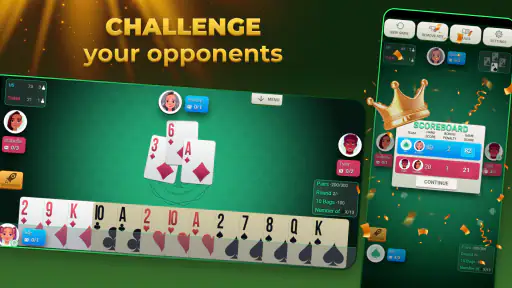
Analysis by Reviewed
I enjoy card games most when they are easy to start but still give me a reason to think. Spades Offline - Card Game aims at that comfortable middle ground: it is a free card game built around Spades, with jokers included, and it is designed for playing without an internet connection. After spending time with it, I see the appeal clearly. It is not trying to replace every game on a phone. Instead, it works best as a dependable companion for short breaks, travel, waiting rooms, or quiet evenings when I want a familiar trick-taking game without needing another person online.
The app comes from Battery Stats Saver and sits in the card-game category. Its average rating is 4.9 from around 21 thousand ratings, which matches the first impression I had: the basic idea is immediately understandable, and the game does not ask me to learn an elaborate system before I can play. It is free to install, although optional purchases range from $0.99 to $99.99 per item. That makes the initial decision simple, but it also means I would pay attention to the purchase screens before committing to any extras.
Why the first week feels so approachable
The strongest part of the opening experience is how naturally Spades fits into short sessions. The rules are familiar to anyone who has played the traditional game, while the offline focus removes a common source of friction. I do not need to wait for a match, depend on a stable connection, or coordinate with friends before starting. When I have only a few minutes, I can open the game and get straight to the decision-making.
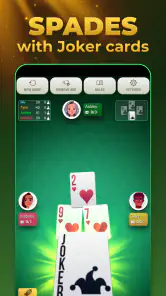
That convenience matters more than it sounds. A lot of mobile card games surround the actual play with online events, social systems, or constant prompts. This one is more appealing when I treat it as a pocket version of a classic card table. The jokers add a variation that can make familiar hands feel less predictable, especially for players who already know standard Spades and want an extra layer of uncertainty.
During the first week, I would use it in several different ways. On a train or plane, the offline format makes it useful when connectivity is unreliable. At home, it works as a low-effort alternative to a more demanding strategy game. I can also imagine keeping it open during a long appointment, where a game needs to be paused easily rather than requiring a live opponent to remain available. The practical advantage is not spectacle; it is reliability when I want a game immediately.
New players should still spend a little time understanding bidding, following suit, and the way jokers affect the hand before judging the difficulty. Spades is simple to describe but can punish careless decisions. A player who bids too aggressively may struggle later, while a cautious bid can leave useful tricks unused. The app is therefore approachable at the rules level, but it is not mindless. I found the best early sessions came from treating each hand as a small planning exercise instead of simply playing the highest card available.
Learning the rhythm instead of chasing quick wins
My main advice for the first few sessions is to watch patterns rather than focusing only on the score. Notice which suits have already been played, whether high cards are still hidden, and how the jokers change the value of a seemingly safe trick. This habit makes the game more satisfying because improvement comes from reading the hand, not from hoping for a lucky deal.
That is also where the app can be more rewarding than a basic solitaire title. Solitaire is excellent when I want a private puzzle, but Spades gives every card a relationship to the rest of the hand. I am thinking about bids, timing, and the likely behavior of the opposing side. For someone who wants a traditional card game with more structure than matching or stacking, this is a better fit.
There is a small trade-off in that familiarity. Players who already know Spades may understand the core loop within minutes, so the first-week novelty depends heavily on whether the joker variation and the available play experience feel fresh to them. I would not choose this game expecting a large campaign, a story, or a constantly changing world. Its pleasure comes from replaying the same foundation with better judgment.
What keeps it useful after the novelty fades
The real test for an offline card game is not the first few hands. It is whether I still want to open it after the initial curiosity has gone. In my experience, Spades has a reasonable chance of staying useful because the game produces a different challenge from the same basic rules every time the cards change. The long-term value comes from decision quality: bidding more accurately, protecting a strong suit, and recognizing when a trick is worth sacrificing.
I would keep it installed for recurring situations rather than daily obligation. It is particularly suitable for people who want a calm, repeatable activity during commutes, travel, or breaks. It does not need to become a major hobby to justify its space. If I play a few hands when I am offline and the game consistently fills that gap, it has already earned a place on my phone.
The offline design also changes how I think about maintenance. I am not depending on a live community being active at the exact moment I want to play. That makes the app less vulnerable to the usual problem where a multiplayer game feels empty outside peak hours. For a person who values independence, this is a meaningful advantage over online Spades rooms. I can play at my own pace and stop without worrying about another player waiting.
At the same time, offline play limits the social dimension. If the main reason I enjoy Spades is conversation, rivalry with friends, or testing myself against real opponents, a dedicated multiplayer service may offer more lasting value. This app makes sense as a personal card table, not necessarily as a replacement for a regular game night. That distinction is important because the same feature that makes it convenient can make it feel solitary.
Small habits that improve repeat play
I get more from the game when I give each session a purpose. One session might focus on conservative bidding, while another might be about improving my awareness of which suits are becoming dangerous. This prevents the play from turning into automatic tapping. The joker rules are also worth treating as a separate learning challenge rather than assuming that standard Spades habits always transfer perfectly.
Another useful approach is to stop after a few hands instead of continuing until the game becomes background noise. Short sessions preserve the feeling that I am making choices. If I keep playing after I have stopped paying attention, the app can become repetitive quickly. That is not a flaw unique to this game; it is the natural risk of any focused card title with a compact ruleset.
For families, I would be slightly selective. The content rating is Teen, so I would not automatically hand it to a young child without checking whether the rating and the purchase environment suit the household. The rules may be teachable, but the age guidance still matters. For older players who already know trick-taking games, the straightforward format may be more attractive than a heavily decorated alternative.
How much maintenance the app demands
One reason I like the concept is that it does not appear to require a schedule. There is no need to log in for a daily reward simply to make the game worthwhile, and the offline format makes it a practical choice when I want something that works independently. The current version is 1.9.8, and the game supports devices running Android 5.0 or later. That broad compatibility makes it approachable for people using older Android hardware rather than only recent phones.
Still, “low maintenance” does not mean “no friction.” I would keep an eye on optional purchases, especially because the available items span from $0.99 to $99.99 each. A free game can remain inexpensive if I ignore extras, but the range makes purchase awareness part of responsible use. Anyone sharing a device with children should use the platform’s purchase protections and review what can be bought before leaving the game unattended.
The developer name, Battery Stats Saver, is unusual for a card game, and that may make some people pause when they first encounter it. I would not judge the game solely by that mismatch, but I would still apply the normal care I use with any app: install it through a trusted store, review its behavior on the device, and avoid assuming that a familiar game concept automatically makes every surrounding choice harmless. The card gameplay itself is the reason to try it, not the developer branding.
There is also a maintenance burden of a different kind: mental maintenance. To keep the game interesting, I need to remain engaged with the cards. If I play while distracted, the decisions flatten into routine. That means the app is easy to maintain technically, but its recurring value depends on whether I am willing to bring some attention to each hand.
Where the game can become tiring
The biggest source of fatigue is repetition without a personal goal. Spades has a strong core, but it remains the same type of activity. After a long session, I may want a puzzle with different objectives, a story-driven game, or a social match with human unpredictability. The app is not the right choice when I need constant novelty or a broad progression system.
Another possible weakness is the emotional distance of offline play. Computer-controlled competition can be convenient, but it does not reproduce the small surprises of playing with friends. There is no shared table conversation, no friendly argument over a bid, and no satisfaction from reading a particular opponent’s habits. If those moments are central to why I play Spades, I would use this app only as a backup for solo practice.
The joker variation may divide players as well. I enjoy having a twist available, but traditionalists may prefer a strictly familiar game. Jokers can change the value of a hand and make established instincts less dependable. That is good for variety, yet it can also feel less elegant if I want classic rules and nothing else. I would start with the style that feels most natural, then decide whether the extra uncertainty improves the experience.
There is a further trade-off between accessibility and depth. Because the game is easy to begin, it may not satisfy expert players looking for extensive competitive analysis or a large range of formats. Its strength is the quick, self-contained match. Players who want advanced statistics, tournaments, or a persistent ranking system may find a specialized Spades platform more suitable, assuming they are comfortable with online requirements.
Who should keep it installed
I would recommend this game to someone who already likes trick-taking cards and wants an offline option that can be opened at almost any time. It is especially sensible for travelers, people with inconsistent connectivity, and players who prefer short solo sessions over live matchmaking. It can also work for someone returning to Spades after a long break, because the rules are recognizable and the game does not require a large commitment before becoming playable.
I would be more cautious about recommending it to a player who needs a strong social experience. For that person, a multiplayer card room or a way to invite friends would likely provide more lasting motivation. I would also steer away from it for anyone who dislikes repeated hands, joker-based twists, or optional purchase prompts. A free download is useful, but it does not change the fact that the game’s structure is intentionally narrow.
Compared with solitaire, this offers more strategic interaction between cards and bids, but less of the relaxed puzzle quality that makes solitaire appealing. Compared with online Spades, it offers greater independence and fewer connectivity concerns, but less human unpredictability and community energy. Compared with a full collection of card games, it is more focused and easier to return to, though it cannot provide the variety of several different formats in one package.
The audience size suggests that the idea has found a substantial group of interested players: the game has passed 500 thousand installs and carries a 4.9 average. I see those figures as a useful sign of appeal, not a guarantee that every player will enjoy it. Card games are personal. The right question is whether I want a repeatable offline Spades table, not whether the game can replace every other card app.
My long-term verdict
After the novelty fades, I think Spades Offline remains worthwhile for the right kind of player. Its lasting strength is practical: I can return to a familiar game without needing a connection, a group of friends, or a complicated setup. The joker variation gives experienced players something to reconsider, while the standard trick-taking foundation keeps the experience understandable. That combination is enough to support regular short sessions, especially when I use them for deliberate practice rather than endless tapping.
It is not a universal recommendation. The lack of a social table can matter, repeated hands can become tiring, and players seeking a broad progression system or a large online community should look elsewhere. I also would not ignore the in-app purchase range simply because the game is free. Those are manageable limitations, but they shape how I would install and use it.
For me, the deciding factor is habit. If I often need an offline game during travel or quiet breaks, this is the kind of focused utility that can stay installed for months without demanding attention every day. If I only want a quick novelty or expect constant new content, its compact design may feel too restrained. Its lasting value comes from dependable replayability, not from a stream of surprises.
Released on November 25, 2021, and still available in its current version 1.9.8, the game has had time to establish itself as a straightforward card option. I would try the free version, learn how the joker variation affects my decisions, and decide within a few sessions whether the offline convenience fits my routine. My final view is positive but specific: this is a good pocket Spades table for independent players, and a poor substitute for the social experience of playing with real people.
Pros
- Playable without Wi‑Fi or mobile data
- Simple controls make it accessible for beginners
- Multiple difficulty levels provide room to improve
- Quick rounds suit short gaming sessions
- Offline play avoids ads caused by constant connectivity
Cons
- Limited variety compared with online multiplayer card games
- Computer opponents may feel predictable over time
- No live matchmaking or real-time competition
- Some features may require watching ads or paid upgrades
- Visual design may feel basic for players wanting polished graphics

- Category
- Card
- Version
- 1.9.8