Rap Beat Battle - Full Mods
- 45.00
- 4.2
- Installs
- 1.00M
- Price
- Free
Screenshots
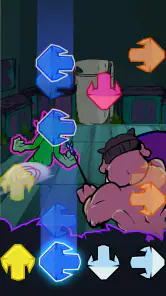
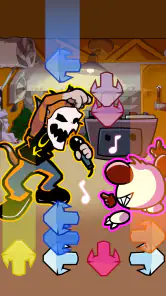
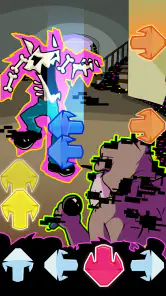
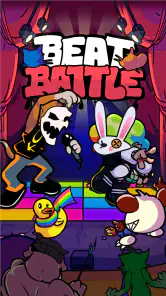
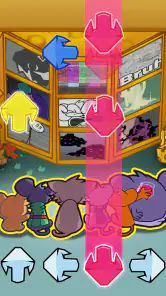
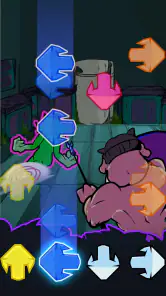
Analysis by Reviewed
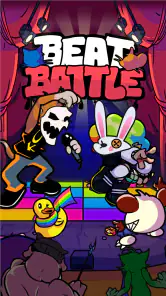
I spent time with Rap Beat Battle - Full Mods as a compact music game built around rap-themed rhythm battles. Its basic appeal is easy to understand: listen, watch the beat, and respond with the right timing while the match pushes you through a lively musical exchange. That makes it a natural fit for short sessions, especially when I want something more active than a playlist but less demanding than a long strategy or role-playing game.
The game comes from HOLA GAME and is free to start. It sits in the music category, carries a Teen age rating, and has attracted over a million installs. Those figures suggest that the format is approachable, but they do not make it automatically suitable for everyone. The important question is whether its rap-battle presentation and rhythm-focused loop give you enough reason to keep returning after the first few rounds.
How the first goals shape the opening hours
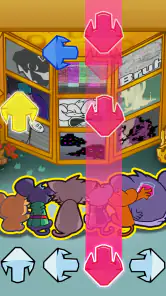
The opening experience works best when I treat each battle as a small timing exercise rather than as a conventional fighting game. The opponent, the beat, and the note patterns create the immediate goal: stay synchronized and avoid letting the exchange fall apart. I like that this gives the first sessions a clear purpose without requiring a long explanation of complicated menus or character statistics.
That early clarity matters on a phone. I can pick it up during a short break, play a few rounds, and understand what I am trying to improve. The rap framing also gives the action more personality than a plain sequence of abstract notes. Even when the underlying task is familiar to rhythm-game players, the battle setup makes each attempt feel like a response to an opponent rather than a silent practice chart.
My first useful recommendation is to play with sound rather than relying only on visual prompts. The music is not merely decoration here; it is part of the timing reference. If I focus on the beat and use the screen as confirmation, I make fewer rushed inputs. Playing silently is possible in some situations, but it weakens the main advantage of this particular game: the connection between the rap presentation and the action.
The early goals are also most satisfying when I avoid treating every missed note as a failure of reflexes. Some mistakes come from looking too far ahead, while others happen because I react to the animation instead of the rhythm. I found that concentrating on the next small phrase produced better results than trying to predict an entire exchange. That approach makes the game friendlier to newcomers without removing the need for practice.
There is a practical issue with this kind of design: the first impression depends heavily on whether the music style appeals to you. Players who enjoy rap-inspired battles will probably understand the mood immediately. Someone looking for calm piano tracks, orchestral pieces, or a broad music library may find the presentation narrower than a general rhythm app. The theme is a strength when it matches your taste, but it is also the first reason some people may lose interest.
What progress feels like during normal play
Progress in a rhythm battle is not measured only by a visible unlock or a new menu item. I notice it in smaller signals: I can hold attention through longer patterns, recover more quickly after a mistake, and recognize when a sequence is about to change. Those improvements are useful because they come from my own timing rather than from simply making a character stronger.
This is where the game can support a healthy short-session routine. Instead of playing until I become frustrated, I can repeat a difficult section with one specific target in mind, such as keeping a steady tempo or avoiding late taps. That makes each attempt informative. If I finish a round knowing exactly what went wrong, the loss still feels worthwhile.
Players wondering whether there is enough to work toward should set expectations carefully. The central motivation is the battle loop itself: improving performance, handling tougher musical pressure, and seeing whether a cleaner run is possible. It is not the right choice if you need a deep collection system, a long narrative, or a large set of role-playing rewards to make every session feel meaningful. Its progress is primarily skill-based and repetition-based.
The current release is version 1.2.0, and the game remains free to download, with optional in-app items priced from $0.99 to $1.99 each. I would approach those purchases as convenience or extra-content decisions rather than as a reason to start spending immediately. The best way to judge the game is to play its basic rhythm loop first. If the timing itself is not enjoyable, small purchases will not solve that problem.
One less obvious way to use it is as a quick coordination warm-up. Before playing a longer game, I can spend a few minutes here focusing on consistent reactions. It is not a substitute for a dedicated practice tool, but the battle format gives the exercise a stronger sense of purpose. I am not just tapping at random; I am trying to keep control while the musical exchange becomes more demanding.
Reading the difficulty curve instead of chasing perfect runs
The challenge feels most rewarding when I accept that improvement will come in uneven steps. A pattern that seems impossible at first may become manageable after I stop watching every individual prompt and start recognizing its rhythm. That transition is typical of music games, but the rap-battle framing makes the pressure feel more immediate because a mistake appears to damage the exchange with the opponent.
I recommend separating accuracy from speed when practicing. If I try to play faster before my timing is stable, I create a cycle of panic: one missed input shifts my attention, then the next response becomes late as well. A better routine is to keep my hands relaxed, follow the musical pulse, and treat a difficult passage as a sequence of smaller phrases. This is especially helpful on a phone screen, where cramped hand movement can make hurried reactions less reliable.
The Teen rating is worth keeping in mind for families. The game’s identity is built around rap battles and competitive musical presentation, so it is not aimed at very young children. Parents should consider whether that tone suits the player, rather than assuming that a simple tap-based format is automatically child-oriented. For older players, the rating is unlikely to be a barrier, but the style remains more important than the control scheme.
Another trade-off is that rhythm games can expose device and environment issues more clearly than many casual genres. Notifications, inconsistent attention, or playing while walking can interrupt timing and make a fair challenge feel worse than it is. I get better results when I use a stable grip, reduce distractions, and give the music my full attention for a few minutes. That small change can make the difference between a satisfying retry and an irritating one.
I would not describe the challenge as universally relaxing. Even a short round can demand concentration, and repeated misses may become tiring if I keep forcing the same attempt without changing my approach. The game is better for players who enjoy gradual mastery than for people who want a passive music experience. If your ideal session is listening without interaction, a regular music player is the better option.
What keeps the loop interesting, and where it can wear thin
The strongest retention pressure comes from the desire to answer one more sequence correctly. A near-successful run creates a clear personal challenge: I know I was close, and I want to see whether a calmer response will finish the exchange. That kind of motivation is more convincing than a generic promise of endless play because it is tied directly to something I can feel improving.
At the same time, this loop can become repetitive if the musical variety or battle presentation does not continue to feel fresh for you. I would not recommend approaching it as a game with unlimited novelty. Its replay value depends on whether you enjoy refining timing and revisiting the rap-battle atmosphere. Players who need constant new mechanics may reach the edge of its appeal sooner than dedicated rhythm fans.
There is also a difference between short-term retention and long-term commitment. For a commute, a waiting room, or a quick evening break, the format is convenient because a battle gives the session a natural boundary. For a long uninterrupted play period, the same focused structure may feel less varied than a larger music title with broader modes. I see it as a game that fits around daily life rather than one that needs to occupy an entire afternoon.
When comparing it with usual alternatives, I would place it closer to a focused rap rhythm challenge than to a full music library or a traditional arcade fighter. A broad rhythm game may offer more musical variety, while a fighting game may provide deeper character systems and strategic choices. This title’s advantage is the directness of its beat-versus-opponent concept. Its disadvantage is that it cannot satisfy someone whose priority is extensive customization, complex combat decisions, or a wide range of music styles.
The optional purchases are another reason to keep your expectations practical. At the stated item range, they are small enough to be tempting during an enthusiastic session, but I would still decide what I actually want before buying. A useful rule is to wait until I have played enough free content to know whether I enjoy repeating battles. That prevents the common mistake of paying for a game loop that was never a good match in the first place.
Who should play it and who should skip it
I would recommend this game to someone who likes rap aesthetics, quick rhythm challenges, and the satisfaction of improving through repetition. It is also a good candidate for players who want something more interactive than listening to music but less involved than a large competitive game. The free entry point makes it easy to test that fit without committing to a purchase at the start.
It is less suitable for anyone with limited patience for repeated attempts. The game asks me to learn timing rather than simply passively progress, and that means failure is part of the normal rhythm. Players who prefer story-heavy adventures, tactical battles, or a large social component should probably choose a different genre. Likewise, people who dislike rap-themed presentation may not find enough variety beneath the central concept to change their mind.
For a realistic everyday scenario, I can imagine using it during a ten-minute break after work. I would play one round to settle in, identify the section causing trouble, then try again with a narrower goal instead of mindlessly repeating the whole match. If the second attempt improves, I stop there and return later. That approach keeps the game refreshing and avoids turning a short break into a frustrating grind.
Another useful scenario is sharing the phone with a friend who enjoys rhythm games. Rather than competing over a complicated ranking system, we can compare how each person handles the same kind of beat pressure and exchange timing tips. The game’s appeal in that setting comes from immediate readability: the action is easy to explain, while better performance still requires practice.
My verdict on its progression and staying power
After playing it with those expectations, I see the progression as a test of personal timing more than a reward-heavy journey. The early goal is clear, the progress signal is easy to recognize in cleaner runs, and the difficulty encourages focused practice. That is a coherent structure, especially for a free music game that wants to deliver short bursts of action.
The main limitation is equally clear: the loop depends on your willingness to repeat musical battles and improve small details. If that sounds satisfying, the game can become a dependable pick-up-and-play option. If you need a constantly expanding adventure, a deep unlock tree, or a large collection of unrelated activities, its focused design may feel too narrow.
Its average rating of 4.2 from around 1.5 thousand ratings reflects a generally positive reception, while the listed review count is 45. I would read that as encouragement to try it, not as proof that every player will enjoy the same style. The most important test is whether the beat, the battle framing, and the timing challenge work together for you during the first few sessions.
Overall, HOLA GAME has made a straightforward rhythm concept more engaging by presenting it as a rap confrontation. I like its quick goals, its emphasis on earned improvement, and the way a short session can still feel complete. I would recommend starting free, playing with audio, and judging the game by the quality of its timing loop rather than by the promise of long-term unlocks. For the right player, the real reward is the moment a difficult beat finally feels natural; for everyone else, the focused format may be the clearest reason to move on.
Pros
- Large mod selection adds variety to battles.
- Simple controls make it easy to start playing.
- Short rounds suit quick gaming sessions.
- Beat-focused gameplay rewards timing and concentration.
- Works well for players who enjoy competitive rhythm games.
Cons
- Some mods may feel repetitive after extended play.
- Difficulty can increase sharply in later battles.
- Fast patterns may be challenging on smaller screens.
- Progress may feel limited without more varied modes.
- Ads can interrupt the gameplay experience.
- Category
- Music
- Version
- 1.2.0