Blade Night : Rhythm Saber
- 60.00
- 4.8
- Installs
- 1.00M
- Price
- Free

Screenshots
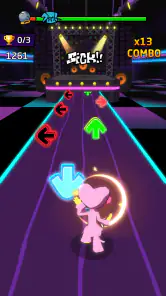
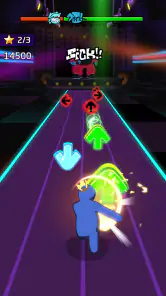
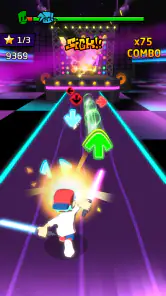
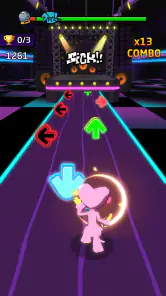
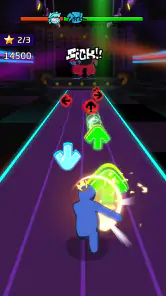
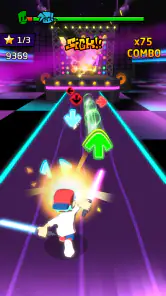
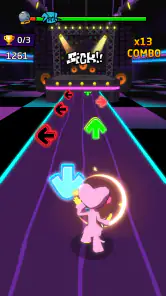
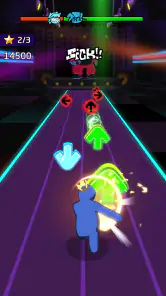
Analysis by Reviewed
Blade Night: Rhythm Saber is the kind of music game I can open for a quick break and understand almost immediately. The idea is simple: move through a neon-style three-dimensional runway, follow the music, and cut through the incoming action with a blade. That directness is its biggest strength. I never need a long explanation before the first attempt, yet the timing gives each run enough tension to make me want another try.
Developed by HOLA GAME, this free music game is aimed at Everyone and runs on Android devices using version 7.0 or later. It has reached over one million installs and holds a 4.8 average from around 2.7 thousand ratings, which suggests that its quick, accessible format connects with a broad audience. There are optional in-app purchases priced from $0.99 to $1.99 per item, so the game is easy to sample without paying at the start.
How the first action sets up the whole experience
The first useful thing to know is that this is not a traditional rhythm game built around tapping menus or simply listening to a track. The music gives the run its pulse, but the player also has to react to objects arriving along the runway. That combination makes the opening seconds feel active rather than passive. I am not just waiting for a note; I am watching the path, judging the timing, and trying to make the blade movement match what I see.
That visual setup gives the game a more physical feeling than a standard music player or a simple tap-to-the-beat app. Even when the underlying action is straightforward, the runway creates a sense of forward motion. I found that this made short sessions feel more purposeful: there is a clear direction, a visible target, and an immediate consequence when my timing is poor.
The controls are best approached with small, deliberate movements rather than frantic gestures. New players may instinctively swipe as soon as something appears, but the better habit is to read the approach and wait for the moment when the cut should happen. That tiny adjustment changes the game from random reaction into a rhythm exercise. It is also a useful tip for playing on a smaller phone, where broad movements can make the screen harder to read.
The game’s music category is important here because the soundtrack is not merely decoration. It establishes the pace at which the player expects events to arrive. When I pay attention to the beat instead of relying only on visual reaction, the runway becomes easier to interpret. This does not turn Blade Night into a serious musical training tool, but it does make the action feel more coherent.
For a first session, I would recommend playing with the sound on and starting with relaxed hands. The temptation is to chase every object aggressively, especially when the screen becomes busy. That usually makes mistakes more likely. A calmer approach lets the music act as a guide, while the visual effects provide confirmation that the movement landed correctly.
The feedback rhythm is what makes mistakes readable
A rhythm game lives or dies by feedback, and Blade Night works best when the player can immediately understand whether an action was well timed. The blade movement, the object interaction, and the continuing music form a compact feedback chain. I make a move, the game responds, and I quickly know whether I should repeat that timing or change it on the next attempt.
That clarity matters more than elaborate systems in a game designed for short sessions. If an error feels mysterious, I lose interest because I do not know what to improve. Here, the basic loop encourages experimentation: react earlier, wait slightly longer, keep the movement tighter, or use the beat more carefully. The next attempt has a practical purpose instead of being a completely blind retry.
One of the less obvious strengths is that the game can be enjoyed in two different ways. I can treat it as a casual visual music experience and simply enjoy moving through the runway, or I can focus on accuracy and try to make each action line up more cleanly with the track. The first approach suits a short break. The second gives the game more staying power for players who like refining their timing.
The trade-off is that a simple control idea leaves little room for hiding weak concentration. There are not many layers between the player and the result. If I am distracted, the run feels immediately less satisfying. That is not a flaw in the concept, but it means Blade Night is better for a focused few minutes than for playing while doing something else.
Another practical tip is to avoid judging the game only by the first attempt. The opening run is partly about learning how the runway presents its cues. Once I stop reacting to every visual detail and begin anticipating the rhythm, the experience becomes smoother. This is where the game’s feedback starts to feel rewarding rather than merely corrective.
It is also worth lowering expectations if you are looking for a deep music library, a detailed campaign, or a highly technical competitive system. Blade Night’s appeal comes from the immediate relationship between music, movement, and visual response. Players who prefer complex progression trees or long-form strategy will probably find the loop too narrow. Players who want an accessible action game with a musical pulse are more likely to appreciate its focus.
Why the reward is tied to improvement rather than complexity
The reward in this type of game is not only an unlock or a score. The first reward is the feeling that a sequence which seemed difficult has become readable. I notice that improvement within a small number of attempts: a movement becomes less rushed, a pattern feels more familiar, and the runway no longer seems quite as chaotic. That personal progress is what encourages another session.
The game’s free entry point helps that process. I can try the central experience without committing money, then decide whether the format suits me. Optional items cost between $0.99 and $1.99 each, so anyone considering a purchase should first spend time deciding whether the basic rhythm-and-blade loop is genuinely enjoyable. The sensible approach is to treat the paid options as extras rather than as a reason to install.
For younger players, the Everyone content rating makes the game approachable as a family-friendly music option, although the fast reactions may still be more comfortable for players who enjoy action games. For adults, it works well as a short reset between tasks. I would not describe it as a game that demands a long evening. Its value is closer to a compact burst of concentration that can be repeated whenever I want a quick change of pace.
A realistic use case is a commute or a waiting period when I have only a few minutes and do not want to start a story-heavy game. I can launch a run, focus on the incoming sequence, and stop after an attempt without feeling that I have abandoned a larger narrative. That self-contained structure is convenient, especially compared with games that punish leaving in the middle of a lengthy mission.
There is also a useful distinction between playing for relaxation and playing for mastery. If I am tired, the bright runway and music can provide an entertaining distraction, but my accuracy will naturally suffer. If I want the game to feel satisfying rather than frustrating, I should play when I can give it at least a little attention. The reward is strongest when I can see a direct connection between better concentration and a cleaner run.
Compared with ordinary music apps, Blade Night gives the listener something active to do. Compared with conventional endless runners, it places more emphasis on timing and musical flow than on simply avoiding obstacles. Compared with deeper rhythm games, it is easier to enter but may offer less variety for players who want extensive customization or a long progression journey. That middle position is the reason I see it as a casual action-rhythm game rather than a complete replacement for every other music title.
The reset after a run keeps the game approachable
Resetting is an important part of the design because the game’s sessions are built around immediate repetition. When a run goes badly, I do not need to spend much time preparing for the next attempt. I can think about the mistake, adjust my timing, and try again while the memory is still fresh. That short distance between failure and action is one of the best reasons to keep playing.
The reset also makes the game suitable for different moods. I can play casually, accept an imperfect result, and move on. Alternatively, I can repeat the same kind of challenge with a specific goal in mind, such as keeping my movements controlled or following the beat more closely. The game does not need a complicated training menu for this to work; the restart itself becomes the practice tool.
One limitation is that repetition can expose the narrowness of the core loop. If I want constant novelty, the same pattern of approach, cut, feedback, and retry may eventually feel familiar. This is where expectations matter. Blade Night is strongest as a compact repeatable activity, not as a huge music platform with endless systems to explore.
On older or less powerful devices, I would also keep the experience realistic. The minimum supported Android version is 7.0, but compatibility with an operating system does not automatically mean every phone will feel equally comfortable during fast visual action. A player using an older handset should pay attention to responsiveness and screen visibility during the first few runs. Timing games are particularly sensitive to hesitation, whether it comes from the player or the device.
The current version is 1.2.6, so anyone installing it should make sure the app is updated through the normal store process before judging the controls. That is a small but worthwhile habit for a game where the feel of input matters so much. I would also suggest using headphones when possible, not because they transform the game, but because a clearer beat can make timing easier to follow in a noisy environment.
Another practical workflow is to use the first attempt as a calibration run. Instead of chasing a perfect result, I watch how quickly objects approach, how much movement feels comfortable, and whether my grip blocks part of the screen. Then I adjust my hand position before restarting. This is more useful than simply repeating the same rushed gesture and hoping the result changes.
Who should begin, and who should choose another game
I would recommend Blade Night to someone who wants a free, easy-to-understand music game with a visible action component. It is especially suitable for players who enjoy short attempts, quick feedback, and the satisfaction of improving through repetition. The Everyone rating also makes it a reasonable option for a broad audience, provided the player enjoys fast visual reactions.
I would be more cautious recommending it to someone seeking a full musical catalogue, complex character development, or a long story campaign. A player who prefers turn-based games, relaxed puzzle solving, or uninterrupted music listening may find the constant reaction requirement tiring. In those cases, a conventional music app or a slower rhythm title would probably be a better fit.
Players who dislike optional purchases should know that the game includes items priced from $0.99 to $1.99 each. That does not prevent a free trial of the experience, but it is still worth keeping in mind before handing the phone to a child. The safest approach is to decide in advance whether any extra content is necessary and to use the device’s purchase controls accordingly.
The developer, HOLA GAME, has kept the central idea easy to grasp: music establishes the mood, the runway creates urgency, and the blade supplies the action. That focus is both the game’s identity and its main boundary. It does not try to be a broad arcade collection. Instead, it asks whether the simple act of matching movement to a musical flow can stay enjoyable across repeated runs.
My verdict on the action-feedback-reward-reset loop
My experience with Blade Night: Rhythm Saber is best summed up as a clean, approachable loop. I begin by reacting to the runway, receive immediate feedback from each movement, gain the small reward of better timing or a stronger run, and then reset with a clear reason to try again. That structure is easy to understand but not entirely empty, because the music gives the repetition a changing sense of pace.
The game is not the right choice for anyone demanding deep progression or a large collection of advanced systems. Its limitations become clear when I play for too long without a specific goal. Still, those same limits help it work as a quick mobile game. There is little preparation, little commitment, and no need to remember a complicated story before returning.
With a 4.8 average from around 2.7 thousand ratings and more than one million installs, it has clearly found an audience for this compact style of music-driven action. I would not use those figures as a substitute for personal taste, but they fit my impression that the game is easy to pick up and immediately understandable.
My final recommendation is simple: install it if you want a free rhythm game that turns each track into a short physical challenge, and give yourself several attempts before deciding whether the timing feels satisfying. Keep your movements controlled, listen to the beat, and treat each reset as practice rather than punishment. The strongest reason to start another session is the feeling that your next cut can be cleaner than the last one.
Pros
- Fast rhythm gameplay makes short sessions engaging.
- Sword trails and neon effects create an appealing visual style.
- Multiple tracks encourage replaying to improve scores.
- Simple controls are easy to learn on a touchscreen.
- Works well for players who enjoy music-based challenges.
Cons
- Higher difficulties can feel demanding for casual players.
- The music selection may not appeal to every taste.
- Repeated patterns can become predictable over time.
- Extended play sessions may cause hand or arm fatigue.
- Some content or features may require in-app purchases.

- Category
- Music
- Version
- 1.2.6