Pango Sheep: Count & Play
- 10.00
- 4.3
- Installs
- 10.00K
- Price
- $5.99

Screenshots
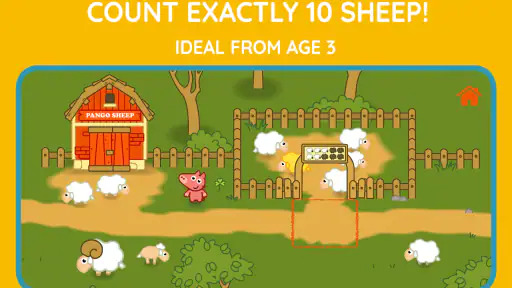
Analysis by Reviewed
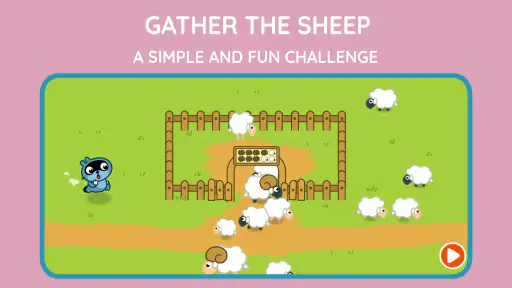
Pango Sheep: Count & Play is a small, focused preschool game that turns counting practice into a gentle search-and-explore activity. I found its central idea easy to understand: children move through five playful worlds, look for sheep, and use numbers along the way. It is not trying to be a complete early-learning platform, and that is both its appeal and its main limitation. For a young child who enjoys discovering things at their own pace, it can be a pleasant way to reinforce basic number awareness without feeling like a worksheet.
My overall view is positive, with an important qualification. This is best treated as a short, repeatable learning game for preschoolers, not as the only educational app on a child’s device. The experience has a clear theme, a manageable scope, and an age-appropriate presentation. At the same time, parents looking for broad lessons in reading, phonics, shapes, writing, or more advanced mathematics will need something else alongside it.
How the sheep-search format supports early learning
The game comes from Studio Pango - Kids Fun preschool learning games, a developer whose name makes the intended audience clear. In practical terms, the design is aimed at children who are still building confidence with simple numbers and basic interaction. The Everyone content rating also fits that positioning: this is presented as a child-friendly educational game rather than an action title or a competitive challenge.
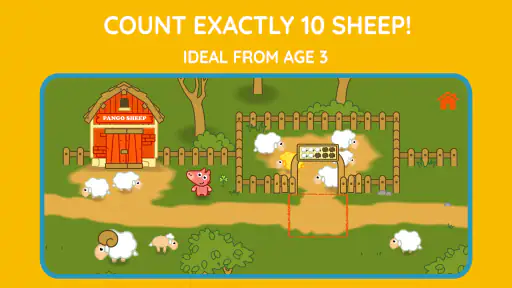
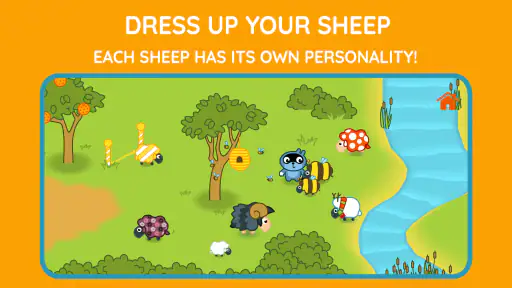
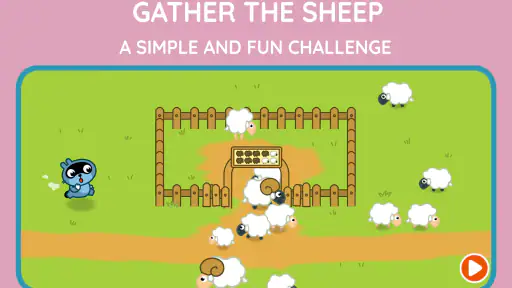
What worked for me is the way the learning goal is embedded in a simple reason to keep exploring. A child is not merely shown a sequence of numbers and asked to repeat them. Instead, the search for sheep gives the counting task a little context. That difference matters for preschoolers, because a concrete object is often easier to understand than an abstract number on its own.
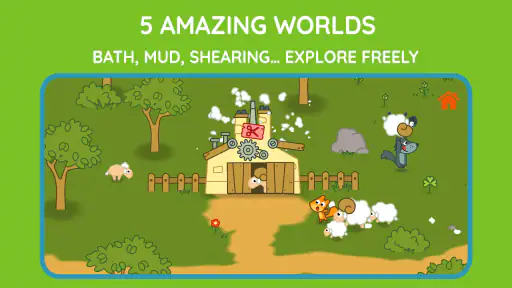
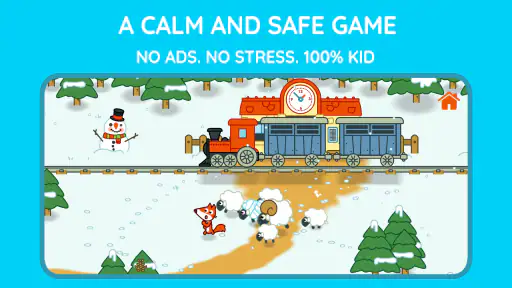
The five-world structure gives the experience a useful sense of progression without making it feel like a formal course. Each setting acts as a fresh place to investigate, so a child can return later and feel that there is still something familiar to do in a different visual context. I would not describe this as deep adventure gameplay, but the exploration framing is more inviting than a plain drill.
One of the most useful ways to play is with an adult nearby for the first few sessions. Rather than immediately solving every counting moment, I would ask the child to point to each sheep and say the number aloud. If the child rushes, gently restarting the count from the beginning can turn a mistake into practice. This makes the game more valuable than simply watching a child tap around the screen.
That shared approach also reveals what the child actually understands. Some children can recite numbers from memory but lose track when counting objects. Others recognize small groups quickly but need help with a longer sequence. The sheep-search format gives parents a chance to notice that difference naturally, without turning playtime into a test.
More From Our News Desk

Clash of Clans Is Won Between the Battles

Android Auto Makes the Case for Quieter Car Software

MobiOffice: Transforming Mobile Productivity with Seamless Integration

EA SPORTS FC™ Mobile Soccer: Redefining Mobile Sports Gaming

How Microsoft OneDrive Became a Mobile Productivity Giant

How Google Translate Breaks Language Barriers Effortlessly
A calm activity rather than a high-pressure challenge
The strongest evidence in favor of this game is its modesty. It does not need a complicated story or a large collection of systems to make the basic activity approachable. The child’s attention stays on finding and counting, which is appropriate when the goal is early number familiarity.
I especially see it fitting into short periods such as after breakfast, during a quiet afternoon, or while waiting for an appointment. A parent can sit with the child, complete a small amount of play, and then move on to another activity. That makes it more practical for families who want occasional learning moments rather than a long daily lesson.
It is also a reasonable choice for children who become frustrated by fast games. The concept does not depend on racing another player, beating a timer, or mastering complicated controls. A slower child can look around and work through the task with encouragement. That relaxed pace is a meaningful strength in a preschool setting, where confidence often matters more than speed.
Another non-obvious benefit is that the game can support language practice at the same time as number practice. An adult can ask questions such as “Where did you see the sheep?” or “How many are there now?” The app itself remains centered on counting, but the surrounding conversation can build vocabulary, location words, and turn-taking. I would use it as a prompt for interaction, not as a replacement for it.
There is also a useful trade-off in the limited subject matter. Because the game concentrates on sheep and numbers, a child is less likely to be overwhelmed by too many unrelated lessons. That focus can help a beginner stay engaged. However, the same narrowness means the learning benefit may level off once the child is comfortable with the central activity.
Where it sits beside ordinary preschool alternatives
Compared with number flashcards, this game offers more context and movement. Flashcards can be excellent for quick recognition practice, but they may feel repetitive to a child who wants to explore. Here, the act of looking for sheep gives the numbers a purpose and adds a small element of discovery.
Compared with a workbook, it is more immediately inviting for a child who resists pencil-and-paper tasks. The screen responds to the child’s actions, while a workbook requires sustained fine-motor control and adult explanation. On the other hand, a workbook can provide clearer evidence of what a child can draw, write, or solve independently. This game should not be expected to develop handwriting.
Compared with large preschool learning suites, the experience is easier to approach but much less comprehensive. A broad subscription-style app may include songs, letters, puzzles, drawing, stories, and multiple difficulty levels. That variety can be useful for families wanting one main learning platform. Pango Sheep is more appealing when the parent wants a specific, contained activity and does not want a crowded menu of lessons.
Compared with open-ended video content, it is more interactive and gives the child a reason to make choices. Yet it still benefits from supervision. I would not hand it over with the expectation that every learning outcome will happen automatically. The best results come when the adult occasionally asks the child to explain what they are doing.
What parents should know before buying
The game is listed at $5.99, so the decision is easier for families who prefer paying once for a focused title rather than relying on a larger collection. The price also raises the right question: will the child return to this particular activity enough for it to feel worthwhile? If your child enjoys repeating familiar searches and counting objects, the focused format may justify the purchase. If they quickly demand new subjects, a wider educational app may offer better value.
The public response is encouraging but not enormous: it has a 4.3 average from around 140 ratings, with about 10 written reviews and over 10 thousand installs. I read those figures as a sign of a generally well-received niche game, not as proof that it will suit every preschooler. A child’s temperament and current learning stage matter more here than popularity.
Its release on December 10, 2015, is worth keeping in mind when setting expectations. This is an older title, and I would approach it as an established, compact game rather than a modern all-in-one learning environment. The current version is 1.6.2, and it supports a minimum operating system of 7.1. Before purchasing, I would check that the intended device meets that requirement and that the screen is comfortable for a small child to use.
The age guidance is Everyone, but that does not mean every child can use it completely independently. Preschoolers differ widely in reading ability, attention span, and tablet familiarity. A child who is still learning how to tap accurately may need an adult to demonstrate the interaction. A child who already counts confidently may need extra questions from a parent to keep the activity educational rather than purely observational.
The meaningful weakness: limited depth after the first curiosity fades
The main weakness is not that the game is poorly focused; it is that the focus may become too narrow for some children. Five worlds sound inviting at first, but the underlying activity remains centered on finding sheep and learning numbers. Once a child has understood the pattern, the novelty may fade faster than it would in a game with several distinct types of challenge.
This matters especially for children who are ready to move beyond basic counting. If your preschooler is asking for addition, subtraction, letter sounds, spelling, pattern recognition, or drawing practice, this title will not cover those needs by itself. I would skip it as a primary purchase if you are seeking a complete curriculum in one app.
There is also a potential difference between recognition and mastery. A child may enjoy locating the sheep and repeating numbers without truly understanding quantity. That is why I would avoid measuring success by how quickly the child completes a session. Ask them to count slowly, show the amount with fingers, or compare two groups using objects away from the screen. The app can begin the lesson, but real understanding may need hands-on follow-up.
Another limitation is that screen-based counting cannot replace physical play. Preschool children benefit from counting blocks, snacks, steps, toys, and people in their everyday surroundings. I would use the game as a bridge: after playing, count five toy cars or find three red objects in the room. This simple extension prevents the numbers from staying locked inside the virtual worlds.
Parents should also consider whether their child enjoys searching games. Some children love looking carefully through a scene, while others prefer direct puzzles with an obvious answer. If your child becomes impatient when an object is not immediately visible, the exploratory format may feel slow rather than relaxing. In that case, a structured number puzzle with clearer instructions could be a better match.
Who will get the most from it
I would recommend it most strongly to families with a preschooler who is beginning to connect spoken numbers with groups of objects. It is particularly suitable for a child who likes animals, visual discovery, and calm play. The game also makes sense for parents who want a small educational purchase rather than a large app filled with unrelated activities.
It can work well for siblings at slightly different stages, provided the adult adjusts the questions. A younger child might simply locate the sheep and repeat numbers. An older preschooler could be asked to count independently, explain where the sheep were found, or compare what they saw in different worlds. That flexibility comes from how the parent uses the activity, not from expecting the game to provide every level automatically.
I would be less enthusiastic for a child who already has strong number skills and needs challenge. The game may still offer a pleasant break, but it is unlikely to provide enough mathematical variety to remain a main learning tool. I would also look elsewhere for children who learn best through music, storytelling, handwriting, or physical manipulation rather than visual searching.
A realistic family routine might look like this: after dinner, a parent and child spend a few minutes exploring one world. The child counts the sheep aloud, then the parent asks them to find the same number of blocks on the floor. On another day, the child plays independently while the adult checks in and asks what was found. This keeps the screen activity short and turns it into a starting point for broader learning.
For travel or quiet waiting time, the compact concept is convenient because it does not require a complicated explanation before the child can begin. Still, I would not make it the default solution for every idle moment. Its value is higher when it is used intentionally, with occasional conversation and a connection to real objects.
My verdict on the purchase
After weighing the focused design against its limited scope, I see Pango Sheep: Count & Play as a worthwhile specialist game rather than a universal preschool package. Its best quality is the way it makes basic counting feel like part of a small discovery mission. The five worlds provide enough variety to support repeat visits, while the sheep give children a concrete subject to find and count.
The purchase makes the most sense when you want a calm introduction to numbers for a young child and are comfortable adding your own questions and offline activities. At $5.99, it is not a major commitment, but it should still earn its place by matching your child’s interests. The strongest results will come from a child who enjoys exploring and an adult who treats the game as shared learning rather than digital babysitting.
I would choose a broader preschool suite if you need letters, writing, puzzles, songs, and several learning areas in one place. I would choose physical counting games if your child needs hands-on practice or struggles to transfer screen lessons into daily life. But for a focused, friendly way to encourage early number talk, this game has a clear purpose and carries it out without unnecessary complexity.
My final recommendation is therefore specific: buy it for a preschooler who is curious about numbers, enjoys finding hidden things, and benefits from a gentle pace. Skip it if you expect advanced mathematics, extensive educational variety, or long-term challenge. Used within those boundaries, it is a charming little learning game that can turn a few quiet minutes into meaningful counting practice.
Pango Sheep: Count & Play Frequently Asked Questions
How much does Pango Sheep: Count & Play cost to download?
Pango Sheep: Count & Play is a paid game, priced at $5.99. It may suit families who prefer paying upfront for a preschool activity rather than choosing a free download. Check the price shown in your app store before purchasing, since the amount displayed can depend on your region and storefront.
What devices can run Pango Sheep: Count & Play?
The game is available for devices running iOS 7.1 or later. Before downloading, check your device’s operating system version and make sure it meets that requirement. Pango Sheep: Count & Play is an educational game for young children, so it is worth confirming that you are viewing the correct app in the store for your device.
What is Pango Sheep: Count & Play about?
Pango Sheep: Count & Play is an educational game designed for young children, combining simple counting activities with playful interactions involving sheep. Children can explore colorful scenes, complete age-appropriate tasks, and practice recognizing quantities at their own pace. The experience is designed to feel like play rather than a traditional lesson, making it suitable for preschoolers who are beginning to develop early numeracy skills.
What age group is Pango Sheep: Count & Play suitable for?
The game is mainly intended for preschool-aged children, particularly those who are starting to learn numbers and basic counting. Younger children may need occasional help understanding the objectives or navigating the interface, while older preschoolers can often play more independently. Parents should still consider their child’s individual development, since attention span, counting ability, and familiarity with mobile devices can vary considerably.
Does Pango Sheep: Count & Play require reading skills?
No advanced reading ability is generally required to enjoy the game. Its activities rely primarily on visual instructions, simple interactions, and recognizable characters, which makes it accessible to children who have not yet learned to read. However, parents may need to explain certain tasks at first, especially if the child is unfamiliar with counting concepts or needs assistance understanding what to do in a particular scene.
Pros
- Simple counting activities are suitable for preschool beginners.
- Bright animations and friendly sheep keep children interested.
- Short activities work well for quick learning sessions.
- Touch controls are easy for young children to understand.
- Encourages basic number recognition through playful repetition.
Cons
- Limited challenge may not satisfy children who already count confidently.
- Some activities can feel repetitive after extended play.
- Requires supervision to prevent accidental taps or exits.
- Educational content focuses mainly on early counting skills.
- May use noticeable storage and battery for a children’s game.

- Category
- Educational
- Version
- 1.6.2