Music Rap Time Battle
- 822.00
- 4.3
- Installs
- 10.00M
- Price
- Free

Screenshots
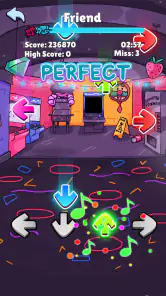
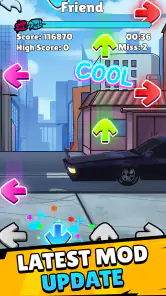
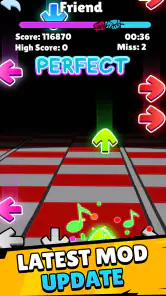
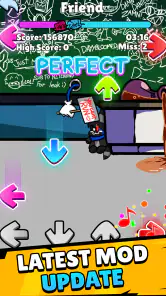
Analysis by Reviewed
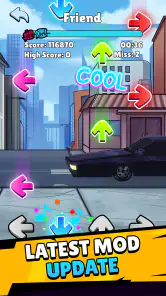
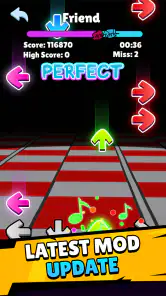
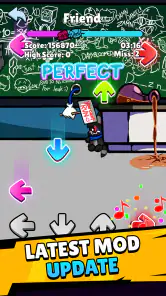
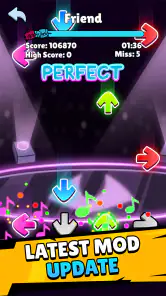
I judge a rhythm game by how quickly it lets me settle into a beat, how clearly it asks for my attention, and whether a short session feels satisfying rather than frustrating. Music Rap Time Battle is aimed at that kind of play: you follow directional prompts on screen and tap along with the music. Its rap theme gives the game a distinct identity, but the central appeal is timing, not writing lyrics or learning to perform. I’d consider it for a spare moment when I want an active music break rather than something to listen to passively.
What the pace feels like in everyday play
The basic appeal is immediate input rather than a long setup or a deep music-production workflow. I’d expect the fun to come from reacting accurately as the arrows arrive, then improving through another attempt. That suits a short break, a commute when you’re safely seated, or a few minutes between other tasks. It is less suited to someone looking for a relaxed listening app: the music is part of an active timing challenge, not simply something to put on in the background.
For a practical first session, I’d begin with the screen comfortably within reach and focus on the rhythm instead of tapping as fast as possible. In games built around music cues, rushing can make timing less consistent; a steadier finger can be more useful than frantic movement. If a section feels difficult, taking a short pause before trying again is a sensible way to reset your attention rather than turning a casual game into a test of endurance.
Speed expectations and the feel of a round
The game’s arrow-based premise suggests a quick response loop, but I wouldn’t confuse that with a promise that every phone will feel equally fast. The practical question is whether your taps register comfortably while you can still follow the beat. Before judging a difficult stretch, I’d play somewhere quiet, hold the phone steadily, and make sure my finger is not covering the next cue. That small adjustment can tell you more about the fit than repeatedly tapping harder.
If you’re new to rhythm games, give yourself a few attempts before deciding that the pace is too demanding. Early misses can come from watching the arrows without listening for their timing, or from trying to anticipate every cue. I’d use the sound as the guide and the screen as confirmation. If you still find yourself straining to keep up, that is useful evidence about your preference, not a reason to turn a casual game into a chore.
How it fits beside other music games
Compared with music apps made for composing, recording, or learning an instrument, this is a much more direct kind of entertainment. You are responding to on-screen cues, not building a track or practising a real-world instrument technique. Compared with broader rhythm games, its rap identity gives it a more specific mood, which may be exactly what you want if the genre appeals to you. If you mainly want a large song-selection experience or a serious tool for making music, a different app will likely be a better fit.
The game is free, with optional in-app purchases listed at $1.99 per item, so you can approach it as a low-commitment download rather than paying upfront. I’d still treat any purchase as a choice to make only after the core play feels worthwhile to you. The Everyone age rating makes it suitable for a broad audience, though a parent should still decide whether a particular game is right for a child’s habits and screen time.
More From Our News Desk

Clash of Clans Is Won Between the Battles

Android Auto Makes the Case for Quieter Car Software

MobiOffice: Transforming Mobile Productivity with Seamless Integration

EA SPORTS FC™ Mobile Soccer: Redefining Mobile Sports Gaming

How Microsoft OneDrive Became a Mobile Productivity Giant

How Google Translate Breaks Language Barriers Effortlessly
There’s also a useful distinction between this and a music-learning app. A learning tool usually asks you to build a skill that transfers to an instrument or vocal practice; here, the skill is responding to the game’s visual and musical cues. That makes it easier to pick up casually, but less useful if your real goal is to improve your rap delivery. I’d choose it for a playful timing challenge, and choose a dedicated practice tool if I wanted structured coaching or feedback on performance.
Who is likely to enjoy it
I’d recommend trying it if you like music games that reward attention and quick finger timing, or if rap is already part of your listening taste. It can also work as a casual pick-up-and-play option for someone who wants a small challenge without learning complicated controls. On the other hand, skip it if you dislike tapping to prompts, need a game that can be played without looking at the screen, or want a dependable way to practise rapping itself. The rhythm-game premise is the important distinction: enjoying rap does not automatically mean you will enjoy this style of play.
A realistic use case is a short wait in a place where you can sit and give the display your attention. I’d play a few attempts, stop when I notice my timing getting careless, and return later rather than chasing a perfect run while distracted. It is a poor choice while walking, crossing a street, or doing anything that needs your eyes and hands elsewhere. The same visual focus that makes the arrows easy to follow also means this is not a safe background activity.
It may be especially appealing if you want a game that gives you something to do with music without asking you to create anything. For a friend who enjoys quick challenges but doesn’t want a complicated setup, that is a clear advantage. Someone who wants a long, varied campaign, custom music control, or a social competition experience should be more cautious: those expectations go beyond the core timing idea I would install it for.
Device fit and sensible setup
If you’re deciding whether to install it, the basic device requirement is Android 5.1 or later. The current version is 1.0.0.54, and Unicorn Studio Official is the developer. I’d check that your device meets the minimum before downloading, especially if you’re using an older handset. As with any game that asks for quick input, a smaller or less responsive screen may make precise tapping less comfortable, so screen size and touch feel can matter as much as raw processing power.
For the most comfortable test, I’d use the phone in portrait or landscape only as the game presents it, keep it steady, and avoid playing with a charger cable or case edge interfering with my grip. I would not assume the app needs a powerful device simply because the play is fast; the more immediate concern is whether the screen responds consistently and remains easy to read. If the display is already sluggish in other apps, this is unlikely to be the best place to diagnose that problem.
Storage and background activity can affect how any phone behaves, but I wouldn’t treat them as guaranteed explanations for a missed cue. If responsiveness feels off, I’d close apps I’m not using, clean the screen, and try again in a brief session. That is a more useful check than changing several settings at once, because it helps separate a touch or attention issue from a broader device slowdown.
Getting Started with Your Rap Journey
First things first, let's talk about the setup. Music Rap Time Battle is super user-friendly. As soon as you launch the app, you're greeted with a sleek interface that makes navigation a breeze. Trust me, you don't need to be tech-savvy to get started. The app is available for both Android and iOS, so no one feels left out of the rap battle fun.
Features That Make You Go "Wow!"
The app is packed with features that will make your inner rapper jump with joy. One of my favorites is the beat library. They've got an extensive collection of beats to choose from, catering to all kinds of rap styles. Whether you're into old-school hip hop, trap, or even experimental, there's something for everyone.
Another standout feature is the community aspect. You can challenge friends or random users to a rap battle, and it's as thrilling as it sounds. There's nothing like the adrenaline rush of going head-to-head with someone and showing off your lyrical prowess.
Unleash Your Creativity
Music Rap Time Battle doesn't just stop at battles. The app encourages creativity by allowing you to record your sessions and share them with the world. You can also edit and fine-tune your recordings using the built-in audio editor. It's like having a mini studio in your pocket, and I can't get enough of it.
Oh, and did I mention the tutorials? If you're new to rap or just want to polish your skills, the app offers some pretty neat tutorials that guide you through the basics and beyond. It's like having a personal rap coach, which is pretty awesome if you ask me.
Why You'll Love It
So, why should you download this app? Because it's not just an app; it's an experience. It's a place where you can express yourself, connect with others, and most importantly, have fun. I found myself getting lost in the world of words and rhythms, and I bet you will too.
And hey, if you're worried about the technical stuff, don't be. The app runs smoothly, and I haven't experienced any glitches or crashes, which is always a relief. Plus, the developers seem pretty responsive to feedback, constantly rolling out updates to enhance user experience.
Its audience figures suggest it has reached well beyond a niche: it has over 10 million installs, with an average rating of 4.3 from around 23,000 ratings and about 822 written reviews. I treat those numbers as a useful sign that people are finding it, not as proof that every device or play style will suit it. The game is free to install and is listed as released on March 1, 2023, details that help place it among established casual music games rather than a brand-new experiment.
Keeping a session comfortable and reliable
On a busy day, I’d use a short session as a focused break: launch the game, try a few rounds, then put it away rather than letting repeated attempts eat into a longer task. That approach also makes it easier to notice whether the rhythm and touch response feel comfortable on your own phone. A game can seem smooth in a quick first run yet feel tiring if you play for a long stretch, especially when the screen demands sustained attention.
I wouldn’t assume that every player will get identical performance. Device age, available storage, background activity, and touch-screen condition can all affect how responsive a game feels, so closing other demanding apps and keeping the display clean are reasonable first steps if taps seem inconsistent. If the game pauses or closes unexpectedly, reopening it and trying a brief session again is a practical check; I wouldn’t count on a particular recovery feature without seeing it on the device being used.
For a more reliable feel, I’d avoid testing it for the first time when the phone is already busy with notifications or other tasks. A quiet, short run gives you a clearer baseline. If a pause or unexpected close happens, I’d reopen the game and see whether a fresh attempt behaves normally before deciding the problem is persistent. That is a practical way to judge reliability without assuming that one rough moment represents every session.
In everyday use, the main recovery question is less about a special tool and more about whether you can comfortably resume after losing focus. If you get interrupted, I’d stop rather than try to rejoin a beat while distracted. For a game built around attention and quick taps, protecting the quality of the next attempt matters more than squeezing in another round at any cost.
When another option makes more sense
If I wanted to compose, I’d pick a music-making app; if I wanted to practise an instrument, I’d choose a lesson-focused tool; and if I wanted an experience centered on browsing and listening, I’d use a music player. This game occupies a narrower space: a rap-flavored reaction challenge. That focus is a strength when I want quick, hands-on play, but it is also the reason I would not recommend it as an all-purpose music app.
It is also worth being realistic about how much variety you personally need. A rhythm game can feel fresh when the beat and cue pattern are engaging, but repeated attempts may become monotonous for someone who wants a changing set of activities. I’d try it without expecting it to replace a broader game collection, and I’d stop if the tapping starts to feel repetitive rather than satisfying.
Performance verdict
For me, the sensible verdict is that this is a lightweight idea to try when you want rap-flavored rhythm play, not a substitute for a music workstation or an instrument-learning course. Its strongest case is the simple, immediate challenge; its main trade-off is that timing games ask for visual attention and can lose appeal if you prefer more control over the music itself. If that distinction sounds right for you, it is an easy game to sample and judge by feel.
In conclusion, if you're looking to dive into the world of rap battles or just want an app to hone your skills, Music Rap Time Battle is the way to go. It's engaging, fun, and packed with features that will keep you coming back for more. So, what are you waiting for? Give it a whirl and unleash the rapper within!
Music Rap Time Battle Frequently Asked Questions
Does Music Rap Time Battle require an internet connection?
Music Rap Time Battle is centered on tapping colorful arrows in time with music, so its main appeal is the rhythm challenge. Whether you need a connection may depend on the particular features you want to use and how the game handles them. If you plan to play while traveling or away from reliable Wi-Fi, check the game’s behavior on your device before relying on it offline.
Is Music Rap Time Battle appropriate for children?
Music Rap Time Battle has an Everyone content rating, so it is rated for a broad audience. Its music-game format focuses on following cues and tapping arrows, which can make it approachable for different ages. Parents may still want to review the game themselves and consider any optional in-app purchases before a child plays, especially if purchases are enabled on the device.
What kind of game is Music Rap Time Battle?
Music Rap Time Battle is a music game built around colorful magic tiles and timed finger taps. Its short description is “Music Rap,” while its gameplay prompt invites you to hit the arrows in time with the music. It may appeal if you enjoy rhythm-focused challenges and want a casual game that centers on following musical cues.
What is Music Rap Time Battle?
Music Rap Time Battle is an engaging mobile app designed for rap enthusiasts and aspiring MCs. It provides a platform to showcase your rap skills, compete against others, and improve your craft through various challenges and battles. The app offers a community-driven experience where users can connect, share, and grow their rap prowess. Available on both Android and iOS, it caters to both beginners and experienced rappers alike.
How does the battle feature work in Music Rap Time Battle?
The battle feature in Music Rap Time Battle allows users to compete in rap battles against other players. Participants can either join existing battles or create their own. Each battle consists of multiple rounds where users exchange verses, showcasing their lyrical creativity and flow. The app provides beats to rap over, and battles are judged by the community or through a point system. Winners earn rewards and can climb the leaderboard for recognition.
Pros
- Engaging battle format enhances creativity.
- Wide variety of beats to choose from.
- Real-time feedback improves rap skills.
- User-friendly interface for easy navigation.
- Connects users with a global rap community.
Cons
- Limited free beats
- in-app purchases required.
- Occasional lags during live battles.
- Some features require stable internet.
- Ads can be intrusive at times.
- No offline mode available.

- Category
- Music
- Version
- 1.0.0.54