Stick Hero: Tower Defense
- 5.14K
- 4.7
- Installs
- 50.00M
- Price
- Free

Screenshots
Analysis by Reviewed
I approached Stick Hero: Tower Defense as a quick strategy game for spare moments, and its stick-figure battles give it an immediately approachable feel. It is a free game from Sun Global, rated for Everyone 10+, with a 4.7 average from around 382,000 ratings and over 50 million installs. Those figures suggest that its simple visual style has broad appeal, but the real question for me is whether the decisions stay engaging after the novelty wears off.
What the purchase details do—and don’t—tell you
The game is free to install, with optional in-app purchases priced from $0.99 to $9.49 per item. That gives you a clear starting point: you can try it without paying, while spending is a choice rather than an entry requirement. I would still treat “free” as a reason to test the experience, not as proof that every part of progression is equally convenient without purchases. The listed purchase range alone does not establish what each item does or how much it changes play.
That distinction matters if you prefer games where every advantage comes only from planning. I would begin without buying anything and see whether the pace suits me before considering an optional purchase. If you are choosing a game for a younger player, the Everyone 10+ rating is useful context, while the presence of in-app purchases is a practical reason to review device purchase settings together.
Gameplay that Keeps You Hooked
First things first, the gameplay in Stick Hero: Tower Defense is nothing short of addictive. You start off with a basic stick hero who must defend their tower from waves of increasingly challenging enemies. The goal is simple: prevent these baddies from reaching your tower at all costs. But don't be fooled by the simplicity—this game requires some serious strategic thinking.
Every level presents a new challenge, with different enemy types and attack patterns. You'll need to strategize and upgrade your stick hero's abilities to keep up. The game does a great job of ramping up the difficulty in a way that feels challenging but fair. I found myself constantly tweaking my approach and learning from each defeat, which kept me coming back for more.
Reading a failed attempt
When I lose, I try to treat the result as information rather than a verdict on whether I am good at the game. I look for the point where the defense began to unravel and ask whether I reacted too late, chose the wrong upgrade, or simply need another attempt to understand the threat. Changing one thing at a time is a useful habit: if I alter several decisions together, I cannot tell which one helped. This makes retries more purposeful, especially when a level’s pressure feels like it is rising faster than my confidence.
That approach also helps set expectations. A loss can be satisfying when it reveals a pattern I can use next time; it is less rewarding if I want a game to hand me a steady stream of easy wins. I would give a difficult stage a few focused attempts, then take a break rather than repeating it impatiently. Returning with a clearer head is a better test of my strategy than spending simply because I am annoyed.
More From Our News Desk

Weather by Xiaomi Review: Clear at a Glance, Less Clear Up Close

X Under Pressure: Can It Recover When Posting Goes Wrong?

Clash of Clans Is Won Between the Battles

Android Auto Makes the Case for Quieter Car Software

MobiOffice: Transforming Mobile Productivity with Seamless Integration

EA SPORTS FC™ Mobile Soccer: Redefining Mobile Sports Gaming
Making short sessions count
This kind of defense game is easiest to enjoy when you give each attempt your attention rather than treating it as background tapping. On a commute or during a short break, I’d play one level, notice which enemy or attack pattern caused trouble, then change one part of my approach on the next try. That small, deliberate adjustment makes a loss useful instead of merely frustrating. If you are often interrupted, it is worth seeing whether the game fits your routine before relying on it as a stop-and-start time filler.
A practical tip is to avoid changing several things at once after a defeat. Since the challenge comes from responding to different enemies and patterns, focusing on what actually went wrong makes it easier to tell whether a new strategy helped. The trade-off is that this asks for a little patience: players who want instant progress with no trial and error may prefer a simpler action game.
A good fit for certain kinds of downtime
I can see this working well for someone who has a few quiet minutes between errands, wants a focused challenge, and enjoys learning from a retry. For example, if I had a short wait before an appointment, I would try a level, make a mental note of what overwhelmed my defense, and stop when I needed to give the next attempt proper attention. That is a more realistic use than expecting it to fill a long evening with a sprawling campaign.
It is less suited to moments when I need to put my phone down without warning or when I am looking for a game that can be played entirely on autopilot. The strategic appeal depends on noticing what the enemies are doing and adjusting accordingly. If I only have one eye on the screen, the same pressure that makes a focused session engaging could make the game feel unnecessarily irritating.
Graphics and Sound that Pop
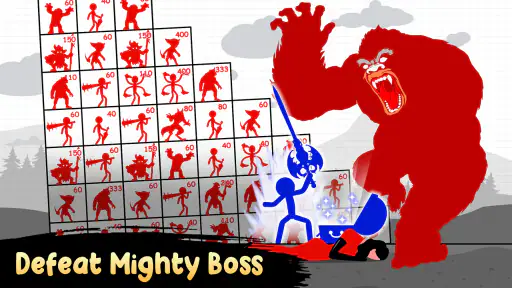
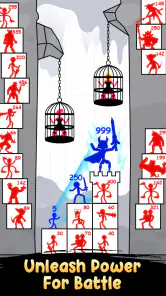
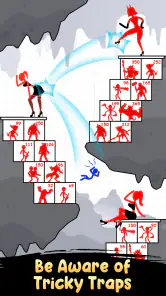
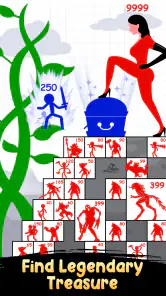
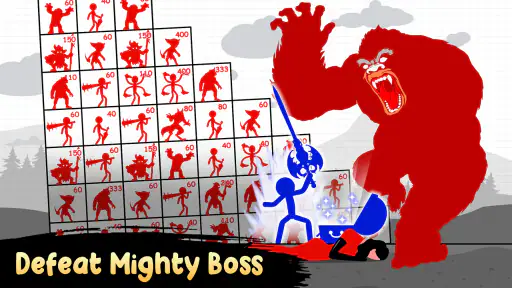
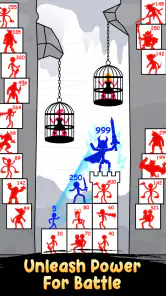
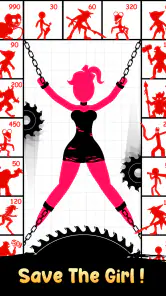
Now, I know what you're thinking: "It’s just stick figures!" But trust me, the developers have done an amazing job at making the graphics both charming and engaging. The animations are smooth, and the little details, like the way your hero swings their weapon or the unique look of each enemy type, add a lot of personality to the game.
The sound design is another highlight. The music is upbeat and catchy, perfectly setting the tone for an epic defense battle. The sound effects are crisp, adding a satisfying punch to every successful hit you land on an enemy. It’s these little touches that make the whole experience more immersive.
What the presentation means in practice
The clear stick-figure look helps me follow the action without needing a realistic battlefield full of visual detail. That simplicity is a useful design choice for a game about reacting to enemy types and attack patterns: I can focus on the threat instead of parsing a busy scene. It also gives the battles a lighter tone than the defensive premise might suggest, which should appeal to players who like strategy without a heavy presentation.
Sound is a matter of taste and circumstance. The upbeat music and punchy effects add energy when I am playing with audio on, but I would not assume that every session needs sound to be enjoyable. In a quiet public place, I would keep the device’s sound appropriate and judge whether the visual feedback alone is enough for me to follow a round comfortably.
Where it sits among strategy games
Compared with slower strategy games built around long-term planning, this one puts the emphasis on defending against attacks and adjusting as pressure rises. That makes it easier to approach in brief bursts, but it may feel less satisfying if you want a large map, extensive resource management, or complex multiplayer decisions. I’d choose it for compact tactical challenges rather than as a replacement for a deep strategy campaign.
It also differs from a purely reflex-based action game: the appeal is not just landing hits, but learning how the changing threats affect your defense. If you enjoy spotting patterns and refining a plan, that is the part most likely to hold your attention. If you mainly want open-ended exploration or a story to follow, this particular format is probably not the right fit.
Choosing it over a familiar alternative
When I decide between this and a conventional tower-defense game, I ask what kind of planning I want. A map-focused title may be a better pick if I enjoy placing defenses across lanes and managing a broader layout. Here, the appeal is more compact: pay attention to the stick hero, the incoming threats, and how the defense needs to change. That makes it easier to get into quickly, but it is not the choice I would make for elaborate battlefield design.
Likewise, a casual action game may suit me better if I want immediate movement and little reflection between attempts. This game sits between those moods: its battles are accessible, but the changing enemy patterns invite me to think. Before installing, it helps to be honest about whether I want that small tactical puzzle or a different kind of strategy experience. The label “strategy” covers very different games, and this one is most appealing when I want focused defense rather than a large system to manage.
Fairness, progress, and what I’d check
The game’s rising difficulty gives each setback a purpose when it teaches you something about enemy behavior. Still, “challenging but fair” is a personal impression, not a promise that every player will find the same point of difficulty comfortable. If progress starts to feel like a grind, I’d take a break or revisit the way I approach a level before spending money in hopes of solving the problem.
The game is currently at version 1.0.92 and requires Android 7.0 or later. It was released on August 25, 2022, and has around 5,100 written reviews alongside its much larger rating count. I’d check that my device meets the system requirement and look at the current in-game purchase choices before deciding whether it belongs in my regular rotation. The purchase range is known, but the effects of individual items and the balance between paid and unpaid progress are not established here, so I wouldn’t assume either that spending is essential or that it never affects convenience.
What fairness can and cannot mean here
For me, fair play is not the same as easy play. A demanding level can still feel reasonable if careful observation and a better decision improve my next attempt. The important personal test is whether I can identify something to learn, rather than feeling that progress depends on guessing or paying. I would keep that distinction in mind as I play, especially before treating a purchase as a shortcut through a frustrating stretch.
There is a limit to what I can conclude about spending: the game has optional purchases, and their listed prices run from $0.99 to $9.49 per item, but the role of each item is not established here. I would not claim that purchases are necessary, that they provide a competitive edge, or that free progression is always equally quick. A cautious approach is simple: play first, decide whether the challenge itself is enjoyable, and only then consider whether any purchase actually matches what you want.
Questions I would settle before committing
If you are wondering whether you need to pay to start, no: the game is free to install, and purchases are optional. If you are wondering whether an optional item makes progress faster or changes a battle, I would inspect the in-game offer carefully rather than infer its effect from the price. That is the most useful distinction for a budget-conscious player: the cost range is clear, while the individual benefits need to be judged in context.
If you are choosing it for a child, the Everyone 10+ rating gives you an age guide, and it is still sensible to discuss purchases and device settings. If you want to know whether it suits a quick break, try a session when you can give the screen attention; if your breaks are frequently interrupted, a more forgiving game may be a better match. And if you want a deep strategy campaign, broad base-building, or multiplayer competition, I would look elsewhere rather than expecting this compact defense format to provide those experiences.
Why You Should Download It
If you're still on the fence about downloading Stick Hero: Tower Defense, let me give you a few more reasons to hit that download button. The game is free to play, which is always a plus. There are in-app purchases available, but they’re not necessary to enjoy the game fully. You can progress at your own pace without feeling pressured to spend money.
Moreover, the community around the game is fantastic. There are plenty of forums and social media groups where players share tips and strategies, so you never feel like you're battling alone. Plus, regular updates from the developers ensure that the game stays fresh with new content.
Who should leave it off the download list
I would skip it if my idea of strategy means planning a whole map, managing several resources, or competing directly with other players. Those are reasonable preferences, but the appeal here is a more immediate defensive challenge centered on a stick hero and shifting enemy pressure. Someone who dislikes retries may also find its learning curve tiring, even if another player sees those same attempts as the main reason to keep going.
I would also be cautious if I wanted a purchase-free experience with fully known progression conditions before opening the game. It costs nothing to try, but optional purchases are present, and their precise effects are not established here. That is not a reason to assume the game is unfair; it is a reason to make a personal decision based on what the actual in-game choices show, rather than on expectations.
In conclusion, Stick Hero: Tower Defense is a delightful mix of strategy and action that offers endless hours of entertainment. Whether you're a seasoned gamer or just looking for something fun to pass the time, this game is definitely worth a try. So, grab your virtual sword, strategize your defenses, and dive into the world of stick hero battles. Trust me, you won't regret it!
My recommendation is more specific than that closing enthusiasm: I would try it if I wanted short, attentive defensive battles and enjoyed learning through retries. I would not choose it as my only strategy game if I were after expansive planning, a story-led journey, or a clear picture of every purchase’s effect before playing. Its free entry makes a low-commitment trial possible, while a little patience and a careful look at optional offers help keep that trial on my terms.
Stick Hero: Tower Defense Frequently Asked Questions
What kind of gameplay should I expect from Stick Hero: Tower Defense?
Stick Hero: Tower Defense is a strategy game centered on defending territory and moving through increasingly challenging levels. Its premise combines defensive planning with collecting and developing characters, so it may appeal if you enjoy making tactical choices as you progress. The store summary highlights gathering legendary red and blue warriors and expanding your inventory on the road to victory.
Can I play Stick Hero: Tower Defense in short sessions?
The game is designed for mobile play, making it easy to pick up on a phone or tablet when you have time for a round. Its levels and progression provide a clear focus for play, while the strategy elements give you decisions to consider as you defend your territory. It can suit players looking for a mobile game to return to between other activities.
What does the age rating mean for Stick Hero: Tower Defense?
Stick Hero: Tower Defense is rated Everyone 10+, which can help families decide whether it suits younger players. The game is a strategy experience built around defending territory and progressing through challenges. Parents may want to review the game themselves and consider how its battles and in-app purchases fit their child’s preferences before downloading.
Who developed Stick Hero: Tower Defense, and how popular is it?
Stick Hero: Tower Defense was developed by Sun Global. It has a 4.7 average rating from around 382,000 ratings, alongside more than 50 million installs. Those figures suggest that it has reached a broad mobile audience, though individual experiences can vary. The game’s core appeal is its mix of strategic defense, character collection, and progression.
What is Stick Hero: Tower Defense about?
Stick Hero: Tower Defense is an engaging strategy game where players must protect their territory from waves of enemies. By strategically placing defensive units and utilizing unique skills, players can fend off attacks and progress through increasingly challenging levels. The game combines elements of strategy, action, and puzzle-solving, making it a dynamic experience for mobile gamers. Its store summary also highlights gathering legendary red and blue warriors and expanding your inventory on the road to victory.
Pros
- Engaging gameplay with strategic elements.
- Colorful graphics enhance user experience.
- Regular updates with new challenges.
- Easy to learn
- hard to master mechanics.
- Variety of heroes and enemies keep it fresh.
Cons
- In-app purchases can be pricey.
- Some levels feel repetitive.
- Requires constant internet connection.
- Occasional bugs disrupt gameplay.
- Ads can be intrusive at times.
- Category
- Strategy
- Version
- 1.0.92