Music Ballz Go - Hop Star
- 41.00
- 4.9
- Installs
- 500.00K
- Price
- Free

Screenshots
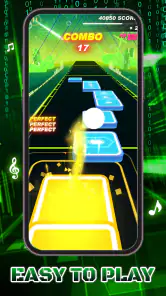
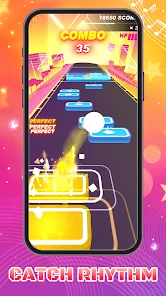
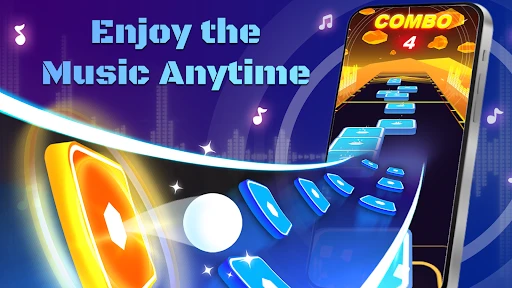
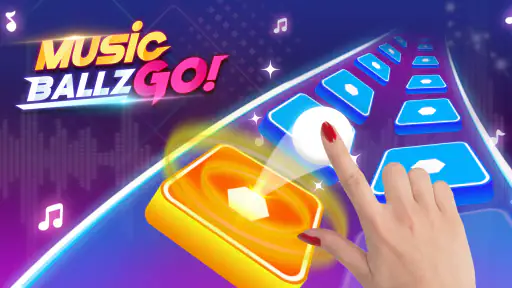
Analysis by Reviewed
I approach a rhythm game like Music Ballz Go - Hop Star with one practical question: does it feel responsive enough to make timing the fun, rather than a fight against the phone? Its appeal is easy to understand from the outset: you guide a bouncing ball in time with music, so each brief play session asks for attention without demanding that you learn a complicated control scheme. That makes it a natural pick when I have a few minutes to spare, though it is less suited to anyone looking for a deep music library or a long-form game with a story to follow.
What to expect from the pace
The basic interaction is simple tapping, and that simplicity helps the game get going quickly. The real test is whether I can match the beat consistently as a level becomes more demanding. I would treat it as a reflex game with a musical cue, not as a precise instrument for practicing rhythm: the music sets the mood and helps guide timing, while the challenge comes from keeping attention on the action. If you enjoy repeating a section to improve your performance, that loop can be satisfying. If repeating attempts feels like work, the same focus on timing may become tiring sooner than a more relaxed music app.
For a short everyday session, I can imagine opening it while waiting for a drink or taking a break between tasks, playing a little, then putting it away without needing to set aside a whole evening. On a commute, it may suit a seated journey where I can give the screen my attention; I would not choose it when I need to watch my surroundings or keep one hand free. A useful personal tip is to begin when you can listen clearly and look at the screen comfortably. Trying to play while distracted makes a timing-based game less enjoyable, regardless of how quick the controls are.
The Rhythm Keeps You Hooked
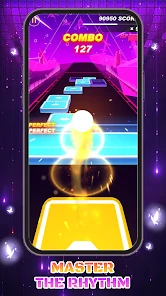
One of the first things that stands out about Music Ballz Go - Hop Star is its incredibly engaging rhythm-based gameplay. Imagine bouncing a ball to the beat of catchy tunes. Sounds simple, right? But trust me, it’s anything but. The game masterfully integrates music into its core mechanics, creating an immersive experience that keeps you tapping your feet as you play. I found myself getting lost in the beats, and before I knew it, hours had flown by.
A Visual and Auditory Delight
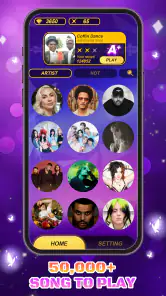
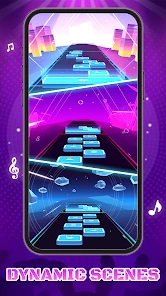
Visually, the game is a treat. The vibrant colors and dynamic backgrounds make every level feel fresh and exciting. It’s like a little party happening right on your phone screen. And the music? It’s an eclectic mix of genres that ensures there’s something for everyone. Whether you’re into pop, rock, or EDM, the soundtrack will have you nodding your head along with the beat. I’d say the game does a fantastic job of marrying visuals and audio in a way that enhances the overall experience.
When a session gets demanding
In a longer play session, the combination of movement, bright scenes, and music gives me more to process than a basic tap game. If I start missing beats, I find it more useful to pause and reset my attention than to keep tapping faster; rushing tends to make timing worse. Playing at a comfortable volume can also help me stay with the beat without turning the game into background noise. This is a small but worthwhile trade-off: the sound is part of the experience, so playing silently may make timing less intuitive, while playing in a noisy place can make the rhythm harder to follow.
Compared with the usual alternatives, such as music-streaming apps or rhythm games built around instrument-like inputs, this is a lighter, more immediately playable choice. It does not replace a playlist when I want to choose songs and let them run, and it is not the option I would pick for a detailed music-performance challenge. Its particular appeal is the combination of a simple ball-control idea and beat-led play. If I want a quick interactive distraction, that is a better fit than opening a full music library; if I want to listen without watching my phone, a playlist is clearly more convenient.
More From Our News Desk

Weather by Xiaomi Review: Clear at a Glance, Less Clear Up Close

X Under Pressure: Can It Recover When Posting Goes Wrong?

Clash of Clans Is Won Between the Battles

Android Auto Makes the Case for Quieter Car Software

MobiOffice: Transforming Mobile Productivity with Seamless Integration

EA SPORTS FC™ Mobile Soccer: Redefining Mobile Sports Gaming
Making short sessions work
The game makes the most sense to me as something I can pick up in a defined pocket of free time. For example, if I have a few minutes before a meeting, I can play a short round and stop when it is time to move on. I would avoid starting when I am already late or likely to be interrupted: a sudden distraction is especially unwelcome when I am concentrating on a beat. That is less a flaw in the game than a practical consequence of playing something that asks me to watch and listen at once.
One small adjustment that helps is to treat each attempt as a chance to learn the timing, rather than judging the whole game by a single missed tap. If I notice that I am reacting to the ball’s movement instead of the music, I slow down mentally and listen for the beat before tapping. This is a useful distinction in a rhythm game: watching alone can make my responses feel hurried, while listening gives the action a more natural rhythm. It will not suit everyone, but it makes practice feel less like random tapping.
Challenge Yourself or Just Chill
One of the aspects I really appreciate is the game’s flexibility. You can choose to challenge yourself and aim for perfect scores, or just enjoy a casual session without any pressure. The levels are designed to test your reflexes and timing, but they’re also forgiving enough to make sure you’re having fun. I’ve found that this balance keeps the game accessible to both hardcore gamers and casual players alike.
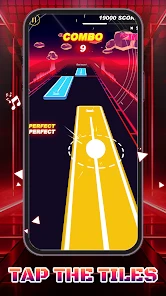
The controls are intuitive and easy to pick up, which is always a plus. It’s just a matter of tapping the screen at the right time, but mastering it is another story. The game does a great job of gradually increasing difficulty, so you’re always engaged and never bored.
Reliability, device fit, and value
For reliability, I judge a game like this by whether the taps feel dependable and whether I can return to it without needing a complicated setup. The experience is most enjoyable when the phone is behaving normally and I can focus on the beat; interruptions, a busy screen, or competing audio can break concentration even if the game itself is running smoothly. I would close other demanding apps if my device already feels sluggish, then try a short session before settling in for a longer one. That is a sensible way to separate a momentary device slowdown from a genuine mismatch with the game’s timing.
Since the main interaction is tapping along, I would give the game a brief test on my own phone before deciding how well it fits. A quick first session can tell me whether the screen responds consistently for my taps and whether the music is easy to follow in my usual surroundings. If it feels off, I would first move somewhere quieter and check that I am not distracted before deciding the game is the problem. Rhythm depends on attention as much as on the device, so changing one condition at a time is more useful than immediately blaming the phone.
I would also think about the setting before choosing to play. Bright visual movement can be enjoyable when I am seated and focused, but it is not ideal if I am walking, switching between tasks, or trying to conserve attention for something else. On a break at home, that active screen can be part of the fun. During a busy commute, a playlist or a game that does not rely so heavily on visual focus may be the more practical choice. This is the kind of trade-off that matters more than a broad claim that a game is suitable for every moment.
It is free to start, with optional in-app purchases priced from $7.99 to $12.99 per item. I would first see whether the core tapping loop and music suit me before spending anything; purchases only make sense if I already know I want to keep playing. The game is rated for Everyone, comes from Moonlight Studio2025, and its current version is 1.1.2. It supports Android 7.0 and later, a useful baseline to check before installing, especially on an older phone. It has a 4.9 average from 360 ratings, with 41 reviews, and has passed 500K installs. Those figures suggest a positive reception, though they cannot tell me whether its particular rhythm and visual style will suit my own taste.
The free starting point makes trying the basic experience a low-commitment decision, but I would not treat optional purchases as necessary just because they are available. I would first ask myself whether I actually return to the game after a few short sessions. If the timing loop keeps me interested, then I can decide whether spending adds enough value for my own play habits. If I only open it occasionally, keeping it as a free, casual distraction is the more sensible approach.
Who will enjoy it—and who may not
I would recommend it to someone who likes short, hands-on music games, enjoys improving timing through practice, and wants something more active than simply playing songs. It is also a reasonable choice for casual players because the tapping idea is easy to understand. I would steer away if you mainly want an uninterrupted listening experience, dislike repeating attempts, or need a game that demands very little visual attention. Likewise, if precise musical input is the main attraction for you, a rhythm game built around more detailed controls may be a better match.
It may also be a good fit for someone who wants an easy game to explain to a friend: the central idea is straightforward, so there is little to learn before taking a turn. That simplicity is a strength for quick, informal play, but it also sets expectations. Players who want elaborate progression, a story, or fine control over musical notes should choose a different kind of game rather than expecting a ball-tapping format to provide those things. The appeal here is immediate action, not depth in every direction.
If your phone is older, check that it meets the Android 7.0 minimum before trying to install it. Even a compatible device can feel different depending on its general condition, so I would keep my first session short and see whether the visuals and sound remain comfortable. I would not assume that a rhythm game needs a powerful phone, but I also would not promise identical smoothness on every device. If the game feels sluggish, closing other demanding apps and testing again gives a more useful answer than trying to push through a frustrating session.
Why You Should Download It Now
In a market flooded with countless mobile games, Music Ballz Go - Hop Star manages to stand out with its unique blend of music and gameplay. It’s a game that’s perfect for those quick breaks or long commutes, offering both a challenge and a way to unwind. Plus, who doesn’t love a game that doubles as a mini-concert?
For me, the strongest reason to give it a try is that it turns a few spare minutes into an activity rather than simply filling them with more listening. The balance will depend on what I want from my phone at that moment: when I have the attention to watch and tap, the music-led challenge is appealing; when I want to relax with my eyes away from the screen, it is the wrong tool. Knowing that difference helps me enjoy it on its own terms instead of expecting it to replace a playlist or a more involved rhythm game.
So, if you’re ready to tap to the beat and enjoy some seriously addictive gameplay, give Music Ballz Go - Hop Star a try. It’s a fun, engaging, and visually appealing game that’s sure to keep you entertained. Just be warned—you might find yourself humming along to the tunes long after you’ve put your phone down!
Music Ballz Go - Hop Star Frequently Asked Questions
What age group is Music Ballz Go - Hop Star suitable for?
Music Ballz Go - Hop Star is rated Everyone, making it suitable for a broad audience. Its music-focused, bouncing-ball gameplay is presented as an accessible casual game, though the timing challenges may take practice. Parents can consider whether rhythm games appeal to their child and check the device’s purchase settings, since optional in-app purchases are available.
Does Music Ballz Go - Hop Star have optional purchases?
Yes. Music Ballz Go - Hop Star is free to download, and it also offers optional in-app purchases priced from $7.99 to $12.99 per item. You can begin playing without buying anything; purchases are an additional choice rather than a requirement for downloading the game. If children use the device, it may be useful to review its purchase controls beforehand.
Who developed Music Ballz Go - Hop Star, and how popular is it?
Music Ballz Go - Hop Star is a music game developed by Moonlight Studio2025. It has an average rating of 4.9 from 360 ratings, alongside 41 written reviews, and has reached over 500K installs. These figures offer a quick snapshot of its store presence, but whether its rhythm-based play suits you will depend on your interest in music games.
What is Music Ballz Go - Hop Star?
Music Ballz Go - Hop Star is an engaging rhythm-based game available for Android devices. The game challenges players to guide a bouncing ball along a path in sync with the music, requiring quick reflexes and precision. With a variety of songs and levels, it offers an exciting musical adventure to players of all ages. Its store tagline invites players to turn on the music and enjoy with ballz!
How do I play Music Ballz Go - Hop Star?
In Music Ballz Go - Hop Star, players control a ball that hops from platform to platform. The key is to time your taps to the rhythm of the music, ensuring the ball lands securely on each platform. As you progress, the speed and complexity of the levels increase, providing a challenging yet rewarding experience. Mastering the timing is essential for success.
Pros
- Engaging rhythm-based gameplay
- Simple and intuitive controls
- Wide variety of music tracks
- Visually appealing graphics
- Regular updates with new content
Cons
- Contains in-app purchases
- Frequent ads can be disruptive
- Requires internet connection
- Limited offline features
- Can be challenging for beginners
- Category
- Music
- Version
- 1.1.2