Music Ball Tunes: Falling Ball
- 11.00
- 3.8
- Installs
- 1.00M
- Price
- Free
Screenshots

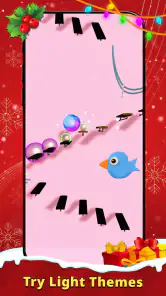
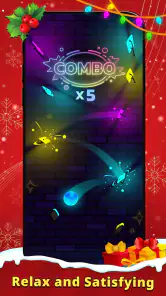

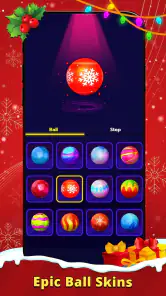
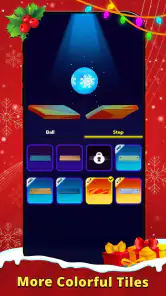

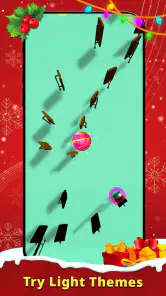
Analysis by Reviewed
I judge a rhythm game by whether its mood and controls work together, not just by how busy the screen looks. Music Ball Tunes: Falling Ball caught my attention as a music game built around guiding a ball along a track, with timing and a lively presentation doing much of the work. It aims for a quick, absorbing play session rather than a complicated musical toolkit, which makes it easy to understand but also puts a lot of pressure on the feel of each run.
A bright world with a simple visual language
The game’s colorful, neon-leaning look gives its tracks a clear identity: the ball, path and surrounding effects are meant to read as one playful musical space. That visual energy suits short bursts of play, though it can also make a difficult moment feel more hectic. I found it useful to focus on the path ahead rather than chase every flash of color; keeping my eyes on the route made timing feel more manageable.
This is not the kind of music game I would choose for a quiet, story-led world or detailed customization. Its appeal is more immediate: a moving ball, a track to follow and music that gives the action its character. If you like a strong arcade look, that directness is a plus. If you prefer restrained visuals that keep every obstacle easy to distinguish, the vivid presentation may take a little adjustment.
How the music shapes each run
The soundtrack is central to the experience, not background decoration. The ball’s movement and the track’s changing pace invite you to listen as well as watch, and a beat can help you anticipate when to act. That said, I would not treat the music as a perfect substitute for visual attention: when the pace rises, watching the route still matters. Playing with sound on makes the game’s mood more coherent, while a muted session is possible in principle but would lose much of what gives this particular format its personality.
A practical tip is to settle into a steady listening rhythm before trying to react faster. When I focused on the beat and made small, deliberate inputs instead of hurried corrections, the action felt less chaotic. This approach is especially helpful if you are new to rhythm games, although a rising challenge can still catch you out. The game’s tension comes from having to keep your timing together as the run becomes more demanding.
The Gameplay Experience
From the moment you launch Music Ball Tunes: Falling Ball, you're whisked away into a visually stunning universe where your main mission is to guide a ball through a series of musical tracks. Now, don't let the simplicity fool you—this game is as challenging as it is addictive. The ball moves to the rhythm of the music, and your job is to keep it from falling off the track. Trust me, keeping your cool as the tempo rises is no easy feat!
What really stands out is how the game syncs with the beats. Each level offers a unique track, and it's like the ball dances along with the melody. The combination of timing and precision is crucial, and every misstep can lead to a dramatic drop. But hey, that’s part of the fun, right? It keeps you on your toes and makes those successful runs all the more satisfying.
More From Our News Desk

Weather by Xiaomi Review: Clear at a Glance, Less Clear Up Close

X Under Pressure: Can It Recover When Posting Goes Wrong?

Clash of Clans Is Won Between the Battles

Android Auto Makes the Case for Quieter Car Software

MobiOffice: Transforming Mobile Productivity with Seamless Integration

EA SPORTS FC™ Mobile Soccer: Redefining Mobile Sports Gaming
Visuals and Soundtrack
Visually, the game is a treat. The developers have done an excellent job with the graphics, ensuring that each level is not only challenging but also aesthetically pleasing. The neon lights and vibrant colors are mesmerizing, especially when paired with the upbeat soundtrack. And speaking of soundtracks, the music selection is top-notch. Each track has been carefully curated to enhance the gameplay, making you feel like a DJ spinning records while navigating obstacles.
One thing I particularly love is how the music influences the gameplay. The tempo changes, the beats drop, and suddenly you're immersed in this fast-paced musical journey. It's almost like your reflexes are being finely tuned with each note, and I find myself bobbing my head along with the ball.
User Experience and Accessibility
One of the aspects that make Music Ball Tunes: Falling Ball stand out is its user-friendly interface. The controls are intuitive, and even if you're new to rhythm games, you'll find yourself getting the hang of it in no time. Plus, the app doesn't bombard you with ads, which is a huge plus for a seamless gaming session.
Where it fits among music games
Compared with music games built around tapping notes in fixed lanes, this one asks me to keep a moving ball on its route. That makes it feel closer to an arcade reflex challenge with a musical pulse than to a score-chasing instrument simulation. I would choose it when I want to respond to a track and stay visually engaged; for learning songs through repeated note patterns, a conventional lane-based rhythm game is the better fit.
It also suits short breaks better than a long session that demands constant concentration. A useful everyday moment might be waiting for a friend or taking a breather between tasks: one attempt gives me a focused diversion, and I can stop without needing to settle into a lengthy campaign. I would avoid playing while distracted, though. The rising pace rewards attention, so trying to fit a run into a moment when I need to watch something else is likely to end in a missed cue.
For a fair first try, I would play somewhere I can hear the music clearly, keep my attention on the path, and resist making several quick corrections at once. If the visuals feel busy, concentrating on the ball’s route rather than the surrounding effects is a simple adjustment. These habits do not remove the challenge, but they help separate a genuine timing mistake from a rushed reaction.
However, there are a few instances where the game could improve. Sometimes, the difficulty curve feels a bit steep, especially for beginners. A more gradual increase in challenge would be more welcoming. But if you're someone who thrives on challenges, this might just be the perfect fit for you.
Who I’d recommend it to
Great Arcade Games’ music title is free to start, and its Everyone age rating makes it broadly approachable. It has an average rating of 3.8 from around 530 ratings, with over a million installs, so there is a sizable audience for this straightforward ball-and-beat idea. The current version is 1.1.8, and the game first appeared in May 2024. Optional in-app purchases range from $0.49 to $69.99 per item, so I would check purchase prompts carefully if I were handing a device to a child or trying to keep spending strictly at zero.
I’d recommend it to someone who enjoys bright arcade visuals, quick retries and music that makes reflex play feel more lively. It is less suited to players who want a deep progression system, precise music practice, or a calm game that never asks for fast reactions. The free entry point makes it easy to sample, but the purchase range is a reason to be deliberate rather than assume every extra is a small add-on.
When the mood works—and when it doesn’t
For me, the strongest quality is the way the sound, movement and vivid setting point in the same direction: the game feels energetic because all three are pulling toward quick, rhythmic focus. Its trade-off is that this same combination can become demanding when the pace climbs. I would not pick it for winding down if fast visual feedback tends to tire me, nor would I use it as a substitute for a music-learning game. I would pick it when I want a compact, colorful reflex challenge with a beat at its center.
Making a short session count
The best way I found to approach a run is to treat the opening moments as a chance to settle in, not as a test of how quickly I can move. I listen for the pulse, watch the ball’s route and let the basic timing become familiar before trying to react aggressively. This matters because a sudden string of corrections can make it harder to tell whether I am responding to the track or simply panicking at the visuals. A calmer start gives me a more useful sense of the game’s rhythm.
If I have only a few minutes between errands or while waiting for someone, I would play with the phone held comfortably and attention fully on the screen. It is easy to think of a music game as something that can accompany other tasks, but this one asks for both listening and watching. I would not start a run while crossing a street, keeping an eye on a child, or waiting for an important message. The short-session appeal is real, but the reflex demand makes it a poor choice for divided attention.
For a longer break, I would change my approach rather than repeat the same frantic attempt. A brief pause after a miss helps me return with a clearer eye, and focusing on one cue at a time is more helpful than trying to absorb every visual effect. This is a small adjustment, but it turns a string of failures into something I can learn from. The challenge feels fairer when I can identify whether my timing slipped or my attention drifted.
What to expect from the challenge
The simple premise should not be mistaken for a game that stays effortless. Keeping a ball on a path is immediately understandable, but the pressure comes from doing it as the pace and visual activity rise. That creates an appealing entry point for someone who has never played a rhythm game, while still giving experienced players a reflex-focused reason to pay attention. The trade-off is that a newcomer may understand what to do before they feel comfortable doing it consistently.
I would not promise that every run will feel equally relaxing. The music and bright presentation give the game a playful surface, but a demanding stretch can turn that mood into concentration quickly. If you are looking for a gentle background activity, the increasing pressure may work against you. If you enjoy a compact challenge where a mistake is easy to understand and a better attempt is tempting, that tension is more likely to be a draw than a flaw.
One useful way to decide whether it suits you is to notice what you enjoy most in a music game. If you want to tap along to note prompts and build familiarity with a song’s sequence, a lane-based alternative offers a clearer practice loop. If you prefer the feeling of steering through a changing route while music shapes the pace, this game’s ball-and-track focus has a more arcade-like appeal. Neither approach is automatically better; they serve different moods and kinds of attention.
Practical expectations before installing
The game is free to begin, which makes trying its central idea straightforward. I would still approach optional purchases thoughtfully: the listed range runs from $0.49 to $69.99 per item, a wide spread that makes it sensible to check each prompt rather than assume every purchase is minor. If a child is using the device, I would discuss purchases beforehand and use the device’s usual purchase safeguards. The Everyone content rating is reassuring for broad access, but it does not remove the need to manage spending.
Its audience figures suggest that plenty of people have tried the game, while an average rating of 3.8 from around 530 ratings points to a generally mixed-to-positive reception rather than universal enthusiasm. I read that as a reminder that the central idea will click more strongly with some players than others. The bright look and reactive play are specific tastes; players who dislike visual intensity or repeated reflex tests should not feel obliged to persist just because the premise is easy to grasp.
The current version is 1.1.8, and the game was released in May 2024. Those details are useful context, but the decision I would make is simpler: do I want a music-flavored arcade challenge, or do I want something calmer and more focused on songs themselves? Knowing that distinction before installing saves time. The former is where this title makes its case; the latter is better served by a music app or a different style of rhythm game.
Final Thoughts
In conclusion, Music Ball Tunes: Falling Ball is more than just a game; it's an experience. It's a vibrant world where music and gaming collide, creating a thrilling adventure that tests your reflexes and rhythm sense. Whether you're a casual gamer or a rhythm game enthusiast, this app has something to offer. Just remember, it's all about the journey and finding your groove. So, why not give it a spin and let the music guide you?
Music Ball Tunes: Falling Ball Frequently Asked Questions
What is Music Ball Tunes: Falling Ball?
Music Ball Tunes: Falling Ball is an engaging rhythm-based game available for both Android and iOS platforms. In this game, players guide a ball through a series of musical tracks, syncing movements with the beats of popular songs. It's a delightful fusion of music and gameplay, designed for those who love rhythm games.
How does the gameplay of Music Ball Tunes: Falling Ball work?
In Music Ball Tunes: Falling Ball, players control a ball that moves along a path aligned with musical beats. The objective is to keep the ball in sync with the rhythm by tapping and swiping to the beat. The game offers various levels of difficulty, challenging players to stay on beat and navigate through obstacles as they enjoy their favorite tunes.
Are there any in-app purchases in Music Ball Tunes: Falling Ball?
Yes, Music Ball Tunes: Falling Ball includes in-app purchases. Players can buy additional songs, themes, and power-ups to enhance their gaming experience. While the game is free to download and play, these purchases offer a way to unlock more content and customize the game to better suit personal preferences.
What are the system requirements for Music Ball Tunes: Falling Ball?
For Android users, Music Ball Tunes: Falling Ball requires Android version 5.0 or higher, while iOS users need iOS 10.0 or later. The game is designed to run smoothly on most modern devices, but ensuring your operating system is up-to-date will optimize performance and provide the best gaming experience.
Can I play Music Ball Tunes: Falling Ball offline?
Music Ball Tunes: Falling Ball requires an internet connection to download songs and updates. However, once the music tracks are downloaded, players can enjoy the game offline. This feature is especially convenient for those who want to play on-the-go without worrying about connectivity issues.
Pros
- Engaging rhythm-based gameplay
- Wide variety of music tracks
- User-friendly interface
- Smooth and responsive controls
- Regular updates with new content
Cons
- Ads can be intrusive
- Limited offline functionality
- In-app purchases for premium features
- Occasional bugs and crashes
- Requires consistent internet connection
- Category
- Music
- Version
- 1.1.8