Moto Rider GO: Highway Traffic
- 10.26K
- 4.3
- Installs
- 100.00M
- Price
- Free

Screenshots

Analysis by Reviewed
For a first-time player, the appeal of Moto Rider GO: Highway Traffic is easy to understand: it turns a short stretch of spare time into a quick test of attention and timing. I’d approach it as an arcade-style motorcycle game rather than a realistic riding simulator. The goal is to react to highway traffic, learn how the controls feel, and improve a run by making cleaner decisions. That makes it approachable, though anyone hoping for a slow, detailed career simulation may find its fast, repeatable format too simple.
What to expect from a quick ride
This is a free racing game from T-Bull S A, with a 4.3 average from around 927,000 ratings and more than 100 million installs. It is rated Everyone, so its basic presentation is suitable for a broad audience. The current version is 1.93.0, and the game has been available since November 30, 2016. Those details give a sense of its long-running reach, but the more useful question is whether its moment-to-moment play fits your habits: each ride asks for focus, not a long tutorial or a big time commitment.
I would try it when I have a few minutes to spare and want something more active than a casual puzzle. It is also a reasonable pick for someone curious about mobile racing who does not want to begin with complicated handling or a large set of controls. In my experience, its straightforward premise makes the first attempt less intimidating, while traffic turns a simple ride into a practical exercise in judging gaps. If you prefer exploring a large world, tuning every part of a vehicle, or following a story, this is not the kind of racing game I would choose first.
Getting from install to a confident first run
First impressions and setup
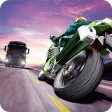
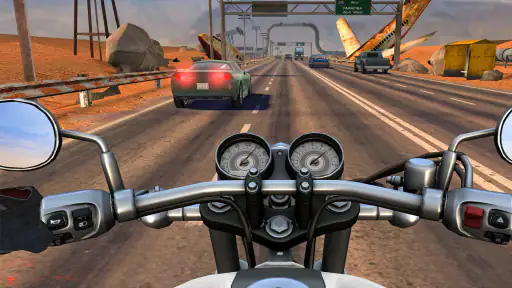
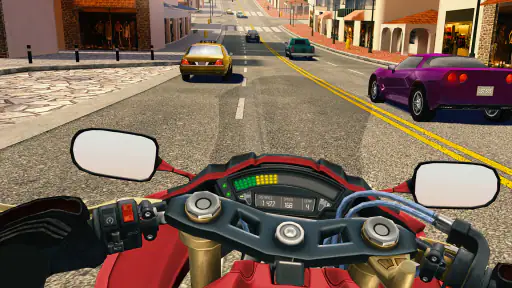
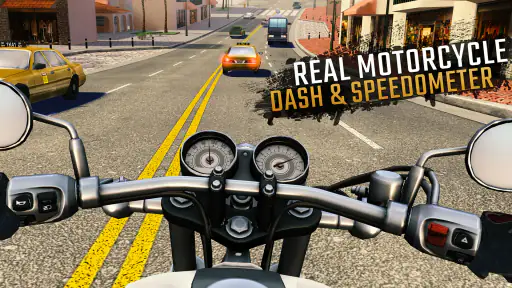
As soon as I launched the game, I was hit with a sleek and user-friendly interface. The graphics are surprisingly crisp for a mobile game, and the level of detail put into the motorcycles and environments is commendable. The developers clearly knew what they were doing when they designed this app. The moment you start your first race, it feels like you’re actually on the highway, weaving through traffic with the wind in your hair—or at least that’s what it felt like for me.
Before trying to chase coins or a high score, I’d spend the opening run learning the steering response. Tilt controls can feel different depending on how you hold a phone, so keeping it steady and making small movements is more useful than sharply tipping it at every car. If the default feel is awkward, give yourself a few attempts before deciding the game is not for you; the first useful milestone is simply finishing a run with more deliberate steering than the one before it. That small adjustment makes later traffic decisions easier.
Gameplay, timing, and rewards
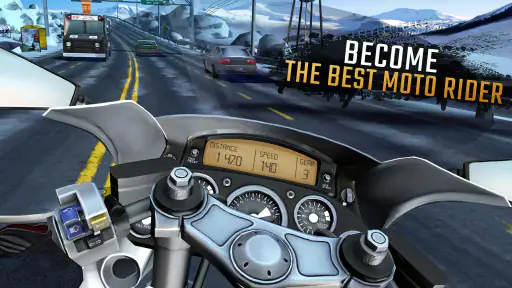
The game is simple: you ride your motorcycle down a busy highway, dodging cars and trucks while trying to collect coins and power-ups. What I love about Moto Rider GO: Highway Traffic is its intuitive controls. You tilt your device to steer and touch the screen to accelerate. It’s easy to pick up, even if you’re not a seasoned gamer. The more you play, the more you get the hang of timing your moves, which is crucial when traffic starts getting crazy.
A useful habit is to treat a gap as a decision rather than a reflex test: look at the space you intend to enter, then commit with a small steering movement instead of weaving back and forth. Coins and power-ups can tempt you toward a risky line, but a clean route is often the better choice while you are still learning. This is a small trade-off that matters in a traffic racer: chasing every pickup may feel productive, yet avoiding a collision can preserve a run and give you more chances to understand the handling.
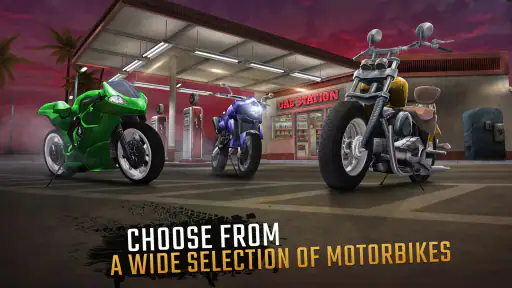
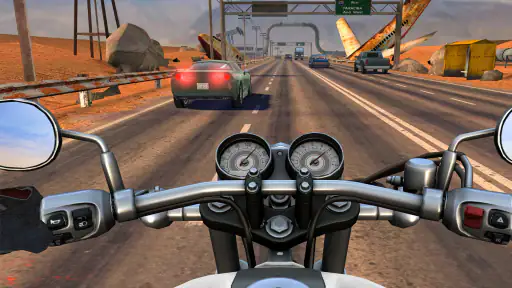
One thing I noticed is that the game offers different environments and weather conditions, keeping things fresh and exciting. Whether you’re riding through a sunny desert or a rainy cityscape, each setting presents its own unique challenges. Plus, there are tons of bikes to unlock and customize, which is a huge plus for me. I mean, who doesn’t want to race on a bike that reflects their personal style?
Making progress without rushing
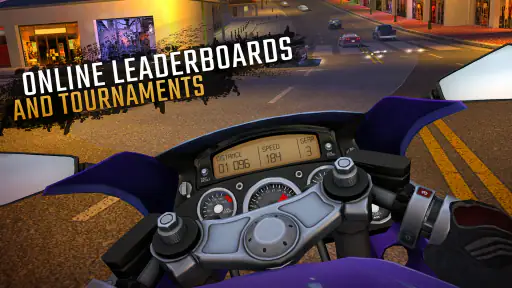
What keeps me coming back to the game are the various challenges and missions. Completing these not only gives you a sense of achievement but also rewards you with coins and new bikes. There's something incredibly satisfying about finally getting that challenging mission completed after several attempts. The game also features a leaderboard, where you can compete against players from all over the world. It’s a great way to see how you stack up against other racers.
For a more satisfying first session, I would focus on one task at a time rather than trying to collect everything, master every route, and compare scores immediately. A mission gives each attempt a purpose; once you have a feel for traffic, its objective can help you decide what to prioritize. The leaderboard is better treated as a later yardstick than as a beginner’s target, because a global comparison can be discouraging before you have settled into the controls. I find the game works best when improvement means making a more controlled run, not instantly reaching someone else’s score.
Costs, friction, and who will enjoy it
I should mention that while the game is free to play, it does offer in-app purchases. Personally, I didn’t feel the need to spend any money to progress, but the option is there if you want to accelerate your progress or get your hands on some cool bikes and upgrades.
Those purchases range from $0.21 to $25.37 per item, so I would be cautious about tapping through any purchase prompt without checking what it offers and whether it is worth it to you. The game’s free entry makes it easy to sample, but optional spending can change how quickly you reach bikes or upgrades. I would start without paying, learn whether the repeated runs stay enjoyable, and only consider a purchase if you already know exactly what you want from it.
Compared with a traditional circuit racer, this is more about threading through moving traffic than learning a track and braking for a sequence of corners. That makes it a better fit for short, reactive sessions than for players who want realistic motorcycle handling or a deep vehicle setup. A realistic everyday use is a quick break between tasks: play one run, focus on a mission or a safer line, then put the phone away. If you want a longer, more structured racing experience, a track-based game is likely a better match; if you want immediate highway action, this one gets to the point.
Choosing the right moment to play
In practical terms, I would keep this for a settled break, not for a moment when I am standing in a queue with one eye on the door or trying to pass time while walking. The traffic requires enough attention that a short session works best when I can actually look at the screen. That makes it a better fit for a lunch break at a table, a pause at home, or a few minutes before another activity than for distracted, stop-start use.
It can also work as a low-pressure introduction to mobile racing for someone who is unsure about complicated controls. The opening goal need not be a long streak or an impressive score; it can simply be steering into a clear lane and understanding how acceleration and movement feel together. If the player is younger, the Everyone age rating is reassuring for the game’s general suitability, but I would still keep purchase prompts in mind when a device is shared. That is a practical habit, not a reason to avoid trying the game.
Where the ride may lose its appeal
The same simplicity that helps a newcomer get started can become a limitation. Repeating runs and chasing rewards may feel satisfying at first, but players who need a changing objective or more involved progression could tire of the loop. Traffic also asks for attention, so I would not treat this as a game to play while walking, commuting, or doing anything else that needs your eyes. It suits a seated, focused break better than distracted play.
On Android, the minimum operating system requirement is version 7.0. If your device meets that requirement, the next question is whether tilt steering feels comfortable in your hands; a short trial is the most honest way to answer it. The game is free to download, which lowers the cost of finding out, while the in-app purchase options make it sensible to keep an eye on accidental taps if you share a device or let a younger player use it.
For players choosing among racing games, the key distinction is the kind of concentration each one asks for. A circuit racer rewards learning a course and planning around bends; a more simulation-focused motorcycle game is a better choice if realistic handling is the point. This game instead makes traffic itself the immediate problem, so a beginner can understand the aim quickly, but the same focus on dodging may not satisfy someone who wants to master a detailed racing line. I would choose it for quick reactions, not for a substitute for a full track experience.
My recommendation after the first ride
Overall, Moto Rider GO: Highway Traffic is an exhilarating experience. It’s perfect for those moments when you need a quick break or just want to enjoy some high-speed action. The combination of great graphics, smooth controls, and engaging gameplay makes it a must-try for any motorcycle enthusiast or arcade racing fan. So, if you’re looking for a game that’s both challenging and fun, this one’s definitely worth a download.
I’d recommend giving it a fair first session rather than judging it by a single awkward turn: try a few runs, make small steering corrections, and see whether missions give you a reason to return. If you enjoy quick reactions, highway dodging, and gradual improvement, it is an easy game to keep on hand. If you are after simulation, elaborate tuning, or long-form racing, I would pick another style instead. For me, its best quality is how quickly it lets a new player get moving, while its main caveat is that the simple loop has to be something you genuinely enjoy.
A simple way to decide whether to keep it
After installing, I would give myself a small, concrete test: complete a few runs, pay attention to whether the steering begins to feel more predictable, and try one mission once the basic movement makes sense. That gives a fairer answer than judging the game by its first collision or by an early score. If I find myself wanting one more attempt because I can see what I would do differently, the central loop is probably working for me. If each restart feels like the same chore, there is little reason to force it.
One useful trade-off is that the game’s quick entry also means its appeal depends heavily on whether you like repeating a run to improve. Someone who enjoys visible, small gains—choosing a safer lane, timing a pass, or getting closer to a mission objective—may find that satisfying. A player who wants every session to introduce a new system or a lengthy sequence of events may find the format thin. I would make that distinction before spending on optional items: first decide whether the riding itself is enjoyable, then decide whether extra progression matters to you.
My bottom line for a newcomer is straightforward: this is an accessible, traffic-focused arcade ride that can make a short break feel active, provided you can give it your attention. Start with steady hands, prioritize a clean path over every tempting pickup, and use a mission as a specific target once the controls feel familiar. The free download makes that first test easy, and the game’s biggest strength is its immediate premise. I would pass if I wanted realistic motorcycle physics, deep tuning, or a substantial racing campaign; for quick highway dodging and modest personal goals, I think it is a sensible one to try.
Moto Rider GO: Highway Traffic Frequently Asked Questions
Who developed Moto Rider GO: Highway Traffic, and when was it released?
Moto Rider GO: Highway Traffic is a motorcycle racing game developed by T-Bull S A. It was released on November 30, 2016, and its current version is 1.93.0. If you enjoy racing games built around riding through highway traffic, its central idea is easy to grasp: rev your engine, take to the road, and try to keep your ride going.
Is Moto Rider GO suitable for younger players?
Moto Rider GO: Highway Traffic has an Everyone content rating, making it suitable for a broad audience. It is a racing game focused on motorcycle riding and navigating traffic. Parents can still consider whether fast-paced racing and the game’s in-app purchase options fit their preferences before a child downloads it, and can review purchase settings on the device.
What devices can run Moto Rider GO: Highway Traffic?
Moto Rider GO: Highway Traffic is available for Android and iOS, so you can play on a compatible phone or tablet. On Android, the listed minimum operating system is version 7.0. The game is free to download, and its Everyone content rating makes it suitable for a broad audience. Check that your device meets the platform requirements before installing.
What is Moto Rider GO: Highway Traffic?
Moto Rider GO: Highway Traffic is an exciting motorcycle racing game where players can experience the thrill of high-speed racing in various environments. The game offers a realistic simulation of riding a motorcycle through traffic, challenging players to maneuver through vehicles and obstacles while maintaining high speeds. It's available for both Android and iOS platforms. Developed by T-Bull S A, the game was released on November 30, 2016, and its current version is 1.93.0.
How do I control the motorcycle in Moto Rider GO?
In Moto Rider GO: Highway Traffic, players control their motorcycles using intuitive touch or tilt controls. The game provides multiple control options, allowing players to choose between steering by tilting their device or using on-screen buttons. This flexibility ensures that players can find the control scheme that best suits their play style, enhancing the gaming experience.
Articles Related to Moto Rider GO: Highway Traffic
Clash of Clans Is Won Between the Battles
Its raids are quick; its community is a long-term project of coordination, teaching, rivalry, and shared responsibility—with all the friction that entails.
Android Auto Makes the Case for Quieter Car Software
The car interface is no longer judged by how much it can do, but by how quietly it helps. Android Auto shows what drivers now expect—and what still gets in the way.
MobiOffice: Transforming Mobile Productivity with Seamless Integration
MobiOffice: Word, Sheets, PDF is redefining mobile productivity with a surprising blend of functionality and innovation.
EA SPORTS FC™ Mobile Soccer: Redefining Mobile Sports Gaming
Dive into EA SPORTS FC™ Mobile Soccer, where immersive gameplay and strategic depth transform mobile sports gaming.
Pros
- Realistic motorbike physics enhance gameplay.
- Multiple camera views for immersive experience.
- Variety of bikes and upgrades available.
- Engaging career mode with diverse challenges.
- Stunning graphics and smooth performance.
Cons
- In-app purchases can become expensive.
- Requires internet connection for some features.
- Advertisements can be intrusive.
- Limited customization options for bikes.
- Repetitive level designs over time.

- Category
- Racing
- Version
- 1.93.0