MONOPOLY
- 18.99K
- 4.2
- Installs
- 1.00M
- Price
- $3.49

Screenshots


Analysis by Reviewed
What makes a phone version of a long-running board game worth paying for is not just whether the board looks familiar. I want it to handle the fiddly parts cleanly, make it easy to gather the right people, and still leave room for the trades and risky decisions that make each match its own story. MONOPOLY gets much of that balance right: it brings the property game to a screen without asking anyone to sort cash or keep track of rent by hand.
I’d see it as a convenient way to play a game your group already understands, rather than a replacement for every kind of board-game night. The digital format is particularly useful when a physical board is impractical, but it also changes the feel of the table. If you enjoy the chatter as much as the buying and trading, that difference matters before you decide to spend money on it.
Rolling the Dice on Your Phone
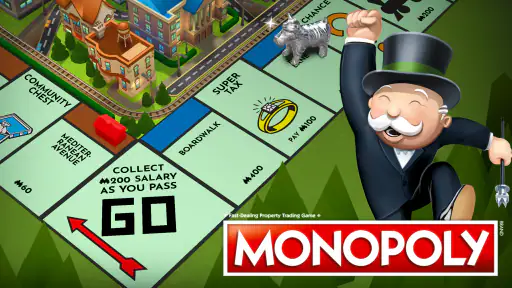
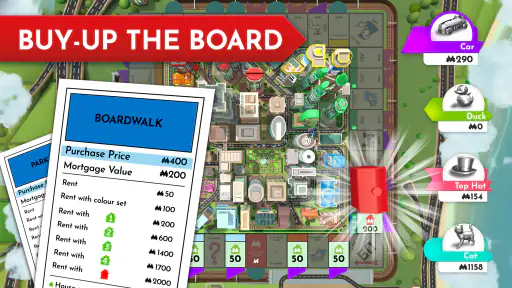
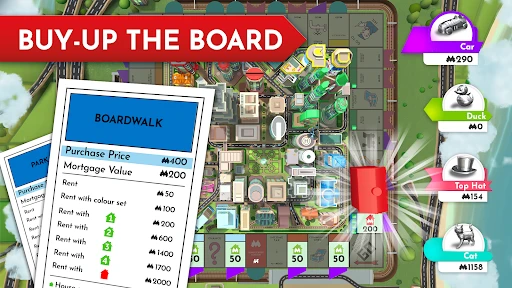
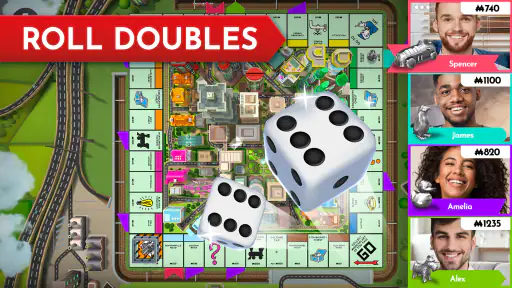
First things first, let me tell you about the interface. The digital version retains the charm of its physical counterpart with a well-designed board and vibrant graphics. The animations are smooth, making it feel like you’re playing on a high-end console. You’ll find all the classic tokens and properties, from the little iron to Park Place, each brought to life with colorful detail.
Gameplay Experience
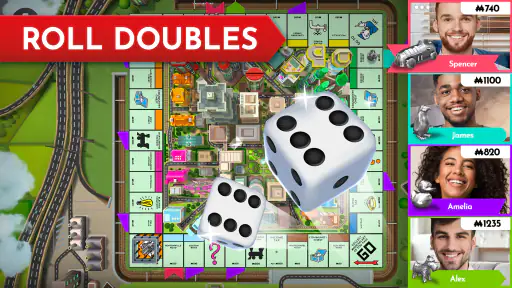
The game offers several modes, including online multiplayer, local multiplayer, and solo play against AI. Personally, I found the online multiplayer mode the most engaging. There’s something thrilling about competing against players from all over the world, each with their own strategies and tricks up their sleeves. The AI, on the other hand, provides a decent challenge if you’re looking to practice your property trading skills.
One thing I absolutely loved is the speed of the game. Unlike the board game, where negotiations and dice rolls can drag on, the digital version moves at a brisk pace, thanks to automated processes and quick animations. This makes it perfect for a quick game during a lunch break or while commuting.
Monopoly Money and Microtransactions
Now, let’s talk about the elephant in the room: microtransactions. The app is a paid download, which is a bummer for some. However, once you’ve paid, there are no pesky ads to interrupt your gameplay. There are optional in-app purchases, but they’re mostly cosmetic, allowing you to customize your board and tokens. So, if you’re a stickler for aesthetics, you might find yourself tempted to splurge a little.
For those worrying about pay-to-win mechanics, fret not. The game stays true to its roots, and winning purely depends on your strategy and a bit of luck with the dice, much like the original board game.
More From Our News Desk

Clash of Clans Is Won Between the Battles

Android Auto Makes the Case for Quieter Car Software

MobiOffice: Transforming Mobile Productivity with Seamless Integration

EA SPORTS FC™ Mobile Soccer: Redefining Mobile Sports Gaming

How Microsoft OneDrive Became a Mobile Productivity Giant

How Google Translate Breaks Language Barriers Effortlessly
Is It Worth the Investment?
So, is the app worth downloading? If you’re a fan of the classic board game, I’d say absolutely. It’s a great way to experience the property-trading game without the hassle of setting up the board and counting cash. Plus, the portability of having it on your phone means you can indulge in a game anytime, anywhere.
In conclusion, the mobile version does a fantastic job of bringing the nostalgic thrill of property trading to your fingertips. Whether you’re a seasoned tycoon or a newcomer to the game, this app offers hours of entertainment. Just remember, in this world of property deals, every roll of the dice could be your ticket to riches—or ruin!
Who Will Get the Most from the Digital Board?
I’d recommend this board game adaptation to people who already enjoy bargaining over properties and don’t mind a match taking more than a few spare minutes. It is especially handy when friends or family are in different places: online play can bring everyone to the same table without coordinating a physical board. For a relaxed evening together, local multiplayer is the more natural fit, while playing against the AI makes sense when you want to learn the flow without asking another person to wait through your decisions.
There is a useful trade-off here. Automation removes the chores of sorting money, checking rent, and moving pieces, but it also makes the experience less social than sitting around a real board. On a phone, negotiations happen through the game’s available controls rather than the spontaneous conversation that often makes a family session memorable. If that table talk is the main reason you play, the physical edition is still the better choice.
Small Choices That Can Improve a Session
For a short break, agree on a stopping point before starting rather than assuming every match will fit neatly into the time available. The quicker handling of turns helps, but property trading and late-game decisions can still stretch a session. When playing with friends remotely, settling on a shared pace at the outset can also reduce the frustration of waiting for someone who has stepped away from their device.
Solo play is best treated as a low-pressure way to try different approaches, not as a guarantee that every match will teach the same lesson. I like using it to think through whether to hold cash, make a trade, or take a risk on a property set. Against people, those choices become harder to predict, which is precisely why multiplayer has more replay value for me.
What the Purchase Means
The game is made by Marmalade Game Studio and is listed at $3.49, with optional purchases priced from $0.99 to $59.99 per item. I’d treat the initial purchase as the real decision and regard extras as discretionary; there is no need to buy cosmetic items to enjoy the core property-trading appeal. The game is rated Everyone, so it can suit mixed-age households, although younger players may still appreciate an adult explaining trades and rent before their first match.
Its average rating is 4.2 from around 133,000 ratings, and it has over a million installs. Those figures suggest a well-established audience, but they don’t tell you whether its pace or online style suits your group. If you mainly want a quick, simple board game to play face to face, a lightweight free alternative may be a better fit. If you want this familiar property game without setting up pieces or handling cash, the paid app has a clear practical advantage.
Current Version and What to Watch
The game was released on December 4, 2019, and its current version is 1.14.0; it runs on Android 6.0 or later. Those details give existing players a concrete sense of its current state, but a version number alone does not explain what changed between releases. I would check the store’s update notes before reinstalling or expecting a particular new feature, and keep the app current if you play online so you are using the latest available build.
For someone returning after a break, the practical question is less whether the digital board still resembles the familiar game and more whether its available multiplayer options suit their friends now. Before buying, I’d also make sure the device meets the minimum Android requirement and consider whether the group can commit to a full match. If those points line up, this remains a convenient way to bring property trading to a phone; if not, a physical board or a shorter casual game may suit the occasion better.
A Match That Fits Real Life
Think of a family group trying to play after dinner when one person is visiting relatives elsewhere and nobody wants to unpack a board that will occupy the table all evening. Online play solves the physical-distance problem, while automated turns take routine bookkeeping off everyone’s hands. I would still set expectations before launching: this is a game to settle into, not an ideal choice for a few minutes between errands. The app makes the handling faster, but it cannot make the central property-dealing match reliably brief.
For a group meeting in person, local play has a different advantage: everyone can share one session without bringing a box of pieces and paper money. Yet the phone becomes the center of attention, and the interface can’t reproduce the side conversations around a real board. I’d choose the digital version for convenience and choose the physical one when the social ritual is the point.
How It Sits Among Board-Game Options
Compared with a simple casual board game, this adaptation asks for more patience and planning. Its appeal comes from building property sets, weighing trades, and deciding when to preserve cash, so it suits players who enjoy a match with an unfolding arc. A lightweight alternative is a better pick for a quick round or for a group that loses interest when turns become less predictable.
Compared with the physical edition, the app’s strongest practical edge is that it handles the bookkeeping and makes remote play possible. Its biggest sacrifice is human negotiation: an in-person player can persuade, joke, or change the mood of a deal in ways a screen-based exchange cannot. I would not treat those formats as interchangeable. They deliver the same broad property-trading idea, but they serve different occasions.
Making Solo Play More Useful
When I play alone, I try to give each match a small purpose instead of simply chasing a win. For example, I can focus on noticing how much cash I need to keep available before committing to a purchase, or consider whether a trade improves a complete set rather than just adding another property. This makes AI games a practical place to get comfortable with the decisions, while still recognizing that human opponents bring less predictable bargaining.
There is also a useful distinction between learning the rules and learning people. Playing against AI can help a newcomer follow the flow of turns and property management without holding up friends. It cannot fully prepare you for a relative who refuses a seemingly sensible offer or a remote player who takes time to decide. If your goal is a family match, a short explanation before the first round may be more helpful than expecting solo practice to cover every social wrinkle.
Who May Prefer Another Choice?
I’d skip this purchase if your main requirement is a free, very short game or if your group regularly abandons long board games before they reach their later stages. Paying for a familiar game makes sense when you expect to return to it, but it is harder to justify for someone who only wants occasional, low-commitment entertainment. The optional purchases are another reason to decide in advance whether cosmetic customization matters to you; I would not treat add-ons as necessary to the core experience.
It is also not my first recommendation for people who value negotiation as live conversation. The digital controls streamline transactions, but a smooth interface is not a substitute for looking across the table and working out a deal together. If that interaction is what makes your group laugh, keep the physical board in mind. If practical access, remote company, and automatic bookkeeping matter more, the phone version has a clearer case.
A Practical Buying Decision
Before purchasing, I’d ask two simple questions: will I have people to play with, and do we enjoy a game that can run longer than a quick break? The range of modes gives it more than one use, but the best value comes when at least one mode fits a regular habit. A solo player can still use the AI, while a household can use local play; people hoping specifically for remote matches should make sure their friends are interested too.
For Android users, the minimum requirement is Android 6.0, so checking compatibility before buying is sensible. The game’s Everyone age rating makes it broadly suitable for family settings, but the strategic choices may still call for a bit of guidance for younger players. I would explain what rent and a property set mean, then let the automated handling take care of the repetitive details. That gives a first-time player a more welcoming start without pretending the game has no decisions to learn.
What the Version Number Can and Cannot Tell You
Version 1.14.0 is a useful marker for the build currently available, especially for returning players comparing what is installed on a device with what they see in the store. It is not, by itself, a description of the changes that led to that build. I would read the release notes when available rather than assume a version number guarantees a particular improvement, mode, or fix. That is a sensible habit for any game where friends need to be on compatible current builds to meet online.
The same caution applies to expectations about the future. A release date and a current version show that the game has an established history and an identifiable present, but they do not promise what the developer will add next. If a specific feature is essential to your decision, verify it in the current app details before paying. Otherwise, judge the game on the familiar essentials it already offers: a digital board, property decisions, and ways to play alone or with others.
My Take on Its Best Use
I see this as a useful, focused purchase for people who already like the property-trading formula and want an easier way to organize a match. It removes setup and accounting friction, and its different play modes make it more adaptable than a board that must be physically shared. The trade-off is that convenience comes with less face-to-face energy, while the length and stop-start pace of a group’s decisions remain part of the experience.
If I were recommending it to a friend, I’d suggest buying it for a household or friend group that can name a realistic time and occasion to play—not just because the familiar board brings back memories. At $3.49, the entry cost is clear, but the real value depends on whether you will use solo, local, or online play. For the right group, it turns a box of pieces and piles of cash into a ready-to-hand digital session. For someone who wants quick rounds or lively table talk above all, a simpler game or the physical board may be the more satisfying choice.
MONOPOLY Frequently Asked Questions
What is MONOPOLY’s average rating, and how many players have reviewed it?
MONOPOLY has an average rating of 4.2, based on around 133,000 ratings, and players have written around 19,000 reviews. Those figures offer a sense of how the mobile board game has been received, though individual experiences can differ. If you enjoy the familiar property-trading format, you can use the reviews as one consideration alongside the game’s price and features.
How much space or what device requirements should I consider before downloading MONOPOLY?
Before downloading, check that your device supports the game and has enough available storage for an installation. On Android, MONOPOLY requires version 6.0 or later. The game is available on Android and iOS, so make sure you are viewing the correct version for your device. A compatible operating system is an important first step before purchasing and installing a mobile game.
What kind of game is MONOPOLY, and who developed it?
MONOPOLY is a digital board game from Marmalade Game Studio, presented as the official Hasbro family board game. It brings the familiar property-trading format to mobile, so it may appeal to players who enjoy taking turns, making deals, and competing to build a winning position. The game is rated for Everyone.
What platforms is MONOPOLY available on?
MONOPOLY is available for download on both Android and iOS platforms. The game is designed to provide a seamless experience across mobile devices, allowing users to enjoy the classic board game wherever they go. It's important to ensure your device meets the minimum system requirements for optimal performance. On Android, it requires version 6.0 or later.
Is MONOPOLY a multiplayer game?
Yes, MONOPOLY offers both single-player and multiplayer modes. You can play against AI opponents or invite your friends and family to join a game online. The multiplayer feature enhances the traditional MONOPOLY experience by allowing you to connect and compete with others, no matter where they are.
Pros
- Great graphics and animations.
- Multiplayer mode available.
- Classic and customizable rules.
- Regular updates with new content.
- Easy to learn for beginners.
Cons
- In-app purchases can be pricey.
- Requires internet for multiplayer.
- Occasional lag in online mode.
- Limited free content.
- Battery drain on older devices.

- Category
- Board
- Version
- 1.14.0