Kingdom Guard:Tower Defense TD
- 7.55K
- 4.2
- Installs
- 10.00M
- Price
- Free

Screenshots



Analysis by Reviewed
I judge a strategy game less by how dramatic its battles look than by whether its decisions stay interesting once the first novelty wears off. Kingdom Guard: Tower Defense TD drew me in with a familiar fantasy setting, then held my attention through the combination of battles and longer-term kingdom development. It is free to download, made by Tap4fun (Hong Kong) Limited, and rated Everyone 10+. I’d recommend giving it a try if you enjoy making a little progress in several short visits rather than settling in for one long session.
What the price tells you—and what it doesn’t
You can start playing without paying, but there are optional in-app purchases ranging from $0.99 to $99.99 per item. That spread matters when deciding how comfortable you are with the game’s spending options; it does not, by itself, show how much progress depends on purchases or whether paying affects competitive balance. I would begin as a non-paying player and see whether the ordinary pace feels satisfying before considering any purchase.
That approach also makes it easier to tell whether you are buying convenience or trying to solve a problem the game has not yet asked you to solve. If an upgrade looks tempting, I’d first identify what is actually stopping my progress and decide whether that purchase addresses it. If you prefer games with no paid options at all, this is not the cleanest fit. The important distinction is that a listed price range confirms spending is possible, not that it is required or that a particular purchase is worthwhile.
Who will enjoy the ongoing loop
The game is best suited to players who like a continuing project: units to combine, heroes to recruit, a kingdom to protect, and challenges that invite incremental improvement. It can work well as a routine game you check between other activities, especially if you enjoy returning to a familiar goal and making one useful adjustment. Someone seeking a complete tactical puzzle that starts and ends within a single match may find the broader progression distracting.
For example, if I had a few minutes while waiting for an appointment, I’d use that time to inspect the current obstacle, make one considered change, and try again rather than spend the break upgrading everything I can. That creates a simple decision loop without demanding a full evening. The trade-off is that a short visit may feel less satisfying if you expect a self-contained battle with a clear ending every time you open the game.
How its battles and progression feel
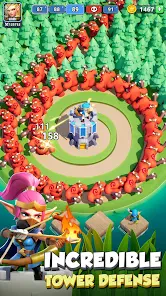
When I first launched the game, I was immediately impressed by how intuitive the controls were. The primary objective is to protect your kingdom from waves of enemies, and boy, does it keep you on your toes! You get to strategically place towers along the enemy’s path, and each tower has its unique abilities and upgrades. It’s like a chess game but with dragons and magic!
Making progress without rushing
The game’s central hook is reflected in its focus on combining soldiers and recruiting heroes, alongside protecting dragon eggs and defending the kingdom. That gives progression a different flavor from a traditional tower-defense game built mainly around choosing a maze layout and adjusting towers during a single battle. Here, I’d treat each play session as a chance to make deliberate progress, not as a race to clear everything at once.
More From Our News Desk

Weather by Xiaomi Review: Clear at a Glance, Less Clear Up Close

X Under Pressure: Can It Recover When Posting Goes Wrong?

Clash of Clans Is Won Between the Battles

Android Auto Makes the Case for Quieter Car Software

MobiOffice: Transforming Mobile Productivity with Seamless Integration

EA SPORTS FC™ Mobile Soccer: Redefining Mobile Sports Gaming
A useful habit is to pause before spending scarce upgrade materials: ask whether a stronger unit or a more useful hero would solve the obstacle you are actually facing. That small check can prevent a string of upgrades that look satisfying but do little for your next difficult encounter. If you prefer games where every round resets cleanly and your decisions stay inside that round, this longer progression focus may feel like extra management rather than a bonus.
What a normal play break looks like
For me, the most realistic fit is a short break between other tasks: open the game, check what is holding back progress, make one purposeful improvement, then try the next challenge. It suits someone who likes seeing a kingdom develop over time without needing to plan an entire evening around it. I would be more cautious about recommending it to a player who wants a purely offline-feeling puzzle or a self-contained match with no ongoing progression to keep track of.
There is a small but useful difference between opening the game with a goal and simply tapping through every available option. When I have limited time, I’d pick one bottleneck—such as a battle that keeps going badly—and focus my effort there. This helps keep the progression legible: I can tell whether the change helped instead of scattering resources across several improvements and being unsure what made a difference.
Graphics and Sound Design
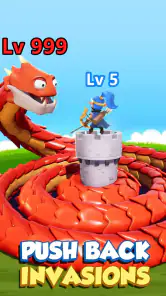
The visuals in Kingdom Guard: Tower Defense TD are nothing short of stunning. The vibrant colors and detailed animations bring each battle to life. I found myself marveling at the intricate designs of the towers and enemies. Plus, the sound effects and background music perfectly complement the gameplay, making the experience even more immersive. It’s like being right in the middle of an epic fantasy battle.
Strategic Depth
One aspect that really stood out to me was the depth of strategy involved. As you progress, the enemies get tougher, and you need to think several steps ahead. It’s not just about placing towers randomly; you need to consider the type of enemies, their paths, and how best to utilize your resources. The game really challenges you to come up with creative solutions to defend your kingdom.
One practical trade-off is that strategic depth and pace are not always the same thing. If progress slows, it can be tempting to make every available upgrade immediately; I’d instead focus on the weakest part of the current plan and test whether that change helps. This is a better fit for players who enjoy gradual tuning than for anyone looking for constant new tactical decisions in every minute of play.
Compared with a classic tower-defense game, where the puzzle is often about arranging defenses for a particular wave and then seeing how that setup performs, Kingdom Guard asks me to think about both the immediate encounter and the unit development surrounding it. That added layer can make a setback feel like a reason to refine my approach rather than simply retry a level. It also means there is more to keep track of, so players who value a clean reset after each match may prefer a more focused defense game.
Community and Updates
Another thing I love is the active community and regular updates. The developers seem genuinely invested in the game, frequently releasing new content and improvements based on player feedback. It’s always exciting to see what new challenges and features are introduced, keeping the game fresh and engaging.
For a new player, I would avoid treating other players’ progress as a timetable. The appeal here is in finding a pace that makes the combination of battles and kingdom development enjoyable, not in trying to match someone else’s upgrades. If you like discussing strategies with other fans, a large audience can make the game feel less solitary; if you would rather play entirely on your own terms, the core question is still whether its ongoing goals suit you.
Spending and fairness
The game is free to download, with optional in-app purchases priced from $0.99 to $99.99 per item. That range is worth keeping in mind if you are deciding whether to spend, but it does not by itself tell me how much progress depends on purchases or how competitive play is balanced. I would start without paying, see whether the normal pace feels enjoyable, and only consider a purchase if it offers something I personally value. If you prefer games with no in-app spending at all, this is not the cleanest match.
It is reasonable to ask whether paying is necessary to enjoy the game, but the purchase range alone cannot answer that. I would pay attention to my own experience: am I still making progress at a pace I like, and do I understand what an item would change before buying it? That is a more reliable way to judge value than assuming that a higher-priced option is either essential or automatically unfair.
Players often want to know whether they can enjoy it without paying, whether it is a quick game, and whether it feels like a classic tower-defense title. I’d say the free entry makes trying it straightforward, while the purchase options mean spending is available but not something I’d assume is necessary. Its strategic battles connect to broader kingdom progression, so it is less self-contained than a simple level-based defense game. The right choice depends on whether that continuing development sounds motivating or like a chore.
What to check before settling in
It is also worth checking the device requirement before installing: the listed Android minimum is version 6.0, and the current release is 1.0.486. The game has been available since March 25, 2020, so this is an established title rather than a new launch. Its 10M+ installs, around 338,000 ratings, and 7.6K reviews show that many people have tried it, but popularity cannot tell you whether its particular mix of defense and progression is right for you.
The audience rating is Everyone 10+, which gives families a useful starting point when deciding whether the game is appropriate. I would still make that decision in the context of the player and the optional purchase controls: the age label and the presence of in-app purchases answer different questions. For an adult choosing a game for themselves, the more important practical test is whether they enjoy its gradual, persistent style of progress.
Who I’d recommend it to
With over 10 million installs and 7,600 reviews, Kingdom Guard: Tower Defense TD has clearly attracted plenty of players. It was released on March 25, 2020, and its current version is 1.0.486, for devices running Android 6.0 or later. I’d suggest it to fantasy strategy fans who enjoy combining units, building up a kingdom, and returning for incremental progress. If you want a compact, one-and-done tower-defense puzzle, or dislike games with optional purchases and ongoing progression, I’d choose a more self-contained alternative instead.
My clearest recommendation is for someone who likes to make small, purposeful decisions over time: choose a unit or hero to develop, test that choice against a challenge, and adjust if it does not help. I would skip it if the appeal of tower defense for you is strictly the tactical layout puzzle, or if you dislike keeping track of a longer progression system. In those cases, a level-based game that concentrates on one battle at a time is likely to feel more direct.
In conclusion, if you're a fan of strategy games, Kingdom Guard: Tower Defense TD is definitely worth checking out. It combines beautiful graphics, engaging gameplay, and a vibrant community to create an experience that's both challenging and rewarding. Whether you’re a seasoned strategist or new to tower defense games, there’s something here for everyone. So, gear up, strategize, and defend your kingdom!
Kingdom Guard:Tower Defense TD Frequently Asked Questions
Who develops Kingdom Guard: Tower Defense TD?
Kingdom Guard: Tower Defense TD is developed by Tap4fun (Hong Kong) Limited. If you like to know who is behind a game before installing it, this gives you a clear publisher and developer name to look for. The game is a strategy title centered on protecting a kingdom, and its store summary highlights merging soldiers, recruiting heroes, and defending dragon eggs.
What devices can run Kingdom Guard: Tower Defense TD?
The listed minimum operating-system requirement is Android 6.0, so check your device’s software version before downloading. Meeting that requirement is a useful first step when deciding whether the game is compatible with your phone or tablet. If your device runs an older version, update it if possible before trying to install the game.
What is Kingdom Guard: Tower Defense TD about?
The game’s short store description is “Kingdom Guard,” while its summary invites players to merge soldiers, recruit heroes, protect dragon eggs, and defend their kingdom. Those ideas frame it as a strategy game built around developing forces and taking on defensive challenges. It may suit players who enjoy combining unit progression with the goal of guarding a fantasy kingdom.
What kind of game is Kingdom Guard: Tower Defense TD?
Kingdom Guard: Tower Defense TD is a strategy game built around defending your kingdom and developing forces for battle. Its store summary highlights merging soldiers, recruiting heroes, protecting dragon eggs, and defending the kingdom. The mix of combat planning and progression gives players several connected goals, so it may appeal to those who enjoy strategy games with heroes and defensive challenges.
Is Kingdom Guard: Tower Defense TD suitable for younger players?
The game carries an Everyone 10+ content rating, which can help families decide whether it is appropriate for a younger player. It is a strategy game focused on defending a kingdom, recruiting heroes, and protecting dragon eggs. Parents should also bear in mind that the game includes optional in-app purchases, and can review the device’s purchase controls before allowing a child to play.
Pros
- Engaging and strategic gameplay.
- Vibrant and detailed graphics.
- Smooth and intuitive controls.
- Variety of heroes and towers.
- Regular updates and events.
Cons
- Requires constant internet connection.
- Can be pay-to-win oriented.
- Occasional bugs and crashes.
- Limited offline content.
- High battery consumption.
- Category
- Strategy
- Version
- 1.0.486