Hey Duggee: We Love Animals
- 2.00
- 4.1
- Installs
- 10.00K
- Price
- $2.99
Screenshots
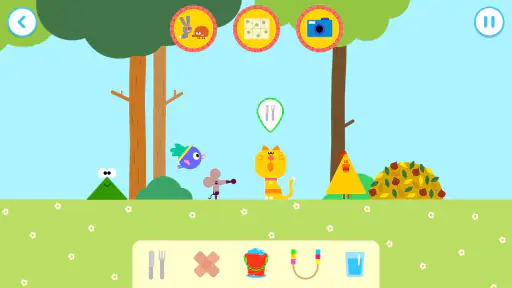
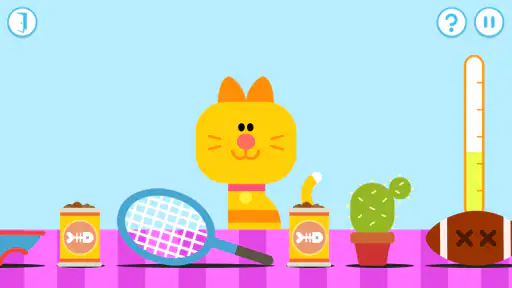
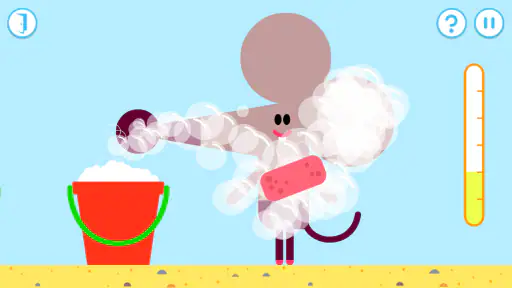
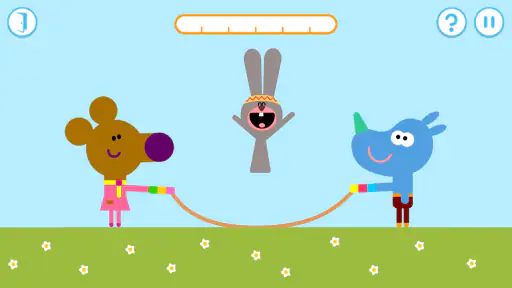
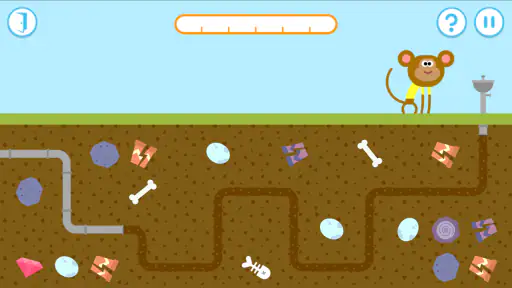
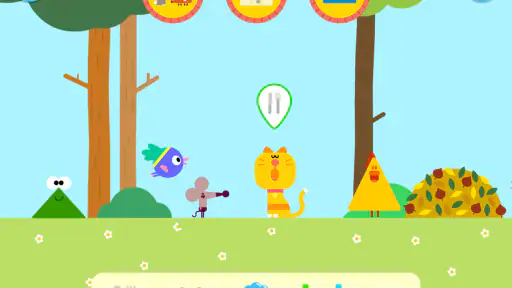
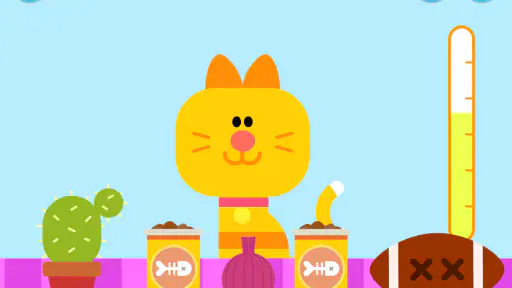
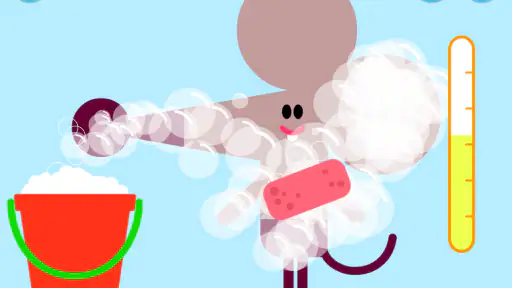
Analysis by Reviewed
Animal-themed games for young children often promise a lot, then turn out to be little more than a few taps and cheerful sounds. Hey Duggee: We Love Animals takes a more focused approach. It is an educational game built around the familiar Hey Duggee world, with the Squirrels learning how to care for animals and inviting the child to take part. After spending time with it, I found the appeal is less about challenge or progression and more about creating a gentle, guided play session that can also start a conversation about responsibility.
The game is made by BBC Studios Distribution Ltd. and is aimed at children in the Everyone age group. It is a paid title rather than a free download, priced at $2.99, which immediately sets a different expectation from ad-supported children’s games. I think that price makes the most sense for families who already enjoy Hey Duggee or who want a calm, recognizable activity for a younger child, rather than for someone searching for a long, complex game with deep replay value.
What the current version feels like to use
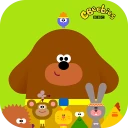
The current version is 1.5.2, and the overall experience feels designed for independence at a very early age. The presentation is colorful without being visually overwhelming, and the Hey Duggee setting gives the activities a friendly sense of purpose. Instead of asking a child to master complicated controls, it encourages them to notice animals, respond to simple situations, and understand that looking after another living thing involves care and attention.
That simplicity is one of its strongest qualities. A child who is still becoming comfortable with touch controls can approach the game without needing to understand menus, virtual joysticks, or complicated rules. I could imagine handing it to a child for a short session and letting them explore without constant adult intervention. The familiar characters also help: children who know the show are likely to understand the tone quickly, while newcomers can still follow the basic idea because the activities are presented in an accessible way.
It is worth being clear about the type of entertainment this is. This is not an action game, a collection of competitive puzzles, or a large virtual world. It belongs firmly in the educational game space, with learning woven into simple interactions rather than delivered as a lesson. The animal-care theme gives the play a useful direction, but the game works best when an adult treats it as a starting point for discussion rather than as a complete lesson about animal welfare.
For an everyday example, I would use it during a quiet period after school or before a child’s bedtime routine. A short session could lead naturally to questions such as why animals need food, how different animals behave, or why gentle handling matters. That makes it more valuable than a game that only keeps a child busy for a few minutes. The screen activity becomes a prompt for real-world learning, especially if the adult asks the child to explain what they are doing instead of simply watching.
A friendly design for early learners
The strongest design choice is the way the game keeps its theme consistent. The Squirrels are learning alongside the player, so the child is not placed in the role of an expert who must already know the correct answer. That framing lowers pressure. A young player can experiment, make a mistake, and try again without feeling that the game is testing them in a formal way.
More From Our News Desk

Weather by Xiaomi Review: Clear at a Glance, Less Clear Up Close

X Under Pressure: Can It Recover When Posting Goes Wrong?

Clash of Clans Is Won Between the Battles

Android Auto Makes the Case for Quieter Car Software

MobiOffice: Transforming Mobile Productivity with Seamless Integration

EA SPORTS FC™ Mobile Soccer: Redefining Mobile Sports Gaming
I also like that the animal-care subject gives the interactions a little more meaning than matching colors or collecting points. Even when the action is simple, it can reinforce a basic idea: animals depend on people to notice their needs. That is a modest educational goal, but it is appropriate for the intended audience. Parents looking for an introduction to empathy and observation may get more from this theme than from a generic preschool arcade game.
One practical tip is to play alongside the child for the first session, even if the controls look obvious. Not because the game is difficult, but because the best value comes from talking through the choices. Ask what the animal might need, what the child noticed first, and whether every animal should be treated in the same way. This turns passive tapping into a small shared activity and helps reveal whether the child understands the ideas behind the actions.
Where the educational value is most useful
The game is particularly suitable for children who respond well to characters and imitation. A child may not be interested in a direct lesson about responsibility, but may happily copy what the Squirrels are doing. That is a useful distinction. The learning is not presented as a workbook exercise, so it can feel like play even when it encourages careful observation and kindness.
It can also work as a bridge between fictional play and real experiences. After playing, a parent could invite the child to help fill a pet’s water bowl, observe birds from a window, or talk about why wild animals should not be approached. The game itself does not need to provide every detail for this connection to be useful. Its role is to make the subject approachable and give the child vocabulary for a conversation.
There is a trade-off here. Children who want fast rewards, dramatic movement, or a clear score may find it too quiet. The same gentle pace that makes it comfortable for younger players can make it feel limited to older children. I would not choose it for a child who has already moved on to more demanding educational titles with reading, problem-solving, or structured progression.
How it compares with familiar alternatives
Compared with free children’s games, a paid experience like this has one obvious advantage: the design is easier to approach as a contained activity rather than as an endless stream of distractions. I found that appealing for shared family use. A parent can choose it because of the animal-care theme and the Hey Duggee connection, not because the child has been pushed toward it by advertising or competitive rewards.
Compared with educational apps built around letters, numbers, spelling, or basic school skills, this game is less academic. It is better suited to social and emotional learning, imaginative play, and early conversations about living things. If your main goal is practicing phonics or counting, another educational app will probably be a better fit. If your goal is to encourage empathy through a familiar children’s program, this is more relevant.
It also differs from open-ended digital pet games. Those usually focus on maintaining one virtual companion over a longer period, while this title centers on the Squirrels’ learning experience and the broader idea of caring for animals. That makes it easier to use in short sessions, but it may offer less reason to return repeatedly once a child has seen everything that interests them.
The Hey Duggee connection is important, but it should not be the only reason to buy it. Familiar characters can make a child more willing to try the game, yet the real question is whether the animal-care theme matches the child’s interests. A fan of the show who prefers energetic badge-collecting adventures may still find this particular activity calmer than expected.
What changed over time and what that means today
The game was released on November 24, 2016, and the current version, 1.5.2, shows that it has continued to exist as a maintained product rather than remaining only at its original launch point. That version history is useful context, but I would not treat it as proof of a major redesign. The important thing for a new user is the experience available now: a compact, character-led educational game whose central idea remains animal care.
For existing users, a later version can be reassuring because it gives them a current build to use instead of assuming that an older installation is the whole story. At the same time, families should keep their expectations realistic. A version number by itself does not turn a focused preschool activity into a large, constantly expanding platform. The game’s identity is still its simplicity, and that is both its appeal and its boundary.
The public response is reasonably positive, with an average rating of 4.1 from 57 ratings and 2 reviews. I read that as a sign that the concept works for a portion of its audience, while also remembering that a small review pool cannot describe every child’s experience. The title has reached over 10 thousand installs, which suggests genuine interest without placing it among the biggest children’s games. For me, those figures support cautious confidence rather than automatic recommendation.
That distinction matters when deciding whether to pay for it. The cost is low in absolute terms, but children’s interests can be unpredictable. If your child loves Duggee, animals, and calm touch-based play, the purchase is easier to justify. If you are hoping for a title that will remain engaging for years or serve several age groups, the value is less convincing. I would see it as a small, targeted purchase rather than a primary educational resource.
Limitations parents should consider
The main limitation is depth. The animal-care premise is appealing, but a young child may eventually feel that the available activities are familiar. There is no reason to expect the same kind of long-term variety found in a broad educational suite. That is not necessarily a flaw for short play sessions, yet it affects the price calculation for families who want frequent daily use.
Another limitation is that the game’s learning depends heavily on context. A child can interact with the content without fully understanding the underlying message, especially if they are left alone and simply repeat the most obvious actions. This is why I recommend occasional adult participation. A few questions can turn the experience into meaningful learning, while unattended play may remain mostly decorative and entertaining.
The gentle presentation may also be too restrained for children who need stronger feedback. Some players are motivated by levels, unlocks, timed tasks, or visible goals. A calm animal-care game will not satisfy that preference in the same way. I would skip it for a child who consistently abandons slow activities in favor of fast-moving games, even if that child recognizes the characters.
Parents should also think about device fit and household habits before buying. The minimum operating system is Android 5.1, so the title is positioned for older compatible devices as well as newer ones, but the practical experience still depends on how comfortable the child is with the particular screen. A smaller display may make touch interactions less inviting, while a shared family tablet may make supervised play easier.
Who should play it, and who should look elsewhere
I would recommend it to preschool-age children who enjoy Hey Duggee, animal stories, and simple guided activities. It is a good candidate for a parent-child session, a quiet independent play window, or a gentle introduction to the idea that animals have needs that deserve attention. It is also suitable for families who prefer buying a focused children’s game instead of relying on free apps with a more distracting atmosphere.
I would be more hesitant for older children, advanced readers, or anyone looking for measurable academic progress. The game can support conversation and early understanding, but it should not replace books, real-world observation, or a structured learning app when those are the actual goals. Likewise, children who need substantial replay variety may outgrow it quickly.
One useful way to judge the purchase is to ask whether you can name a real-life activity that would follow a play session. If you can imagine looking after a pet, visiting a farm, watching wildlife responsibly, or discussing how animals communicate, the game has a clear place in your routine. If you only want a title to occupy a child without interaction or follow-up, a longer-form game may provide better value.
What I would watch in future use
For current users, I would watch whether the child returns because of the animal-care ideas or only because of the familiar characters. That difference tells you how long the game is likely to remain useful. If the child begins asking questions and connecting the play to real animals, it is doing something worthwhile. If interest fades after the novelty of the characters disappears, that is a sign to treat it as a short activity rather than a lasting favorite.
I would also pay attention to how well the game fits into a family’s screen routine. Its short, calm nature makes it easier to place between other activities than a highly competitive game, but it still benefits from a clear stopping point. Ending with a question or a small offline task can make the transition away from the device smoother and reinforce the educational theme.
My final view is positive but specific. This is best understood as a gentle animal-care experience, not a complete preschool curriculum or an endlessly replayable game. The BBC Studios Distribution Ltd. branding, recognizable world, Everyone age rating, and focused subject make it approachable, while the paid model keeps the proposition straightforward. I would recommend it to the right child, especially one who already enjoys the characters and responds to caring, imaginative play.
For me, the purchase makes sense when the goal is quality over quantity: one small game that can support a calm session and a useful conversation. I would not choose it as the only educational app in a child’s collection, and I would skip it for children who want challenge, speed, or advanced learning tasks. But within its narrow purpose, it has a thoughtful idea and a welcoming tone. The strongest results come when I use it as a doorway into real-world curiosity about animals, rather than expecting the screen to do all the teaching.
Overall, Hey Duggee: We Love Animals earns its place as a friendly, focused choice for younger players. Its current version preserves the simple appeal that makes the concept accessible, while its limitations are easy to understand before buying. If that balance matches your child’s age, interests, and play style, the modest price is reasonable; if not, a broader educational alternative will likely serve your family better.
Hey Duggee: We Love Animals Frequently Asked Questions
How much does Hey Duggee: We Love Animals cost, and what should I expect before downloading?
Hey Duggee: We Love Animals is a paid educational game priced at $2.99. It is aimed at young fans of the show, with animal-themed activities and familiar characters rather than a large, competitive game experience. Check that your device meets the minimum operating-system requirement before downloading, and consider whether the gentle, preschool-focused play style suits your child.
Will Hey Duggee: We Love Animals work on my Android device?
The game requires Android 5.1 or later, so it is worth checking your device’s operating-system version before you download it. Hey Duggee: We Love Animals is an educational game from BBC Studios Distribution Ltd. Its straightforward interactions are designed for young children, though an adult may need to help with setup or navigating menus, especially when a child is new to using a device.
What is Hey Duggee: We Love Animals?
Hey Duggee: We Love Animals is an interactive children’s game inspired by the popular Hey Duggee animated series. It introduces young players to different animals through simple activities, playful animations, and familiar characters. The experience is designed for preschool-aged children, with an emphasis on exploration, recognition, and gentle learning rather than difficult challenges or competitive gameplay.
Is Hey Duggee: We Love Animals suitable for young children?
Yes. The game is aimed primarily at preschool children and uses colorful visuals, friendly characters, and straightforward interactions that are easy to understand. Most activities can be enjoyed with limited reading ability, although younger children may still benefit from help navigating menus or understanding instructions. It is rated Everyone, making it a family-friendly option for introducing little ones to animal-themed play.
Does the game require an internet connection?
The main game content is generally intended to be available after installation, allowing children to play without continuously connecting to the internet. However, an internet connection may be needed for the initial download or updates. It is worth opening the game once while online before using it offline, particularly if you plan to let your child play somewhere without a reliable connection.
Pros
- Simple tap-based controls are suitable for preschool children.
- Animal facts are presented through colorful
- friendly visuals.
- Short activities make it easy to play in brief sessions.
- Familiar Hey Duggee characters add comfort for young fans.
- Works well as a calm
- non-competitive learning game.
Cons
- Some children may finish the available activities quite quickly.
- Gameplay can feel repetitive after several sessions.
- Limited challenge may not appeal to older children.
- Requires device storage for the full app installation.
- Parental guidance is still useful during animal-themed activities.
- Category
- Educational
- Version
- 1.5.2