Hangman - Classical Word Game
- 20.00
- 4.7
- Installs
- 100.00K
- Price
- Free
Screenshots
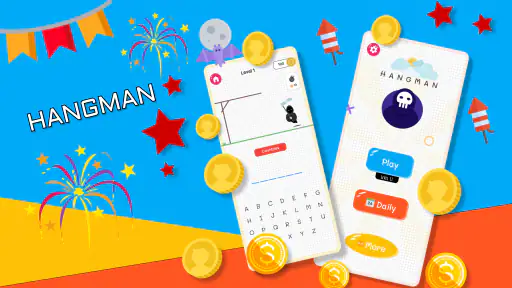
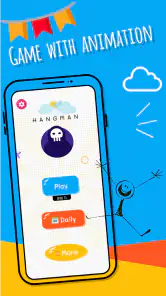
Analysis by Reviewed
I approached Hangman - Classical Word Game expecting a very familiar word puzzle, and that is exactly what I found: a straightforward guessing game built around identifying a hidden word before the gallows drawing is completed. That simplicity is its main appeal. There is no complicated setup to learn, no long tutorial to work through, and no need to reserve a large block of time. I can open it, make a few guesses, and put it down without losing track of a campaign or a developing story.
That makes it a useful choice for short breaks, casual vocabulary practice, or a quiet round with someone who enjoys classic paper-and-pencil games. At the same time, its traditional design means it will not satisfy everyone. Players looking for elaborate presentation, deep progression, competitive systems, or a large variety of puzzle formats should keep their expectations modest. This is a focused word game, and its success depends almost entirely on how comfortable you are with that focused loop.
A familiar idea that gets to the point
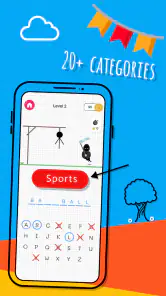
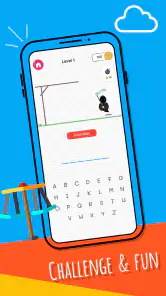
The basic rhythm is easy to understand. A word is hidden, I choose letters, and each incorrect guess moves the drawing closer to its completed form. Correct guesses reveal useful parts of the answer, while careless guesses reduce the room for error. The tension comes from deciding whether to try a common letter, make a more informed guess from the pattern, or take a risk on a less obvious possibility.
I like that the game does not need to over-explain this structure. Anyone who has played hangman on paper can begin immediately, while a newcomer can understand the objective after a single round. The interface and rules serve the central idea rather than competing with it. That restraint is especially welcome on a phone, where a word puzzle should feel readable and responsive instead of crowded with unnecessary distractions.
The game is free to play, and it is rated for Everyone, which suits its accessible concept. GeniusTools Labs is the developer behind it. The current version is 2.1.1, and it runs on Android devices using version 6.0 or later. Those details make it a practical option for people using older compatible phones, although the actual comfort of play will still depend on screen size and how clearly the letter controls are laid out on a particular device.
The visual language of a classic word puzzle
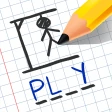
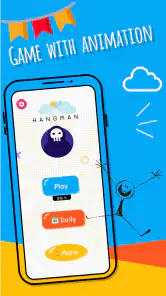
The gallows illustration is more than a rule reminder; it gives each mistake a visible consequence. Instead of watching an abstract counter decrease, I see the failed guesses take shape in front of me. That visual language keeps the game connected to its traditional identity and gives the otherwise quiet word-solving process a small dramatic arc.
There is a useful contrast between the hidden word and the gradually completed drawing. The word invites analysis, while the image communicates urgency. Even when I am not emotionally invested in a particular answer, the unfinished drawing gives me a reason to pause before choosing another letter. It turns a sequence of taps into a compact visual story: uncertainty at the start, growing evidence in the middle, and either relief or failure at the end.
The setting is intentionally limited. This is not a word game built around a fantasy map, a cast of characters, or a changing narrative environment. Its world is the familiar hangman setup, and the atmosphere comes from that recognizable scene rather than from extensive lore. For me, that works when I want a traditional puzzle without a lot of visual noise. It may feel bare to anyone who judges a mobile game mainly by its backgrounds, animation, or world-building.
That simplicity also affects how long the visual presentation stays interesting. The first few rounds benefit from the clean relationship between letters and drawing, but the artwork does not appear to be the reason to keep playing for extended sessions. The lasting appeal comes from the guessing itself. In other words, the presentation establishes the mood, but the vocabulary challenge has to carry the experience.
How the mood changes from calm to tense
Hangman naturally has a stop-and-start pace. I spend a moment inspecting the visible pattern, choose a letter, and then reassess the board. A correct guess creates a small burst of progress; a wrong one adds pressure without requiring a dramatic interruption. That measured rhythm is well suited to mobile play because each decision has a clear beginning and end.
The game feels calm when several letters are available and the word pattern points toward a likely answer. It becomes more tense when only a few spaces remain and the missing letters could belong to several possible words. The drawing provides the pacing cue, so the pressure grows through the accumulation of mistakes rather than through fast movement or a countdown.
I found that this makes it easy to fit a round into ordinary moments. For example, if I have a few minutes while waiting for an appointment, I can play without needing headphones, a large uninterrupted display, or a complicated save system. I can focus on one word, finish the attempt, and stop naturally. That makes it more convenient than many word games that encourage longer streaks or require a continuous run through multiple stages.
The trade-off is that the experience may feel too quiet for players who want constant feedback. If you prefer word games with energetic effects, rapid challenges, or a strong score-chasing pulse, this slower structure may seem uneventful. Its mood is closer to a small puzzle at a desk than to an arcade session. I consider that a strength for relaxed play, but it is not a universal advantage.
Why the mechanics and presentation fit together
The best part of the design is that the visual consequence of a wrong guess directly supports the gameplay. The gallows drawing is not an unrelated decoration placed around a word puzzle; it explains the stakes at a glance. Every incorrect letter changes both my strategic position and the visible state of the round. That connection makes the old-fashioned format feel coherent on a touchscreen.
The central skill is not simply knowing many words. It is managing uncertainty. I have to balance letter frequency against the clues already revealed, and I need to recognize when a likely word is still too risky to commit to. A useful habit is to examine the length and shape of the answer before guessing randomly. If the pattern suggests several common endings, I can use that information to test a letter that separates the possibilities instead of repeating safe but unhelpful guesses.
Another practical approach is to treat vowels as structural clues rather than automatic first choices. In some words, finding one vowel quickly makes the remaining pattern much easier to read. In others, spending an early turn on a vowel can leave me with little information if the word contains none of the obvious options. I enjoy this small trade-off because it gives each round a little more thought than simply tapping the most common letters in a fixed order.
Players who are using the game with children can turn the same mechanic into a learning exercise. Rather than focusing only on winning, I can ask the child to explain why a letter was chosen, identify the revealed pattern, or think of another word with a similar ending. Since the age rating is Everyone, the basic concept is suitable for a broad audience, although an adult may still want to guide younger players through unfamiliar vocabulary.
The game is also useful as a low-pressure warm-up before more demanding word activities. I can use a few rounds to get into the habit of scanning letter patterns, then move to a crossword, an anagram game, or a spelling exercise. It does not replace those formats because it tests a narrower skill: recovering a word from partial information while protecting a limited number of mistakes.
What the numbers suggest about its place on a phone
The game has reached over 100K installs and holds a 4.7 average from around 1.6K ratings. That combination suggests that its uncomplicated format has found an audience, especially among people who want the classic hangman idea in a mobile form rather than a large, feature-heavy word platform.
Its release date was November 13, 2022, so I see it as an established option rather than a brand-new experiment. The free entry point makes it easy to try without committing money first. There are in-app purchases ranging from $0.49 to $99.99 per item, which is worth remembering if I prefer games with no optional spending at all. Before playing for a long time, I would check how those purchases fit into the version available on my device and decide whether I want to keep spending controls in place.
The presence of optional purchases does not change the basic appeal of the free download, but it does affect who may want to be cautious. Families sharing a device should manage purchase access, and players who dislike any monetization around a simple puzzle may prefer a paid alternative with a clearly defined one-time cost. On the other hand, someone who only wants occasional rounds can try the game without paying and judge its feel firsthand.
Where it beats other word-game options
Compared with crosswords, this game asks for less setup and less broad knowledge at any one moment. I do not need to interpret a clue with several possible meanings or maintain a large grid of intersecting answers. Compared with anagrams, I am not rearranging a fixed collection of letters. The challenge here is narrower and more visual: uncover the answer while using the pattern and the remaining mistakes wisely.
That makes it a better fit than a crossword when I want a quick, self-contained puzzle. It can also be easier to share with a child or a casual player because the rules are immediately visible. Someone who finds anagram games frustrating may appreciate having blank spaces and revealed letters as guidance.
However, those same differences expose its limits. Crossword fans may miss layered clues and a sense of solving across a connected grid. Anagram players may prefer the freedom to build several possible words from the same letters. Daily word games often create a stronger habit through scheduled challenges, streaks, or social comparison, while this classic format is more self-contained. I would choose this game for direct, traditional guessing, not for a broad vocabulary platform or a long-term competitive routine.
It is also less suitable for anyone who wants a narrative reason to keep playing. The drawing creates a recognizable setting, but it does not turn each answer into a chapter of a larger adventure. If story, character development, or changing locations are essential to your idea of a game, a themed word title would probably serve you better.
Small strategies that make rounds more satisfying
My first recommendation is to avoid guessing letters only because they are common. Frequency is useful, but the visible pattern matters more once a few spaces have opened. I try to ask which letter would distinguish the most likely answers. That approach reduces wasted guesses and makes the game feel like deduction rather than a memorized sequence.
I also pay attention to repeated-letter possibilities. When a word contains a duplicated character, revealing it can transform an uncertain pattern into an obvious one. It is tempting to chase a rare consonant because it feels informative, but checking whether a known position could repeat is sometimes the safer move. This is one of the moments when patience matters more than speed.
A third useful habit is to stop treating the drawing as a simple life counter. Its real value is feedback about risk. If only a small part of the illustration has been completed, I can afford a speculative letter. Once the drawing is advanced, I should choose guesses that test the strongest remaining hypothesis. Thinking in those terms helps me adjust my play instead of using the same strategy from the first move to the last.
For group play, I would keep the discussion focused on reasoning rather than shouting out random answers. One person can suggest a letter and explain the pattern it might reveal, while another checks whether the guess is worth the risk. This turns a solitary puzzle into a short collaborative exercise without requiring a separate multiplayer system. It works particularly well during a family break or as a simple classroom-style vocabulary prompt, provided everyone is comfortable with the word selection.
Who should play and who should look elsewhere
I would recommend this game to someone who wants a recognizable word puzzle that starts quickly and ends cleanly. It is a good match for casual players, families looking for an accessible letter game, and people who enjoy making careful guesses without dealing with a large interface. The free price also lowers the barrier to trying it, while the Everyone rating supports its broad audience.
I would be more hesitant to recommend it to a dedicated word-game enthusiast who needs constant novelty. The classic hangman structure can remain enjoyable, but it has a natural ceiling. Once the basic guessing rhythm is familiar, the experience depends heavily on the quality and variety of the words presented. Anyone seeking elaborate progression, extensive customization, or a strong social layer should compare it with a more feature-rich alternative.
I would also skip it if the gallows theme feels uncomfortable or if you prefer word games that use a neutral failure image. The drawing is central to the identity of the format, so it is not merely an optional visual detail. Players who want an entirely peaceful presentation may be happier with a spelling, matching, or anagram game that expresses mistakes in a different way.
My overall impression of the playable atmosphere
What stays with me is the consistency between the idea, the image, and the pace. The hidden word creates curiosity, the drawing gives mistakes a visible cost, and the slow sequence of guesses lets the tension build without becoming frantic. Nothing about the presentation tries to turn this into a different kind of game. It remains a compact interpretation of a familiar word challenge.
The strongest reason to try it is its clean connection between deduction and visual consequence. I can understand what is happening immediately, make meaningful choices within a short round, and leave without feeling that I have abandoned a larger obligation. That is valuable on a phone, particularly when I want a game that respects a few spare minutes.
My final view is positive but specific: Hangman - Classical Word Game is best when you want traditional word guessing with a quiet, recognizable mood. Its 4.7 average and growing install base reflect a format that remains easy to enjoy, but popularity does not change its boundaries. It is not a replacement for crosswords, anagrams, or story-driven puzzle games; it is the simpler alternative for moments when a few letters, a few decisions, and a little pressure are exactly enough.
Pros
- Simple rules make it easy for anyone to start playing.
- Helpful hints can assist when you get stuck on difficult words.
- Short rounds are ideal for quick breaks or casual play.
- Improves spelling and vocabulary through repeated word guessing.
- Clean interface keeps the focus on the puzzle.
Cons
- Some word categories may feel repetitive after extended play.
- Difficulty can vary noticeably between individual puzzles.
- Hints may reduce the challenge for experienced players.
- Ads may interrupt gameplay
- depending on the app version.
- Limited features may not satisfy users seeking competitive modes.
- Category
- Word
- Version
- 2.1.1