Good Pizza, Great Pizza
- 30.95K
- 4.7
- Installs
- 100.00M
- Price
- Free
Screenshots
Analysis by Reviewed
I enjoy games that give me a small, clear job to focus on, and this one makes that job feel surprisingly personal. Customers describe what they want, I build their pizzas by hand, and the day moves along one order at a time. The pleasure is less about rushing through a huge simulation and more about noticing details, learning the rhythm, and getting a fussy request right. Good Pizza, Great Pizza is a casual game from TapBlaze, and its cozy shop setting makes it an easy choice when I want a gentle activity rather than a demanding challenge.
A small task that fits an ordinary day
That focused structure makes the game easy to fit into spare moments. I might open it while waiting for a kettle to boil, finish a handful of orders, and return to whatever I was doing without feeling that I need to commit to a long session. The work has a natural stopping point: each customer brings a request, and each completed pizza gives me a little sense of closure.
The same design is less convenient if I want to play while distracted. A request can include details that are easy to overlook, and the satisfaction comes partly from paying attention to them. I find it more relaxing when I can give the screen a little focus than when I’m trying to multitask. If you want something that runs almost entirely on autopilot, this may ask more of you than its cozy presentation suggests.
The Pizza-Making Adventure Begins
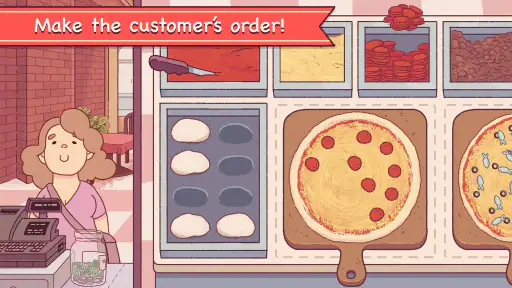
When I first opened Good Pizza, Great Pizza, I was immediately greeted by a cute and colorful interface. It's like stepping into your favorite neighborhood pizzeria, complete with the sounds of a bustling kitchen. The premise is simple but addictive: you run your own pizza shop, and your mission is to make the best pizzas in town.
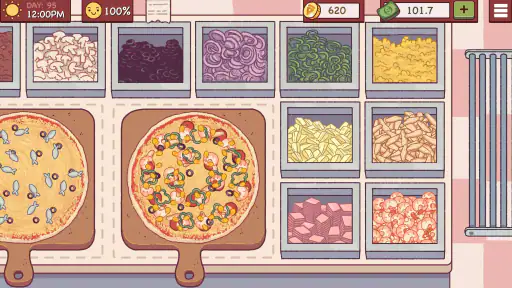
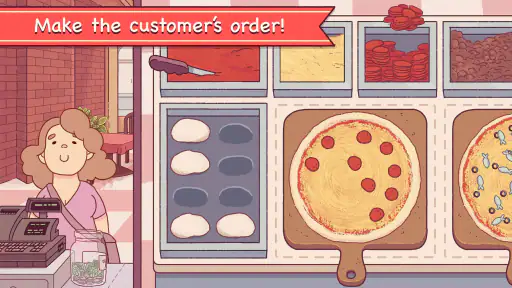
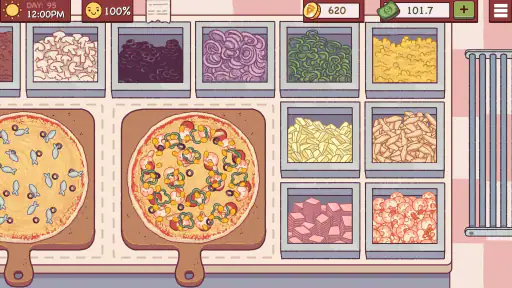
The game kicks off with a tutorial that walks you through the basics of making a pizza. From spreading the sauce to sprinkling the cheese and toppings, every step is interactive and engaging. You’ll quickly find yourself immersed in the process, trying to perfect each pizza to meet the whims of your hungry customers.
Mastering the Art of Pizza
In the world of Good Pizza, Great Pizza, each day presents new challenges. Customers come with specific requests, and it's up to you to get their orders just right. Some might want extra cheese, while others are all about the pepperoni. The trick lies in balancing speed with accuracy, ensuring each pizza is cooked to perfection.
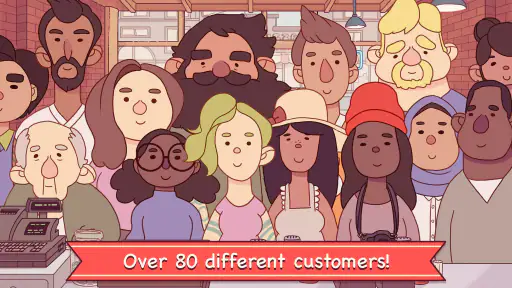
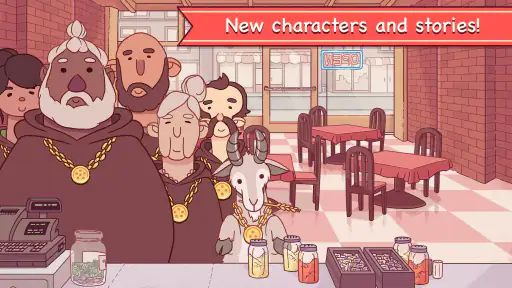
What really hooked me was the variety of customers and their quirky personalities. They add a layer of humor and personality, making each interaction feel unique. From picky eaters to indecisive patrons, you never know what to expect, and that keeps the gameplay fresh and exciting.
More From Our News Desk

Weather by Xiaomi Review: Clear at a Glance, Less Clear Up Close

X Under Pressure: Can It Recover When Posting Goes Wrong?

Clash of Clans Is Won Between the Battles

Android Auto Makes the Case for Quieter Car Software

MobiOffice: Transforming Mobile Productivity with Seamless Integration

EA SPORTS FC™ Mobile Soccer: Redefining Mobile Sports Gaming
Early goals make each order matter
The opening stretch works because it gives me something practical to learn before asking me to juggle much. I focus on understanding how a spoken request maps to sauce, cheese, toppings, and cutting, rather than treating every customer as a timer to beat. My useful habit is to pause for a moment after reading an order and mentally separate its requirements. That small check helps avoid careless mistakes and makes the hands-on preparation feel like a skill I’m building, not just a repeated animation.
For a short break, I can complete a few orders and stop without needing to plan a long session. It suits someone who likes tactile, low-pressure tasks and a bit of character-driven humor. If I’m looking for a fast reflex game, though, the deliberate assembly can feel slow; if I want a deep restaurant-management simulator, the focus on individual pizza orders may feel narrow. That difference is useful to know before settling in.
Progress you can feel, not just count
As you progress, the game introduces new elements to keep you on your toes. You’ll need to upgrade your equipment, manage your earnings, and even experiment with new recipes. The shop's upgrades are not just cosmetic; they impact your efficiency and the quality of the pizzas.
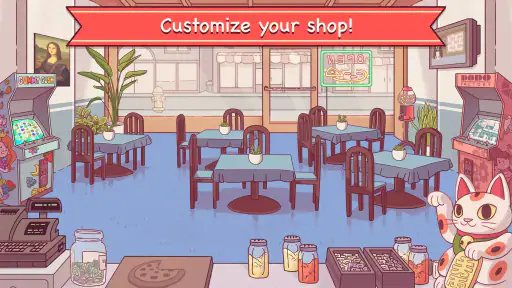
One feature I particularly enjoyed is the ability to customize your shop. You can choose different decorations and layouts, giving your pizzeria a personal touch. It’s a nice way to break up the routine and keep things interesting.
I like that progress has more than one texture: improving how smoothly the kitchen runs feels different from making the shop look more like my own. When I’m deciding what to work toward, I’d prioritize a practical improvement if I’m struggling with order flow, then spend on appearance when I simply want a change of mood. That is a more satisfying approach than treating every unlock as equally useful. The game’s appeal depends on enjoying small gains, not on expecting a dramatic transformation after every play session.
Challenges and Rewards
While the game is generally light-hearted and fun, it also offers challenges that test your skills. Special events and competitions pop up, requiring you to think fast and strategize. The rewards? More ingredients and customization options that help you expand your pizza-making repertoire.
The game does a great job of balancing difficulty. It starts off easy, allowing you to get a feel for the mechanics, but gradually ramps up the challenge. It never feels overwhelming, and there's always a sense of satisfaction when you manage to meet a particularly tricky order.
When the pace gets demanding
The tougher moments are most enjoyable when I treat accuracy as the priority and speed as something that improves naturally with familiarity. Trying to rush before I understand a request is a good way to waste ingredients or disappoint a customer, so I find it better to build a steady routine first. I read carefully, assemble deliberately, and let repeated orders teach me where I can move faster. This is a modest challenge curve rather than a test of twitch reactions, but a run of specific requests can still make me feel the pressure.
That pressure also marks the game’s main trade-off. The same order-by-order structure that makes a quick session comforting can become repetitive if I play for a long stretch. I would not choose it when I want constant novelty or complex strategic choices; I would choose it when the appeal is calmly improving at one focused task. The events and changing customer requests help vary the routine, but they don’t change its basic, hands-on nature.
Small habits that make the kitchen smoother
One practical way I keep mistakes down is to treat each request as a short checklist instead of relying on memory while I’m already placing ingredients. I note the essentials first, then work through the pizza in a consistent order. That little pause is especially useful when a customer phrases an order in an unusual way: it gives me a chance to translate the request before starting the physical steps.
I also try not to confuse a decorative unlock with a useful kitchen improvement. When the order flow feels awkward, a functional upgrade is likely to have a more immediate effect on my play than a new look for the shop. When I’m already comfortable with the work, customization can be a pleasant reward in its own right. Thinking about what I want from the next session helps me spend progress resources with more intention rather than buying something simply because it has just become available.
Who will enjoy running this shop?
For an everyday scenario, I can imagine opening it while waiting for a meal to cook or winding down after work: a few customers give me a contained activity, and I can put the game away when I’m done. It is also a friendly pick for players who enjoy food themes, gentle humor, and visible progress through upgrades. The Everyone age rating makes it broadly accessible, though younger players may still appreciate a grown-up’s help understanding purchase prompts.
Compared with the usual casual time-management game, this one puts more of the attention on making each order directly rather than simply tapping through a queue. That hands-on focus is its strongest distinction, but it also means it is less suitable if I want automation, a sprawling business plan, or nonstop action. I’d pick a faster arcade-style game for quick reflex play, and a more systems-heavy management game when I want to optimize a whole operation. Here, the small craft of assembling a pizza is the point.
It is particularly well suited to someone who likes following instructions, making small corrections, and seeing an immediate result from careful work. The humor softens the pressure, but the game still rewards attention; that combination can make it a nice choice for a shared, low-stakes moment with a younger player, provided an adult handles purchase settings. Players who dislike repeated manual actions, or who prefer a story to drive every session, may find the central routine too familiar even as new requests arrive.
Practical expectations before you start
The game is free to start, with optional in-app purchases priced from $0.99 to $99.99 per item. I’d treat those as optional spending rather than a requirement for enjoying the basic order-and-upgrade loop, and I’d check purchase settings if a child will be playing. It has a 4.7 average from around 1.8 million ratings and over 100 million installs, so it has clearly found a broad audience, but popularity alone does not mean its calm, repetitive rhythm will suit everyone.
TapBlaze released the game on February 6, 2015, and the current version is 5.51.2, with Android 6.0 as the minimum OS requirement. If I’m choosing between this and another casual game, I’d ask myself whether I enjoy reading a request closely and carrying it out by hand. If yes, the loop has a clear, pleasant purpose. If I mainly want story-heavy play, expansive planning, or a game that constantly changes its core activity, I’d look elsewhere.
How the progression holds up over time
For me, the strongest progress signal is not a number going up; it is noticing that I can handle requests with less hesitation. Early on, I spend attention translating each customer’s words into a plan. With practice, the preparation becomes more fluent, leaving me better able to respond when a request is particular. That improvement is satisfying precisely because it comes from understanding the routine, not from turning the game into a reflex test.
There is a limit to how much that mastery can change the experience. If I return after a break, the familiar process is easy to pick up again, but a longer session can make the repeated assembly stand out. I like that the game does not require me to remember a complicated chain of systems just to enjoy a few orders. On the other hand, someone who wants every return to introduce a completely different activity may not get enough variation from new ingredients, challenges, and shop goals alone.
Wrapping Up the Experience
Overall, Good Pizza, Great Pizza is a delightful little game that offers a satisfying blend of strategy and creativity. Whether you’re a pizza aficionado or just looking for a fun way to pass the time, this game is bound to keep you entertained. The graphics are charming, the gameplay is smooth, and the experience is just plain fun.
If you're ready to embark on your own pizza adventure, you can find Good Pizza, Great Pizza available for download on both Android and iOS. Trust me, once you start, you’ll find it hard to put down. What's not to love about making virtual pizzas and running your own pizzeria?
My progression verdict
What keeps me playing is a modest but coherent chain of goals: learn the order routine, improve the shop, and handle more demanding requests without losing the relaxed feel. The unlocks give me reasons to return, while the steady increase in precision keeps the work from being completely automatic. I do think the routine can wear thin during long sessions, so I see it as a satisfying little ritual rather than an endless management project. For players who enjoy careful, incremental progress, that balance is the game’s best quality.
Good Pizza, Great Pizza Frequently Asked Questions
What does a typical session in Good Pizza, Great Pizza involve?
A typical session centers on running a pizza shop and responding to customer orders. You prepare pizzas according to what customers ask for, while trying to serve them accurately and build up your business. The cozy pizza-shop simulator premise keeps the focus on casual management, so it is a natural fit if you enjoy food-themed games and making choices as you play.
Is Good Pizza, Great Pizza a good choice for casual players?
Good Pizza, Great Pizza is a casual game built around the approachable idea of operating a pizzeria. Its main activities—taking orders, making pizzas, and managing the shop—are easy to understand, even if you are new to simulation games. It may appeal to players who want a relaxed mobile game with a clear theme rather than a complex competitive experience.
Does Good Pizza, Great Pizza work on older phones?
Good Pizza, Great Pizza is a casual game available for Android and iOS. On Android, it requires version 6.0 or later, so checking your device’s software before downloading is a sensible first step. The game focuses on running a pizza shop, making it a straightforward option for players looking for a relaxed mobile experience.
Is Good Pizza, Great Pizza free to download and play?
Good Pizza, Great Pizza is free to download, so you can try its pizza-shop gameplay without paying upfront. It also offers optional in-app purchases, with items priced from $0.99 to $99.99. Those purchases are worth keeping in mind, particularly if a child will be playing, but the free download lets you explore the game before deciding whether to spend anything.
What is the main objective of Good Pizza, Great Pizza?
Good Pizza, Great Pizza is a simulation game where you run your own pizza shop. The main objective is to manage and grow your pizzeria by serving customers, fulfilling their pizza orders accurately, and competing with rival shops. Success depends on your ability to meet customer demands and expand your business.
Pros
- Engaging storyline with diverse characters.
- Intuitive controls for easy gameplay.
- Variety of pizza toppings and recipes.
- Regular updates with new content.
- No intrusive ads during gameplay.
Cons
- Limited free in-game currency.
- Repetitive tasks can become tedious.
- Occasional lag on older devices.
- Requires internet for certain features.
- Some recipes can be hard to master.
- Category
- Casual
- Version
- 5.51.2