Draft Showdown
- 2.31K
- 3.9
- Installs
- 1.00M
- Price
- Free
Screenshots
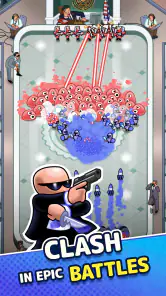
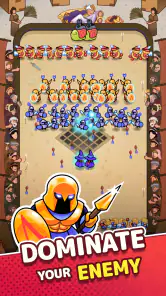
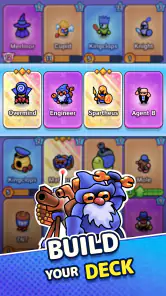
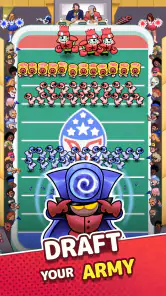
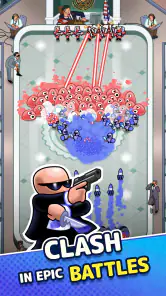
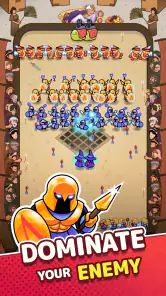
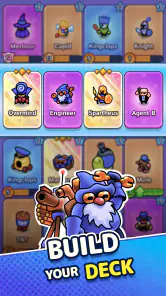
Analysis by Reviewed
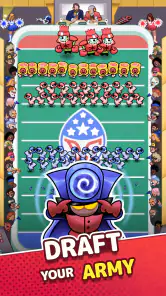
Draft Showdown is a strategy game built around a simple but consequential choice: assembling an army before sending it into battle. I like that this premise puts planning up front. Rather than asking me to manage a sprawling campaign, it invites me to think about what I am drafting and whether that lineup seems ready for a clash. That focus makes it easy to understand, though the satisfaction depends on enjoying quick tactical decisions more than a deep, long-form strategy experience.
What the draft changes about a strategy game
The key question here is not just whether an army looks strong, but whether its parts make sense together. That shifts the player’s attention toward selection and trade-offs before the clash begins. For me, this is a useful distinction from strategy games where most of the thinking happens through continuous movement, resource allocation, or managing a base. Here, the draft is the point at which I try to give the upcoming battle a coherent shape.
That focus can also make the game easier to pick up between other activities. I do not need to remember a sprawling web of campaign decisions to engage with the central idea. At the same time, the draft asks for more thought than a purely reflex-based diversion: if I choose without considering the army as a whole, I miss the part that gives the game its strategic character. The most rewarding approach is to treat each pick as a contribution to a plan, not as an isolated prize.
Why the army draft matters
In many strategy games, the main appeal is gradually building a base, managing resources, or steering a campaign over hours. Draft Showdown puts the emphasis elsewhere: the army you put together is the decision that frames the battle. That gives each choice a clear purpose. I am not just collecting units for its own sake; I am trying to create a force that can hold together when it meets an opponent.
That distinction is useful for players who enjoy weighing options but do not always want the overhead of a large strategy game. Drafting asks for attention, yet the central idea is quick to grasp. The challenge is not simply to pick something that looks powerful. A lineup has to make sense as a group, and a strong individual choice may not be the best choice if it leaves the rest of the army feeling poorly balanced.
The game is free to download and is developed by VOODOO. Its strategy focus is reflected in its Teen age rating, while optional in-app purchases range from $0.99 to $99.99 per item. It has a 3.9 average from around 39,000 ratings and more than 1 million installs. Those figures suggest a sizeable audience, but they do not tell me whether the drafting style will suit you; that comes down to whether you enjoy making decisions with a battle in view.
Choices first, clashes second
The most useful way to approach the core idea is to treat drafting as a small planning puzzle. Before committing to an army, ask what role each pick plays and what the overall force might struggle to handle. Even without turning every match into a spreadsheet exercise, that habit can make the decision-making more satisfying. It also gives you a reason to reflect after a clash: was the lineup coherent, or did the choices pull in different directions?
You May Like

Clash of Clans Is Won Between the Battles

Android Auto Makes the Case for Quieter Car Software

MobiOffice: Transforming Mobile Productivity with Seamless Integration

EA SPORTS FC™ Mobile Soccer: Redefining Mobile Sports Gaming

How Microsoft OneDrive Became a Mobile Productivity Giant

How Google Translate Breaks Language Barriers Effortlessly
A practical tip is to avoid judging a draft solely by its most impressive-looking option. Think about the army as a whole, and notice whether your choices support a plan rather than simply adding attractive pieces. This is a general strategic approach, not a promise that one formula always wins. The important point is that Draft Showdown’s central premise rewards attention to composition, so deliberate choices are more engaging than tapping through the setup without considering how the force might work together.
This also shapes how I would use the game in short sessions. If I have a few spare minutes, I can focus on the immediate question of what army I want to field instead of needing to remember a long chain of campaign goals. That makes it an approachable option for a brief break. On the other hand, players who want a detailed story, persistent world-building, or extensive management may find the central loop too narrow.
A useful routine for learning the draft
When trying a strategy game with a compact central mechanic, I find it helps to change one decision at a time. In Draft Showdown, that means paying attention to which kinds of choices seem to make a lineup feel more complete, rather than changing everything from one clash to the next. You can then form a clearer impression of what your drafting habits are doing. It is a simple way to learn without needing a guide or pretending there is a universally correct army.
Another sensible routine is to decide what you want from a session before starting. If the goal is a quick tactical diversion, make the draft, play, and move on without demanding a long-term progression arc from it. If the goal is to improve, give yourself a moment after each battle to identify one decision you would reconsider. That small pause turns a short match into a more deliberate strategy exercise.
I would also keep expectations flexible. Drafting naturally involves choices under constraints: you cannot expect every lineup to contain everything you might want. Treating an imperfect army as a puzzle is more rewarding than seeing it as a failed run. That mindset is especially helpful if an early choice leaves you with trade-offs. The interesting question becomes how to make the best of the force you have, not how to reconstruct an ideal army that was never available.
A quick way to test whether the loop suits you
On a first session, I would resist the urge to decide whether the whole game is for me after a single clash. Instead, I would notice whether I am curious about the next draft: do I want to test a different balance, or am I already repeating the same picks without much thought? That reaction is a better personal signal than simply winning or losing. A loss can still be useful if it makes me reconsider my choices, while an easy win may tell me little about whether the drafting itself holds my attention.
It also helps to separate a disappointing result from a disappointing decision. If a lineup seemed sensible when I chose it, the outcome alone does not prove that the plan was poor. Conversely, a victory does not necessarily mean every pick was thoughtful. Looking back at the logic behind the army keeps the experience centered on strategy rather than turning every clash into a simple scorecard.
Where it fits into an ordinary day
For a realistic everyday use case, imagine waiting for a friend or taking a short break between tasks. You want something more involving than a reflex game, but you do not have the attention for a lengthy campaign. The army-drafting premise gives you a concrete decision to focus on, and the clash gives that decision a clear payoff. I would use it in that sort of gap rather than expecting it to replace a deeper strategy game during a long evening.
The same short-session appeal may work well for someone who likes comparing tactical ideas with a friend: each person can think about what they would draft and why. The value there is in discussing choices, not assuming that one lineup will always beat another. If you enjoy explaining your reasoning—why a particular force seems balanced, or why you accepted a weakness to pursue another plan—the game’s focus gives that conversation a natural starting point.
A practical boundary makes those brief sessions work better: start when you have enough time to give the draft and its battle your attention, rather than opening it in the middle of a task that needs constant checking. The appeal is the connection between the choice and its consequence. If you are too distracted to remember why you built an army a certain way, that satisfying comparison is harder to make. For a quick pause, I would treat one session as a complete little decision-making exercise, then put the game aside rather than expecting it to fill every spare minute.
How it compares with other strategy choices
Compared with a campaign strategy game, Draft Showdown puts less emphasis on carrying a plan through a long sequence of connected decisions. That makes it easier to approach casually, but it also means it is not the obvious choice for someone who wants a persistent world to develop over time. Compared with a strategy title focused on direct control during battle, its distinguishing appeal is the preparation: the player’s attention is drawn to assembling a force before the clash rather than treating the setup as a minor prelude.
That difference is a genuine preference test. If you enjoy asking, “What can I make from these choices?” the draft can be more interesting than a game where you already know exactly which pieces you will deploy. If you would rather plan every detail in advance, or carefully direct each action once combat starts, a more traditional tactics game may suit you better. I would choose this one for compact decisions about army composition, not for the broadest possible control over a battle.
It is less suited to a situation where you want a calm, hands-off game. Strategy requires attention, and the drafting decision is the point rather than a step to skip. Nor would I recommend it as a substitute for a game built around extensive army customization unless you first find that the available drafting choices offer enough variety for your taste. The appeal here is the decision-making frame, not an assumed catalogue of detailed management systems.
The trade-off: accessible focus versus depth
A focused design can be a strength, but it can also set a ceiling on what some players want. Draft Showdown’s central hook is easy to explain, which lowers the barrier to trying it. Yet players who measure strategy games by elaborate economies, long-term planning, or many layers of control may want more than a draft-and-clash structure can provide. If you are choosing between this and a traditional campaign strategy game, pick this one for compact army decisions and choose the campaign for sustained planning.
There is also a difference between a simple premise and a shallow experience. Drafting can support meaningful thought when choices interact, but whether it stays interesting depends on how much you enjoy revisiting that decision. If you quickly settle on a preferred approach and stop wanting to experiment, the central loop may lose its pull. I would approach it with curiosity: try different ways of thinking about army composition, and judge the game by whether those decisions stay enjoyable for you.
Purchases are another consideration. The game is free to start, but it includes in-app items priced from $0.99 to $99.99. That is a wide range, so I would be cautious about treating optional purchases as a necessary part of getting value from the game. Set your own spending boundary before browsing them, especially if you prefer games where the cost is settled up front. The presence of purchases does not, by itself, explain what each item does, so I would make a decision based on what is presented in the game rather than assuming any item is essential.
For device compatibility, the listed minimum is Android 8.0. The current version is 1.17.1, so it is worth checking that your device meets the operating-system requirement before downloading. That is a straightforward but useful check for anyone using an older phone or tablet; it avoids mistaking a compatibility issue for a problem with the game itself.
Who will get the most from it
I would recommend Draft Showdown to players who like strategy in concentrated form: make a plan, build a force around it, and see how that decision fares in battle. It should also appeal to people who enjoy discussing why a lineup feels sensible, rather than only chasing a large collection or a lengthy story. Its 1.17.1 version and established audience make it easy to consider as a current option, but your enjoyment will still depend on the draft being engaging match after match.
It is probably not the right pick if you want a deep campaign, detailed resource management, or a game that asks very little of you while you play. Nor is it the best fit if you dislike making choices before a clash and would rather control every part of a battle directly. In those cases, a more traditional strategy title—or a more relaxed casual game—will likely fit better.
If you are deciding whether to install it, I would ask yourself one simple question: do you enjoy building a plan from the choices in front of you, even when you cannot make a perfect army? If yes, its focused structure is a reasonable match for a short tactical break. If your answer is that you want a long campaign, broad customization, or minimal decision-making, you will probably be happier with a different kind of game. That distinction is more useful than expecting a strategy label alone to tell you whether it will click.
My main recommendation is to give the drafting choices your attention instead of rushing through them. That is where this game’s identity sits, and it is also the best way to tell whether its battles have enough strategic appeal for you. Draft Showdown works best as a compact, thoughtful diversion: not a replacement for every kind of strategy game, but a reasonable choice when you want army composition to be the heart of the decision.
Draft Showdown Frequently Asked Questions
What is Draft Showdown?
Draft Showdown is a fantasy sports game built around drafting players and competing against other users. Rather than relying only on a season-long roster, the experience focuses on making a series of draft choices and seeing how your selections perform in the competition. Check the app’s current store listing for details about supported sports, game formats, and availability, since these can vary by version or region.
How does a Draft Showdown competition work?
In general, you join or create a contest, select players during a draft, and compete based on how those players perform under the game’s scoring rules. Draft timing, roster limits, scoring, and contest duration can differ between formats, so review the rules shown for each matchup before entering. That helps you understand what your picks need to deliver and whether the contest suits your play style.
Is Draft Showdown free to download, and are there in-app purchases?
The download price and any optional purchases depend on the current listing for your device and region. Fantasy sports apps may offer free contests, paid entry options, subscriptions, or other in-app purchases, but availability and terms can change. Before joining a contest or making a purchase, check its entry fee, prize details, payment terms, and the app’s purchase settings. Never assume that a particular contest is free.
Can I play Draft Showdown with friends, and is it available in my location?
Draft Showdown may let users compete in shared or public contests, but the available options should be confirmed in the app. Access to fantasy contests can also depend on local laws, age requirements, and regional availability. Review the eligibility information before creating an account or attempting to enter a contest. If you plan to play with friends, check whether private leagues or invite-based matchups are currently supported.
What should I check before downloading Draft Showdown?
Start by checking that Draft Showdown is available for your Android or iOS device, and confirm its minimum operating-system requirements in the official app store. Read the privacy information and permissions so you know what data the app may collect, and review account and location requirements before signing up. It is also sensible to inspect recent user feedback and the contest rules, especially if you intend to make purchases or enter paid competitions.
Pros
- Quick matches make it easy to play in short sessions.
- Simple controls are approachable for new players.
- The head-to-head format adds excitement to each round.
- Unlockable content offers goals to work toward.
- Its lightweight premise suits casual play.
Cons
- Match outcomes can feel dependent on luck.
- Gameplay may become repetitive over time.
- Progression can take patience for free players.
- Online play depends on a stable connection.
- It may offer limited appeal to players seeking a deep story.
- Category
- Strategy
- Version
- 1.17.1