Coin Master - Board Adventure
- 348.00
- 4.8
- Installs
- 500.00K
- Price
- Free

Screenshots
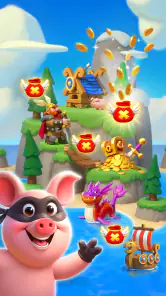
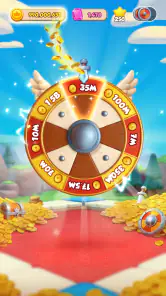
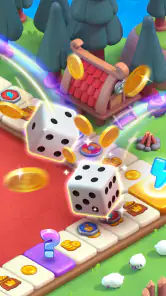
Analysis by Reviewed
Before downloading Coin Master, I’d ask myself whether I enjoy a game where luck sets the pace and building gives each short session a goal. Its appeal comes from the rhythm between spinning, collecting coins, and improving a village, rather than from demanding dexterity or a long story. I find that makes it easy to open for a few minutes, though it may not satisfy someone who wants direct control over every outcome.
A casual game built around quick decisions
Moon Active’s casual game has a 4.8 average from around 6,200 ratings, and it has passed 500,000 installs. Those figures suggest a broad audience, but they don’t tell you whether the central loop will click for you. In practice, the key choice is how to use the results of each spin: build when you can, or accept that other players may disrupt your progress and treat that uncertainty as part of the fun.
The game is free to download, rated Everyone, and its current version is 3.5.2402. It runs on Android 6.0 or later, while in-app purchases range from $0.49 to $99.99 per item. I’d approach spending as optional rather than necessary: if you’re comfortable waiting for progress and stopping when you’ve had enough, the free-to-play format can work; if you tend to buy more whenever luck turns against you, set a personal limit before you start.
Spinning into Action
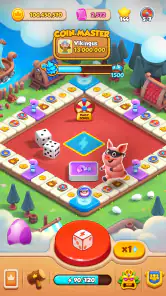
At the core of Coin Master is a slot machine mechanic. You’ll be spinning away to earn coins, shields, and the much-coveted raid and attack options. It’s that simple yet addictive loop that keeps you coming back for more. The spins are your gateway to growth, allowing you to build and upgrade your village. And believe me, there’s something oddly satisfying about seeing those coins roll in.
Now, the spins aren’t just about luck. They’re your ticket to interacting with other players. Whether it’s raiding a friend’s village or defending your own, there’s a social layer that adds a delightful twist. You’ll find yourself itching to get just one more spin to see what fortune has in store.
Building Your Viking Empire
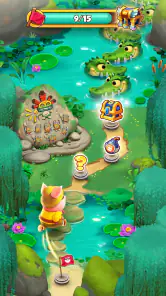
Once you’ve hoarded enough coins, it’s time to channel your inner architect. Each village in Coin Master has a unique theme, from lush jungles to moonlit castles. Upgrading these villages isn’t just about aesthetics; it’s about moving to the next level and unlocking new adventures. It’s like having a tiny empire right in your pocket.
The game cleverly combines elements of strategy and chance, making every upgrade feel like a small victory. And trust me, seeing your village blossom is super rewarding. But be warned, it’s a journey that requires patience and a bit of strategic planning.
More From Our News Desk

Clash of Clans Is Won Between the Battles

Android Auto Makes the Case for Quieter Car Software

MobiOffice: Transforming Mobile Productivity with Seamless Integration

EA SPORTS FC™ Mobile Soccer: Redefining Mobile Sports Gaming

How Microsoft OneDrive Became a Mobile Productivity Giant

How Google Translate Breaks Language Barriers Effortlessly
Making progress without turning every spin into a chore
A useful habit is to treat a play session as a small planning window, not an obligation to keep spinning until the village is finished. I’d check what I can afford to upgrade, make a deliberate choice, and then leave rather than chase a particular result. That approach makes the building loop feel more satisfying and helps keep the game’s random outcomes in perspective.
There’s also a practical trade-off between spending coins as soon as they arrive and holding them while you decide what to do next. Since other players can attack villages, progress may not feel perfectly secure; I wouldn’t treat a large coin balance as a guaranteed long-term reserve. For me, the better mindset is to make useful upgrades when the opportunity is there and accept that setbacks are part of this particular social loop.
The Social Spin
What really spices up the gameplay is the social interaction. You can connect with friends, attack their villages, or even join forces with them. It’s a love-hate relationship that adds layers to the game. There’s nothing quite like the thrill of a successful raid or the satisfaction of thwarting an attack on your own village. Plus, there’s an in-game chat feature that keeps the banter rolling and the camaraderie alive.
And let’s not forget the pet system. Yes, that’s right, you can have little companions that help you during raids and attacks. These pets add an extra layer of strategy, making each encounter unique and engaging.
When a different casual game is a better fit
Compared with a puzzle game, where success usually depends on solving the board in front of you, this one gives chance a much bigger role. Compared with a town-building game focused on freely arranging and managing a settlement, its village upgrades are tied to the spin-and-earn cycle. That distinction matters: I’d choose this if I want playful surprises and a social nudge, but pick a puzzle or more hands-on builder if I want my skill or design choices to determine most of what happens.
It’s also not ideal if attacks on your village would feel personal, or if you dislike waiting for chances to advance. The social side can be a draw when friends enjoy friendly rivalry, yet it is easy to enjoy the core loop casually without turning every session into a contest. If I were introducing it to a friend, I’d describe it as light, luck-led play rather than a serious strategy game.
Visuals and Soundtrack
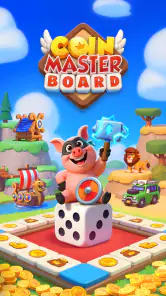
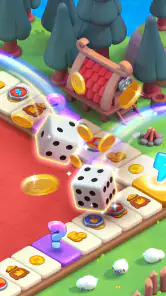
The visuals in Coin Master are vibrant and lively, perfectly capturing the whimsical nature of the game. From the spinning reels to the detailed village designs, everything is polished to a sheen. The soundtrack is equally engaging, with catchy tunes that enhance the overall experience without being overbearing.
Each sound effect, from the clinking of coins to the triumphant fanfare of a successful spin, is spot on. It’s all these little details that make the game feel alive and immersive.
A sensible way to try it
For an everyday example, I can see this fitting into a coffee break: open the game, take a few turns, see whether there’s a worthwhile village upgrade, and stop when the session stops being fun. That routine is a better test than deciding from a long, uninterrupted first session, because the game’s appeal depends on whether its repeated rhythm stays enjoyable for you.
If you’re trying it with friends, agree on the tone before treating attacks as rivalry. Some people will laugh off a raid; others would rather keep their games separate. The chat and social interactions can make the experience livelier, but they also mean this is not the best pick for someone who wants a wholly solitary, self-directed game.
Monetization and Progression
Now, let’s talk about the elephant in the room—monetization. Like many free-to-play games, Coin Master offers in-app purchases. While you can certainly enjoy the game without spending a dime, the temptation to buy extra spins or coins can be strong, especially if you’re the impatient type. The game’s progression is designed to keep you engaged, but it can sometimes feel like a grind if you’re not willing to shell out some cash.
However, if you’re strategic and patient, you can still progress at a decent pace. The game does a good job of rewarding active players with daily bonuses and events, keeping things fresh and exciting.
Keeping the experience in proportion
The most useful question before paying is not whether a purchase could speed things up, but whether you would still enjoy the game if you didn’t buy anything. I’d play free first and notice how I react when a spin doesn’t deliver the result I hoped for. If that makes me want to spend just to undo the frustration, that’s a sign to take a break rather than buy in the moment.
For anyone sharing a device or letting a younger player try it, I’d make the purchase expectations clear beforehand. The Everyone age rating makes the game broadly accessible, but the presence of optional purchases still makes a spending boundary useful. The best fit is someone who can enjoy gradual progress without needing every session to end with a major upgrade.
Final Spin
So, is Coin Master worth a spin? Absolutely. It’s a game that’s easy to pick up but hard to put down. The blend of casual gaming with social interaction and strategic elements makes it a refreshing addition to the mobile game scene. Whether you’re a casual gamer looking for some fun or a competitive player seeking new challenges, there’s something here for everyone.
Just remember to pace yourself, enjoy the ride, and maybe, just maybe, you’ll become the ultimate Coin Master.
My recommendation
I’d recommend it to someone who likes quick mobile sessions, village progression, and a little unpredictable rivalry, especially if the social element is part of the appeal. I’d steer a player who wants pure puzzle-solving, full control over town design, or reliably skill-based competition toward another kind of casual game. The main cost of switching away is simply leaving behind a familiar progress loop and social connections; there’s no need to force yourself to stay if the random turns stop feeling entertaining.
My practical advice is to try it without spending, decide whether the spinning and upgrading still feel fun after the novelty settles, and keep purchases within a limit you chose in advance. If that sounds like the kind of low-pressure diversion you want, Moon Active’s game is an easy one to sample. If you need every decision to produce a predictable result, I’d skip it and choose a more skill-led alternative instead.
What to pay attention to in your first sessions
I wouldn’t judge the game only by whether the first few spins go well. The more revealing test is how I feel when a turn produces something other than the resource I wanted. If I can shrug, use what I received, and enjoy the village progress that follows, the loop is probably a good match. If I keep restarting the game or wishing I could control the outcome, the central mechanic may be the very thing that wears me down.
It also helps to separate the small decisions from the big goals. A spin can be exciting, but it is not a promise that a village will be completed in one sitting. I’d look at the available upgrades before tapping repeatedly, then decide whether the next few turns have a purpose for me. That little pause turns the session from automatic tapping into a choice, and it makes it easier to stop without feeling that I have left an important task unfinished.
Friendly competition, with realistic expectations
The social side is most enjoyable when everyone understands that attacks and raids belong to the game’s playful rivalry, not to a serious scorekeeping contest. I’d invite friends who already enjoy teasing each other over small wins, rather than people who dislike having progress interrupted. If one person takes a raid badly, it may be better to keep the game as a personal diversion instead of making every turn a group event.
For a player who does not have friends involved, the solo routine can still be the reason to play: spins lead to resources, and resources feed village upgrades. But someone expecting a deep cooperative campaign or a carefully balanced competitive ladder should look elsewhere. The social features add flavor and occasional tension; they don’t change the fact that chance is doing much of the work.
Choosing between waiting and paying
A practical spending check is to decide what a purchase would actually solve. If I’m buying because I enjoy the game and have already set a reasonable entertainment budget, that is different from buying because I’m annoyed by a streak of unlucky results. The latter can turn a casual game into a cycle of frustration and impulse. I’d close the app, return later, and see whether I still want to play before considering any optional purchase.
That approach is especially useful for families. The broad age rating does not remove the need to talk about in-app spending, so I’d make sure a younger player knows purchases are not part of the basic requirement to enjoy a session. For my own use, I’d also avoid treating every reward or progression nudge as a reason to stay longer. The game works best as a light break when I decide the length of the break myself.
Who will enjoy the loop—and who may not
I see the strongest fit for people who like collecting, small upgrades, and a little surprise in between everyday tasks. It suits someone who wants an easy game to dip into while waiting for coffee or winding down, and who is happy to measure progress in modest steps. A friend who enjoys comparing village progress or joking about a raid may get more from it than someone who never wants game activity to touch their social circle.
On the other hand, I would not choose it as my main game if I wanted precision, demanding tactical choices, or a creative building tool where every placement is mine to control. Puzzle fans may prefer challenges where observation and planning decide the result; builder fans may prefer a game centered on designing and managing a town directly. Neither alternative is automatically better—the right choice depends on whether I want surprise or control to be the main pleasure.
A low-pressure way to decide
I’d give the game a few short visits rather than a marathon trial. One session can show whether the spin mechanic is appealing; another can show whether village building still feels worthwhile when progress is slower. If both parts hold my attention without making me feel pushed to spend or keep playing, I’d keep it installed. If not, moving on costs little beyond leaving the social routine behind, and a puzzle or hands-on builder is likely to be a more satisfying use of my time.
My recommendation stays simple: try it for the light, luck-led loop, keep a clear boundary around purchases, and let your own reaction to setbacks decide whether it belongs on your phone. For the right player, the mix of spins, upgrades, and friendly rivalry makes an appealing casual pastime. For someone who needs control and predictable progress, choosing another style of game is not missing out; it is choosing a better fit.
Coin Master - Board Adventure Frequently Asked Questions
What devices and operating systems can run Coin Master - Board Adventure?
Coin Master - Board Adventure is available for Android and iOS, and the Android version requires Android 6.0 or later. Before downloading, check that your device meets the operating-system requirement and has enough room for the game. The app is a casual game from Moon Active, with a free download and optional in-app purchases.
Can I download Coin Master - Board Adventure on my device?
You can download Coin Master - Board Adventure on a compatible Android or iOS device. The Android version requires Android 6.0 or later, so check your device’s software version before installing. The game is free to download, but it includes optional in-app purchases. Its Everyone age rating may also help families decide whether it suits the intended player.
What is Coin Master and how do I play it?
Coin Master is a popular adventure game where players build and upgrade their villages using coins they earn from spinning a virtual slot machine. Players can attack other villages, defend their own, and collect cards to complete sets for rewards. The game combines elements of strategy, chance, and social interaction.
Is Coin Master free to play, and are there in-app purchases?
Yes, Coin Master is free to download and play on both Android and iOS devices. However, the game offers in-app purchases that allow players to buy coins and spins, which can enhance gameplay. While purchasing is optional, it can accelerate progress and provide additional features.
Are there any age restrictions for playing Coin Master?
Coin Master is rated for players aged 12 and older due to its interactive elements and in-app purchases. Parents should be aware of these features and monitor their children's usage, especially since the game involves a virtual slot machine mechanic that may not be suitable for younger audiences.
Pros
- Engaging and addictive gameplay.
- Frequent updates with new features.
- Simple mechanics yet strategic depth.
- Vibrant graphics and animations.
- Social features enhance interaction.
Cons
- In-app purchases can be costly.
- Requires internet connection to play.
- Ads can be intrusive at times.
- Game progress can feel slow.
- Limited offline content available.
- Category
- Casual
- Version
- 3.5.2402