Block Buster - No Timer
- 340.00
- 4.4
- Installs
- 500.00K
- Price
- Free
Screenshots
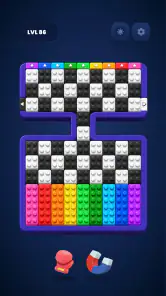
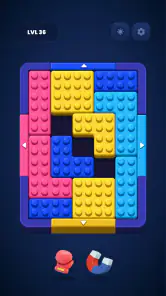
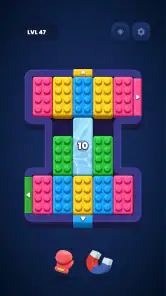
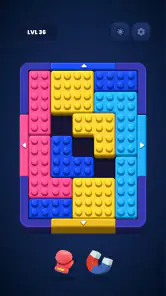
Analysis by Reviewed
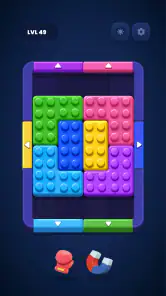
I spent time with Block Buster - No Timer as a casual puzzle game, and its appeal is easy to understand: it turns arranging colorful blocks into a quiet little exercise in planning. The basic idea is approachable enough for a quick break, yet the board can become surprisingly demanding when several pieces compete for the same limited space. I like that tension because it rewards looking ahead rather than simply tapping as fast as possible.
This is a free game from Lion Studios Plus in the puzzle category, aimed at Everyone. It runs on Android devices using version 6.0 or later, and the current release is 1.8.0. The game has reached over 500 thousand installs and holds a 4.4 average from roughly 21 thousand ratings. Those figures suggest that it has found a sizeable audience without needing to present itself as a complicated, high-commitment experience.
How the block puzzles feel in everyday play
The strongest part of the experience is the simple decision loop. I look at the available shapes, consider where they can fit, and try to create useful lines or groups without closing off the board too early. That sounds familiar if you have played other block-arranging puzzles, but the no-timer identity changes the mood. Instead of racing a countdown, I can pause over a move, test a few possibilities mentally, and choose the placement that leaves the most flexibility.
That makes it especially comfortable for short sessions. I can open it while waiting for a coffee, play a few turns during a commute, or use it as a small reset between tasks. It does not demand the concentration of a long strategy game, but it is more engaging than a completely passive distraction. The best moments come when a crowded board suddenly becomes manageable because one carefully chosen piece creates room for everything else.
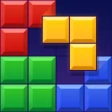
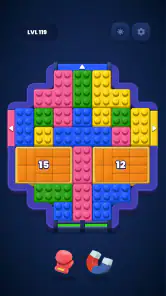
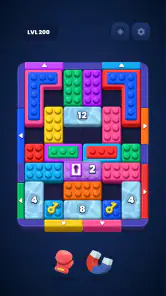
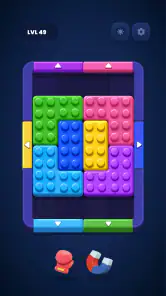
The colorful presentation also helps the game communicate quickly. Shapes are easy to distinguish, and the visual feedback makes successful clearing feel satisfying without requiring a complicated explanation. I did not need a long tutorial to understand the central rhythm. That accessibility is a genuine strength for players who want a puzzle they can begin immediately, including younger users and people who do not normally spend time with brain-training games.
The useful skill is preserving options
My biggest practical lesson was to stop treating every available placement as an opportunity to clear something immediately. A move that completes a line can still be poor if it leaves awkward gaps around the rest of the board. I found better results by asking a different question: which placement keeps the largest number of future shapes usable?
That approach makes the game feel less random, even when the next pieces are not ideal. I try to keep broad open areas available, avoid building isolated pockets, and delay filling corners unless a piece fits there naturally. Long, narrow shapes deserve extra care because they can become difficult to place once the board loses its clean edges. This is one of the more rewarding aspects of the game: the rules are simple, but good play depends on managing space several moves ahead.
Another useful habit is to avoid clearing a line automatically when waiting one turn could create a better arrangement. The immediate reward is tempting, especially during a relaxed session, but a tidy-looking board is not always a healthy board. I now think of each cleared section as a way to restore mobility rather than as the main goal by itself. That small change makes my decisions more deliberate and gives the puzzle more depth than the bright visuals initially suggest.
Why the no-timer approach matters
Many block puzzles create pressure through a clock, falling pieces, or a constant demand for rapid reactions. This game is better suited to players who enjoy spatial reasoning without that kind of urgency. I can examine the board, compare possible placements, and learn from a mistake without feeling that the interface is rushing me into the next action.
That slower pace is also the main reason I would recommend it to someone who finds traditional arcade puzzles stressful. It works well as a wind-down activity because the challenge comes from organization rather than reflexes. A parent looking for a simple game to share with a child may also appreciate the readable rules and Everyone content rating, although the best experience still depends on whether the child enjoys planning instead of fast action.
There is a trade-off here. Players who want escalating urgency, timed combos, or the excitement of reacting under pressure may find the pace too gentle. The absence of a timer is not automatically a benefit for everyone. It removes one source of tension, so the game must rely on board management and the satisfaction of improving decisions. For me, that is enough for casual play, but it may not replace a faster puzzle game for someone who plays mainly for adrenaline.
What the free access offers and where value becomes less clear
The game is free to download and play, which makes trying it straightforward. I do not have to commit money before learning whether this style of block puzzle suits me. That matters because the central appeal is personal: some players will enjoy the calm, thoughtful rhythm, while others will quickly want more variety or a stronger competitive hook.
Its free entry also makes it useful as a low-risk filler game. If I want something that can occupy a few minutes without asking me to learn a large system, this is a sensible option. The value comes from repeatable spatial decisions rather than from a story, a large collection of characters, or a deep progression framework. Anyone judging it should therefore focus on how much they enjoy the core board rather than expecting the scope of a premium puzzle release.
In-app purchases are listed from $1.99 to $199.99 per item. That is an unusually broad range, so I would treat optional spending carefully and decide in advance whether the free experience already gives me enough entertainment. The important distinction is that the game can be approached without an upfront purchase, while the value of any individual optional item depends on what the player wants from the experience. I would not buy anything simply because a difficult board creates a moment of frustration.
For me, the sensible value test is simple: play it free for several sessions, notice whether I am enjoying the decisions rather than merely chasing a temporary result, and only then consider whether an optional purchase genuinely improves my use of the game. I would also avoid assuming that paying automatically turns a casual puzzle into a deeper one. The main satisfaction still comes from placing blocks well, and no purchase can replace that basic fit between the player and the format.
Small decisions that improve a session
I get more from the game when I begin with a quick scan instead of placing the first piece that looks convenient. I check which parts of the board are already becoming narrow, identify the shapes that would be hardest to accommodate later, and protect at least one area with enough room for unusual pieces. This takes only a moment, but it prevents many avoidable dead ends.
I also recommend treating corners and edges as resources rather than automatic storage. A corner can be a safe home for a shape that would otherwise be difficult to place, but filling it too early may remove the only useful location for a larger piece. Leaving a flexible central area is often more valuable than making the board look neat immediately. This is a concrete difference between casual tapping and purposeful play.
When the board becomes crowded, I slow down even more. Instead of focusing on the next clear, I compare the aftermath of each possible move. Which option leaves connected spaces? Which one creates a pocket that only a very specific shape can fill? Which one keeps multiple future placements available? Thinking in those terms turns a frustrating position into a manageable puzzle and is probably the most transferable skill I took from the game.
Another practical use is as a gentle focus break. I would not describe it as a formal training tool, and I would not expect it to measure cognitive improvement, but it does give my attention a narrow, concrete task. After a long stretch of reading or routine work, a few careful placements can feel more refreshing than scrolling through unrelated content. The benefit comes from the activity itself, not from any claim that it delivers a particular mental-health or educational result.
Where it sits beside familiar alternatives
Compared with timed block puzzles, this one is the calmer choice. It gives me more room to reason and less reason to react. Compared with match-style puzzle games, it emphasizes spatial arrangement rather than searching for identical symbols or building quick chains. Compared with premium puzzle apps that are designed around a fixed set of handcrafted challenges, it feels more like a repeatable casual board that I can revisit whenever I want a short mental exercise.
That comparison also clarifies who should choose something else. If I wanted a strong narrative, carefully staged levels, or a sense of finishing a defined campaign, I would look toward a different kind of puzzle game. If I wanted head-to-head competition or timed score chasing, I would choose a faster alternative. Block Buster - No Timer is most convincing when I value simplicity, open-ended replay, and the ability to think without a countdown.
The game is also less suitable for someone who dislikes repetition. Its appeal depends on finding continued interest in arranging pieces and improving board awareness. Players who need frequent mechanics, changing objectives, or a large amount of content may feel that the central loop becomes familiar. That is not a flaw in the basic design, but it is an important expectation to set before installing it.
Who will get the most from it
I would recommend this puzzle to casual players who want a free, easy-to-start way to fill small gaps in the day. It is a particularly good match for people who enjoy planning but dislike time pressure, and for anyone who prefers a game that can be understood almost immediately. The Everyone rating and modest Android requirement also make it approachable across a broad range of compatible devices.
It can work well for a player who likes improving through personal habits rather than unlocking a complicated skill tree. The satisfaction is in recognizing a bad pattern earlier, keeping the board open longer, and making a difficult shape fit without sacrificing future choices. That kind of progress is quiet, but it feels real when a position that once seemed impossible becomes manageable.
I would skip it if my priority were rich presentation, competitive intensity, or a large, clearly structured adventure. I would also be cautious if I am easily tempted by optional purchases, since the listed purchase range reaches from small amounts to much larger individual items. In that situation, I would keep the game strictly as a free diversion or choose a paid alternative with a cost model I find easier to control.
My verdict after weighing the trade-offs
Block Buster - No Timer succeeds because it understands the appeal of an unhurried block puzzle. I enjoy being able to inspect the board, protect future options, and solve problems through placement rather than speed. The free entry makes it easy to test, and the game is specific enough to provide a useful little challenge without becoming a major commitment.
Its limitations are equally clear. The no-timer format will not satisfy players who need urgency, and the repeating board-focused loop may feel narrow beside more elaborate puzzle games. Optional purchases also deserve restraint, especially because the listed range is wide. I would judge the game by the free play first and keep spending separate from the question of whether the core mechanics are enjoyable.
My final recommendation is positive but targeted. If you want a colorful, relaxed puzzle for short sessions and like the idea of improving your spatial planning, this is worth trying. If you want story, competition, or constant novelty, choose another option. For the right player, the best feature is not a flashy extra; it is the freedom to pause, think, and make the board work one careful move at a time.
Pros
- Simple block-puzzle rules make it easy to start playing immediately.
- No timer creates a relaxed experience for casual
- stress-free sessions.
- Offline play is convenient when traveling or without an internet connection.
- Short rounds fit well into quick breaks or commutes.
- Gradual strategic decisions keep the gameplay engaging over time.
Cons
- Limited gameplay variety may become repetitive after extended play.
- Some levels can feel difficult without offering much strategic guidance.
- Ads may interrupt the experience
- depending on the version installed.
- The minimalist presentation may feel too plain for some players.
- Progression may lack enough rewards for users seeking long-term goals.
- Category
- Puzzle
- Version
- 1.8.0