A Dance of Fire and Ice
- 1.25K
- 4.8
- Installs
- 500.00K
- Price
- $1.99
Screenshots
Analysis by Reviewed
When I want a game that asks me to listen closely rather than simply react to whatever flashes across the screen, I reach for A Dance of Fire and Ice. Its central idea is easy to understand: two planets travel around one another, and I guide their movement by tapping in time. That simple interaction creates a surprisingly exacting music game, one where the beat is not decoration but the thing I have to read, anticipate, and follow.
That focus shapes who will enjoy it. I think it is a strong fit for players who like learning a musical pattern through repetition, including people who do not usually play complicated action games. It is less suitable if you want a rhythm game that lets you casually mash buttons, keep moving through mistakes, or enjoy songs mainly as background music. Here, listening and timing are the activity. The game is made by 7th Beat Games, and its appeal comes from how much tension and satisfaction can grow out of a small number of actions.
Reading the path and finding your bearings
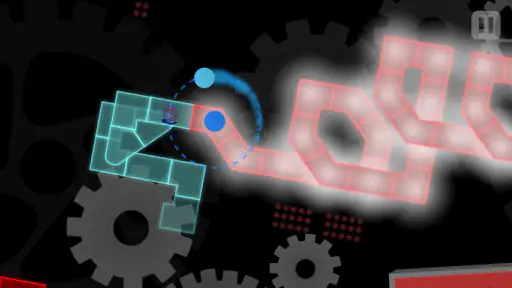
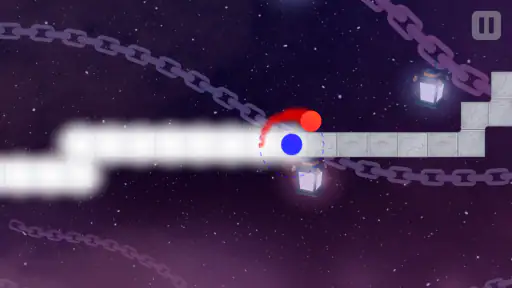
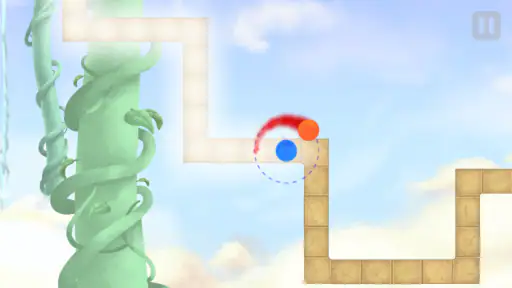
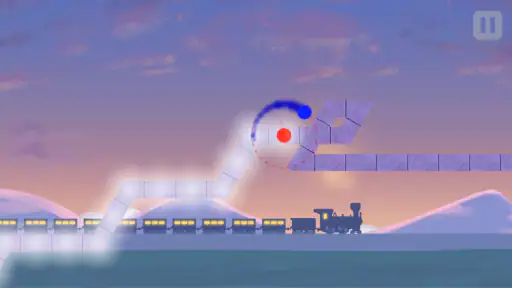
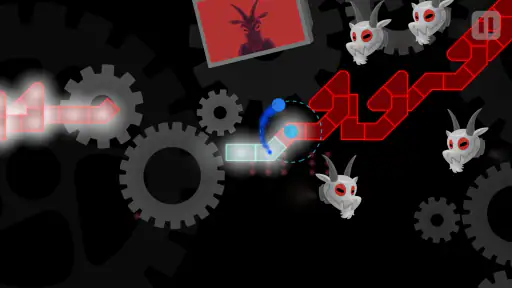
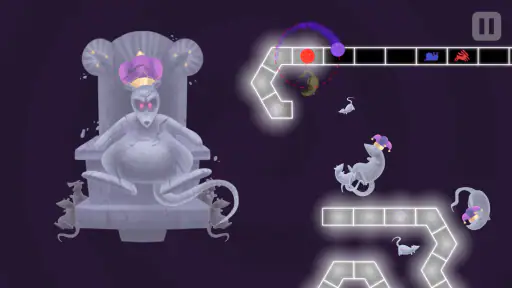
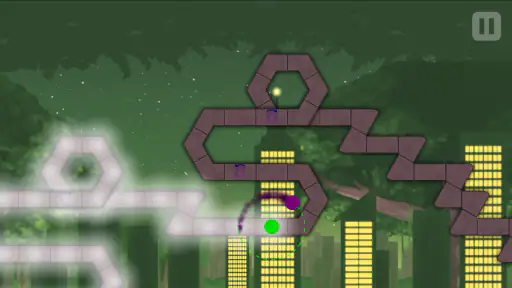
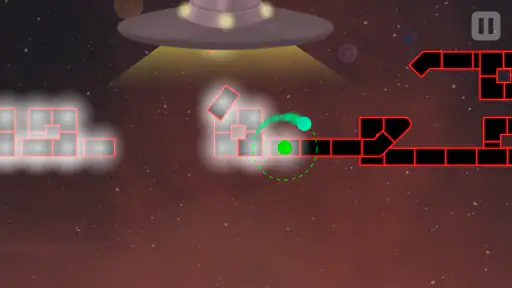
The visual presentation is uncluttered, which helps me keep my attention on the relationship between the moving planets and the route ahead. I do not have to manage a screen full of menus or a character with a long list of moves. The path itself becomes a visual cue, while the soundtrack tells me how to approach it. This makes the basic idea quick to grasp, though it does not mean every sequence is easy to read at speed.
On a first attempt, I find it useful to watch a section before treating it like a test of reflexes. The turns and spacing give me clues about the rhythm, and listening for the recurring pulse is more useful than staring only at the planets. If I make a mistake, I try to identify whether I tapped too early, too late, or misunderstood the pattern. That small change in how I practise turns a frustrating restart into a specific lesson.
The game’s minimal look also has a trade-off: it keeps the action focused, but the visual route may not communicate timing as clearly to every player. Someone who depends more on visual cues than sound may need extra practice to connect what they see with when they should tap. I would not assume that a clean screen automatically makes a rhythm game easy to follow. Here, clarity comes from learning how the visual movement and music work together.
Music Meets Gameplay
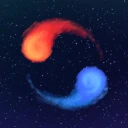
A Dance of Fire and Ice is not just another rhythm game; it's a symphony of timing and precision. When I first launched the game, I was greeted with a simple yet captivating interface, which set the perfect tone for the journey ahead. The game’s core mechanic revolves around controlling two orbiting planets, one of fire and the other of ice, as they traverse through a series of challenging paths.
Getting Into the Groove
The learning curve in this game is quite steep, but that’s where the thrill lies. Each level presents a unique musical track, challenging players to tap in sync with the beat. It’s amazing how the game manages to create a seamless connection between the visual and auditory elements, making every tap feel rewarding. The levels are designed to test your rhythm and reflexes, and trust me, missing a beat can be as frustrating as it is motivating.
More From Our News Desk

Weather by Xiaomi Review: Clear at a Glance, Less Clear Up Close

X Under Pressure: Can It Recover When Posting Goes Wrong?

Clash of Clans Is Won Between the Battles

Android Auto Makes the Case for Quieter Car Software

MobiOffice: Transforming Mobile Productivity with Seamless Integration

EA SPORTS FC™ Mobile Soccer: Redefining Mobile Sports Gaming
For me, the best way to approach a difficult stretch is to stop trying to force speed. I listen for the pulse, notice where the route changes, and practise keeping my tap steady through the transition. When a section does not click, a short break can be more useful than immediately repeating it while annoyed: returning with fresh attention makes it easier to hear the pattern rather than guess. This is a practical game to play in brief sessions because a single attempt can be focused, but I would avoid treating it as a mindless time-filler if I am tired or distracted.
The visual design is minimalist yet effective. The vibrant colors and geometric patterns keep you engaged, while the music, which ranges from calm melodies to intense beats, makes sure you’re constantly on your toes. The developers have done a fantastic job in ensuring that each level feels like a new musical adventure.
Challenge and Reward
What I love about A Dance of Fire and Ice is its ability to keep you hooked. The game doesn’t hold your hand, but instead, encourages you to learn from your mistakes. The moment you finally nail a tricky section after numerous attempts, it feels like a personal victory. It’s this blend of challenge and reward that kept me coming back for more.
That same design is the main source of friction. Repeating a section can be satisfying when I understand what I am correcting, but repeated misses without a clear sense of why can make progress feel slow. I would recommend giving each attempt a purpose: concentrate on the beat, then on the route change, rather than treating every failure as proof that your reflexes are not good enough. The game rewards patience and pattern recognition more than frantic tapping.
Moreover, the game offers a variety of modes that cater to different skill levels. Whether you’re a casual player looking for a relaxing experience or a hardcore gamer seeking an intense challenge, there’s something for everyone. The satisfaction of completing a level with a perfect score is unparalleled, and the leaderboards add a competitive edge to the experience.
Playing in everyday settings
I can imagine fitting a level or a few attempts into a quiet break: settle somewhere comfortable, keep the sound at a level where the beat is clear, and give the pattern my full attention. It is not the game I would pick while walking, waiting in a noisy place, or trying to follow a conversation. Divided attention works against its central demand, and environmental noise can make it harder to use the soundtrack as a timing guide.
For a shared session, it can be fun to take turns and let the other person listen for the pulse or talk through where a mistake happened. That changes the experience from a private test into a small puzzle to solve together. It is not quite the same as a party rhythm game built around several people acting at once, though; the pleasure here is concentrated on one player reading and responding to a precise sequence.
Compared with music games that emphasize broad song libraries, familiar pop tracks, or a constant stream of visual prompts, this one feels more like practising a compact musical challenge. If I want to sing along or discover songs I already know, another rhythm game may be a better fit. If I want to understand a beat by physically responding to a carefully shaped path, this game has a more distinctive appeal. The trade-off is that the narrow focus will not satisfy everyone looking for variety in the usual sense.
Timing, comfort, and different abilities
The controls are conceptually simple, but the timing requirement can be demanding. That distinction matters: a game can ask for only a tap and still be difficult for someone whose hands tire quickly, whose motor responses vary, or who finds precise repetition stressful. I would approach it in short, comfortable sessions and stop when frustration starts replacing concentration. There is no need to turn a rhythm challenge into a test of endurance.
Sound is central to the experience, so players who cannot comfortably rely on hearing may find the game harder to interpret. The route and movement provide visual information, but I would not assume they fully replace listening. Likewise, players sensitive to intense repetition may prefer to take breaks rather than push through a tricky passage for a long stretch. These are practical considerations, not reasons to rule the game out for everyone: personal comfort and the way each player reads rhythm can differ.
Before settling into a session, I would also check that the device is comfortable to hold and that the surrounding space is quiet enough to hear the beat. A stable posture can make repeated taps feel less awkward, while turning down competing audio helps me focus. These small choices do not alter the game, but they can make practice less tiring and make it easier to tell whether a missed input came from my timing or from being distracted.
Who should choose it—and who might not
I would recommend it to anyone who enjoys rhythm as a skill to learn, especially players who get satisfaction from noticing a pattern and gradually making it feel natural. It can also suit people who want a focused challenge without needing to learn a complicated set of controls. The game’s reputation is strong among its audience: it has an average rating of 4.8 from around 30,000 ratings, and it has passed 500,000 installs. Those figures suggest broad interest, but the precise timing remains a matter of taste.
I would steer away from it if I were looking for a low-pressure game to play while multitasking, a music player with interactive extras, or a rhythm title where missed beats barely matter. The escalating demand can be motivating, but it can also be the reason someone puts it down. Players who prefer exploration, narrative, or open-ended play may find the deliberately narrow focus repetitive. I see that focus as the game’s identity, not a flaw that needs to suit every mood.
It is a paid game at $1.99, with in-app purchases priced at $1.99 per item. I would think of the purchase as a commitment to a particular style of play rather than an impulse download for occasional background entertainment. The age rating is Everyone, and the current version is 2.8.4; it was released on October 4, 2014. Those details are useful context, but my main buying advice is simpler: choose it if the idea of practising a beat sounds appealing, not merely because you want something with music in it.
Final Thoughts
In conclusion, A Dance of Fire and Ice is a game that beautifully marries music with gameplay. It’s a challenging yet rewarding experience that will appeal to anyone with a love for rhythm and music. The simple controls and engaging visuals make it accessible, while the challenging levels ensure that it remains captivating.
Whether you’re looking to kill some time or dive into a world of rhythm, this game offers a unique experience that’s hard to put down. So, if you’re ready to test your timing and reflexes, give A Dance of Fire and Ice a try. Just remember, it’s all about the rhythm!
My inclusive verdict is positive, with an important caveat: the straightforward input does not remove the challenge of keeping precise time. I appreciate how the game strips a rhythm challenge down to movement, sound, and a tap, but I would not describe that combination as effortless for every player or every setting. It works best when I can hear clearly, focus without interruption, and practise at my own pace. If those conditions suit you, its demanding little musical puzzles can feel deeply rewarding; if they do not, a looser rhythm game may be a kinder choice.
A Dance of Fire and Ice Frequently Asked Questions
What is the main gameplay idea in A Dance of Fire and Ice?
You guide two orbiting planets along a winding path by tapping in rhythm. The central challenge is to time each tap accurately as the path changes, so the game rewards listening and careful timing rather than tapping as quickly as possible. If you enjoy music games that ask you to learn a pattern and steadily improve, this focused concept may appeal to you.
Who developed A Dance of Fire and Ice?
A Dance of Fire and Ice was developed by 7th Beat Games. It is a music game built around rhythm and precise timing, with a simple control scheme that puts the focus on following the beat. Knowing the developer can help you identify the game when browsing the app store, especially if you are comparing it with other rhythm games before downloading.
Is A Dance of Fire and Ice easy to pick up for a new player?
The basic idea is easy to understand: tap in time to guide two orbiting planets along a winding path. Getting comfortable with the timing is another matter, as the game asks for steady, precise rhythm rather than quick tapping. If you enjoy learning a pattern through practice, its simple controls make it approachable, while the timing challenges give you room to improve.
What kind of game is 'A Dance of Fire and Ice'?
'A Dance of Fire and Ice' is a unique rhythm-based game that challenges players to navigate through various worlds by keeping a steady beat. Players must coordinate their movements to the rhythm, making it both a musical and reflexive challenge. The game stands out due to its simplicity in design but complexity in mastering the timing and rhythm required to advance.
Does A Dance of Fire and Ice suit players who enjoy challenging games?
It can be a good fit if you like games that become more demanding as you work on your timing. The controls are straightforward, but following the beat accurately takes concentration and practice. Rather than relying on complicated actions, the challenge comes from responding consistently to the rhythm, making it appealing to players who enjoy refining a skill through repeated attempts.
Pros
- Visually stunning graphics.
- Addictive rhythm-based gameplay.
- Simple one-touch controls.
- Regular updates with new levels.
- Engaging soundtrack enhances experience.
Cons
- High difficulty curve.
- Limited accessibility options.
- Repetitive gameplay for some.
- Requires precise timing.
- No multiplayer mode.
- Category
- Music
- Version
- 2.8.4