The Independent: Breaking News
- 39.00
- 4.1
- Installs
- 10.00K
- Price
- Free

Screenshots




Analysis by Reviewed
I approached The Independent: Breaking News as something I might keep on my phone rather than merely try once. It is a free news and magazines app from Independent Digital News & Media Limited, aimed at readers who want coverage spanning world, US, UK, and sport. The first impression is straightforward: this is a publication-focused way to follow The Independent’s journalism, not an attempt to become an all-purpose social feed or a giant news aggregator.
That distinction matters. A dedicated newspaper app can be useful when I already trust a publication’s voice and want a cleaner route to its reporting. It can also become repetitive if I am looking for a broad mixture of local updates, specialist sources, weather, finance, and breaking alerts in one place. After spending time with the app, my view is that its lasting value depends less on the novelty of installing it and more on whether The Independent is already one of the sources I want to check every day.
From a promising first week to a regular news habit
During the first week, the appeal is easy to understand. Opening a publication’s own app feels more purposeful than scrolling through a general platform where headlines compete with unrelated posts. The Independent’s focus gives the experience an editorial identity. I can go in expecting news and sport rather than wondering what the feed will serve next.
I also like the way this type of app fits short reading sessions. I might check it while having breakfast, scan a developing story before leaving home, or read a longer piece when I have a few quiet minutes. That flexibility is more valuable than it sounds. A news app does not need to entertain me constantly; it needs to help me find something worthwhile quickly and return to it when I have time.
The app is rated at 4.1 on average from 128 ratings, which suggests a generally positive reception without making the product look universally loved. I would treat that as a useful signal rather than a final verdict. News apps are judged very personally: one reader may value the publication’s tone, while another may dislike the same editorial choices or prefer a wider range of sources.
The Teen content rating also makes the audience clear. This is designed for older children, teenagers, and adults who can handle current affairs and the serious subjects that naturally come with news coverage. I would not install it as a general-interest app for a young child, and I would be careful about handing a phone to someone who is sensitive to distressing headlines.
What makes the opening experience useful
The strongest early benefit is concentration. Instead of jumping between a newspaper website, a search engine, and several social accounts, I can use one publication-centered destination for its reporting. That makes it easier to develop a simple routine: check the latest headlines, open the stories that matter, and leave when I am done.
More From Our News Desk

Clash of Clans Is Won Between the Battles

Android Auto Makes the Case for Quieter Car Software

MobiOffice: Transforming Mobile Productivity with Seamless Integration

EA SPORTS FC™ Mobile Soccer: Redefining Mobile Sports Gaming

How Microsoft OneDrive Became a Mobile Productivity Giant

How Google Translate Breaks Language Barriers Effortlessly
That routine is particularly useful for readers who want both international context and coverage connected to the US and UK. Someone living abroad but following British news, or a reader in the UK who wants a broader world view, may find the editorial mix more relevant than a narrowly local news application.
Sport adds another reason to return. I would not expect this to replace a dedicated live-score service for someone who needs minute-by-minute match information, but it gives the app a second daily use. News can be quiet for a few hours; sport creates another natural moment to check in. That combination is one of the better reasons to keep a newspaper app installed instead of relying only on a browser bookmark.
The release history also shows that this is not a brand-new experiment. The app first appeared on October 30, 2018, and the current version is 3.0.22. It supports devices running Android 8.0 or later, so compatibility should cover many phones still in everyday use. I would still check the version of an older handset before planning to rely on it as my main news source.
Where the first-week excitement can mislead
News apps often feel more valuable at the beginning because every section is new. I can browse the world coverage, sample UK and US stories, look at sport, and decide which topics deserve attention. After that discovery period, the question changes: will I still have a reason to open it tomorrow, next week, and next month?
For me, the answer is yes only if I actively like The Independent’s editorial approach. The app itself cannot manufacture a personal connection with a newspaper. It can make access convenient, but convenience is not the same as loyalty. If I usually get headlines from a general news reader, a television app, or several specialist sources, this may initially feel like one more place to check rather than a replacement for anything.
There is also a practical trade-off between depth and breadth. A publication app can provide a coherent point of view, while an aggregator can show how different outlets frame the same event. I prefer the dedicated approach when I want a focused reading session. I prefer an aggregator when I am trying to compare reporting, discover smaller sources, or build a wider picture quickly.
What remains valuable after the novelty fades
Month-to-month usefulness depends on repeatable moments
The app earns a permanent place when it attaches itself to moments I already have. A realistic example is a weekday commute. I can open it before work, read the main world or UK developments, then return later for sport. On a weekend, the same app can serve a different purpose: a longer read with breakfast, followed by a quick check of the day’s major stories.
That is a better long-term workflow than opening the app aimlessly throughout the day. I would use it in deliberate sessions, not as an endless stream. This reduces the chance of turning news consumption into constant refreshing and makes the app feel like a tool rather than a source of background anxiety.
A second useful workflow is event-based reading. During an election, international crisis, major court case, or significant sporting period, I can make the app one of my regular reference points. The value increases when I care about a particular story and want to follow how a publication develops its coverage over time. Once that event passes, however, the habit may weaken unless the broader sections continue to interest me.
The third insight is that a publication app works best when I decide in advance what I want from it. I might use it for global headlines in the morning, UK coverage at lunch, and sport in the evening. That simple division prevents the app from competing with every other source on my phone. It also makes it easier to notice whether I am genuinely receiving recurring value or merely opening it out of habit.
Who is most likely to keep it installed?
I think it suits readers who already recognize The Independent as a publication they want to follow. It is also a reasonable choice for people who want a mixture of world, US, UK, and sport coverage without building a personal collection of separate apps. Students, commuters, internationally minded readers, and anyone trying to replace casual social-media headline checking with a more focused routine could all get something from it.
It may also work for families with older teenagers, provided everyone understands that news can include upsetting material. The Teen rating is a useful reminder that this is not a light entertainment feed. I would encourage younger readers to discuss difficult stories with an adult rather than treating the app as harmless background content.
On the other hand, I would not choose it as my only news source if I need highly specialized reporting. A reader focused on local council decisions, technology regulation, market data, weather warnings, or detailed live sports statistics may be better served by specialist services. The Independent can be part of that information mix, but a single newspaper app is unlikely to cover every practical need equally well.
The subscription question changes the calculation
The app is free to install, which makes trying it low-risk. However, in-app purchases range from $9.99 to $174.99 per item. That means I would pay close attention to what I can read without subscribing and what requires a purchase before making the app central to my routine.
I would not subscribe simply because the first week feels polished. My test would be more demanding: after several weeks, am I opening it often enough to justify the cost, and am I reading material here that I would otherwise miss? If the answer is no, the free installation may still be useful, but a paid commitment would not make sense for me.
This is also where browser access and general news readers become serious alternatives. A browser can be more flexible when I want to move between publications. An aggregator may offer more variety in one place. The dedicated app’s advantage is the focused relationship with The Independent, so the purchase is easier to justify for a loyal reader than for someone casually sampling headlines.
Maintenance, friction, and the cost of staying informed
Keeping the app useful requires a little discipline
The maintenance burden is not just technical. A news app needs editorial maintenance on my side too. I have to decide how often I want to check it, which topics deserve attention, and when to stop reading. Without that discipline, the app can become another source of interruptions or an automatic habit that adds little understanding.
My practical approach would be to give it two planned check-ins a day for a week. In the morning, I would scan the major sections and choose only a few stories. Later, I would return for updates or sport. At the end of the week, I would ask whether the app helped me understand events or merely gave me more headlines. That test is more useful than judging it after a single installation session.
There is also the ordinary maintenance of keeping an older phone compatible. Since the minimum requirement is Android 8.0, most relatively recent devices should be within range, but anyone using an aging handset should verify that before relying on the app. I would also keep the application updated when practical, especially because news products change their presentation and underlying delivery over time.
The developer, Independent Digital News & Media Limited, gives the app a clear publishing identity. That is reassuring for readers who want to know which newsroom they are following, but it also means the application’s usefulness is tied to that one editorial source. If I want a neutral dashboard assembled from many outlets, I would choose a different category of product rather than expecting this app to behave like one.
Where fatigue starts to appear
The main source of fatigue is repetition. News is inherently cyclical: the same major story can dominate several updates, and the reader may see many versions of an event before anything genuinely changes. A focused publication app makes that editorial rhythm visible. If I check too often, I may feel that I am consuming more without learning more.
Sport can help break that pattern, but it can also create another reason to refresh constantly. I would use the section as a deliberate change of subject, not as an excuse to monitor every development. Readers who are especially sensitive to alarming headlines may want to limit their sessions and avoid treating the app as a continuous alert system.
Another possible frustration is editorial fit. The Independent may emphasize stories, angles, or writing styles that do not match my preferences. That is not necessarily a flaw in the app; it is the unavoidable result of choosing a publication rather than an open news marketplace. Still, I would compare a few stories with another trusted source before deciding that one app gives me enough perspective.
Payment can become a second point of friction. The free entry point is attractive, but the range of in-app purchase prices means I would read the subscription terms carefully and avoid assuming that every article or section is included automatically. A reader who dislikes paywalls should treat this as a trial-first app: use the free experience, understand the limits, and only then decide whether continued access is worth paying for.
Small habits that improve the experience
One useful habit is to read fewer stories more carefully. I would start with a headline, open the most relevant report, and avoid immediately jumping through every related item. This makes the app better for understanding rather than simply collecting updates.
A second is to pair it with a source that serves a different purpose. I might use this app for The Independent’s reporting and a local service for nearby practical information. That division prevents disappointment and keeps the publication’s strengths clear.
A third is to review the habit once a month. If I am opening the app only because I feel I should, rather than because it provides reporting I value, I would remove it or reduce its role. The fact that an app is free does not mean it costs nothing: attention is still the resource being spent.
Finally, I would use the app around meaningful routines rather than every notification or headline cycle. A morning overview and an evening catch-up are enough for many readers. This approach preserves the convenience of a dedicated news application while reducing the mental clutter that can make current-affairs products tiring over time.
My long-term verdict on The Independent: Breaking News
After the initial novelty fades, I still see a credible reason to keep this app installed, but not for everyone. Its lasting strength is focus. Readers who want The Independent’s world, US, UK, and sport coverage in a dedicated mobile experience can build a sensible daily habit around it. The free installation makes that decision easy to test, and the Teen rating clearly signals that the subject matter is intended for mature readers.
I would keep it if I regularly read this publication, value a focused editorial voice, and want a convenient routine that combines general news with sport. I would also consider paying only after confirming that the app has become part of my real month-to-month reading pattern, not merely something I explored during the first week.
I would skip it as a primary choice if I need local reporting, specialist information, extensive source comparison, or a live-score replacement. In those situations, a broad aggregator, a specialist app, or a direct browser-based approach may fit better. The Independent’s dedicated experience is most convincing when I want one recognizable newsroom rather than every possible source.
My final judgment is positive but measured. This is not an app I would recommend to everyone simply because it is free. I would recommend it to a friend who already enjoys The Independent’s journalism and wants a focused way to return to it. For that reader, the application can earn lasting space through a manageable routine. For everyone else, the first-week appeal may be real, but the month-to-month value needs to prove itself before it deserves a permanent place on the phone.
The Independent: Breaking News Frequently Asked Questions
Is The Independent: Breaking News available for my phone?
The Independent: Breaking News is a news app for Android and iOS devices. Its minimum operating system requirement is Android 8.0, so check your device’s software version before downloading. The app is published by Independent Digital News & Media Limited and is intended for readers who want to follow news and sport from the UK, the US, and around the world.
Is The Independent: Breaking News suitable for younger readers?
The app has a Teen content rating, which can help families decide whether it is appropriate for a particular reader. Its news coverage may include reports about serious or distressing events, as well as opinion and other general-interest material. Parents and guardians may want to consider the teenager’s age and sensitivity to current-affairs topics before allowing regular access.
What is The Independent: Breaking News app?
The Independent: Breaking News is the official mobile app from The Independent, designed to deliver journalism, breaking news, analysis, opinion, culture, business, lifestyle, and international coverage in one place. After opening the app, readers can browse the latest headlines, select articles by section, and receive updates about important stories. The experience is aimed at users who want a recognizable news source on their Android or iOS device.
Is The Independent: Breaking News free to download and use?
The app can generally be downloaded without paying, but access to all content may depend on The Independent’s current subscription and regional policies. Some articles or features may be available to everyone, while other content can be limited to subscribers or require registration. Before downloading, check the app-store description and the publisher’s terms, since pricing, trial offers, and article limits may change over time.
Does the app provide breaking-news notifications?
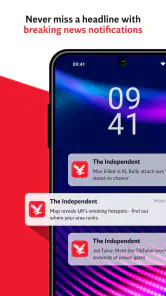
Yes, The Independent: Breaking News is intended to keep readers informed through breaking-news alerts and other notifications. During setup, you can usually decide whether to allow notifications, and device settings let you disable them later or adjust their behavior. Alerts can be useful for major developments, although users who prefer a quieter phone experience should review notification categories and avoid enabling every available update.
Pros
- Clear
- well-reported coverage of major national and global events.
- Strong focus on investigative journalism and independent viewpoints.
- App layout makes it easy to browse breaking news and featured stories.
- Articles generally provide useful context beyond the initial headline.
- Customizable alerts can help users stay informed about important developments.
Cons
- Many premium articles require a paid subscription to access fully.
- Frequent breaking-news notifications may feel excessive for some users.
- Some content can be politically opinionated rather than strictly neutral.
- Large images and media may consume noticeable mobile data.
- Certain app features may vary depending on your country or subscription plan.
- Category
- News & Magazines
- Version
- 3.0.22