The Denver Post
- 815.00
- 2.2
- Installs
- 100.00K
- Price
- Free

Screenshots


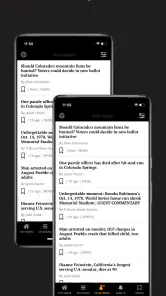




Analysis by Reviewed
I found The Denver Post most useful when I treated it as a quick local-news checkpoint rather than as my only source of information. Developed by MediaNews Group, this free news and magazine app brings Denver-area reporting, Broncos, Avalanche, Nuggets, Rockies, weather, and related coverage into one mobile reading space. Its strongest appeal is immediate: open it during breakfast or a commute, scan what matters, and move on without searching across several sites.
That convenience is also the central question for anyone considering keeping it installed. A news app can feel essential during a major local event, a storm, or a busy sports season, then become easy to ignore once the novelty fades. After spending time with it, my view is mixed but practical. It has a clear place for readers who want Denver-focused coverage and are willing to work around a few frustrations. It is less convincing for people who already rely on a broader news reader, prefer highly polished mobile design, or want a completely free reading experience without subscription prompts.
From the first week to a lasting reading habit
Why the first few days feel useful
The first-week experience is easy to understand. The app gathers several reasons someone might check local news into one destination. A reader interested in city developments can use it for general reporting, while a sports fan can move toward coverage of Denver teams without opening separate team apps. Weather adds another practical reason to return, especially when conditions may affect a commute, school plans, or an evening event.
I like that this combination reflects how people actually consume local information. I may open a news app for one headline, notice a weather update, and then glance at a game story before leaving. The Denver Post fits that short-session behavior better than a service built around long, uninterrupted reading. It is particularly handy when I want context from a local publication rather than a national headline that treats Denver as a small part of a much larger story.
The app’s subject mix also gives it a useful rhythm. General news can bring me in during the morning, weather can make it relevant at midday, and sports can bring me back after work. That variety is more important than it first appears because a single topic rarely creates a reliable daily habit for every reader. Someone who does not follow baseball may still return for weather; someone who skips political coverage may still care about a Broncos update.
Still, the first week can create expectations that are difficult to maintain. A busy news cycle makes almost any local news app feel indispensable. The better test is what remains valuable when there is no major breaking story and the local teams are between important games. That is where the app’s recurring usefulness depends on whether its coverage matches your interests closely enough to justify another icon on your phone.
What the app is like for different kinds of readers
For a Denver resident who wants one familiar place to check local developments, I can see the appeal. The app feels more focused than a general news aggregator because its identity is tied to one region. That focus reduces the time spent filtering irrelevant national stories. If I were new to the area, I would also find the local emphasis helpful for building a basic sense of what people nearby are discussing.
More From Our News Desk

Clash of Clans Is Won Between the Battles

Android Auto Makes the Case for Quieter Car Software

MobiOffice: Transforming Mobile Productivity with Seamless Integration

EA SPORTS FC™ Mobile Soccer: Redefining Mobile Sports Gaming

How Microsoft OneDrive Became a Mobile Productivity Giant

How Google Translate Breaks Language Barriers Effortlessly
For a sports-first reader, the decision is more dependent on expectations. The presence of Broncos, Avalanche, Nuggets, and Rockies coverage makes the app relevant across the local sports calendar, but I would not treat it as a replacement for a dedicated team or league service when live scores, deep statistics, alerts, or highly specialized analysis are the main priority. Its value is the combination of sports with broader Denver reporting, not necessarily the depth of a specialist tool.
For someone outside the Denver area, the case is narrower. The app may still be useful if you follow one of the teams, have family in the region, or want local reporting while traveling. Otherwise, its regional focus is more limitation than advantage. A national news app or an aggregator will usually offer a wider range of places and topics with less effort.
The age rating is Everyone 10+, which makes the app broadly approachable for households, although news itself naturally varies in seriousness. I would still use personal judgement before handing it to a younger reader, particularly during difficult breaking-news coverage. The rating does not change the basic experience, but it is worth remembering that a local news feed can move quickly from sports and weather to distressing events.
Small habits that make the app more useful
My first useful habit was to open the app with a specific purpose instead of scrolling without a plan. A quick morning pass works well: check the leading local stories, look at weather, and then visit sports only if there is a team I follow. This keeps the app from turning into an endless loop of headlines. It also makes it easier to decide whether it is earning its place on the phone.
A second habit is to use the app as a starting point for local context, not as a substitute for every other source. If a story affects travel, money, health, or an important personal decision, I prefer to compare it with official information or another reputable report. That is not a criticism unique to this app; it is simply a sensible workflow for any fast-moving news service. The local focus is valuable, but it should not encourage overconfidence after reading only one account.
A third, less obvious trade-off is that concentrating local news and sports in one app can reduce clutter while also making the reading experience feel busier. If I follow several teams and many local topics, the stream can become less focused than expected. I get better results by deciding which sections deserve regular attention and which ones I will visit only when something specific is happening.
Month-to-month value beyond the launch impression
After the first month, recurring value comes from routine rather than discovery. The app does not need to surprise me every day; it needs to provide a dependable reason to check in. Weather is the most practical anchor because it remains relevant even when news is quiet. Local reporting can then add depth to that routine, especially when a city decision, neighborhood issue, or regional event affects daily life.
Sports create a second anchor, but it is seasonal and personal. A fan may find the app much more worthwhile during a competitive stretch, while a casual follower may use it only around major games. That uneven pattern is not necessarily a weakness, but it means the app’s value can rise and fall over the year. I would not judge it solely during a sports-heavy week, and I would not uninstall it solely during an off-season lull.
The important question is whether the app saves enough time compared with my usual alternatives. A browser can reach the same publication, a general aggregator can combine multiple outlets, and dedicated sports apps can go deeper into scores and statistics. The Denver Post earns a continuing role when I want those local subjects together and prefer a single, publication-centered experience. If I already have a carefully organized news routine, the app may add convenience without adding much new information.
Its store presence shows a modest but real audience, with over one hundred thousand installs and an average rating of 2.2 from around one thousand three hundred ratings. I read that combination as a warning to keep expectations realistic rather than as an automatic rejection. People clearly use it, but the low average suggests that convenience alone does not erase interface, access, or reliability frustrations for many readers.
Where the ongoing friction appears
The largest long-term concern is that a news app has to make returning feel effortless. Any delay, awkward navigation, repeated prompt, or difficult transition from headline to article becomes more noticeable after the first few weeks. I am willing to tolerate a little friction during a major story, but not if every ordinary visit requires extra effort. A local app competes not only with other publications but also with the speed of opening a browser and searching for the same subject.
Access expectations matter as well. The app is free to install, but in-app purchases range from $14.99 to $174.99 per item. That makes it important to distinguish between downloading the app and having unrestricted access to everything inside it. I would not install it assuming that every article or feature will remain available without a subscription-related decision. Before building a daily habit, I would check how the current reading experience handles articles I care about and whether the cost fits my budget.
This is one area where the app may suit a committed local-news reader better than a casual visitor. If I read several stories each week and value the publication’s regional focus, a paid option could feel more reasonable than repeatedly searching across unrelated sources. If I only want an occasional headline or weather glance, the purchase range makes the app harder to justify. The right choice depends less on the download price and more on how often I expect to use the coverage.
The current version is 10.0.60 and it requires Android 8.0 or later. That is useful information for anyone using an older phone, particularly if the device is kept for basic tasks and has not been updated recently. On a supported device, I would still leave enough storage and system resources for normal app use, but I would not assume that compatibility alone guarantees a smooth experience on every handset.
Sources of fatigue that can weaken the habit
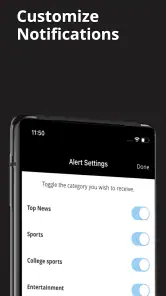
News fatigue is the most predictable problem. A steady stream of alerts, dramatic headlines, and repeated updates can make the app feel demanding rather than helpful. I prefer to decide when I want news instead of allowing every developing story to interrupt the day. If the app’s notifications become noisy, reducing them or checking manually is a better test of its value than deleting it immediately.
Sports fatigue works differently. Following four major Denver teams can make the app feel lively, but it can also crowd out the general reporting that originally attracted me. A reader who cares deeply about one team may find the broader mix distracting, while a general-news reader may not want sports coverage competing for attention. The app’s breadth is useful only when the reader’s interests overlap with that breadth.
Another source of fatigue is repetition. Breaking stories often evolve through several updates, and not every new headline adds enough substance to justify another visit. I get more from the app when I scan for meaningful developments instead of opening every variation of the same story. This is a small reading skill, but it makes a real difference to whether the service feels informative or merely busy.
I also think about maintenance. Keeping any news app useful means occasionally reviewing notifications, checking whether it still fits my reading routine, and removing it if I have stopped opening it. That maintenance is not difficult, but it is easy to ignore. A forgotten news app can occupy attention without delivering value, especially when a browser bookmark or another service already covers the same needs.
How it compares with common alternatives
Compared with a browser shortcut, the app offers a more direct, publication-specific entry point. A browser is more flexible and may be better for readers who want to compare several outlets or avoid adding another installed app. The dedicated app becomes preferable when I repeatedly return to Denver Post coverage and want the same local mix without rebuilding the search each time.
Compared with a general news aggregator, this app trades breadth for local identity. Aggregators are better when I want multiple viewpoints, international headlines, or a single feed covering many cities. The Denver Post is better when regional relevance matters more than variety. I would choose the aggregator for a broad morning briefing and this app for a Denver-centered check-in.
Compared with dedicated sports apps, it gives up specialist depth in exchange for including news, weather, and local reporting beside team coverage. That makes it a sensible companion for a fan who also cares about the city, but not necessarily the best primary tool for someone tracking every statistic or live development. Using both can be logical, although that also increases notification and maintenance burden.
Compared with a print-style reading routine, the app is more convenient for quick updates and changing conditions. A longer article may still be easier to enjoy when I deliberately set aside time, while the phone format encourages short visits. I would use the app to stay current and choose a calmer reading method when I want to absorb a complex story without distractions.
Who should keep it installed
I would recommend trying it to Denver residents who want local reporting, weather, and the city’s major professional sports in one place. It is also a reasonable choice for former residents, relatives, and fans who need a regional perspective from a distance. The free installation lowers the risk of testing it, provided the reader pays attention to how in-app access works before committing to a purchase.
I would skip it if my main goal is national or international coverage, deep sports statistics, or a completely frictionless free news feed. I would also hesitate if I already have a browser routine that reaches the same stories quickly and I do not need the app’s combined subject mix. In that situation, another installation may add more maintenance than value.
For a realistic daily scenario, I can imagine opening it before leaving home to check Denver weather, scanning one or two local headlines, and then checking a team update during lunch. That is enough to make the app useful without turning it into a constant companion. The key is keeping the routine intentional: use it for local awareness, then close it rather than letting the feed dictate the rest of the day.
My long-term verdict
The Denver Post earns lasting space only when its local focus matches a genuine recurring need. I would keep it installed if Denver news, weather, and sports are all part of my normal week, because the combination is convenient and easy to understand. I would not keep it simply because it was useful during one major event or an exciting sports period.
MediaNews Group has a clear opportunity here: make the everyday check-in feel smoother than a browser search and more focused than a broad aggregator. For now, the app’s value is real but conditional. The low average rating tells me to approach it with patience, while the content mix gives it a better chance of becoming a habit than a single-topic news tool.
My final recommendation is to test it through an ordinary month, not just a dramatic news week. Adjust the notification routine, compare the reading experience with your usual alternatives, and decide whether the local coverage saves meaningful time. If the app consistently answers “what is happening around Denver?” faster than your existing routine, it deserves a place on your phone; if not, the novelty will probably fade.
The Denver Post Frequently Asked Questions
What does The Denver Post app cost, and are there subscription charges?
The Denver Post is free to download, so you can install it without paying upfront. Some reading access and digital features may require a subscription, with in-app purchase options ranging from $14.99 to $174.99 per item. Check the purchase details shown in the app before subscribing, and make sure the plan suits how often you expect to read.
Who publishes The Denver Post app, and what should I know about its ratings?
The app is published by MediaNews Group and is listed in the News & Magazines category. Its average rating is 2.2, based on around 1.3 thousand ratings, with 815 written reviews. Ratings can help set expectations, but individual experiences vary; consider the comments that matter most to you, especially those about reading access, navigation, and performance.
What is The Denver Post app?
The Denver Post app is a mobile news application that gives readers access to reporting from The Denver Post, including local news from Denver and Colorado, politics, sports, business, entertainment, lifestyle coverage, and breaking updates. After installing it, users can browse articles through a mobile-friendly interface and, depending on their account and subscription, access additional digital newspaper content and subscriber features.
Is The Denver Post app free to download and use?
The app is generally free to download, and users may be able to read a limited selection of articles without paying. However, many stories and digital newspaper features can be protected by a subscription or metered access limit. The exact number of free articles, available sections, and subscription options may change, so it is worth checking the current terms shown in the app before subscribing.
Do I need a subscription to read articles in The Denver Post app?
A subscription is not always required for basic browsing, but regular readers may encounter a paywall after viewing a certain number of articles or when opening premium content. A digital subscription typically provides broader access to the publication, subscriber-only stories, and other benefits. Existing subscribers can usually sign in with their account credentials to connect their access to the mobile app.
Pros
- Clear local coverage of Denver and Colorado news
- Useful sections for sports
- politics
- business
- and culture
- Breaking news alerts help users stay informed quickly
- Clean layout makes articles easy to browse
- Supports saving articles for reading later
Cons
- Many premium articles require a paid subscription
- Advertising can interrupt the reading experience
- Some content may load slowly on weaker connections
- Push notifications may feel frequent for some users
- Coverage is primarily regional rather than global
- Category
- News & Magazines
- Version
- 10.0.60