The Buffalo News App
- 236.00
- 4.5
- Installs
- 50.00K
- Price
- Free

Screenshots


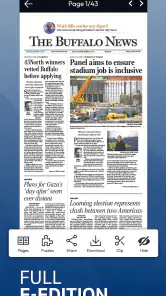


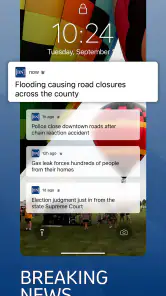
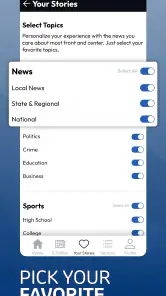

Analysis by Reviewed
I installed The Buffalo News to see whether it could become a regular part of my news routine rather than something I opened once and forgot. It is a free News & Magazines app from The Buffalo News, built around local reporting, sports, weather, and the wider Western New York news cycle. My first impression was that its value depends less on flashy presentation and more on whether local coverage matters to your daily life.
That distinction is important. A national news app can give me a broad overview in seconds, while a general weather app may be better for detailed forecasts. This app makes a different promise through its focus: it puts Buffalo-area information closer to the center of the experience. If I lived in the region, followed its teams, worked there, or had family nearby, that focus would make the app much more useful than a generalized news feed.
The app is rated for Everyone 10+, runs on Android 8.0 or later, and has been available since August 28, 2012. Its current version is 9.22, which gives it the feel of an established publication product rather than a short-lived experiment. It has passed fifty thousand installs and holds a 4.5 average from roughly 457 ratings, with about 236 written reviews. Those figures suggest a stable audience, but they do not remove the central question: will I still open it after the initial curiosity disappears?
From first-week appeal to a practical news habit
Why the first few sessions feel useful
During the first week, the strongest appeal is the local angle. I could use the app as a quick check-in point for what was happening around Western New York instead of assembling that picture from several unrelated sources. Local news often gets lost inside national feeds, where major headlines crowd out neighborhood developments, regional sports, and weather conditions that affect the next few hours. A publication-centered app gives those subjects a clearer home.
I found the most natural routine was to open it at a few predictable moments: before leaving home, during a quiet break, and later in the day when I wanted to understand what had changed. That approach works better than treating it as an endless stream to scroll through. The app is most valuable when I use it to answer a practical question: what matters locally today?
Sports readers may also find a strong reason to return. A broad sports application can cover scores and major national stories efficiently, but it usually does not make a regional audience feel like the main audience. Here, local sports sit alongside news and weather, so the app can serve someone who wants a single Buffalo-focused destination rather than three separate apps.
The weather component is useful in a different way. I would not replace a dedicated weather service when I need radar detail, severe-weather tools, or highly specialized forecasting. However, a local news app can put weather in the same daily context as road conditions, community events, and regional reporting. That combination is convenient when I only need a quick sense of whether the day’s conditions could affect my plans.
More From Our News Desk

Clash of Clans Is Won Between the Battles

Android Auto Makes the Case for Quieter Car Software

MobiOffice: Transforming Mobile Productivity with Seamless Integration

EA SPORTS FC™ Mobile Soccer: Redefining Mobile Sports Gaming

How Microsoft OneDrive Became a Mobile Productivity Giant

How Google Translate Breaks Language Barriers Effortlessly
A realistic morning scenario
Imagine a weekday morning in which I am deciding whether to leave early, follow a local sports story, and keep an eye on developments near Buffalo. Instead of opening a national news app, a sports app, and a weather tool in sequence, I can begin with this one. I may still use another service for detailed information, but the first visit helps me decide what deserves closer attention.
That is one of the app’s less obvious strengths: it can work as a local orientation tool, not merely as a place to read isolated articles. The value comes from the relationship between sections. News tells me what is happening, sports gives me a regional interest point, and weather adds immediate practical context. None of those areas alone would justify every user keeping the app, but together they create a reasonable first stop for the right audience.
What the app is not trying to replace
I would not install it expecting the breadth of a national aggregator. If my main interests are international affairs, technology launches, business markets, or entertainment from around the world, a larger general-purpose service will probably be more efficient. The Buffalo News is more focused, and that focus is both its identity and its limitation.
I also would not treat it as a complete emergency information system. Local reporting and weather awareness are useful, but anyone making safety decisions should still consult the appropriate official alerts and specialized weather resources. The app can help me notice a developing story; it should not be my only source when conditions are serious or rapidly changing.
The role of the publication behind it
The developer is The Buffalo News, so the app feels tied to a specific regional publication rather than to an anonymous content aggregator. That matters for readers who want a recognizable local source and a consistent editorial home. It also means the experience is likely to feel more relevant to Buffalo-area readers than to someone who has no connection to the region.
For me, that editorial identity makes the app easier to understand. I know why it exists and who it is meant to serve. The trade-off is equally clear: the narrower the geographic connection, the less compelling it becomes when my interests move away from Western New York.
Month-to-month value, maintenance, and fatigue
How recurring value is created
News apps earn their place through repetition. A useful first session is not enough; I need a reason to return tomorrow, next week, and next month. This app has a credible foundation for that habit because local news changes continuously, sports schedules create recurring interest, and weather remains relevant every day. Those are durable subjects rather than one-time content categories.
The most sustainable routine is to keep visits short and purposeful. I would check the app for the local picture, open the stories that affect my interests, and leave when I had enough. This avoids the fatigue that comes from trying to consume every headline. It also makes the app easier to maintain as a habit because it does not need to become a large part of my day.
A second useful workflow is to use it as a filter before going elsewhere. I can begin with local coverage, identify the subjects that matter, and then move to a specialist source only when I need more depth. For example, the app may be the place where I notice a weather-related development, while a dedicated forecast service becomes the place where I examine details. That division of labor is more realistic than expecting one app to do everything equally well.
Readers who follow Buffalo sports may have an especially strong recurring reason to return. Sports interest naturally creates a calendar of check-ins, while local news gives the app value even when there is no major game or event. Conversely, someone who rarely follows regional stories may find that the available material does not change their routine enough to justify another icon on the phone.
The hidden maintenance cost of a news app
The maintenance burden is not just storage or updates. It is attention. Every news app asks me to decide how often to check it, which alerts or prompts deserve my time, and when to stop reading. A local publication app can be easier to manage than a huge aggregator because its scope is narrower, but it can still contribute to notification fatigue or habitual checking if I open it without a clear purpose.
My advice is to create a simple rule: use it at chosen points in the day rather than responding to every possible interruption. If the app offers notifications on your device, I would review them after installation and keep only the kinds of updates that genuinely help. That is not a criticism unique to this product; it is the difference between a useful news habit and a stream that constantly competes for attention.
There is also a subscription-related consideration. The app itself is free to download, but in-app purchases range from $26.99 to $324.99 per item. That means the free entry point should not be confused with unlimited access to every possible part of the publication experience. Before committing to a paid option, I would check exactly what it unlocks, how long the access lasts, and whether it matches the amount of local news I expect to read.
This is an important long-term trade-off. A frequent local-news reader may see paid access as a reasonable way to support and use a publication they depend on. A casual visitor may decide that the free portions are enough, or that a broader news service better fits their habits. The right choice depends on reading frequency, not simply on the fact that the app can be installed without an upfront charge.
Where reading fatigue can appear
The first source of fatigue is repetition. Local news is valuable because it is close to home, but a smaller geographic focus can also mean that the overall range feels limited compared with a national feed. If I want constant novelty from many countries and subjects, the app may start to feel narrow after the first burst of interest.
The second source is the tension between quick updates and meaningful reading. I may open the app expecting a fast glance and find that the stories I care about require more time. That is not inherently bad, but it changes the app from a lightweight headline tool into a publication I need to read selectively. I get better results when I choose a few relevant stories instead of trying to process everything.
The third issue is the boundary between free access and paid content. A reader can become invested in the publication and then encounter a purchase decision at the moment a particular story matters. That model may be perfectly reasonable, but it should be part of the decision from the beginning. If I strongly dislike subscription prompts or paid article limits, this may not be the least frustrating option for me.
Who should keep it installed
I would recommend keeping it installed if Buffalo or Western New York is part of your everyday life. That includes residents, commuters, students, sports followers, people with relatives in the area, and anyone who needs regional context more often than national headlines. For those users, the app’s focus can save time and make local information easier to find.
It is also a good fit for someone who prefers a publication-based reading habit over a constantly mixed algorithmic feed. The narrower editorial purpose can feel calmer and more intentional. Instead of being pulled between unrelated viral stories, I can open it with a clear expectation of what kind of information I am going to find.
I would be more cautious about recommending it to travelers who only need temporary information, readers who want worldwide coverage, or people who already have a trusted local-news routine that they never use. Installing another app does not improve a routine if it merely duplicates an existing source. In that case, a browser bookmark, a general aggregator, or a specialized weather service may be more efficient.
How it compares with familiar alternatives
Compared with a national news aggregator, this app gives up breadth in exchange for local relevance. An aggregator is better when I want many publishers, international headlines, and a wide range of subjects in one place. The Buffalo News app is better when the question is specifically what is happening in and around Western New York.
Compared with a social media feed, it offers a more deliberate destination. Social platforms can surface local stories quickly, but they also mix reporting with commentary, reposts, and unrelated material. This app is preferable when I want to begin with a publication rather than with whatever a timeline happens to prioritize.
Compared with a dedicated weather app, it is less likely to be my first choice for detailed forecasting. Its advantage is convenience: weather sits within a broader local-news routine. I would use the dedicated tool for precision and this one for context.
Compared with reading the publication through a mobile browser, a dedicated app may feel more natural for repeated visits, while the browser can be better for people who do not want another installed app or who only read occasionally. The choice comes down to habit. If I check local coverage often, an app deserves consideration; if I visit only when a particular story appears, the browser may be enough.
My long-term verdict
After the novelty fades, I think The Buffalo News earns lasting space for the right reader, but not automatically for everyone. Its strongest quality is clear purpose: it brings local news, regional sports, and weather into one Buffalo-focused destination. That focus gives it recurring value when my life is connected to Western New York.
Its weaknesses are also tied to that purpose. The geographic scope may feel too narrow for people seeking a worldwide news diet, and the free download does not mean every part of the publication experience is free. The app can also become another source of attention demands if I let checking turn into an all-day habit.
My practical recommendation is to try it with a defined routine rather than judging it by the first few minutes. Use it as a morning local briefing, a sports check-in, or a way to understand regional developments before opening specialist apps. After a few weeks, ask whether it has replaced scattered searches with a simpler habit. If it has, the app is doing something worthwhile.
For me, the deciding factor is recurring relevance. If Western New York matters to your daily decisions, this is a focused local news companion rather than just another headline app. If it does not, the same focus becomes a reason to skip it. I would keep it installed for regional awareness, use a dedicated weather service when precision matters, and think carefully before paying for access unless I knew I would read the publication regularly.
The Buffalo News App Frequently Asked Questions
Is The Buffalo News app available for both Android and iOS?
The Buffalo News app is listed for Android and iOS, so readers can look for it in Google Play or the App Store. It is a News & Magazines app from The Buffalo News, with the short description “The Buffalo News.” Before downloading, check that your device meets the platform’s current requirements and that you are selecting the official app from its publisher.
What is The Buffalo News app used for?
The Buffalo News app provides access to local and regional journalism covering Buffalo and Western New York. After installing it, users can browse breaking news, politics, sports, business, entertainment, weather, and community stories in one place. It is designed for readers who want updates from the publication without relying exclusively on a mobile browser. Its focus is local coverage, making it especially relevant to people who follow the region.
Is The Buffalo News app free to download and use?
The app is free to download, but access to all articles and premium content may depend on your subscription status. Some stories can be available to everyone, while other content may require a digital subscription or an account. The app includes in-app purchase options, so review the current terms, pricing, and access limits shown in the App Store or Google Play before committing to a purchase.
Do I need a subscription to read articles in The Buffalo News app?
A subscription may be required for unlimited access to the full article library and certain subscriber-only features. The exact restrictions can change, so readers should review the in-app prompts and the publisher’s current subscription options. Existing subscribers can typically sign in with their account credentials to connect their digital access to the app. If you only want to browse the available content, check what can be read before subscribing.
What features are available in The Buffalo News app?
The app typically offers a categorized news feed, article reading, photo and multimedia content, sports coverage, weather information, and notifications for important local developments. Depending on the current version, users may also find saved stories, subscriber features, or personalized settings. Feature availability can vary by device, operating system, account type, and future updates. Its stated role is as a resource for local news, sports, and weather in Western New York.
Pros
- Fast access to breaking news and local Buffalo coverage
- Clean layout makes articles easy to browse and read
- Personalized alerts help users follow important topics
- Includes sports
- weather
- business
- and community updates
- Supports saving stories for convenient reading later
Cons
- Some premium articles may require a paid subscription
- Frequent notifications can feel excessive without customization
- Video and image content may use significant mobile data
- Coverage is mainly regional and less useful outside Western New York
- App performance may vary on older phones or slower connections
- Category
- News & Magazines
- Version
- 9.22