St. Louis Post-Dispatch News
- 511.00
- 4.5
- Installs
- 100.00K
- Price
- Free

Screenshots
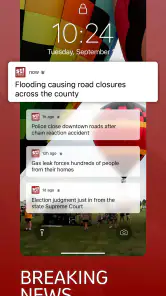
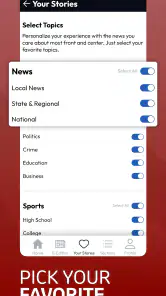
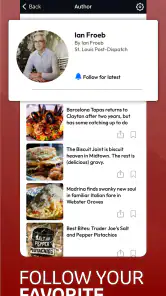

Analysis by Reviewed
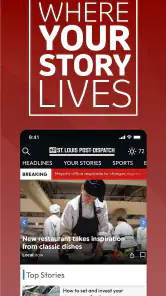
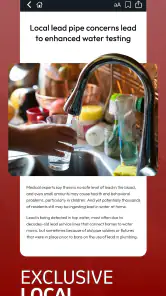
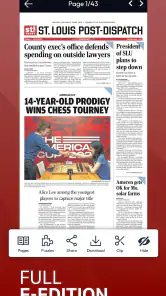
I approached St. Louis Post-Dispatch News as the kind of app that has to prove its value after the first burst of curiosity. News apps are easy to install and just as easy to forget, so my main question was simple: does this give me a practical reason to return, or is it merely another icon competing for attention? In my experience, its strongest case is local relevance. It brings the St. Louis Post-Dispatch’s news, sports, entertainment, and video coverage into one mobile reading destination, which makes it more useful for people who want a regional view rather than a constant stream of national headlines.
The app is free to download and is suitable for Everyone, so there is little commitment involved in trying it. It comes from St. Louis Post-Dispatch, the newspaper publisher behind the coverage, and its long presence on mobile gives it the feel of an established companion rather than a short-lived experiment. I found that distinction important: the app is not trying to replace every news source on my phone. Its job is narrower and more focused, and that focus is where most of its lasting value comes from.
How the app holds up beyond the first week
The first-week appeal is local context, not endless novelty
During the first few days, the most noticeable benefit is convenience. Instead of opening a browser, searching for the latest St. Louis developments, and sorting through unrelated results, I can use a single app aimed at the area I care about. That makes a difference during a busy morning, when I want a quick sense of what is happening before work, or in the evening, when I want to catch up without navigating several websites.
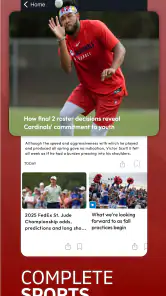
The coverage mix also gives the app a broader rhythm than a single-topic reader. Local news can tell me what affects the community, sports can keep the app relevant on game days, entertainment provides a lighter reason to return, and video offers another way to consume coverage when I do not feel like reading a long article. That variety helped prevent the first impression from becoming too narrow.
I would not describe the experience as a replacement for every source I use. A national news app is usually better when I want international developments, broad political coverage, or a large range of perspectives in one place. A social feed may surface breaking conversations faster, although it can also be noisier and less dependable. This app makes more sense when the question is, “What matters in and around St. Louis?” rather than, “What is happening everywhere right now?”
One useful habit is to open it with a specific purpose instead of scrolling without a plan. I might check local headlines first, then move to sports or entertainment only if I have time. That small approach keeps the app from turning into a time sink and makes its regional focus feel intentional. It is also a better way to judge whether the content fits my routine than simply browsing it once after installation.
What makes the reading routine practical
The app works best as a short, repeatable check-in. For example, I can imagine opening it while having coffee, scanning the main local developments, saving mental notes about stories that affect my day, and leaving before the news cycle takes over the morning. Later, I might return for sports updates or a video. The point is not to spend hours inside it; the point is to make local awareness easy enough that I actually maintain the habit.
More From Our News Desk

Clash of Clans Is Won Between the Battles

Android Auto Makes the Case for Quieter Car Software

MobiOffice: Transforming Mobile Productivity with Seamless Integration

EA SPORTS FC™ Mobile Soccer: Redefining Mobile Sports Gaming

How Microsoft OneDrive Became a Mobile Productivity Giant

How Google Translate Breaks Language Barriers Effortlessly
That workflow is especially useful for people who have moved away from St. Louis but still care about the area. It can also help residents who want local reporting alongside a national source, rather than expecting one application to provide every kind of journalism. Parents following school or community issues, sports fans checking regional coverage, and readers interested in local entertainment all have clearer reasons to keep it installed than someone who only wants general world news.
My first-week impression was therefore positive but conditional. The app earns attention quickly because its subject is specific and familiar. The harder test is whether that specificity continues to matter once the initial exploration is over. A well-organized local news app can become part of a daily routine, but only if the reader’s connection to the region is strong enough to justify repeated visits.
The role of video and lighter coverage
Video gives the app a useful change of pace. There are moments when I would rather watch an update than read several paragraphs, particularly when I am moving around or taking a short break. Entertainment coverage serves a similar purpose by giving the app something less urgent than breaking news. Those sections make the experience feel more like a complete regional publication than a bare headline list.
Still, I would treat video and entertainment as supporting reasons to return, not the entire reason to install it. If I mainly want entertainment clips or broad video discovery, a dedicated video platform will offer a much wider selection. The app’s advantage is the connection between those formats and St. Louis coverage. That connection is useful when I want local context, but less compelling when location does not matter to me.
Month-to-month value depends on personal connection
After the novelty fades, the app’s value becomes more selective. Someone who lives in the region or follows its institutions, teams, and cultural life can find a recurring reason to open it. The app’s 4.5 average from around 1.4 thousand ratings suggests that many users find the overall experience worthwhile, and its reach of over 100 thousand installs shows that it has attracted a substantial mobile audience. Those figures do not decide whether it belongs on my phone, but they do fit the impression of a recognized local news product rather than an obscure utility.
For me, the strongest long-term use is not constant checking. It is using the app as the local layer in a wider information routine. I can pair it with a national outlet for broader events and perhaps a specialized sports source when I need deeper analysis. That division of labor is healthier than demanding that the Post-Dispatch app compete with every alternative on every subject.
There is also a trade-off in choosing a publisher-centered app. The focused editorial identity can make local coverage easier to find, but it may feel less flexible than an aggregator that combines many publications. An aggregator is better for comparing headlines across outlets or following several cities. This app is better when I want one established regional source to be the starting point for St. Louis information.
The recurring value is strongest when I build the app into a particular moment. A weekday morning check, a pre-game visit, or an evening review of local developments gives it a defined role. Without that role, it can become another source of notifications and headlines that I intend to read later but rarely do. The app cannot create a personal connection to local news; it can only make that connection easier to maintain.
Free access and the point where costs matter
The free price makes testing straightforward, but the app also includes in-app purchases ranging from $26.99 to $324.99 per item. That is important for anyone deciding whether this is merely a free news reader or part of a broader subscription relationship. I would inspect the purchase screen carefully before committing, especially if I only want occasional headlines and do not read the publication regularly.
For a frequent local-news reader, paying may make more sense than repeatedly searching the web, but the value depends on reading depth and consistency. Someone who opens the app several times a week and relies on its reporting may see a subscription as part of an information budget. Someone who checks local news only during major events should be more cautious and use the free entry point to determine whether the routine lasts.
I appreciate that the free download lowers the barrier to experimentation, but I would not treat “free” as the complete cost story. The purchase range is wide, and the higher end makes it especially important to understand what each option provides before confirming anything. This is one of the app’s clearest long-term considerations: usefulness can be high, yet the right spending decision depends on how central local coverage is in my life.
Maintenance is light, but attention is the real cost
From a maintenance perspective, the app is not demanding in the way a large game or a complex productivity tool can be. It is a focused news application, and the current version is 9.22 with a minimum operating system requirement of Android 8.0. That makes it accessible to many Android users without requiring a recent flagship phone. The practical maintenance burden is less about setup and more about deciding when the app deserves my attention.
News apps can quietly become tiring because their content changes constantly. If I check every headline, I can spend more time managing information than learning from it. My preferred approach is to use a short reading window and leave once I understand the important local developments. That keeps the app useful without allowing it to occupy every spare moment.
Another maintenance question is whether I still need it when my circumstances change. If I move away, stop following local sports, or lose interest in regional entertainment, the app’s reason for staying installed becomes weaker. In that situation, an app with broader geographic coverage may be a better permanent choice. The Post-Dispatch app is valuable precisely because it is specific, so that specificity can become a limitation when my connection to St. Louis changes.
I also recommend reviewing any purchase choices with the same care I would give a newspaper subscription. The app itself is easy to try, but an ongoing news habit should be deliberate. I would decide whether I am paying for regular reporting I genuinely use, not simply responding to a particularly interesting headline. That distinction prevents the first week’s excitement from turning into a long-term expense with little daily benefit.
Where fatigue can build over time
The first source of fatigue is repetition. Local stories naturally develop over several days, and readers who check frequently may encounter updates that feel incremental rather than substantial. That is not necessarily a flaw in the journalism; it is a consequence of following a continuing news cycle closely. I found that spacing out visits can make the coverage feel more meaningful and reduce the sense that every update requires immediate attention.
The second issue is scope. A reader who expects a complete national and international news service may feel that the app is too narrow. Its regional concentration is its identity, but it also means I still need another source for subjects outside St. Louis. If I want one app to cover the entire world, this is not the most efficient choice.
There is also a format trade-off. Some people prefer a clean text-first experience, while others appreciate video and mixed coverage. The presence of several content types makes the app more versatile, but it may not satisfy a reader who wants only long-form articles or only fast headlines. I would choose it for breadth within local coverage, not for a highly specialized reading style.
Finally, the possibility of in-app purchases can create friction for users who interpret a free download as a promise of unlimited access. I would approach the app with realistic expectations: install it, explore the available experience, and then decide whether the broader paid relationship matches my habits. That is a more reliable test than assuming the free starting point tells the whole story.
Who should make room for it
I would recommend keeping it installed if St. Louis is part of your everyday life or personal identity. Residents who want a convenient local news source, sports followers who value regional coverage, and former residents who still care about the area are the clearest audience. It can also suit readers who want a publisher-based alternative to algorithmic social feeds, where local stories may appear without much context or may be buried beneath unrelated posts.
The app is also a reasonable choice for someone building a two-source routine: one local publication for regional awareness and one broader service for national and international news. In that arrangement, it does not need to do everything. It only needs to make St. Louis coverage easy to reach and worthwhile enough to revisit.
I would skip it if I have no meaningful connection to the region, if I want a worldwide news dashboard, or if I rarely read news in the first place. I would also look elsewhere if I prefer comparing many outlets in one feed. An aggregator or a broad national news app would be more efficient for those needs. Installing this one simply because it is free would not be a strong reason to keep it.
My long-term verdict
After the initial curiosity fades, St. Louis Post-Dispatch News still has a defensible place on my phone, but only when local relevance is part of my routine. Its lasting strength is concentration: news, sports, entertainment, and video are gathered around one region instead of being diluted across a general-purpose feed. That focus gives me a practical reason to return, especially when I want a St. Louis perspective rather than another national summary.
My recommendation is to treat it as a local news companion, not an all-purpose replacement for every information source. Start with the free app, establish a realistic check-in habit, and judge its value by whether you return after the first week for reasons that matter to you. If you do, the app can earn lasting space through recurring local usefulness. If you do not, its narrow focus will make it feel unnecessary quickly.
The lasting value is simple: keep it for the place it covers, not for the novelty of having another news app. For St. Louis readers, that is a convincing reason to stay. For everyone else, a broader alternative will probably make better use of both attention and storage.
St. Louis Post-Dispatch News Frequently Asked Questions
What devices and operating systems can run the St. Louis Post-Dispatch News app?
The St. Louis Post-Dispatch News app is available for Android and iOS devices, making it possible to follow local coverage from a phone or tablet. On Android, it requires version 8.0 or later. The app is listed in the News & Magazines category and is developed by St. Louis Post-Dispatch, so check your device’s compatibility before downloading.
Is the St. Louis Post-Dispatch News app free to download?
The app is free to download, but that does not necessarily mean every article or feature is free to use. In-app purchases are available, with listed prices ranging from around $27 to $325 per item. Access to some stories may depend on your subscription status, so review the current terms and purchase details in the app store before proceeding.
What is the St. Louis Post-Dispatch News app?
The St. Louis Post-Dispatch News app is a mobile news platform focused on the St. Louis region and surrounding communities. It provides access to local reporting, breaking news, politics, sports, business, entertainment, weather, and opinion content. The app is designed for readers who want convenient access to the newspaper’s coverage from an Android or iOS device.
Is the St. Louis Post-Dispatch News app free to download and use?
The app can generally be downloaded without charge, but access to all articles and features may depend on your subscription status. Some stories may be available to non-subscribers, while other content can be protected by a digital paywall. Before downloading, users should review the current subscription terms, trial conditions, and in-app pricing shown in the official app store.
What type of news and content can I read in the app?
The application typically includes local St. Louis news, Missouri and Illinois regional coverage, sports updates, crime reports, politics, business, health, culture, entertainment, weather, and editorial content. Coverage may also include major national or international stories when they are relevant to local readers. Available sections and publishing frequency can change as the service is updated.
Pros
- Covers local St. Louis news
- politics
- sports
- and community updates.
- Offers timely reporting from a well-established regional newsroom.
- Includes useful coverage of Missouri and Illinois area developments.
- Provides weather information relevant to the St. Louis region.
- Clean layout makes browsing recent stories generally straightforward.
Cons
- Most content is focused on the St. Louis area and may feel limited elsewhere.
- Some articles and premium features may require a paid subscription.
- Breaking-news alerts can become frequent for users with notifications enabled.
- Video and multimedia availability may vary between individual stories.
- The app’s usefulness depends heavily on having an interest in local news.
- Category
- News & Magazines
- Version
- 9.22