SITREP
- 35.00
- 3.1
- Installs
- 10.00K
- Price
- Free

Screenshots
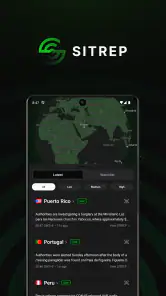
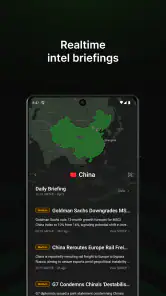

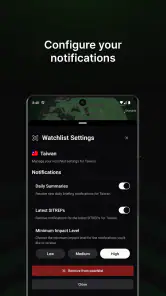
Analysis by Reviewed
When I opened SITREP, I approached it as a practical news tool rather than another app for casually scrolling headlines. Its focus is real-time global intelligence and alerts, which gives it a more urgent feel than a standard magazine reader. I wanted to see whether that focus could help me move from “something is happening” to “I understand what deserves my attention,” without turning every notification into a distraction.
The app comes from Artorias, Inc. and sits in the News & Magazines category. It is free to install, available for Everyone, and supports devices running iOS 11 or later. The current version is 1.0.5. Those details make it approachable for a wide audience, although the presence of optional purchases priced at $9.99 per item means I would still check what is included before paying for anything.
From a vague concern to a clearer news routine
The most useful way to think about SITREP is as part of a workflow. I would not begin by opening it with no purpose and expecting it to replace every newspaper, broadcaster, or specialist source. I would start with a question: is there a developing international event I need to monitor, and do I want alerts rather than a quiet reading session?
That starting condition matters because an alert-centered app can be valuable when time is limited, but less satisfying when I want long-form reporting, cultural coverage, local stories, or a carefully edited morning digest. SITREP’s identity points toward awareness and reaction. It is better suited to keeping an eye on movement than to being my only source for understanding a complicated subject.
For example, imagine I am preparing for a workday while messages are arriving about an overseas crisis. My first need is not a dozen opinion pieces. I need to know whether the situation is still developing, whether it has broader consequences, and whether I should pass a concise update to someone else. That is the kind of moment in which a global alerts app can earn a place on my phone.
I also found it helpful to separate three jobs that news apps often mix together: detecting an event, checking its importance, and understanding its background. SITREP is most naturally positioned at the first job, with a possible bridge into the second. I would still use established reporting for the third, especially when a decision depends on context rather than speed.
Setting expectations before the first alert
The store summary describes real-time global intelligence and alerts, while the short description simply identifies the app as SITREP. That concise positioning tells me not to expect the dense customization of a full news reader. The experience makes more sense when I treat incoming information as a prompt to investigate, not as a complete briefing delivered in one tap.
More From Our News Desk

Clash of Clans Is Won Between the Battles

Android Auto Makes the Case for Quieter Car Software

MobiOffice: Transforming Mobile Productivity with Seamless Integration

EA SPORTS FC™ Mobile Soccer: Redefining Mobile Sports Gaming

How Microsoft OneDrive Became a Mobile Productivity Giant

How Google Translate Breaks Language Barriers Effortlessly
That distinction is one of my main recommendations. If I receive an alert and immediately forward it without checking the surrounding story, I am using the app badly. A better routine is to pause, open the item, identify what changed, and then compare it with a trusted source when the subject is sensitive. Speed is useful, but speed without verification can create unnecessary confusion.
The app has reached 10K+ installs, and its average rating is 3.1 from 123 ratings, with 35 written reviews. I read that combination as a sign to keep expectations measured. It is not evidence that the concept fails, but it does suggest that the experience may not satisfy every type of news reader. People who want a polished, deeply personalized content ecosystem may find ordinary news platforms more comfortable.
My step-by-step workflow
I would begin by opening SITREP when I have a defined monitoring goal. That might be checking global developments before a meeting, following a region connected to family or travel, or keeping an eye on a story that could change during the day. Starting with a purpose helps prevent the app from becoming another endless stream competing for attention.
Next, I would scan the available information for urgency and relevance. The important question is not simply “what is newest?” but “what changes something for me?” An alert about a distant event may be worth reading because it affects travel, markets, safety, or a professional responsibility. Another item may be dramatic but irrelevant to my immediate decisions.
After identifying an item worth following, I would read it as a lead rather than a final conclusion. I would note the location, the kind of event being described, and whether the wording indicates a confirmed development or a rapidly changing situation. This small pause is a concrete advantage in a real workflow: it reduces the chance that I confuse an early signal with a settled account.
Then I would hand the subject to a second source when accuracy matters. A conventional newspaper app may offer more explanation, while a broadcaster may provide live coverage or video. A specialist publication may be better for economics, technology, health, or security. SITREP can begin the chain, but it should not automatically be the last link.
Finally, I would decide what action the information deserves. Sometimes the outcome is simply awareness. Sometimes I would save a note, tell a colleague that a situation is developing, adjust a plan, or return later for confirmation. This is where an alert tool becomes useful: not because it eliminates judgment, but because it can shorten the time between an event emerging and my decision to investigate it.
Where handoffs become important
The first handoff is from the app to my own attention. Notifications are only helpful if I can interpret them in context. If I am working, driving, sleeping, or already overloaded with messages, an alert may arrive at the wrong moment. I would be selective about when I allow the app to interrupt me and use it during periods when I can actually follow through.
The second handoff is from a quick signal to a fuller report. This is the point where SITREP competes with ordinary news apps. A general news service usually has a familiar structure: headline, article, related coverage, and sometimes video or commentary. That structure is more comfortable when I want to sit down and understand a story. SITREP’s appeal is the opposite direction: it can put emerging information in front of me before I have chosen a publication to browse.
The third handoff is from personal reading to communication. If I am sharing an update with a friend or coworker, I would avoid passing along a bare alert. I would add what I know, what remains uncertain, and why it matters. This is a non-obvious but important use case for an intelligence-oriented app: its value may be in helping me start a responsible conversation, not in supplying a ready-made message.
For a family member who wants to keep track of international developments, the workflow could be simple. I might check SITREP once in the morning, review anything urgent during the day, and then use a longer article in the evening to understand the background. That division of labor is more realistic than expecting one free app to provide immediate alerts, deep analysis, local reporting, and a complete archive in one place.
What the workflow produces
The best result I can get from SITREP is a faster sense of what deserves attention. It can help me move from an ordinary day to a focused question without spending a long time browsing unrelated headlines. That is particularly useful for people whose work or personal circumstances make international developments relevant but who do not want to monitor multiple websites constantly.
I also like the possibility of using it as a morning triage tool. Instead of opening several publications and trying to decide which stories are genuinely active, I can use the alert stream to identify subjects and then choose the right source for each one. A global event may lead me to a newspaper, a local situation may lead me to a regional outlet, and a technical issue may require an industry publication. The app helps with discovery; the other sources provide depth.
Another practical outcome is a clearer boundary between urgent and interesting. A conventional magazine-style app encourages browsing, which is enjoyable but can consume time. An alert-focused tool encourages a more deliberate question: does this item change my understanding or my next step? For me, that makes SITREP more useful during busy periods than during relaxed reading sessions.
Still, the result depends heavily on how I respond to the information. If I expect an alert to contain every relevant detail, I may feel disappointed. If I use it to identify developments and then verify important claims, it becomes more credible as part of a wider routine. Its strongest role is as an early-warning layer, not a complete replacement for journalism.
Where the flow breaks down
The main friction is the tension between speed and context. Real-time information is naturally incomplete while an event is unfolding. That means I may see a notification before the facts are stable, and I need to resist treating the first version as the final version. Users who dislike uncertainty or prefer fully edited stories may be happier with a traditional news app.
There is also the risk of notification fatigue. Global events happen continuously, and an alert system can become noisy if I allow every interruption to compete for attention. Even when the individual items are meaningful, the combined effect may be stressful. My practical advice is to use alerts as a controlled channel: check them when you have time to assess them, and do not let the app dictate every pause in your day.
The app’s broad global focus may also feel less useful for readers whose main needs are local. Someone looking for neighborhood announcements, nearby weather, city transport changes, or regional culture would probably get more value from a local news service. Likewise, a reader who mainly wants sports, entertainment, recipes, or lifestyle features is choosing the wrong tool if they install SITREP expecting a broad magazine shelf.
I would also be cautious about making it the sole source for high-stakes decisions. Travel planning, personal safety, financial choices, and workplace communication all deserve confirmation from appropriate authorities or established reporting. SITREP can alert me to a developing issue, but the responsible next step is to verify the details through a source suited to that decision.
The optional purchase model is another point to consider. The app is free, but individual in-app items cost $9.99. Before committing to one, I would want to understand exactly what it unlocks and whether it improves my particular workflow. A casual user who only wants occasional awareness may not need to pay. A frequent user with a clear need for additional functionality may judge the cost differently, but I would not assume that every purchase is essential.
Who should use it, and who should skip it
I would recommend SITREP to people who want a focused way to notice international developments without opening several news services throughout the day. It could suit professionals who need an early sense of changing conditions, travelers who are monitoring a destination, students following world affairs, or families keeping track of events connected to relatives abroad.
It is also a reasonable choice for someone who already has favorite sources but wants a separate alert layer. In that setup, SITREP does not have to compete with a newspaper subscription. It can act as the trigger, while the subscription remains the place for detailed reading. That combination is more convincing to me than using the app alone.
I would skip it if my priority is long-form journalism, local reporting, visual storytelling, or a highly personalized entertainment-style feed. I would also skip it if I know I will react to every notification immediately and share information before checking it. The app rewards a small amount of discipline; without that, its speed can become a weakness.
For older devices, the minimum requirement of iOS 11 or later keeps the entry point relatively broad. The Everyone age rating also makes it suitable for a general audience, although the seriousness of global news means parents may still want to discuss difficult subjects with younger readers. The age label describes access, not the emotional tone of every event the app may surface.
My verdict after fitting it into daily use
SITREP is an interesting, narrowly focused addition to the News & Magazines space. I would not choose it as my only news source, but I can see a clear place for it in a routine built around early awareness, careful handoffs, and verification. Its real value appears when I have a reason to monitor the world and limited time to discover what deserves deeper attention.
The experience is best judged by the outcome of the workflow: an alert catches my eye, I decide whether it matters, I consult a fuller source, and I take an appropriate next step. When those stages work together, the app can save browsing time and make global developments easier to track. When the flow breaks at context, notification control, or verification, a conventional news service is the safer and more comfortable choice.
Artorias, Inc. has made a free app with a clear purpose, but the modest 3.1 average from 123 ratings tells me to approach it as a specific tool rather than a universal news solution. I would install it for monitoring, not for leisurely reading; I would test its place in my routine before considering an optional $9.99 purchase; and I would keep another trusted source nearby for explanation.
My final recommendation is therefore conditional but positive: try SITREP if you want real-time global alerts and are willing to do the interpretation yourself. If your ideal news experience is a complete, polished briefing that supplies background and certainty in one sitting, choose a traditional publication app instead. For readers who understand that the first signal is only the beginning, SITREP can be a useful starting point.
SITREP Frequently Asked Questions
Who develops SITREP, and where should I download it?
SITREP is a News & Magazines app from Artorias, Inc., described as “Real-time Global Intelligence & Alerts.” Download it through the official app store for your device, where you can check compatibility and review the app’s current details before installing. Using an official store also helps ensure you receive the publisher’s version rather than an untrusted copy.
What is SITREP and what can I use it for?
SITREP is designed to provide situation-reporting and operational information in a structured format, helping users review updates, incidents, locations, tasks, or other field-related details in one place. Its usefulness depends on the specific version and organization using it, so new users should explore the available sections and confirm what information the app supports before relying on it for important decisions.
Is SITREP free to download and use?
SITREP is free to download, though some in-app items cost $9.99 each. The free download does not necessarily mean every feature or item is included at no charge, so review any purchase prompt before confirming it. Access to particular features can also depend on the publisher, account type, or organization that provides the service. Check the app’s official store page and in-app purchase details before installing or buying anything.
Does SITREP require an internet connection?
An internet connection is generally recommended because SITREP may need to synchronize reports, retrieve current information, submit updates, or communicate with a central service. Certain functions could remain available offline, depending on the app configuration, but users should not assume that every feature works without connectivity. Test offline access beforehand if the app will be used in remote or unreliable-network environments.
Is SITREP suitable for sensitive or confidential information?
Users should review SITREP’s privacy policy, security documentation, and organizational guidelines before entering sensitive information. The app may include account controls, data synchronization, or cloud-based storage, but the exact protections depend on the version and provider. Avoid submitting confidential, personal, or operationally critical data until you understand who can access it, where it is stored, and how it is protected.
Pros
- Quickly delivers concise updates on developing situations.
- Useful for monitoring events from a single mobile interface.
- Can help users stay informed while away from a computer.
- Information is presented in a practical
- easy-to-scan format.
- Suitable for users who need situational awareness on the go.
Cons
- Some reports may lack detailed background or broader context.
- Update frequency can vary depending on the situation and sources.
- Specialized terminology may be difficult for casual users.
- Notifications could become distracting during periods of frequent activity.
- Availability and relevance of information may depend on your region.
- Category
- News & Magazines
- Version
- 1.0.5